
If you have ever bent a pair of shears against a branch that was just a little too thick, or fought a pair of loppers until your shoulders burned, you already know the problem. Some branches are simply beyond what a squeezing tool can handle cleanly. That is where the best pruning saws earn their place in the shed.
The mistake most gardeners make is treating all saws as interchangeable. A tiny folding blade struggles on a heavy limb, and a giant 18-inch blade is clumsy inside a crowded shrub. Pick wrong and you get ragged cuts, torn bark, and a sore wrist.
This guide fixes that. We compare five proven saws, explain how blade length, tooth count, and blade shape change the way a saw cuts, and show you how to make a clean cut that heals fast. If you are still deciding between tools, start with our guides to the best pruning shears and the best loppers for thick branches, then come back here when the branches get bigger.
Quick Answer
The best pruning saw depends on branch size and where you are cutting. Small branches in tight spots need a compact folding saw. Everyday shrub and tree work is best handled by a 13 to 15 inch curved or semi-curved fixed blade. Heavy limbs need a longer, more aggressive blade of 15 to 18 inches. Overhead work calls for a pole saw. Whatever you choose, match the blade to the job, wear gloves and eye protection, and always cut so the bark cannot tear.
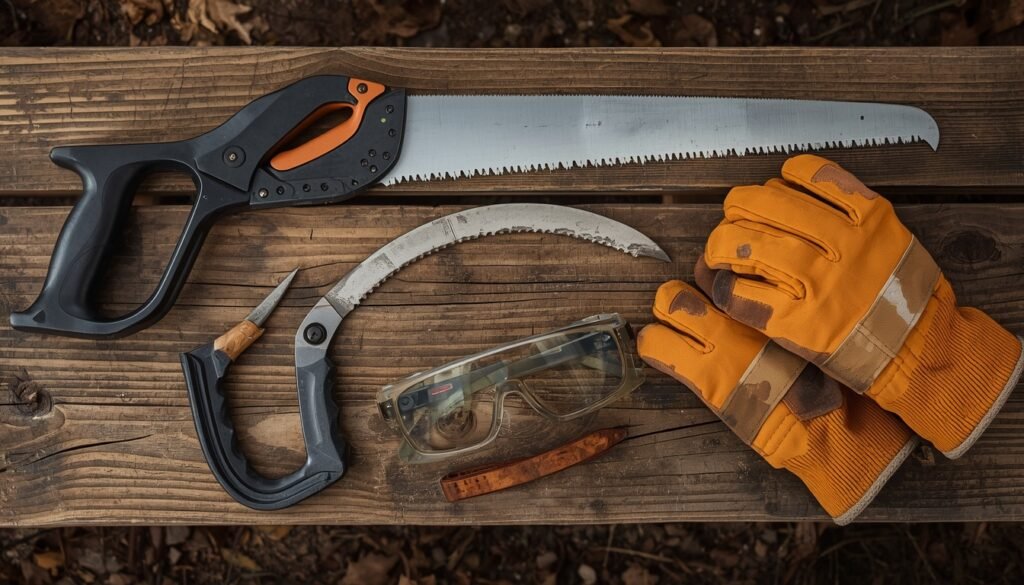
Table of Contents
- What Is a Pruning Saw and How Does It Work?
- How to Choose the Right Pruning Saw
- Best Pruning Saws Compared: Our Top 5 Picks
- Comparison Table
- Best Pruning Saws for Different Jobs
- How to Use a Pruning Saw Correctly
- Common Mistakes to Avoid
- Expert Tips
- Final Verdict
- Frequently Asked Questions
What Is a Pruning Saw and How Does It Work?
A pruning saw is a hand saw designed specifically for cutting living and dead wood on trees, shrubs, and vines. Unlike a carpentry saw, its teeth are set and shaped to clear green, sappy wood without binding. Most cut on the pull stroke, which gives you better control and a smoother finish. Some cut on both strokes, which is faster but leaves a slightly rougher surface.
The key advantage is leverage and reach. Shears and loppers work by squeezing a blade through wood, so thickness is limited by how much force your hands can generate. A saw removes wood a little at a time, which means you can cut much thicker branches with far less effort. A saw also works in spots where a lopper cannot open its handles, and you can operate most models with one hand while the other holds a branch steady.
That makes a saw the natural next step after your first tools. If you are building a kit from scratch, our roundup of the best pruning shears and secateurs covers the small stuff, and our guide on how to prune vegetable plants shows when pruning actually helps your harvest. Reach for a pruning saw once a branch is thicker than about two inches, or when it sits where bulky tools cannot go.
How to Choose the Right Pruning Saw
Three questions will narrow the field quickly.
1. How thick are the branches? A useful rule of thumb is to choose a blade roughly twice as long as the diameter of the biggest branch you plan to cut. A 6-inch blade suits branches up to about 3 inches. For 5 to 8 inch limbs, you want 13 inches or more.
2. How tight is the workspace? Straight blades are precise and good near your body. Curved blades pull themselves into the cut and shine on overhead or low branches. Folding saws fit crowded shrubs and travel safely in a pocket or bucket.
3. How often will you use it? Occasional trimming rarely justifies a premium tool. A daily pruner or small orchard owner benefits from replaceable blades and better ergonomics.
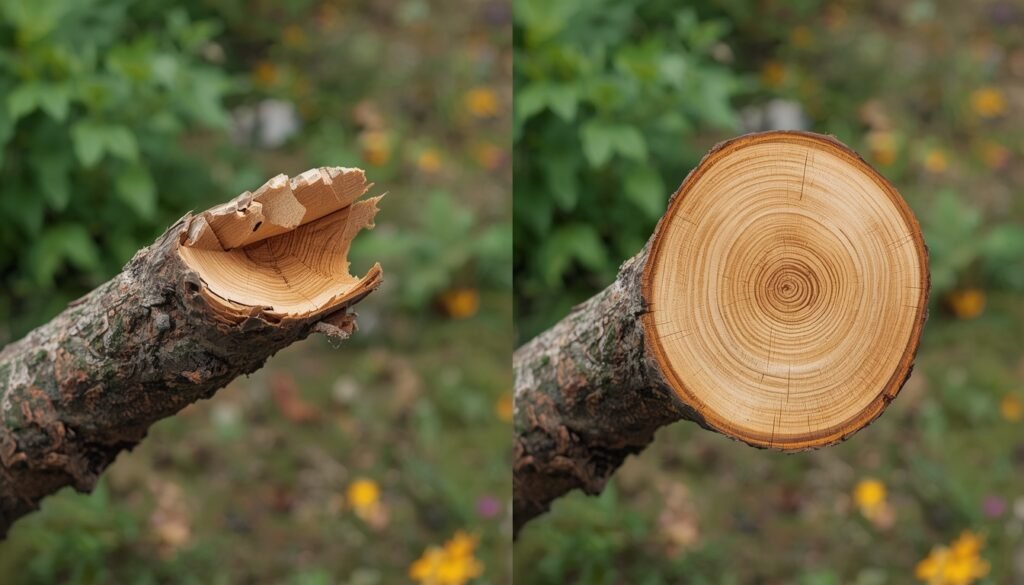
Teeth per inch (TPI) matters too. Fewer teeth mean faster, rougher cuts, while more teeth cut slower but leave a cleaner surface. Clean cuts matter because the tree needs to seal the wound, and university extension guidance consistently stresses cutting just outside the branch collar and avoiding torn bark. You can read the full method in the University of Minnesota Extension guide to pruning trees and shrubs.
Best Pruning Saws Compared: Our Top 5 Picks
1. Fiskars 15-Inch Power Tooth Softgrip D-Handle Saw — Best Overall
Overview: This fixed-blade saw balances reach, speed, and weight better than anything else in its class. The gently curved 15-inch blade handles both overhead and low branches, and the straight teeth cut on push and pull strokes, so work moves quickly. At under a pound, it does not tire your arm on a long afternoon of pruning.
Key Features:
- 15-inch curved steel blade with 6 teeth per inch
- Two-way cutting action
- Non-slip pistol-style soft grip
- Weighs about 13 ounces
Best For: Established shrubs, small orchard trees, and general yard cleanup.
Pros: ✅ Fast, clean cuts ✅ Light and comfortable ✅ Strong value for the performance
Cons: ❌ Too long for tight crotches ❌ Scabbard sold separately
Our Verdict: If you want one saw that does nearly everything, this is the one. Pair it with a solid kit from our guide to the best garden hand tools and you are covered for most yard work.
2. Rexbeti 8-Inch Folding Saw — Best Budget Pick
Overview: Not every gardener needs a professional saw. This compact folding model has a straight 8-inch blade that locks open and folds into the handle, so it slips safely into a bucket or backpack. In testing it handled branches up to about 5 inches, which covers most light shrub and fruit-tree work.
Key Features:
- 8-inch straight SK-5 steel blade, 7 teeth per inch
- Cuts on push and pull strokes
- Secure blade lock with a non-slip handle
- Weighs under 10 ounces
Best For: Occasional pruners and anyone who wants a backup saw.
Pros: ✅ Very affordable ✅ Folds for safe storage ✅ Fits narrow spaces
Cons: ❌ Some blade play reported ❌ Durability is not built for daily use
Our Verdict: A smart low-risk purchase for beginners. If you are putting together a first toolkit, see our best gardening tools for vegetable gardens for what else is worth buying.
3. Felco 600 Pull-Stroke Folding Saw — Best Compact Folding Saw
Overview: Felco built its name on premium pruning shears, and the 600 brings that precision to a saw small enough for a back pocket. The tapered blade is under 6 inches long, yet it cuts quickly and resists sap buildup. It tops out around 4 inches of branch thickness, so think of it as a precision tool rather than a heavy hitter.
Key Features:
- 5.91-inch tapered, chrome-plated blade
- Pull-stroke teeth, about 6 per inch
- Rubberized handle with a secure thumb lock
- Weighs about 8 ounces
Best For: Berry canes, grapevines, small ornamental trees, and tight spaces.
Pros: ✅ Excellent build quality ✅ Pocket-sized ✅ Smooth, aggressive cuts
Cons: ❌ Limited cutting capacity ❌ Higher price for its size
Our Verdict: A superb companion to your shears. Its bright handle is easy to find in the garden, and it pairs well with the garden accessories that make daily work more comfortable.
4. Corona 18-Inch RazorTooth D-Handle Saw — Best for Thick Limbs
Overview: When branches get serious, you need blade length. The Corona’s 18-inch blade carved through limbs up to roughly 10 inches thick in testing without flexing or binding. The D-handle keeps your wrist straight, which delivers more power with less strain on long cuts.
Key Features:
- 18-inch impulse-hardened steel blade, 5 teeth per inch
- Chrome coating to resist rust and wear
- Ergonomic D-handle for undercuts and top cuts
- Weighs about 1.5 pounds
Best For: Hobby orchardists, storm cleanup, and frequent heavy pruning.
Pros: ✅ Big, fast cuts ✅ Stiff, stable blade ✅ Comfortable grip
Cons: ❌ Overkill for small work ❌ No scabbard included
Our Verdict: Buy a sheath alongside it, because an exposed blade this large is a hazard. When the pile of limbs grows, our guide to garden carts and wheelbarrows will save your back on the haul.
5. Silky Zubat Professional 330mm Hand Saw — Best Premium Pick
Overview: Professional landscapers favor Silky for good reason. The Zubat has a narrow 13-inch curved blade with hardened teeth and a tapered spine, so it slides through green and dry wood without clogging. It also ships with a rigid scabbard and belt clip, and you can swap the blade when it eventually wears out.
Key Features:
- 13-inch curved blade, about 6.4 teeth per inch
- Replaceable blade attached with two screws
- Rubber pistol-style grip, about 1 pound
- Hard scabbard with belt clip included
Best For: Daily pruners, arborists, and serious home orchardists.
Pros: ✅ Exceptional cut quality ✅ Replaceable blade extends its life ✅ Scabbard included
Cons: ❌ Premium price
Our Verdict: The best long-term investment here. Keep it protected between jobs with one of the garden storage and organization solutions from our guide.
Comparison Table
| Product | Best For | Blade Length | Teeth Per Inch | Weight | Type |
|---|---|---|---|---|---|
| Fiskars 15″ Power Tooth | Best overall | 15 in | 6 | 13.4 oz | Fixed, curved |
| Rexbeti 8″ Folding | Best budget | 8 in | 7 | 9.8 oz | Folding, straight |
| Felco 600 | Compact precision | 5.9 in | 6 | 7.8 oz | Folding, pull stroke |
| Corona 18″ RazorTooth | Thick limbs | 18 in | 5 | 1.5 lb | Fixed, D-handle |
| Silky Zubat 330mm | Premium daily use | 13 in | 6.4 | 1.0 lb | Fixed, curved |
Specs are based on published manufacturer and independent testing data. Check current listings before buying, since models and pricing change.
Best Pruning Saws for Different Jobs
Thick Limbs and Storm Cleanup
Heavy limbs need long blades, low TPI, and a stable grip. The Corona 18-inch and Silky Zubat are both built for this. Bring loppers along for the 1 to 2 inch branches, since our guide to the best loppers for thick branches covers that handoff. Haul debris with a garden wheelbarrow and tidy the area afterward with a good garden rake.
Tight Spots, Berry Canes, and Small Trees
Compact folding saws such as the Felco 600 and Rexbeti are ideal when branches cross or a shrub is dense. Their short blades will not catch neighboring stems, and you can use one hand. Because this kind of work happens low to the ground, a garden kneeler saves your knees and a pair of tough gardening gloves protects against thorns.
High Branches and Overhead Work
For anything above shoulder height, a pole saw is safer and more practical than a ladder. Look for an extendable pole, a removable saw head with a decent blade, and a lightweight build, because arm fatigue is real overhead. Pole saws are a different category from hand saws, so treat them as a separate purchase. Once the branches are down, turn the smaller prunings into mulch or feed them to a composting bin.
How to Use a Pruning Saw Correctly
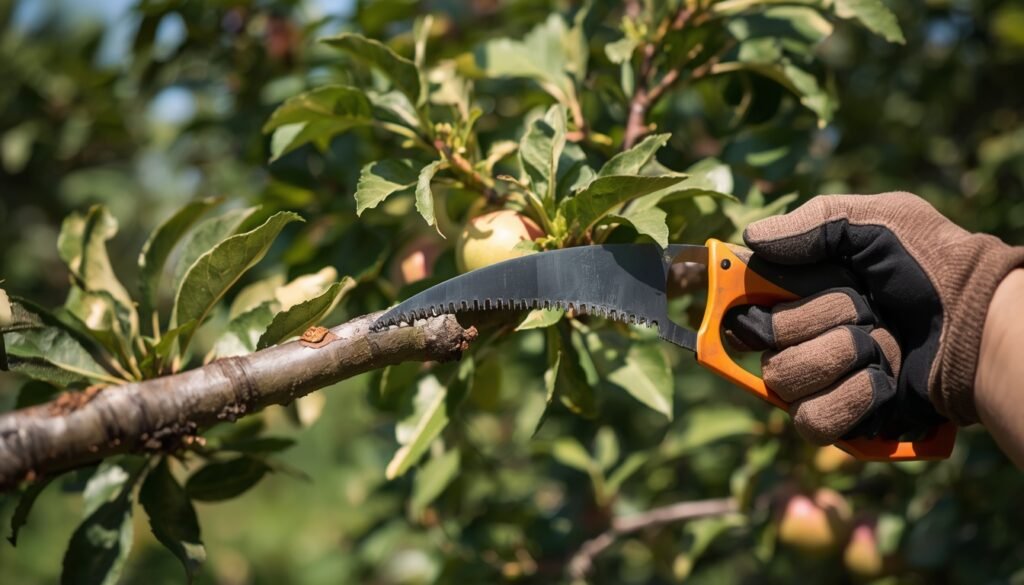
A sharp saw only helps if the cut is made properly. Extension services such as Colorado State University publish detailed guidance on pruning cuts and the three-cut method, and the steps below follow the same principles.
Step 1: Prepare
Wear thick gloves, eye protection, and long sleeves. Check overhead for dead limbs and make sure you have stable footing. Most trees do best with pruning in the late dormant season, and remove dead or damaged wood whenever you spot it.
Step 2: Clean and Set Up
Wipe the blade with rubbing alcohol if you have been cutting diseased wood. A garden sprayer filled with a disinfectant makes this quick when you work through many plants.
Step 3: Make the Undercut
For any branch thicker than about an inch, make your first cut on the underside, 6 to 18 inches out from the trunk, roughly one-third of the way through. This prevents the weight of the falling branch from tearing bark down the trunk.
Step 4: Make the Relief Cut
Move an inch or two further out and cut from the top until the branch breaks free. You are removing the weight so the final cut is controlled and safe.
Step 5: Make the Final Cut and Finish
Cut the remaining stub just outside the branch collar, the slightly swollen ring where the branch meets the trunk. Do not cut into the collar and do not leave a long stub. Wipe and dry the blade, then return it to its sheath.
Common Mistakes to Avoid
Using shears or loppers on wood that is too thick. Forcing a blade through a thick branch crushes tissue and dulls the tool. Move to a saw once resistance climbs. Our guide to pruning shears and secateurs lists their realistic limits.
Skipping the undercut. Without it, the branch can peel a strip of bark down the trunk as it falls, leaving a large wound that invites decay. A two-minute undercut avoids it.
Spreading disease on a dirty blade. Open cuts are an entry point for pathogens and pests. Cleaning between plants is easy insurance, and you can read more about prevention in our guide to garden pest control naturally and the best organic pest control products.
Expert Tips
Let the saw do the work. Use long, steady strokes and light pressure. Forcing the blade causes binding and makes the saw wander off the cut line.
Support the branch. Hold the limb with your free hand where it is safe to do so, or have a helper support it. A supported branch will not pinch the blade shut mid-cut.
Clean sap off the blade. Sap builds up and slows the cut. Wipe the blade after each session and add a thin film of oil before winter storage to prevent rust.
Final Verdict
The best pruning saws are the ones that match your branches, not the biggest or the most expensive.
- Best Overall: Fiskars 15-Inch Power Tooth Softgrip
- Best Budget: Rexbeti 8-Inch Folding Saw
- Best Compact: Felco 600 Pull-Stroke Folding Saw
- Best for Thick Limbs: Corona 18-Inch RazorTooth
- Best Premium: Silky Zubat Professional 330mm
Beginners should start with the Fiskars or the Rexbeti, then add a Felco for tight work. When you are ready to round out your kit, browse our guides to pruning shears, loppers for thick branches, and garden gadgets and accessories.
Frequently Asked Questions
Do I need a pruning saw if I already have loppers? If you only trim branches under about two inches, probably not. Once branches get thicker, or you need to cut in tight spots, a saw is safer and takes less effort than forcing loppers through the wood.
What size pruning saw do I need? Choose a blade about twice the diameter of your thickest branch. For occasional light work, a 6 to 8 inch folding saw is enough. For limbs over four inches, look for 13 inches or longer.
What is the difference between a pruning saw and a regular hand saw? Pruning saws have teeth designed to clear green, sappy wood, often with a curved blade and a pull-stroke action. A carpentry saw tends to clog and bind in living wood and leaves a rougher cut.
Are curved or straight blades better? Curved blades pull into the cut and work well overhead and on low branches. Straight blades give more control near your body. Many gardeners own one of each.
Can I sharpen a pruning saw? Most modern pruning saws use hardened, plated teeth that cannot be sharpened by hand. When the blade dulls, replace it if the model allows, as the Silky Zubat does, or replace the saw.
How do I clean a pruning saw? Wipe off sap with a rag, dry the blade, and rub on a thin layer of mineral oil before long storage. For diseased wood, wipe with rubbing alcohol between cuts.
When is the best time to prune with a saw? The late dormant season suits most trees and shrubs. Dead or damaged branches can come off any time of year, and some spring-blooming shrubs should wait until after flowering.
Is a folding saw strong enough for serious pruning? Quality folding saws handle branches up to roughly four to five inches. Beyond that, a fixed blade with more length and stiffness is safer and faster.
Can I use a pruning saw to cut roots? Yes, but roots hide dirt and stones that dull blades fast. Dig out the roots first with a good spade or shovel and clean the blade afterward.
Is it safe to prune near power lines? No. Never prune near power lines or attempt work that requires a ladder in unstable conditions. Hire a certified arborist for those jobs.
Author: Pamela Reese Last Updated: November 2026