Good gardening tools get a lot of attention, but they only solve half the problem. A gardener with a sharp trowel and a quality hoe can still end up with sore knees, blistered hands, and a wheelbarrow-sized pile of soil dragged around one bucket at a time — because the tools that make a garden productive aren’t always the same ones that make gardening comfortable to keep doing week after week.
Accessories are the quiet difference between a garden that gets tended consistently and one that gets neglected once the novelty wears off. A padded kneeler turns a ten-minute weeding session from something you dread into something you barely notice. A pair of proper gloves means a torn cuticle doesn’t sideline you for a week. None of these items are strictly necessary the way soil preparation or watering are, but they’re what keeps a gardener showing up regularly enough for those essentials to actually happen.
This guide covers five accessories worth adding once you’ve got your core tool kit in place, what to look for in each, and how to prioritize them based on your garden size and how often you’re out working in it.
Quick Answer
The five gardening accessories that make the biggest difference in comfort and efficiency are garden gloves for hand protection, a kneeling pad or garden kneeler for joint comfort during weeding and planting, a garden apron or tool belt for keeping small tools within reach, a wheelbarrow or garden cart for moving soil and materials without repeated trips, and a soil thermometer for timing plantings accurately. Gardeners with small raised beds get the most value from gloves, a kneeler, and an apron, while anyone managing a larger in-ground plot should prioritize a wheelbarrow or cart early on.
Table of Contents
- Why Accessories Matter as Much as Tools
- How to Choose the Right Accessories for Your Garden
- Best Gardening Accessories for Vegetable Gardeners
- Comparison Table
- Best Accessories for Different Garden Setups
- How to Maintain Your Gardening Accessories
- Common Accessory-Buying Mistakes
- Expert Tips
- Final Thoughts
- Frequently Asked Questions
Why Accessories Matter as Much as Tools {#why-accessories-matter}
It’s easy to treat accessories as optional extras once the essential tools are covered, but comfort has a direct effect on how consistently a garden actually gets tended. Sore knees from unpadded kneeling or blistered hands from bare-handed weeding are two of the most common, quietly avoidable reasons gardeners start skipping sessions mid-season.
Accessories also reduce physical strain in ways that protect against longer-term issues, not just day-to-day discomfort. Repeatedly bending without knee support or hauling soil by hand instead of with a cart adds up over a full growing season, especially for anyone managing multiple raised beds or a larger in-ground plot. The right accessories don’t grow better vegetables directly, but they keep you gardening consistently enough that everything else — mulching, weeding, watering — actually happens on schedule.
How to Choose the Right Accessories for Your Garden {#how-to-choose}
Before buying, think through three questions:
How much time do you spend kneeling or bending? Gardeners with several raised beds or a large in-ground plot benefit most from a kneeler, while container gardeners may need one far less often.
How far are you hauling soil, compost, or harvested vegetables? A small courtyard garden may never need a cart, while a larger plot with a distant compost pile benefits enormously from one.
Do you tend to lose track of small tools mid-task? An apron or tool belt solves a specific, common annoyance — setting down a trowel or pruners and losing track of them in the bed.
Best Gardening Accessories for Vegetable Gardeners {#best-accessories}
Garden Gloves
Overview: The most-used accessory in almost any garden, protecting hands from thorns, blisters, soil-borne bacteria, and the general wear of repeated digging and weeding.
Key Features:
- Breathable fabric backs keep hands cool during long sessions
- Reinforced fingertips resist wear from repeated pulling and digging
- Grip-coated palms improve control when handling tools or weeding
Best For: Nearly every gardening task, from planting to pulling weeds to handling thorny or prickly plants.
Pros: ✅ Inexpensive ✅ Protects against cuts, blisters, and soil exposure ✅ Improves grip on tools
Cons: ❌ Reduces fine tactile feel for delicate seedling work ❌ Wears out faster with heavy daily use
Our Verdict: A near-essential first accessory purchase — pick a pair with reinforced fingertips if you’ll be doing regular weeding or handling rough materials like mulch.
Kneeling Pad or Garden Kneeler
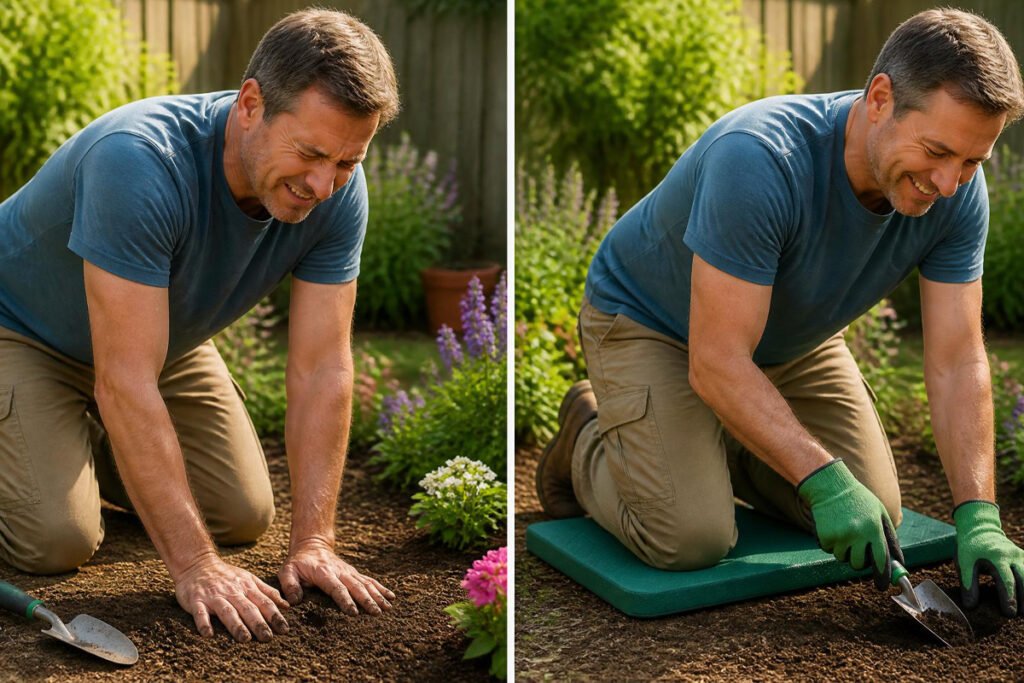
Overview: A cushioned pad, sometimes combined with fold-out side handles, that protects knees during the extended kneeling and bending that weeding and planting require.
Key Features:
- Dense, water-resistant foam holds up against damp soil
- Some models fold into a portable seat for additional versatility
- Side handles on kneeler-style versions help with standing back up
Best For: Extended sessions of weeding, planting, and harvesting in raised beds or ground-level rows.
Pros: ✅ Reduces joint strain significantly ✅ Water-resistant designs stay usable after rain ✅ Foldable options double as a seat
Cons: ❌ Takes up storage space ❌ Less useful in a garden with mostly waist-height raised beds
Our Verdict: One of the highest-comfort-per-dollar accessories available, especially valuable for anyone doing regular soil preparation or seasonal bed resets.
Garden Apron or Tool Belt
Overview: A wearable pocketed apron or belt that keeps small hand tools, seed packets, and harvested produce within reach instead of set down and lost in the bed.
Key Features:
- Multiple pocket sizes for tools, phone, and seed packets
- Durable canvas resists tearing from tool edges
- Adjustable straps fit over layered clothing in cooler weather
Best For: Gardeners who regularly misplace small tools, or anyone doing quick multi-step tasks like transplanting and light harvesting in the same session.
Pros: ✅ Keeps small tools within reach ✅ Frees both hands for harvesting ✅ Reduces time spent hunting for a set-down trowel
Cons: ❌ Can feel bulky during hot weather ❌ Less useful for gardeners who only use one or two tools per session
Our Verdict: A small quality-of-life upgrade that pays off most for gardeners managing several tasks — planting, pruning, and harvesting — in a single visit to the garden.
Wheelbarrow or Garden Cart
Overview: A wheeled hauler for moving soil, compost, mulch, and harvested vegetables in bulk, eliminating the repeated back-and-forth trips that add up quickly in a larger garden.
Key Features:
- Single-wheel wheelbarrows maneuver well in tight raised bed rows
- Four-wheel garden carts offer more stability on uneven ground
- Removable or tipping beds simplify unloading soil and compost
Best For: Larger in-ground plots, seasonal bed prep, and moving mulch or compost in bulk rather than by hand.
Pros: ✅ Saves significant time and physical strain ✅ Handles heavy loads like soil and compost easily ✅ Doubles as general yard equipment beyond the vegetable garden
Cons: ❌ Requires storage space ❌ Overkill for small container or single-raised-bed gardens
Our Verdict: Skip this one for a small container setup, but treat it as a near-essential investment once your garden includes multiple beds or regular mulching and compost hauling.
Soil Thermometer
Overview: A simple probe thermometer that measures soil temperature at root depth, helping time plantings more accurately than air temperature or the calendar alone.
Key Features:
- Long probe reaches below the surface to actual root-zone temperature
- Clear dial or digital display for quick, easy readings
- Reusable across the entire growing season
Best For: Timing warm-season transplants like tomatoes and peppers, and cool-season direct-sown seeds like spinach and lettuce.
Pros: ✅ Removes guesswork from planting timing ✅ Inexpensive and reusable ✅ Reduces losses from planting into soil that’s still too cold
Cons: ❌ One more small item to keep track of ❌ Less useful without knowing target temperatures for your specific crops
Our Verdict: An underrated accessory that pairs well with a seasonal planting calendar — soil temperature is often a more reliable planting signal than the date on the calendar alone.
Comparison Table {#comparison-table}
| Accessory | Best For | Price Range | Storage Space | Priority Level |
|---|---|---|---|---|
| Garden Gloves | Nearly every task | Low | Minimal | High |
| Kneeling Pad/Kneeler | Weeding, planting | Low–Medium | Moderate | High |
| Garden Apron/Tool Belt | Multi-tool tasks | Low | Minimal | Medium |
| Wheelbarrow/Cart | Hauling soil, compost, mulch | Medium–High | Significant | High (larger gardens) |
| Soil Thermometer | Planting timing | Low | Minimal | Medium |
Best Accessories for Different Garden Setups {#different-setups}
Raised Bed Gardens
A raised bed vegetable garden usually needs less hauling capacity than a large in-ground plot, making gloves, a kneeler, and an apron the highest-value accessories, while a wheelbarrow becomes more useful once you’re managing three or more beds.
Single-Plot In-Ground Gardens
Larger in-ground plots get the most benefit from the full accessory set, especially a wheelbarrow or cart, since soil prep, mulching, and harvest hauling all cover more ground than in a compact raised bed layout.
Container and Small-Space Gardens
Container gardens rarely need a wheelbarrow or kneeler, but gloves and a soil thermometer remain useful for handling potting mix and timing transplants into pots correctly.
How to Maintain Your Gardening Accessories {#how-to-maintain}
Step 1: Rinse and Air Dry Fabric Items
Hose off gloves, aprons, and kneeling pads after muddy sessions, and let them air dry fully before storing to prevent mildew.
Step 2: Check Wheelbarrow or Cart Tires Regularly
Inspect tire pressure and wheel bearings each season, since a hard-to-push cart quickly becomes an accessory that stops getting used.
Step 3: Store Fabric Accessories Out of Direct Sun
Prolonged UV exposure breaks down canvas and foam faster than regular use does — store items in a shed or garage rather than left outdoors between sessions.
Step 4: Clean Thermometer Probes After Use
Wipe soil off a soil thermometer probe after each reading to keep it accurate and prevent corrosion at the tip.
Step 5: Replace Foam and Padding When Compressed
Kneeling pads lose cushioning over time — a pad that’s gone flat no longer protects joints the way it did when new, and is worth replacing rather than pushing through discomfort.
Common Accessory-Buying Mistakes {#common-mistakes}
Buying a cart or wheelbarrow before you actually need one. Small container or single-raised-bed gardens rarely justify the storage space a cart requires. Start with gloves and a kneeler, and add hauling equipment once your garden expands.
Choosing gloves that are too bulky for detail work. Thick, heavily padded gloves make transplanting delicate seedlings frustrating. Keep a lighter pair on hand for precision tasks alongside heavier ones for rough work.
Skipping a kneeler and pushing through discomfort. Sore knees are one of the most common reasons gardeners cut sessions short or skip them altogether — a basic kneeling pad solves this for very little cost, directly supporting a more consistent weeding routine.
Expert Tips {#expert-tips}
Keep a lightweight glove pair for delicate tasks. A separate, thinner pair for seedling transplants or harvesting soft fruit preserves the dexterity that heavier work gloves sacrifice.
Match your cart size to your garden, not your yard. A large four-wheel cart can be harder to maneuver between tight raised bed rows than a single-wheel wheelbarrow, even if it holds more.
Use a soil thermometer alongside your rotation plan. Checking soil temperature before moving a new plant family into a bed, as part of your crop rotation schedule, helps avoid transplanting into soil that’s still too cold for that particular crop.
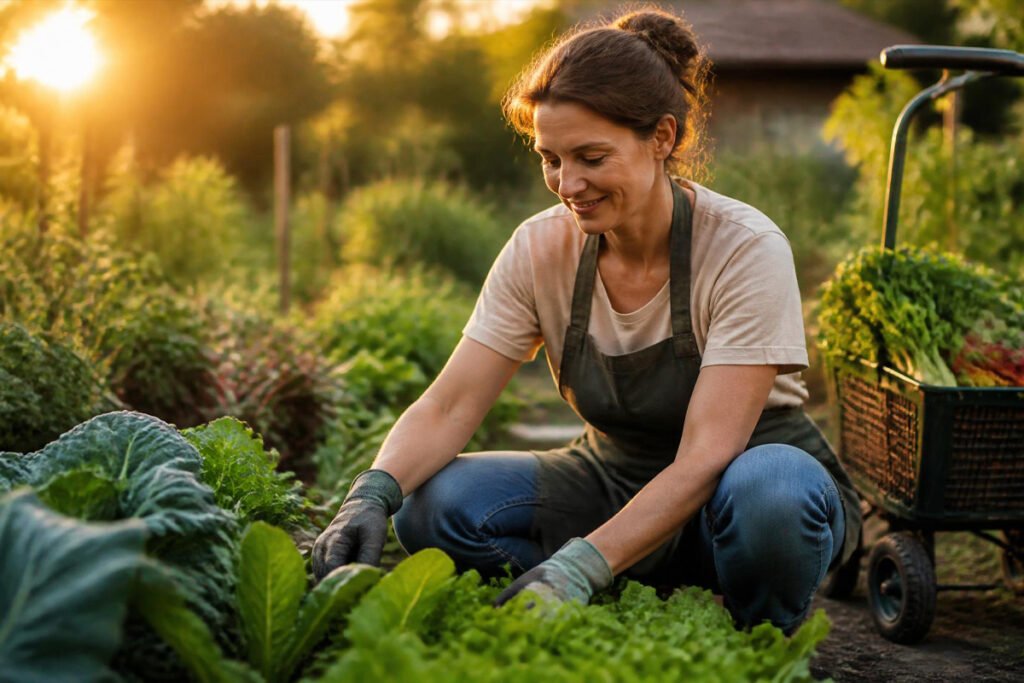
Final Thoughts {#final-thoughts}
Best overall starting point: garden gloves and a kneeling pad, since they address the two most common sources of everyday gardening discomfort. Best for larger gardens: a wheelbarrow or cart, once soil and compost hauling starts adding up. Best underrated pick: a soil thermometer, for anyone tired of guessing when it’s actually safe to plant.
None of these five accessories are strictly required the way core tools are, but together they’re what keeps gardening feeling manageable rather than exhausting. Pair them with a solid tool kit and consistent soil preparation habits, and most gardeners find they’re spending more comfortable, consistent time in the garden within the very first season of adding even one or two of these accessories.
Frequently Asked Questions {#faq}
Do I need all five accessories to start gardening comfortably? No — gloves and a kneeling pad address the most common sources of discomfort and are worth prioritizing first, with the other three added as your garden grows.
What’s the difference between a wheelbarrow and a garden cart? A single-wheel wheelbarrow maneuvers better in tight spaces and raised bed rows, while a four-wheel garden cart offers more stability and load capacity on open, uneven ground.
Are gardening gloves necessary if I don’t mind getting dirty? Gloves protect against more than dirt — thorns, blisters, and soil-borne bacteria are all reduced significantly with a proper pair, even for gardeners who don’t mind getting hands dirty otherwise.
How do I know if I need a kneeling pad versus a full kneeler with handles? A simple pad is enough for most gardeners, while the fold-out handles on a full kneeler help more if getting up and down repeatedly is physically difficult.
Is a soil thermometer really more useful than just checking the calendar? Yes, in many cases — soil temperature can lag or lead the calendar depending on weather patterns that season, making it a more direct indicator of whether soil is actually ready for a given crop.
Can I use a regular gardening apron instead of a dedicated tool belt? Yes, a well-pocketed apron functions similarly to a tool belt for most home gardening tasks, and often adds harvest-carrying capacity a slim tool belt doesn’t offer.
Do container gardens need a wheelbarrow or cart? Rarely — container gardens typically involve small volumes of potting mix that don’t require bulk hauling, making a cart low priority compared to gloves or a soil thermometer.
How often should I replace garden gloves? Replace gloves once seams fray, fingertips wear through, or grip coating breaks down, which for regular use is often once or twice per growing season.
What size wheelbarrow is best for a home vegetable garden? A mid-size wheelbarrow, large enough to move a full load of mulch or compost without becoming too heavy to maneuver comfortably, suits most home gardens better than an oversized contractor model.
Can accessories actually improve plant health, not just gardener comfort? Indirectly, yes — accessories that make gardening more comfortable lead to more consistent weeding, watering, and monitoring, all of which have a direct effect on plant health over a season.
Do I need different accessories for raised beds versus in-ground gardens? The core five accessories work for both, but a wheelbarrow or cart matters more for in-ground plots, while a kneeler and gloves matter more universally across both setups.
What’s the best budget starting point for gardening accessories? A basic pair of gloves and a simple foam kneeling pad cover the two highest-impact comfort issues for very little cost, making them the best first purchase before investing in a cart or apron.
Author: Pamela Reese