Every spring, thousands of home gardeners make the same quiet mistake: they plant tomatoes in the exact same bed they used last year, and the year before that, and the year before that. At first nothing seems wrong. Then, a few seasons in, the tomatoes get smaller, blight shows up earlier every summer, and no amount of organic fertilizer seems to fix it.
This is the slow, invisible cost of skipping crop rotation. Planting the same plant family in the same spot year after year lets soil-borne diseases and pests build up a permanent home base, while the same narrow set of nutrients gets pulled from the soil over and over. It’s one of the most common reasons a once-productive vegetable patch quietly declines, even when watering, soil prep, and pest control all look right on paper.
The good news is that crop rotation is one of the simplest, lowest-cost techniques in all of gardening. It requires no new tools, no extra time in the garden, and no money — just a plan. This guide walks through exactly how crop rotation works, how to group your vegetables into rotation families, and how to build a rotation schedule that fits any garden size, from a single raised bed to a full backyard plot.
Quick Answer
Crop rotation means changing where each vegetable family is planted every year so the same family never returns to the same spot for at least three to four seasons. The easiest way to do it in a home garden depends on your layout: gardeners with multiple raised beds can simply rotate whole beds between plant families each year, while gardeners with one continuous plot should divide it into imaginary zones and rotate crops between them. In every case, the underlying principle is the same — follow heavy feeders with soil-building legumes, and never let two crops from the same botanical family occupy the same ground in back-to-back years.
Table of Contents
- What Is Crop Rotation and How Does It Work?
- How to Choose the Right Rotation Plan for Your Garden
- Best Crop Rotation Systems for Home Gardens
- Crop Rotation Comparison Table
- Crop Rotation for Different Garden Setups
- How to Set Up Crop Rotation Correctly
- Common Crop Rotation Mistakes
- Expert Tips
- Final Thoughts
- Frequently Asked Questions
What Is Crop Rotation and How Does It Work? {#what-is-crop-rotation}
Crop rotation is the practice of changing which plant family grows in a given area of the garden each year, instead of replanting the same crop (or its close relatives) in the same spot season after season. It’s one of agriculture’s oldest techniques, and it works because of two simple biological facts.
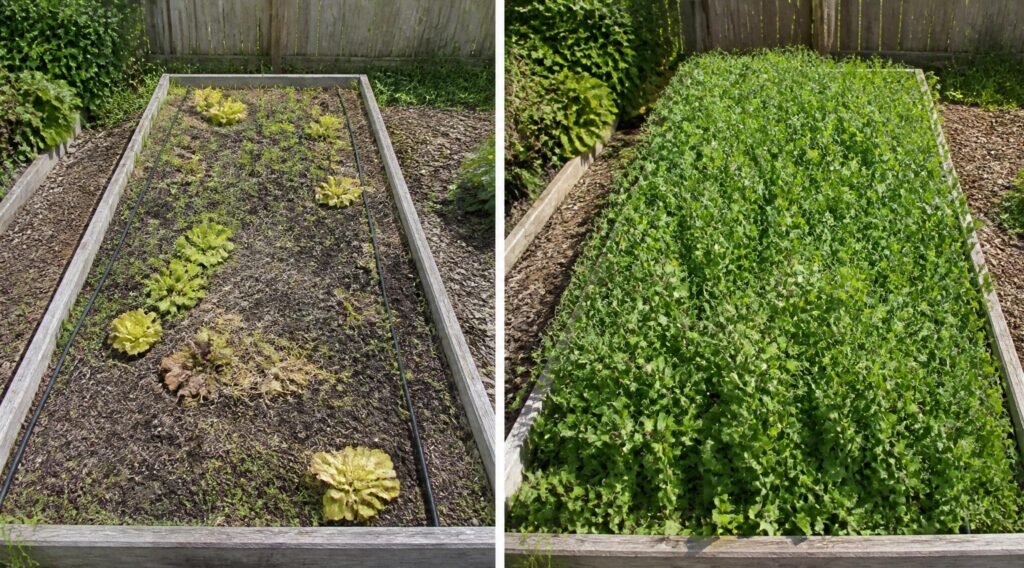
First, vegetables in the same botanical family tend to attract the same pests and are vulnerable to the same soil-borne diseases. Tomatoes, peppers, eggplant, and potatoes all belong to the nightshade family and share susceptibility to blight and verticillium wilt. If nightshades grow in the same bed every year, disease spores and overwintering pests build up in the soil and have a guaranteed food source waiting for them each spring.
Second, different plant families draw different nutrients from the soil in different amounts. Heavy feeders like corn and squash pull large amounts of nitrogen. Legumes such as beans and peas do the opposite — their roots host bacteria that pull nitrogen from the air and fix it into the soil, effectively refilling what other crops used up. Rotating crops for vegetable gardens through this cycle of “heavy feeder, soil builder, light feeder” keeps nutrients balanced without leaning entirely on fertilizer.
Practicing good companion planting alongside rotation compounds the benefit — you’re managing pest pressure and nutrient use both within a season and across years.
How to Choose the Right Rotation Plan for Your Garden {#how-to-choose}
Before mapping out a rotation, ask yourself three questions:
How many separate growing areas do I have? A garden with three or four raised beds rotates naturally — assign each bed a plant family group and shift them clockwise each year. A single open plot needs to be mentally divided into zones instead.
Which vegetable families do I actually grow? There’s no point building an elaborate five-family rotation if you only grow tomatoes, beans, and lettuce. Match the plan to your real planting list, not a generic template.
How much space can I dedicate to soil-building crops? A true four-year rotation needs a “rest” or legume phase in the mix. If space is extremely tight — as in most container vegetable gardens — full rotation isn’t always practical, but swapping the growing medium between seasons offers a similar reset.
According to Iowa State University Extension, splitting a vegetable garden into three or four raised beds is one of the simplest ways to make rotation manageable when garden space is limited (source: Iowa State University Extension, Yard and Garden).
Best Crop Rotation Systems for Home Gardens {#best-systems}
There’s no single “correct” rotation — the right system depends on your garden’s size and what you grow. Below are the four most practical systems for home gardeners.
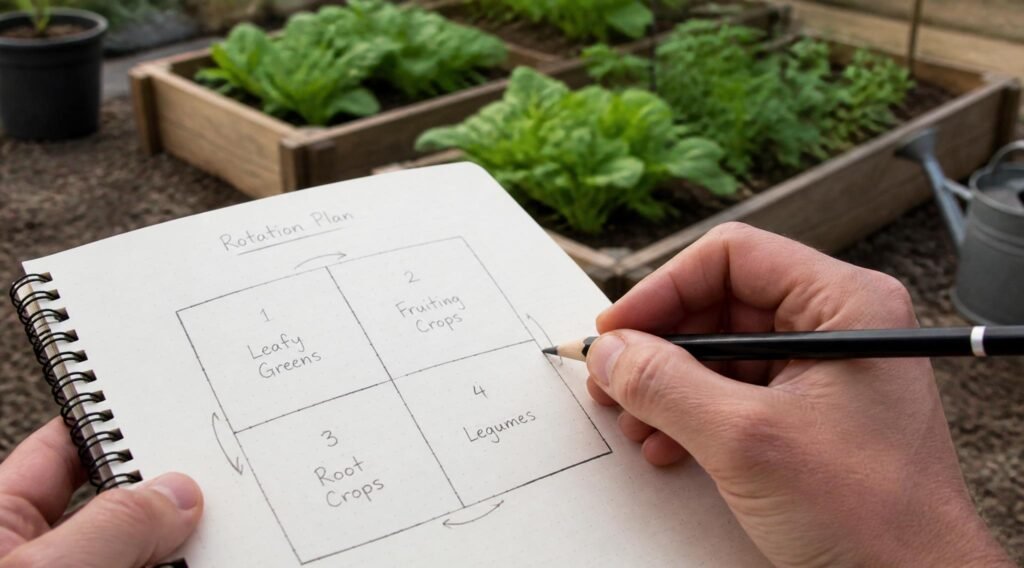
The Four-Family Rotation
Overview: The classic beginner system. Vegetables are sorted into four broad groups — leafy greens, fruiting crops, root crops, and legumes — and each group moves to a new bed every year on a four-year cycle.
Key Features:
- Groups: Leaves (lettuce, spinach, cabbage) → Fruit (tomatoes, peppers, squash) → Roots (carrots, garlic, onions) → Legumes (beans, peas)
- Legumes always follow fruiting crops to rebuild nitrogen
- Works well with four or more raised beds or zones
Best For: Gardeners with four distinct beds or zones and a broad mix of vegetable types.
Pros: ✅ Easy to remember and explain ✅ Naturally balances nutrient use ✅ Scales well as the garden grows
Cons: ❌ Too rigid for very small gardens ❌ Doesn’t account for every plant family precisely
Our Verdict: This is the best starting point for most home gardeners, and it pairs naturally with a raised bed layout since each bed can simply represent one group.
The Three-Year Nightshade-Focused Rotation
Overview: Built specifically around keeping disease-prone nightshades (tomatoes, peppers, potatoes, eggplant) separated from their own family for as long as possible, since this group is the most disease-susceptible in most home gardens.
Key Features:
- Nightshades get a dedicated three-year cycle away from their previous spot
- Other crops fill in around the nightshade schedule
- Often combined with container-grown nightshades to add a fourth “reset” year
Best For: Gardeners whose garden is dominated by tomatoes, peppers, and potatoes.
Pros: ✅ Directly targets the highest-risk disease group ✅ Reduces blight and wilt pressure significantly
Cons: ❌ Less structured for the rest of the garden ❌ Requires tracking nightshade history carefully
Our Verdict: Worth adopting even inside a broader rotation plan — treat nightshade placement as the anchor decision each year, then fit everything else around it.
The Root-Leaf-Fruit-Legume Sequence
Overview: Instead of grouping by family alone, this method sequences crops by type of growth, following the idea that penetrating root crops loosen soil for the next planting, leafy crops shield the soil, fruiting crops use built-up fertility, and legumes replenish it.
Key Features:
- Order: Root crops (carrots, beets) → Leafy crops (spinach, lettuce) → Fruiting crops (squash, tomatoes) → Legumes (peas, beans)
- Root crops break up compaction and pull nutrients up from deeper soil
- Especially useful after soil preparation in heavier ground
Best For: Gardens with compacted or clay-heavy soil that benefits from deep-rooted crops early in the sequence.
Pros: ✅ Improves soil structure over time ✅ Logical, easy-to-follow order
Cons: ❌ Requires growing all four crop types every year ❌ Less intuitive for beginners than family-based grouping
Our Verdict: A strong choice for anyone who battles compacted or poor-draining soil, since the rotation itself does double duty as a soil-improvement plan.
The Small-Space Two-Zone Rotation
Overview: A simplified system for gardeners with only one or two beds. Instead of four full groups, crops are split into just two categories — heavy feeders and soil builders — and the two zones swap every year.
Key Features:
- Zone A: heavy feeders (tomatoes, squash, cucumbers, corn)
- Zone B: legumes and light feeders (beans, peas, herbs, lettuce)
- Zones fully swap contents each season
Best For: Small-space and vertical gardens, balconies, and gardeners with only one or two beds.
Pros: ✅ Realistic for tight spaces ✅ Still delivers most of the pest and nutrient benefits
Cons: ❌ Doesn’t fully separate disease-prone families ❌ Needs to be paired with container growing for true problem crops
Our Verdict: Not a perfect rotation, but far better than no rotation at all — ideal as a first step for gardeners without room for a full four-bed system.
Crop Rotation Comparison Table {#comparison-table}
| System | Best For | Beds Needed | Disease Control | Beginner-Friendly |
|---|---|---|---|---|
| Four-Family Rotation | General gardens | 4+ | High | Yes |
| Nightshade-Focused | Tomato/pepper-heavy gardens | 3+ | Very High | Moderate |
| Root-Leaf-Fruit-Legume | Compacted or clay soil | 4 | High | Moderate |
| Small-Space Two-Zone | Balconies, 1–2 beds | 1–2 | Moderate | Yes |
Crop Rotation for Different Garden Setups {#different-setups}
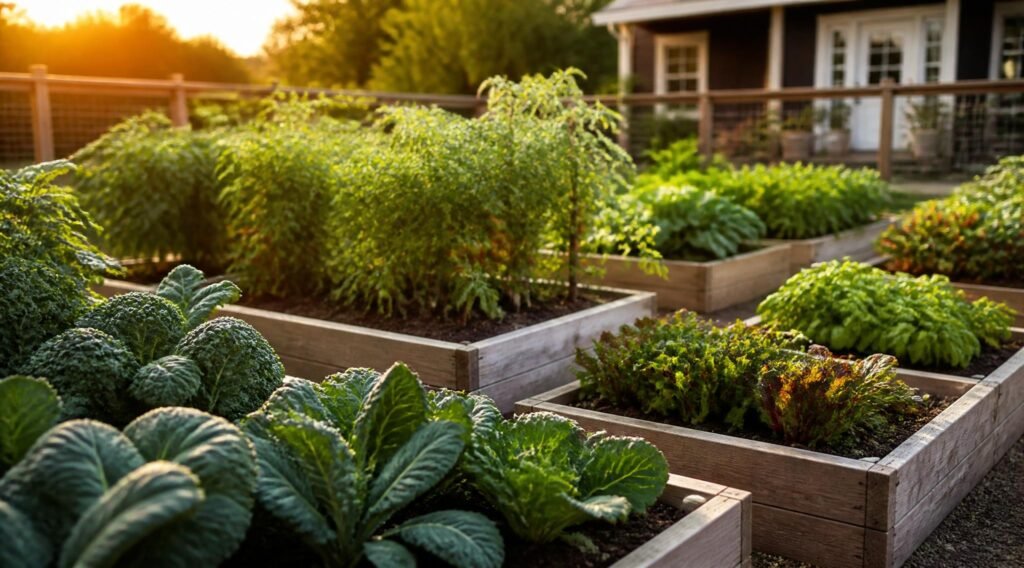
Raised Bed Gardens
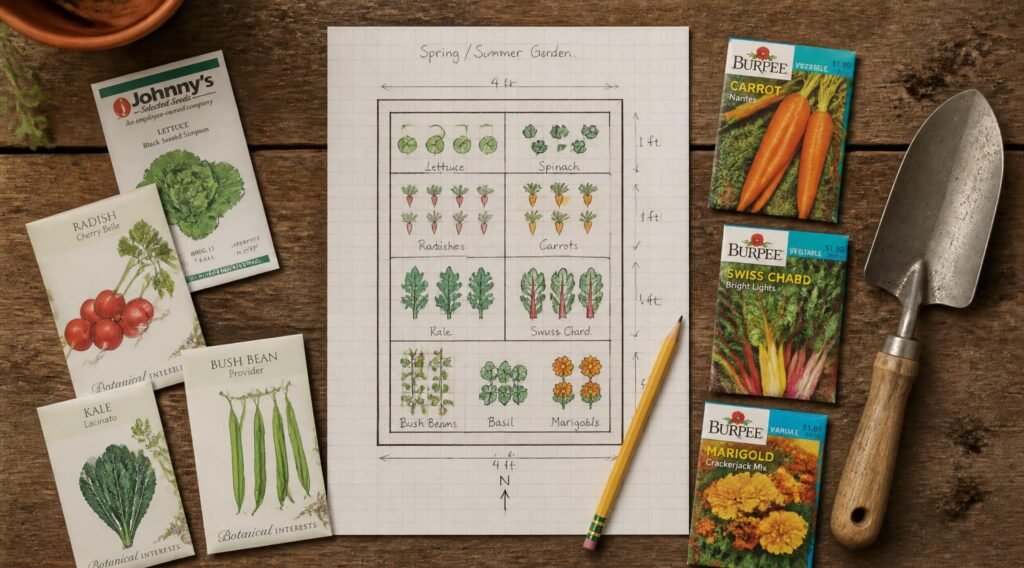
Raised beds are the easiest setup for crop rotation because each bed already functions as a self-contained zone. If you’re just starting out, a raised bed vegetable garden for beginners with three or four beds maps directly onto the four-family system — simply rotate which family occupies which bed each spring. Keep a simple garden map or photo from each year so you always know what grew where.
Single-Plot In-Ground Gardens
Without physical bed dividers, mark out rotation zones with stakes, string, or even just a sketch in a notebook. The beginner’s guide to starting a vegetable garden is a good starting reference for laying out a new plot with rotation in mind from day one, rather than retrofitting zones later.
Container and Small-Space Gardens
True crop rotation is harder in containers since each pot is its own isolated environment — but disease and nutrient depletion can still build up in reused potting mix. For container vegetable gardens, the equivalent of rotation is refreshing or fully replacing the growing medium each year and avoiding planting the same family in the same container two years running.
How to Set Up Crop Rotation Correctly {#how-to-set-up}
Crop rotation, at its core, is a garden-planning strategy that prioritizes moving different plant families through the same area of a garden across successive years rather than repeating the same family in the same spot. Setting it up correctly comes down to five simple steps.
Step 1: Map Your Current Garden
Sketch every bed or zone and write down what grew in each one this year. If you don’t already have a record, start now — this map becomes the foundation for every future rotation decision.
Step 2: Group Your Vegetables by Family
Sort your planting list into families: nightshades (tomatoes, peppers, potatoes), brassicas (cabbage, broccoli), cucurbits (cucumbers, squash, melons), alliums (onions, garlic), legumes (beans, peas), and leafy greens (spinach, lettuce, chard).
Step 3: Choose Your Rotation System
Pick from the four systems above based on your bed count and soil conditions, or adapt one to fit your exact mix of crops.
Step 4: Assign Families to Beds for the Coming Season
Move each family to a bed it hasn’t occupied in at least the last two years, ideally three to four. Cross-reference your map from Step 1 to avoid accidental repeats.
Step 5: Record and Repeat
Update your garden map at the end of each season before you forget what grew where. This single habit is what makes rotation sustainable for years instead of one season.
Common Crop Rotation Mistakes {#common-mistakes}
Forgetting that potatoes and tomatoes are the same family. Many gardeners rotate tomatoes carefully but plant potatoes in last year’s tomato bed, not realizing both are nightshades. Review your pest control notes from the previous season before finalizing placement.
Rotating without tracking history. A rotation plan only works if you actually remember what grew where. Skipping the record-keeping step is the single most common reason rotations quietly fail after a year or two.
Ignoring companion crops planted nearby. A bed can look “rotated” on paper while a companion crop from the same family lingers in a neighboring row. Cross-check your companion planting guide against your rotation map, not just the main crop list.
Expert Tips {#expert-tips}
Use cover crops in the off-season. Planting a quick cover crop like clover or winter rye in a bed between rotations adds organic matter and suppresses weeds, giving the next crop family an even better start.
Rotate container soil, not just beds. If part of your garden lives in containers, treat the potting mix itself as something to rotate — refresh at least a third of it each year to avoid the same nutrient depletion containers are prone to.
Pair rotation with a planting calendar. Cross-referencing your rotation plan against a seasonal planting calendar helps you plan both timing and placement in one pass each spring, rather than treating them as separate decisions.
Final Thoughts {#final-thoughts}
Best overall: The four-family rotation for most raised bed and mid-size gardens. Best for tight spaces: the small-space two-zone system paired with container growing. Best for problem soil: the root-leaf-fruit-legume sequence, especially after a season of dedicated soil preparation.
Whichever system you choose, the real value of crop rotation comes from consistency, not complexity. A simple plan followed every year will always outperform an elaborate plan abandoned after one season. Start with a basic map of this year’s garden, apply one of the systems above, and revisit it every spring alongside your seasonal gardening tips — within two or three years, most gardeners see noticeably fewer disease problems and steadier yields.
Frequently Asked Questions {#faq}
Do I really need to rotate crops in a small garden? Yes, even a two-zone rotation in a small garden reduces disease buildup and nutrient depletion compared to no rotation at all. It won’t be as effective as a full four-year system, but it still meaningfully helps.
How long should I wait before replanting the same family in a bed? Most extension guidelines recommend three to four years minimum between plantings of the same plant family in the same spot, with disease-prone families like nightshades benefiting from even longer gaps when possible.
Do tomatoes and potatoes count as the same family for rotation purposes? Yes. Tomatoes, potatoes, peppers, and eggplant are all nightshades and should be rotated as a single group, not planted in sequence in the same bed.
Can I rotate crops if I only have one raised bed? You can still rotate within a single bed by splitting it into sections and swapping which section holds which crop family each year, though a dedicated multi-bed setup like a beginner raised bed garden makes rotation far easier to manage.
How does crop rotation help with pests, not just soil? Many pests overwinter in the soil near the plants they fed on. Moving the host crop elsewhere the following year forces pests to relocate or fail to find food, breaking their life cycle — similar to the effect of organic pest control methods but achieved through placement alone.
Does crop rotation replace the need for fertilizer? No. Rotation reduces how quickly specific nutrients get depleted, but most gardens still benefit from organic fertilizer or compost, especially for heavy feeders like tomatoes and squash.
What’s the difference between crop rotation and companion planting? Companion planting groups compatible crops together within a single season; crop rotation changes what grows in a location from one year to the next. They work best combined — see our companion planting guide for the within-season side of the equation.
Should I rotate herbs and flowers too? Most perennial herbs and flowers stay in place, but annual herbs and self-seeding flowers can be included in rotation zones if they share family traits with your vegetables — for example, keeping basil away from beds that recently held other prone-to-disease crops.
How do I keep track of my rotation plan year over year? A simple hand-drawn garden map, updated each fall, is enough for most home gardens. Note which family occupied each bed and roughly when, then reference it every spring before planting.
Is crop rotation necessary if I use raised beds with fresh soil every year? It’s less urgent, since fresh soil resets nutrient levels, but disease organisms can still be introduced through transplants, tools, or wind-blown spores, so rotation remains a useful extra layer of protection even with fresh soil.
Can I rotate crops in a garden that mixes vegetables and flowers? Yes — treat any bed with mixed plantings the same way, tracking plant families rather than garden type, and rotate the vegetable portion according to family just as you would in an all-vegetable bed.
What should I plant first when starting a brand-new garden with no rotation history? Start with whichever system matches your bed count, and use starting seeds indoors to get an early handle on your planting list — your first year’s layout becomes the baseline your future rotations will be measured against.
Author: Pamela Reese Last Updated: July 2026