If your tomatoes seem a little more blight-prone every summer, or your once-productive bean bed is producing less each year, the problem might not be your watering schedule or your fertilizer. It might be where you’re planting. Growing the same crop, or crops from the same plant family, in the same spot year after year slowly builds up soil-borne pests and diseases while draining the same nutrients from the same patch of dirt.
That’s the exact problem vegetable garden crop rotation solves. It’s a decades-old, low-cost technique — no products required — where you simply move plant families around your garden on a predictable schedule. Most gardeners who already practice companion planting find that rotation is the natural next step, since both rely on understanding which plants belong to which family.
This guide breaks rotation down into plain steps: which crops to group together, how long a rotation cycle should last, how to adapt it to raised beds and containers, and the mistakes that trip up most beginners.
Quick Answer
The right crop rotation plan depends on your garden size. A large in-ground garden benefits most from a 4-year rotation across four family groups — legumes, brassicas, nightshades, and roots/alliums — moved clockwise through four beds each year. A small garden or a garden with only two or three beds can still get most of the benefit from a simpler 3-year rotation, or by tracking plant families in a notebook and simply avoiding repeats for at least two seasons. Container gardeners can “rotate” by refreshing potting soil each season instead of moving beds. The core principle stays the same no matter the scale: don’t plant the same family in the same soil two years running.
Table of Contents
- What Is Crop Rotation and Why It Works
- How to Choose the Right Rotation Plan
- The Main Crop Rotation Groups
- Crop Rotation Comparison Table
- Crop Rotation for Different Garden Types
- How to Set Up Crop Rotation Correctly
- Common Crop Rotation Mistakes
- Expert Tips
- Final Thoughts
- Frequently Asked Questions
What Is Crop Rotation and Why It Works {#what-is-crop-rotation}
Vegetable garden crop rotation means changing which plant family grows in each bed or section every season, following a repeating cycle instead of planting from memory. It works because plants in the same family share the same pest problems, the same diseases, and similar nutrient needs. Plant tomatoes in the same spot for three years running, and soil-borne issues like early blight have every opportunity to build up, while nitrogen-hungry nightshades leave that patch progressively more depleted.
Rotating breaks that cycle two ways. First, it interrupts pests and pathogens that overwinter in soil waiting for their preferred host to return — no host, no infestation. Second, it balances nutrient use, since heavy feeders like corn and squash can follow nitrogen-fixing legumes that replenish what the soil lost. Good soil preparation still matters every season, but rotation multiplies the benefit by giving that prepared soil a fair chance to recover between plantings.
How to Choose the Right Rotation Plan {#how-to-choose}
Before mapping out beds, answer three quick questions:
- How many separate beds or sections do you have? Four beds make a clean 4-year cycle. Two or three beds still work with a simplified 3-year plan.
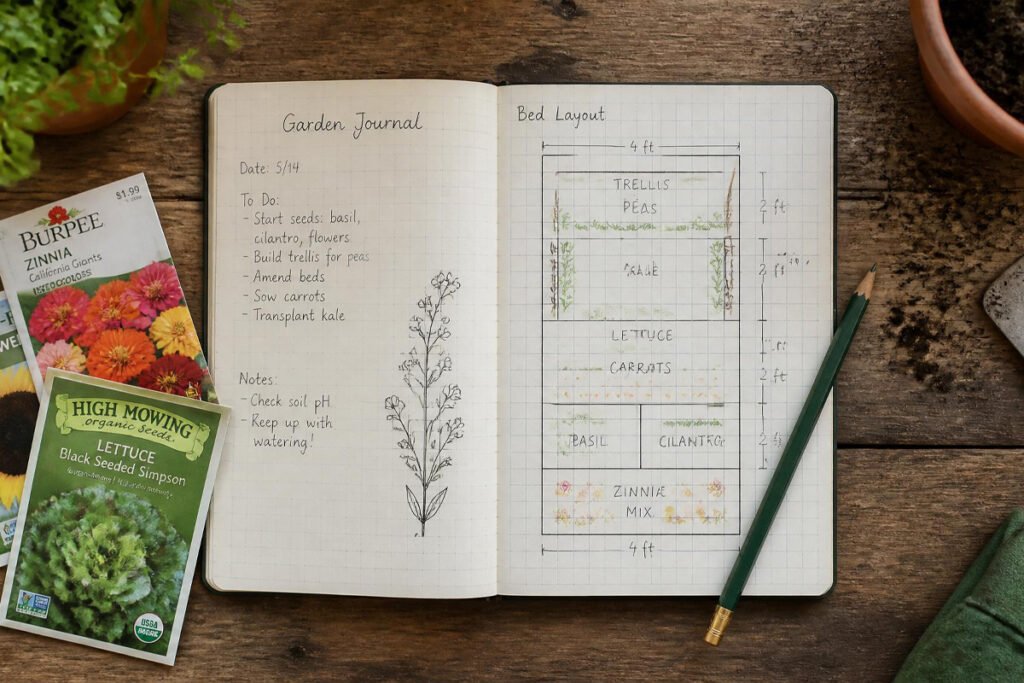
- What have you grown in each spot over the last two years? If you don’t already keep records, start a simple garden journal now — this is the single biggest predictor of rotation success.
- Which crops are non-negotiable for your household? If your family eats tomatoes every week, plan your nightshade bed size around that reality rather than an idealized quarter-garden split.
According to Clemson University’s Home & Garden Information Center, a crop should ideally not return to the same bed for at least three years, since many soil-borne pests can persist in wait of their host that long. That guidance is a useful baseline no matter how many beds you’re working with.
The Main Crop Rotation Groups {#rotation-groups}
Repeat this pattern for each of your beds, moving one group forward each year.
Group 1: Legumes (Peas & Beans)
Overview: Legumes host nitrogen-fixing bacteria on their roots, meaning they add nutrients to soil rather than depleting it. They’re traditionally planted first in a rotation, right before heavy feeders. Key Features:
- Fix atmospheric nitrogen into usable soil nitrogen
- Relatively light feeders themselves
- Fast-growing, good for succession planting Best For: Beds that will host nightshades or brassicas the following year Pros: ✅ Improves soil for the next crop ✅ Low fertilizer needs ✅ Compact varieties available for small beds Cons: ❌ Trellising needed for pole varieties ❌ Susceptible to powdery mildew in humid climates Our Verdict: Legumes are the easiest starting point for a first-time rotation plan, and pairing them with a follow-up crop like tomatoes the next season takes full advantage of the nitrogen boost.
Group 2: Brassicas (Cabbage Family)
Overview: Broccoli, cabbage, kale, and their relatives are heavy feeders prone to shared pests like cabbage worms and clubroot, which is exactly why they need their own rotation slot. Key Features:
- Cool-season crops, often planted spring and fall
- Heavy nitrogen users
- Shared vulnerability to clubroot, a long-lived soil pathogen Best For: Beds enriched with compost the previous season Pros: ✅ High yield in cool weather ✅ Many varieties store well ✅ Pairs well with aromatic companion herbs Cons: ❌ Clubroot can persist in soil for years ❌ Needs consistent moisture Our Verdict: Never skip rotating this group — clubroot is one of the main reasons crop rotation exists in the first place.
Group 3: Nightshades (Tomatoes, Peppers, Eggplant, Potatoes)
Overview: The most commonly overplanted family in home gardens, since tomatoes and peppers are garden favorites that gardeners often default back to the same sunny bed. Key Features:
- Heavy feeders, especially for nitrogen and potassium
- Share vulnerability to blight and verticillium wilt
- Need full sun and consistent watering Best For: Beds that hosted legumes the year before Pros: ✅ High-value harvest per square foot ✅ Long harvest window ✅ Well-suited to raised beds Cons: ❌ High disease pressure if not rotated ❌ Heavy nutrient demand Our Verdict: If you only rotate one family strictly, make it this one — repeated nightshade plantings are the most common cause of declining tomato yields.
Group 4: Roots & Alliums (Carrots, Beets, Onions, Garlic)
Overview: Root vegetables and alliums round out a rotation because they’re comparatively light feeders that help restore soil structure through deep or fibrous rooting. Key Features:
- Loosen and aerate compacted soil
- Light-to-moderate feeders
- Good “reset” crop before returning to legumes Best For: The final year of a 4-year cycle, before the bed returns to legumes Pros: ✅ Improves soil texture ✅ Long storage life ✅ Low disease pressure Cons: ❌ Needs loose, stone-free soil for straight roots ❌ Slower growing than other groups Our Verdict: Pairing carrots with garlic closes out a rotation cycle nicely and sets the bed up for legumes the following spring.
Crop Rotation Comparison Table {#comparison-table}
| Group | Soil Effect | Feeding Level | Typical Rotation Position | Watch For |
|---|---|---|---|---|
| Legumes | Adds nitrogen | Light | Year 1 | Powdery mildew |
| Brassicas | Depletes nitrogen | Heavy | Year 2 | Clubroot |
| Nightshades | Depletes nitrogen & potassium | Heavy | Year 3 | Blight, wilt |
| Roots & Alliums | Improves structure | Light-moderate | Year 4 | Soil compaction |
Crop Rotation for Different Garden Types {#garden-types}
Raised Bed Gardens
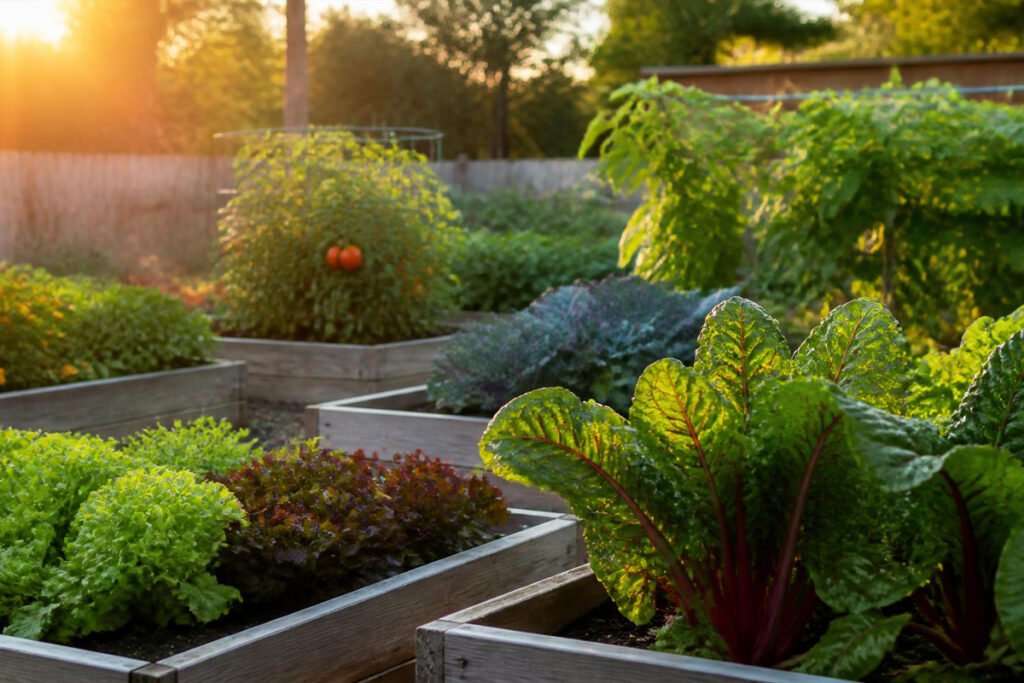
If your setup already follows a raised bed gardening guide, rotation is actually easier than in-ground, since each bed is a clearly defined, self-contained unit. With four beds, assign one plant family group to each and rotate clockwise every season. Gardeners just getting started with raised bed vegetable gardening should sketch their bed layout on paper before the first planting so the rotation sequence is decided in advance, not improvised.
Container Gardens
True soil rotation isn’t practical in pots, but container vegetable gardening still benefits from the same principle. Refresh or replace potting mix each season rather than reusing the same soil for the same plant family repeatedly, and if you have multiple containers, alternate which family goes in which pot year to year. Gardeners following a beginner’s container gardening approach can simplify further by just avoiding two consecutive seasons of nightshades in the same pot.
Small or First-Time Gardens
If you’re just working through a beginner’s guide to starting a vegetable garden, don’t feel pressured into a full 4-year system in year one. Split your space into two or three loose sections, note what went where, and simply avoid repeating a family in the same spot the following season. As the garden matures — see our guide on starting a vegetable garden from scratch — you can formalize the rotation into a full 4-year cycle.
How to Set Up Crop Rotation Correctly {#how-to-set-up}
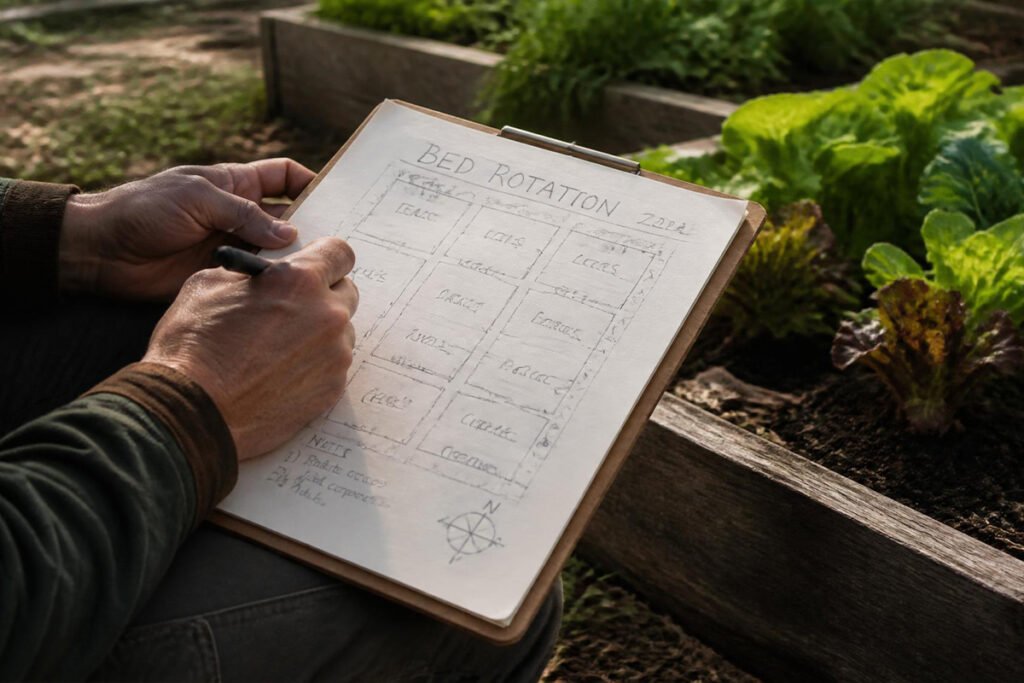
Step 1: Map Your Beds
Sketch every bed or section on paper, numbered or labeled, so you have a fixed reference point for future seasons.
Step 2: Record What Grew Where
Write down every crop planted in each bed this year, sorted by family group, not just crop name.
Step 3: Assign Next Season’s Groups
Move each group one position forward: legumes into last year’s roots bed, brassicas into last year’s legume bed, and so on.
Step 4: Amend Soil for the Incoming Group
Heavy feeders like brassicas and nightshades benefit from a compost top-up before planting; light feeders usually don’t need it. Pairing this with organic fertilizers suited to each group keeps the rotation working with your soil instead of against it.
Step 5: Track and Repeat
At season’s end, update your notes and repeat the cycle. According to the University of Illinois Extension, keeping consistent year-over-year records is one of the most reliable predictors of long-term rotation success — more so than the specific rotation pattern chosen.
Common Crop Rotation Mistakes {#common-mistakes}
Mistake 1: Rotating by crop name instead of plant family. Swapping tomatoes for potatoes doesn’t count as rotation — both are nightshades. Learn the plant family groupings from our companion planting guide so you’re rotating families, not just names.
Mistake 2: Skipping soil prep between rotations. Moving crops around doesn’t replace the need for good soil preparation each season — rotation and soil care work together, not as substitutes for each other.
Mistake 3: Ignoring pest history when planning next year. If a bed had a heavy pest year, that’s valuable data. Cross-reference it with your vegetable garden pest control notes before deciding what goes there next.
Expert Tips {#expert-tips}
Tip 1: Keep a five-year rotation log, not just a one-year plan. Patterns in recurring pest or disease pressure often only become visible after tracking multiple cycles.
Tip 2: Interplant a fast-growing “filler” crop like lettuce or radish between rotation groups if a bed sits empty for a few weeks between plantings — it keeps weeds down without disrupting the rotation.
Tip 3: If a family group takes up more space than the others (most households grow far more nightshades than roots, for instance), size your beds unevenly to match real consumption rather than forcing four equal quarters.
Final Thoughts {#final-thoughts}
Best overall: A 4-year rotation across legumes, brassicas, nightshades, and roots/alliums for anyone with four or more beds. Best for small spaces: A simplified 3-year cycle tracked in a notebook. Best for beginners: Start by just avoiding repeats for two seasons while you build the habit of record-keeping.
Crop rotation pairs naturally with the rest of your garden routine — pencil it in alongside your seasonal planting calendar, keep feeding beds with compost, and stay consistent with watering. None of these techniques work in isolation — rotation just gives the others more to work with each season.
Frequently Asked Questions {#faq}
Do I really need to rotate crops in a small backyard garden? Yes, even a small garden benefits. You don’t need four full beds — splitting your space into two or three sections and avoiding repeats is still far better than no rotation at all.
How long should a full crop rotation cycle last? Most guidance recommends a minimum of three years before a plant family returns to the same soil, with four years being ideal for maximum pest and disease suppression.
Crop rotation vs. companion planting — which one do I need? They’re complementary, not competing. Companion planting groups compatible plants together within a single season; crop rotation moves those same groups to different beds across seasons. Most productive gardens use both.
My tomatoes still got blight even though I rotated — why? Rotation reduces risk but doesn’t eliminate it entirely, especially if blight spores traveled from a neighboring bed or were introduced through infected transplants. Combine rotation with good airflow, mulching, and disease-resistant varieties for the best results.
Do herbs and flowers need to be included in rotation? Most perennial herbs and flowers can stay put, since rotation mainly targets annual vegetables that are replanted every season. Annual herbs grown in the vegetable bed, like basil or dill, can be rotated loosely along with their companion crop.
What if I don’t know what was planted in a bed last year? Start your records now rather than trying to reconstruct history. A single missed year won’t ruin your soil — consistency going forward matters more than a perfect starting point.
Can I rotate crops in raised beds the same way as in-ground gardens? Yes, and it’s often easier, since raised beds have clearly defined boundaries. Follow the same four-group rotation, just move the group assignment to a different raised bed each year instead of a different in-ground section.
Does composting undo the need for crop rotation? No. Composting replenishes nutrients, but it doesn’t address the buildup of family-specific pests and diseases in the soil, which is the problem rotation is designed to solve.
How do I rotate crops if I only have two garden beds? Split each bed loosely by family and alternate between two simplified groups — for example, nightshades/brassicas in one bed and legumes/roots in the other — swapping which bed hosts which group each season.
Author: Pamela Reese Last Updated: July 2026