If you have ever tried to level a freshly tilled bed with a flimsy leaf rake, you already know the frustration. The tines bend, the soil clumps, and a ten-minute job turns into an hour. Choosing the best garden rakes is less about price and more about matching the head, tines, and handle to the work in front of you.
Most gardeners end up with the wrong rake because the word “rake” covers at least four very different tools. A rake built for fall leaves cannot move compost, and a heavy bow rake will shred a lawn. Mixing them up wastes effort and, over a season, wears out your wrists and back.
This guide sorts out the differences, ranks five proven rake types, and shows you how to use each one correctly. If you are still building your tool shed, our guide to the best garden hand tools and the list of best gardening tools for vegetable gardens are good companions to this article.
Quick Answer
The best garden rake depends on the job. Soil prep, compost, and mulch spreading call for a steel bow rake with short, rigid tines. Final seedbed leveling is easier with a wide landscape rake. Leaves and light debris need a flexible leaf rake, and tight corners or containers need a short-handled hand rake. For one rake only, choose a forged-steel bow rake with a fiberglass handle: it handles the widest range of garden tasks and lasts for years.
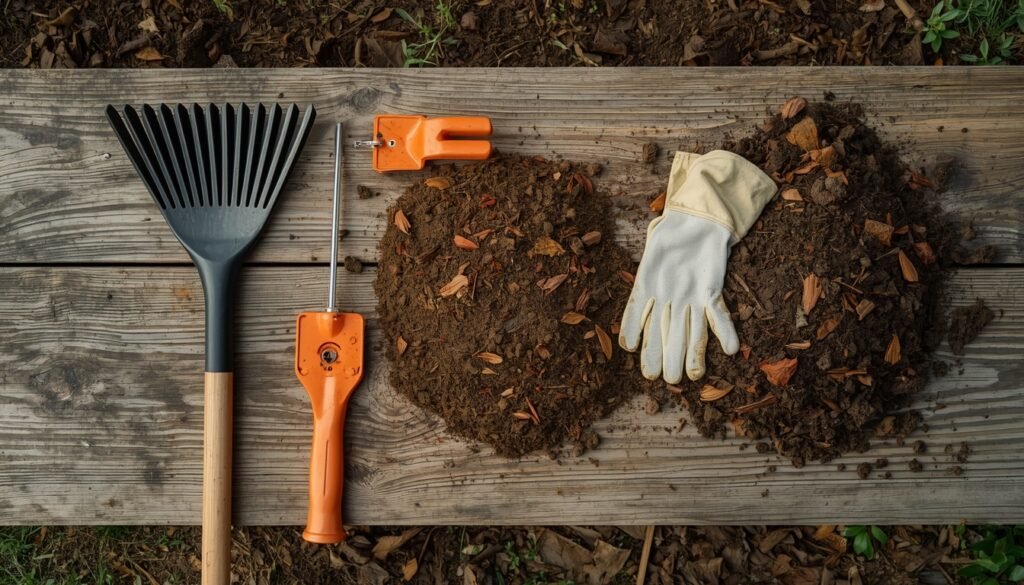
Table of Contents
- What Is a Garden Rake and How Does It Work?
- How to Choose the Right Garden Rake
- The 5 Best Garden Rakes
- Comparison Table
- Best Garden Rakes for Different Garden Jobs
- How to Use a Garden Rake Correctly
- Common Mistakes to Avoid
- Expert Tips
- Final Verdict
- Frequently Asked Questions
What Is a Garden Rake and How Does It Work?
A garden rake is a long-handled tool with a row of tines mounted on a head. The tines either pull material toward you or break up and level the surface. The shape of the head and the stiffness of the tines decide what the rake can do.
The tool most people mean by “garden rake” is the bow rake. Its head connects to the handle through a curved, bow-shaped frame, which adds strength and flexes just enough to absorb shock. Short, stiff steel tines break up crusted soil, and the flat back of the head works as a leveling blade.
A leaf rake is the opposite design. It has a wide fan of long, flexible tines meant to skim across the surface and gather light material without digging in. A landscape rake, sometimes called a level-head rake, has a wide flat head with a straight edge for smoothing large areas. A hand rake is a miniature version for tight spots.
Understanding the best garden rakes for your yard starts with the surface you are working on. Hard soil and heavy material need steel. Loose debris needs flexibility. If you are prepping beds from scratch, pair your rake with a good spade or shovel and read our guide to raised bed vegetable gardening for planning.
How to Choose the Right Garden Rake
Before buying, ask yourself three simple questions. Your answers will narrow the options quickly.
1. What material will I move most often? Soil, compost, and gravel need a bow rake with steel tines. Leaves, grass clippings, and light mulch need a leaf rake. If you mostly spread wood chips, see our guide to the best mulch for vegetable gardens first, since mulch type affects which rake works best.
2. How large is my garden? A small bed or container garden does not need a 24-inch head. Wide heads cover more ground but are harder to control in tight rows. Handle length matters too: aim for a handle that reaches roughly your chin so you can rake without stooping.
3. Can I handle the weight? Forged steel lasts longest but weighs more. Fiberglass handles cut weight and resist rot. Ergonomics matter more than most buyers expect, and the NIOSH ergonomics resources explain why tool weight and posture reduce strain during repetitive yard work.
Two quick buying rules help. First, check how the tines attach to the head: welded or forged joints outlast clip-on or riveted ones. Second, test the grip if you can. A rubber or ribbed grip reduces blisters and slipping.
The 5 Best Garden Rakes
These five picks cover every major garden job. Rather than naming one brand, we rank by rake type, so you can choose a tested model that fits your budget.
1. Forged-Steel Bow Rake — Best Overall
Overview: The forged-steel bow rake is the workhorse of the garden. Its thick head and short tines break up crusted soil, pull stones out of beds, and spread compost in a single pass. If you own only one rake, this is it. Expect a weight between three and five pounds, with a head about 14 to 16 inches wide.
Key Features:
- Forged or heavy-gauge welded steel head
- Short, rigid tines for soil and gravel
- Flat back for leveling
- Fiberglass or hardwood handle, roughly 54 to 60 inches
Best For: Bed preparation, spreading compost, moving gravel
Pros: ✅ Extremely durable ✅ Versatile for soil, compost, and gravel ✅ Flat back doubles as a leveling tool
Cons: ❌ Heavier than other types ❌ Too aggressive for lawns
Our Verdict: For vegetable gardeners, this is the best all-purpose option. It pairs naturally with organic fertilizers and soil amendments when you are working them into a bed. Buy it first and add specialty rakes later.
2. Lightweight Fiberglass-Handled Bow Rake — Best for Beginners
Overview: This version trades some steel mass for a lighter, more comfortable build. The head is slightly thinner and the fiberglass handle reduces fatigue over a long afternoon. It copes well with regular garden soil, though it may flex in heavy clay.
Key Features:
- Lighter steel or alloy head
- Rubber-coated or ribbed grip
- Typically more affordable
- Easy to store and carry
Best For: Small gardens, first-time gardeners, raised beds
Pros: ✅ Easy on wrists and shoulders ✅ Budget-friendly ✅ Good for raised beds
Cons: ❌ Can bend in rocky or compacted soil ❌ Shorter lifespan under heavy use
Our Verdict: A smart starter rake, especially for raised bed kits where soil is loose and rocks are rare. Upgrade later if you take on bigger projects.
3. Landscape (Level-Head) Rake — Best for Leveling
Overview: A landscape rake has a wide, flat head, often 24 to 36 inches, with a straight edge on one side and tines on the other. It is designed for smoothing large areas, finishing seedbeds, and spreading topsoil or mulch evenly. It is less suited to digging or breaking hard ground.
Key Features:
- Wide flat head for fast coverage
- Straight edge for leveling
- Tine side for light raking
- Longer handle for reach
Best For: Seedbeds, topsoil spreading, large garden plots
Pros: ✅ Covers ground quickly ✅ Produces a smooth, even finish ✅ Great for mulch
Cons: ❌ Bulky to store ❌ Not built for heavy digging
Our Verdict: Ideal when you want a clean, flat surface before sowing. If you grow root crops, such as those in our potato growing guide, a smooth seedbed makes planting rows much easier.
4. Flexible Leaf Rake — Best for Cleanup
Overview: The leaf rake is a fan of flexible tines, usually plastic, poly, or thin steel, built to gather light debris without damaging the surface. It is the best tool for fall cleanup, spent plant debris, and grass clippings. It is not a soil tool, and forcing it to act like one will only break tines.
Key Features:
- Wide 22 to 30 inch fan
- Flexible tines that spring back
- Very light, often under two pounds
- Rubberized grip on better models
Best For: Fall leaves, clippings, light debris
Pros: ✅ Very light ✅ Gentle on lawns and beds ✅ Inexpensive
Cons: ❌ Useless for soil ❌ Plastic tines can snap
Our Verdict: Every yard needs one, but it should complement, not replace, a bow rake. Raked leaves also make excellent compost material, so pair it with one of the best compost tumblers.
5. Short-Handled Hand Rake — Best for Tight Spaces
Overview: A hand rake is a compact tool for working between plants, in containers, and under shrubs. Some have rigid claw-like tines for loosening surface crust, and others have flexible tines for gathering debris. It is the rake you reach for when a full-size tool would trample your crops.
Key Features:
- 12 to 20 inch overall length
- Rigid or flexible tine options
- Comfortable D-grip or short handle
- Fits in a bucket or tool belt
Best For: Containers, tight beds, between rows
Pros: ✅ Precise control ✅ Easy to store ✅ Ideal for container gardens
Cons: ❌ Slow for large areas ❌ Needs a kneeling position
Our Verdict: A small tool that earns its keep in crowded beds. Use it with a comfortable garden kneeler and a good pair of gardening gloves to protect knees and hands.
Comparison Table
| Rake Type | Best For | Typical Weight | Tine Style | Skill Level |
|---|---|---|---|---|
| Forged-Steel Bow Rake | Soil, compost, gravel | 3–5 lb | Short, rigid steel | All levels |
| Lightweight Bow Rake | Raised beds, small plots | 2–3 lb | Short, lighter steel | Beginner |
| Landscape Rake | Leveling, seedbeds, topsoil | 3–4 lb | Wide, short steel | Intermediate |
| Leaf Rake | Leaves, clippings | Under 2 lb | Long, flexible | Beginner |
| Hand Rake | Containers, tight beds | Under 1 lb | Rigid or flexible | Beginner |
Best Garden Rakes for Different Garden Jobs
Raised Beds and Vegetable Plots
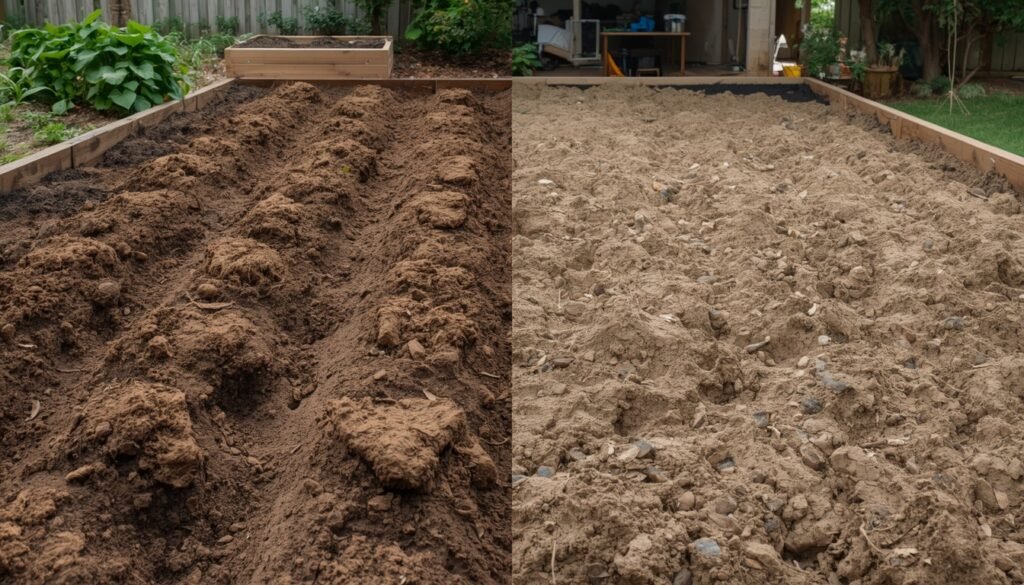
Raised beds hold loose, amended soil, so a lightweight bow rake or a short-handled hand rake is usually enough. Work from the edge to avoid compacting the surface. Use the tines to break up crust and the flat back to smooth the top before planting. Our guides to raised bed materials and kits and best garden soil explain how to fill beds properly, and testing first with a soil pH kit prevents surprises.
Mulching and Weed Control
Spreading mulch evenly is where a landscape or bow rake shines. Pull the material into a layer about two to three inches deep, keeping it a few inches from stems. A rake also helps you collect weed debris after hoeing. Combine your rake with the best garden hoes and our full weed control guide for a low-effort routine. For material choices, see the best mulches for vegetable gardens.
Fall Cleanup and Season Prep
End-of-season cleanup is where leaf rakes and bow rakes work together. Gather leaves and spent vines with a flexible rake, then use the bow rake to level beds and clear stones. Remove diseased plant material rather than composting it, and plan your next season with a crop rotation guide. If frost is coming, protect late crops using the best row covers.
How to Use a Garden Rake Correctly
Proper technique saves your back and gives a better finish. Good form matters just as much as the rake itself. For general safety guidance on lifting and repetitive motion, the NIOSH resources are a reliable starting point.
Step 1: Prepare the Area
Clear large stones, sticks, and old roots by hand. Dry soil is easier to work than soggy soil, so wait a day or two after heavy rain. Wearing gloves prevents blisters.
Step 2: Loosen the Surface
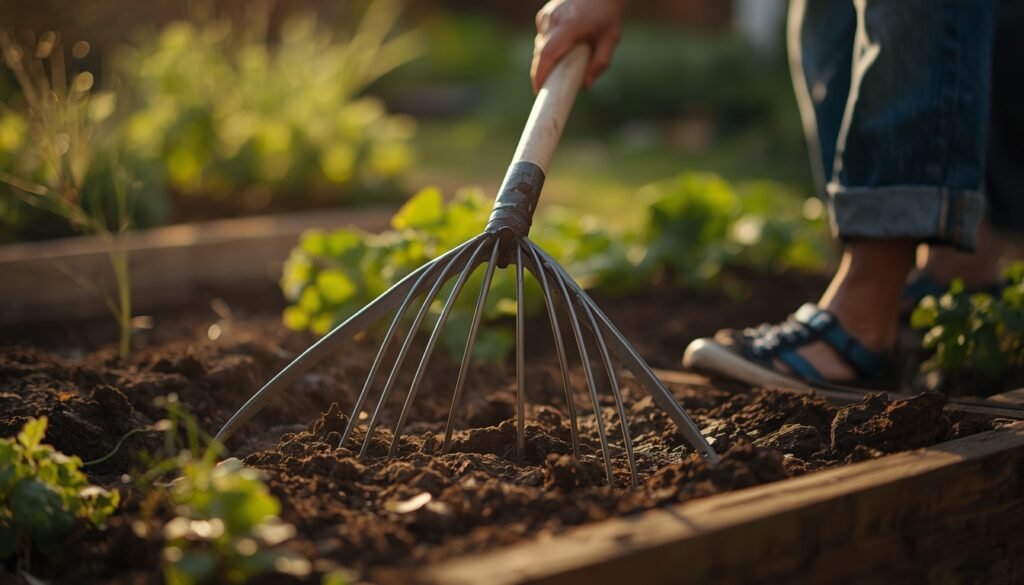
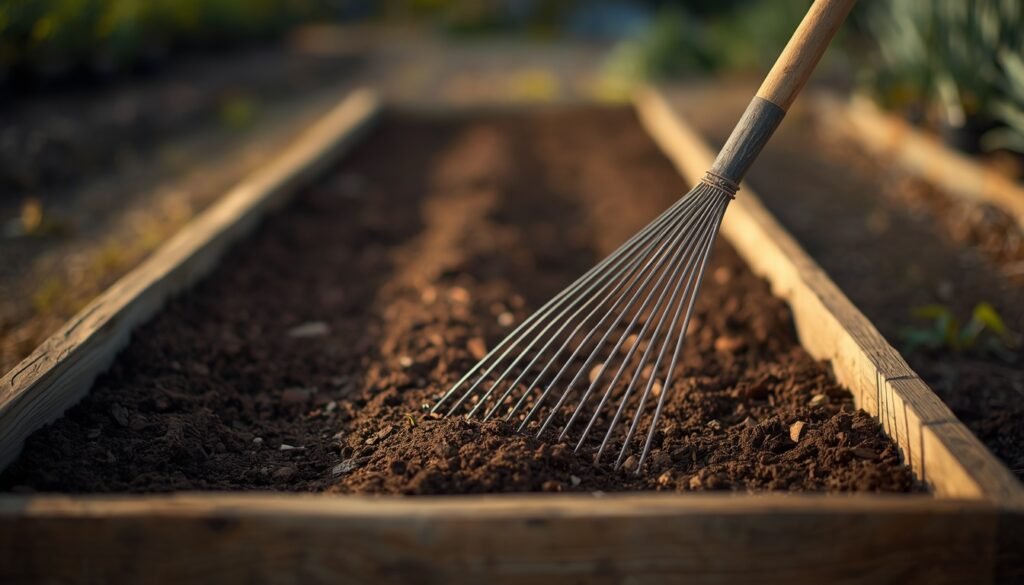
Hold the rake with one hand near the top of the handle and the other about halfway down. Turn the head tines-down and pull the rake toward you in short strokes to break up crust and clods.
Step 3: Spread and Level
Place compost or topsoil in piles, then flip the rake so the flat back faces down. Push and pull in smooth, overlapping passes until the surface is even. Work in one direction, then cross over at a right angle.
Step 4: Check the Grade
Step back and look for high or low spots. Fill dips with soil from nearby, and shave bumps with the rake’s edge. A level bed drains evenly and plants more consistently.
Step 5: Finish and Clean
Make a final light pass with the tines to create a fine seedbed. Clean soil from the head, dry it, and hang the rake to prevent rust.
Common Mistakes to Avoid
Using a leaf rake on soil. Flexible tines bend, snap, and barely move the surface. If you keep breaking tines, you are using the wrong tool. A bow rake does this job better, and a sturdy hand tool set covers detail work.
Raking wet, heavy soil. Wet soil clumps and compacts, which undoes your effort. If your beds stay soggy, see our container vegetable gardening guide for an alternative approach.
Buying the wrong handle length. A handle that is too short forces you to stoop, while one that is too long reduces control. Match the handle to your height, and use a garden kneeler for low work. Other useful add-ons appear in our list of garden gadgets and accessories.
Expert Tips
Keep the head clean. Packed soil and sap cause rust and dull the edges. A quick wipe and a light coat of oil after each season keeps tines sharp and the head smooth.
Rake in two directions. Crossing your passes at right angles reveals low spots you would miss otherwise. It also breaks up clods more thoroughly than a single direction.
Let the weight work. A good bow rake does most of the work through its own mass. Pulling smoothly with a relaxed grip is faster and easier than forcing short, choppy strokes. For heavier loads, a wheelbarrow saves repeated trips.
Final Verdict
The best garden rakes are the ones matched to the job. Here is the short version:
- Best Overall: Forged-steel bow rake
- Best Budget / Beginners: Lightweight fiberglass-handled bow rake
- Best Premium for Large Plots: Landscape (level-head) rake
- Best for Cleanup: Flexible leaf rake
- Best for Small Spaces: Short-handled hand rake
If you buy only one, make it the forged-steel bow rake. Build the rest of your toolkit around it as your garden grows. Next, read our guides to garden hoses, seed starting supplies, and how to grow tomatoes to finish setting up your season.
Frequently Asked Questions
Do I need more than one garden rake? Most gardeners benefit from two: a bow rake for soil and a leaf rake for debris. Add a hand rake if you grow in containers or tight beds.
What is the difference between a bow rake and a leaf rake? A bow rake has short, rigid steel tines for soil, compost, and gravel. A leaf rake has long, flexible tines for gathering light debris. Using one in place of the other usually damages the tool or the surface.
How wide should a garden rake head be? For most home gardens, a 14 to 16 inch head balances coverage and control. Larger plots may justify a wider landscape rake, while raised beds and containers work better with narrower heads.
How long should a rake handle be? A handle between 54 and 60 inches suits most adults. Choose one that reaches roughly your chin so you can rake without bending forward.
Can I use a bow rake on my lawn? It is not recommended. The rigid tines can tear grass and scar the soil. Use a leaf rake for lawns, and reserve the bow rake for beds, paths, and soil work.
Fiberglass, steel, or wood handle: which is best? Fiberglass is light and rot-resistant, steel is strongest but heavy, and hardwood feels comfortable but needs care. For most gardeners, fiberglass offers the best balance.
How do I stop my rake from rusting? Brush off soil after each use, dry the head, and store it indoors or under cover. A light coat of oil on the metal at season’s end helps considerably.
Can a rake help with weed control? Yes. A rake removes small weeds and debris and levels mulch that suppresses new growth. Combine it with mulching and regular hoeing, and see our weed control guide for a full plan.
Author: Pamela Reese
Last Updated: November 2026