A single unexpected frost can undo weeks of careful growing overnight, and flea beetles or cabbage moths can shred young seedlings before you’ve even noticed them. Row covers solve both problems with the same simple idea: a lightweight fabric barrier laid directly over plants (or supported on hoops) that lets sunlight, air, and water through while blocking cold and insects out.
This guide compares the best row covers for 2026, from ultra-light insect barriers to heavy frost blankets rated for near-freezing protection. If you’re timing plantings around temperature, pair this with our soil thermometers guide, and for the pest side of the equation, see our organic pest control guide.
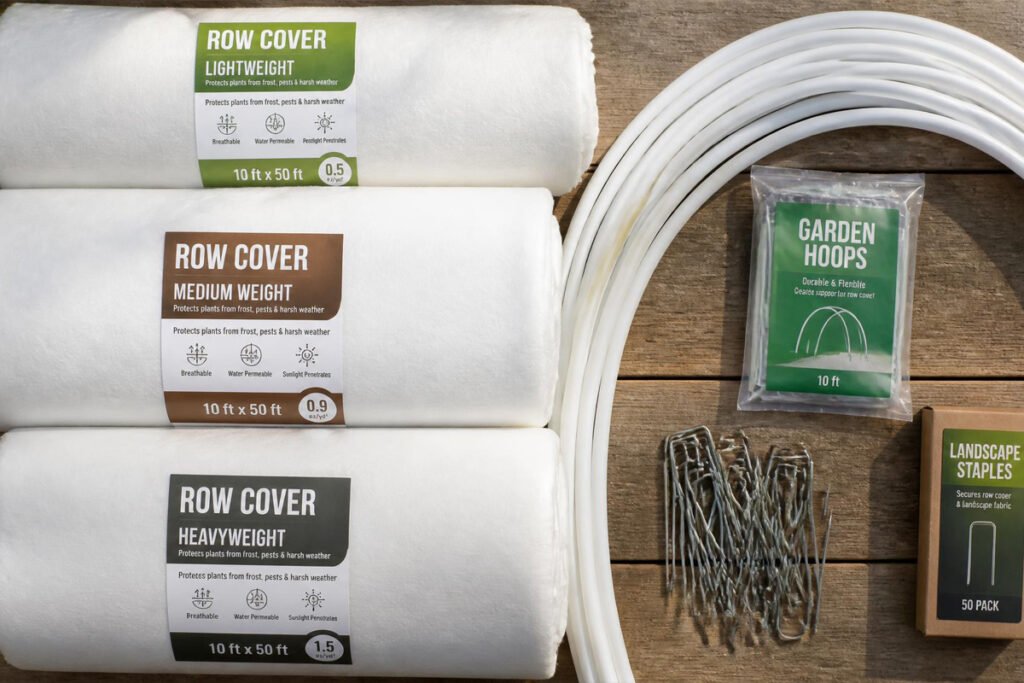
Quick Picks
| If you need… | Best pick |
|---|---|
| Best all-around, most versatile | Agribon AG-19 Floating Row Cover |
| Lightest, best insect barrier | Agribon AG-15 |
| Mid-weight frost protection | Agribon AG-30 |
| Maximum cold protection, overwintering | Agribon AG-70 |
| Budget-friendly alternative | Agfabric Plant Freeze Protection Cover |
| Large gardens, bulk coverage | JUNKOGO Plant Freeze Protection Cover |
How Row Covers Actually Work
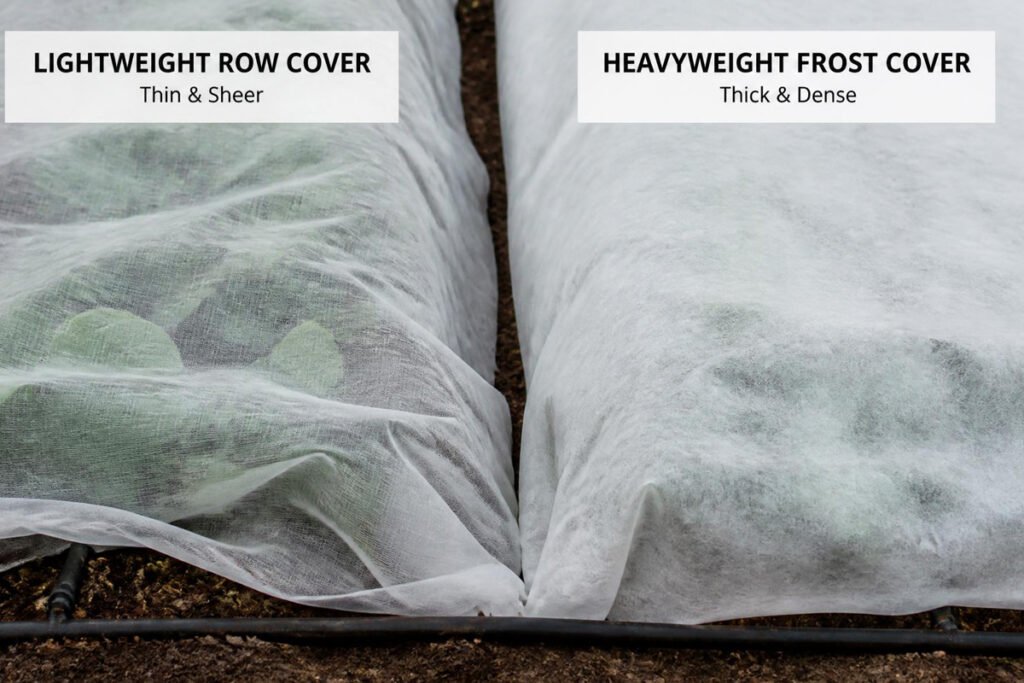
Row covers are spun-bond, non-woven polypropylene fabric — essentially a breathable blanket for your plants. Sunlight, rainfall, and air all pass through the material, so plants keep growing normally underneath, while the fabric traps a thin layer of warmer air near the soil and physically blocks insects from reaching leaves and stems to feed or lay eggs. The trade-off is a numbers game: heavier fabric traps more heat and blocks more cold, but also lets less light through, which matters most during the shorter days of spring and fall when plants need all the light they can get.
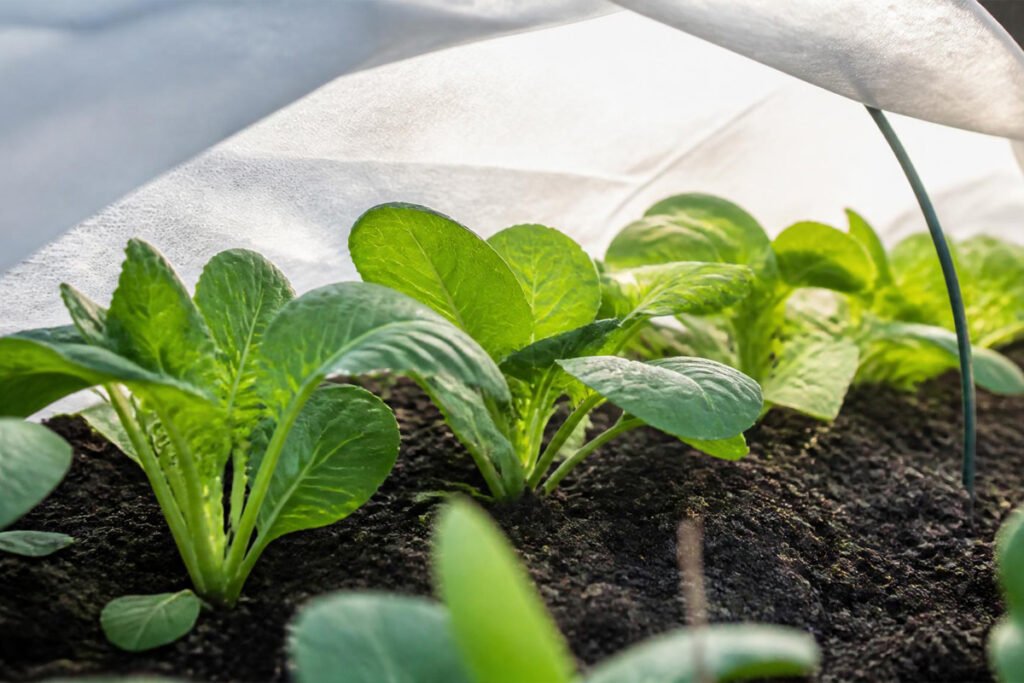
Row covers can be laid directly over low crops (called “floating,” since the plants gently push the fabric up as they grow) or supported over hoops for taller plants, giving more headroom and reducing the chance of the fabric weighing down delicate foliage.
How to Choose the Right Weight
Row cover weight is measured in ounces per square yard, and it directly determines what job the fabric does best:
- Ultra-light (Agribon AG-15, ~0.45 oz/sq yd): Built almost entirely for insect exclusion, with about 95% light transmission and negligible frost protection — ideal for summer pest barriers on heat-sensitive greens.
- Light-to-mid (Agribon AG-19, ~0.55 oz/sq yd): The most balanced, versatile option, offering roughly 2–4°F of frost protection at about 85% light transmission — a solid choice for spring and fall use.
- Heavy (Agribon AG-30 to AG-70): Provides 4–8°F or more of frost protection, but with light transmission dropping as low as 30%, making these best reserved for overwintering or serious cold snaps rather than active growing season use.
Match the weight to the season, not just the temperature — a heavy cover in early spring can actually slow growth by blocking too much light exactly when seedlings need it most.
Best Row Covers Available
1. Agribon AG-19 Floating Row Cover
Overview: Widely considered the most balanced option for hobby gardeners, the AG-19 threads the needle between meaningful frost protection and enough light transmission to keep plants actively growing underneath — the reason it’s the default recommendation for gardeners who only want to buy one weight.
Key Features:
- Roughly 2–4°F frost protection
- About 85% light transmission
- Doubly bonded seams for durability
- UV-stabilized for extended reusability across seasons
Best For: Spring and fall use, general frost and pest protection for most vegetable crops.
Pros: ✅ Versatile enough for most seasonal needs ✅ Reusable across multiple growing seasons ✅ Good balance of protection and light transmission Cons: ❌ Not heavy enough for hard freezes ❌ Some light reduction versus the lightest option
Our Verdict: If you only buy one row cover, this is it — flexible enough to handle both a light frost and everyday pest pressure without significantly slowing plant growth.
2. Agribon AG-15
Overview: The lightest weight in the lineup, AG-15 is built almost entirely for insect exclusion rather than cold protection, with roughly 95% light transmission that makes it nearly invisible to plant growth underneath — genuinely useful during the growing season when frost isn’t the concern but flea beetles and cabbage moths are.
Key Features:
- Roughly 0.45 oz/sq yd, the lightest available weight
- ~95% light transmission
- Minimal frost protection (around 2°F)
- Excellent airflow, won’t trap excess heat
Best For: Summer pest barriers on heat-sensitive greens and brassicas where frost isn’t a concern.
Pros: ✅ Barely affects plant growth underneath ✅ Excellent insect barrier ✅ Won’t overheat plants in summer Cons: ❌ Minimal frost protection ❌ Lighter fabric tears more easily than heavier weights
Our Verdict: Pair this with your organic pest control routine as a physical barrier that reduces how often you need to spray in the first place.
3. Agribon AG-30
Overview: Stepping up in weight, the AG-30 trades some light transmission for meaningfully more frost protection, landing in the sweet spot for late-fall crops or an unexpected cold snap that a lighter cover simply can’t handle.
Key Features:
- 4–6°F frost protection
- Roughly 70% light transmission
- Reinforced for tear resistance
- Suitable for direct or hoop-supported use
Best For: Late fall protection or crops that need to push through colder nights than AG-19 can handle.
Pros: ✅ Noticeably better frost protection than lighter weights ✅ Still allows reasonable light through ✅ Durable, tear-resistant construction Cons: ❌ Reduced light limits ideal use to cooler, shorter-day periods ❌ Heavier to handle over larger areas
Our Verdict: The right upgrade once a lighter cover isn’t holding up against real cold — especially useful for extending a fall harvest a few extra weeks.
4. Agribon AG-70
Overview: The heaviest standard weight available, AG-70 is built specifically for overwintering container stock and serious cold protection, trading the vast majority of light transmission for as much as 8°F or more of frost buffer.
Key Features:
- 8°F+ frost protection in favorable conditions
- Roughly 30% light transmission
- Thermally bonded, reinforced construction
- Built for extended winter coverage rather than active growth periods
Best For: Overwintering plants, protecting dormant crops, or extreme cold snaps where growth isn’t the priority — survival is.
Pros: ✅ Maximum cold protection available in this category ✅ Durable for extended winter use ✅ Reliable for dormant or overwintering plants Cons: ❌ Far too little light for actively growing plants ❌ Overkill for routine spring/fall frost
Our Verdict: Reserve this for genuine winter protection, not general seasonal use — it’s a specialized tool for a specific job, not an everyday cover.
5. Agfabric Plant Freeze Protection Cover
Overview: A more budget-friendly alternative to name-brand Agribon, Agfabric delivers comparable frost protection performance in a similar weight class, making it a practical choice for gardeners covering larger areas without the premium per-roll price.
Key Features:
- Comparable frost protection to mid-weight Agribon options
- Available in multiple large roll sizes
- Freeze protection suited to typical seasonal frost
- Reusable fabric construction
Best For: Gardeners covering larger areas who want solid protection without paying premium brand pricing.
Pros: ✅ Budget-friendly for the coverage area ✅ Adequate frost protection for typical seasonal use ✅ Available in large sizes for bigger gardens Cons: ❌ Slightly less refined seam construction than premium brands ❌ Less established track record than Agribon specifically
Our Verdict: A sensible way to cover a larger garden without the cost scaling as steeply — pairs well with raised bed materials across multiple beds.
6. JUNKOGO Plant Freeze Protection Cover
Overview: Sold in large roll sizes designed for bigger gardens, orchards, or multiple beds at once, JUNKOGO’s freeze protection cover prioritizes bulk coverage — a practical pick if you’re outfitting an entire vegetable plot rather than a single row.
Key Features:
- Large roll sizes suited to bigger gardens
- Freeze and shade protection in one fabric
- Suitable for outdoor vegetables, trees, and greenhouse use
- Reusable across multiple seasons
Best For: Larger gardens, orchards, or greenhouse setups needing bulk fabric coverage.
Pros: ✅ Covers significant ground area per roll ✅ Doubles as light shade cloth in summer heat ✅ Versatile across garden, tree, and greenhouse use Cons: ❌ Bulkier to store and handle than smaller rolls ❌ Overkill if you’re only covering a small bed or two
Our Verdict: If you’re managing more than a couple of beds, buying in bulk here is more practical than piecing together several smaller rolls.
Comparison Table
| Row Cover | Best For | Frost Protection | Light Transmission | Weight Class |
|---|---|---|---|---|
| Agribon AG-19 | Most versatile, spring/fall | ~2–4°F | ~85% | Light-mid |
| Agribon AG-15 | Insect barrier, summer use | Minimal | ~95% | Ultra-light |
| Agribon AG-30 | Late fall, colder nights | ~4–6°F | ~70% | Mid-heavy |
| Agribon AG-70 | Overwintering, extreme cold | 8°F+ | ~30% | Heaviest |
| Agfabric Freeze Cover | Budget, larger areas | Comparable to mid-weight | Moderate | Mid |
| JUNKOGO Freeze Cover | Bulk coverage, big gardens | Freeze & shade | Moderate | Mid-heavy |
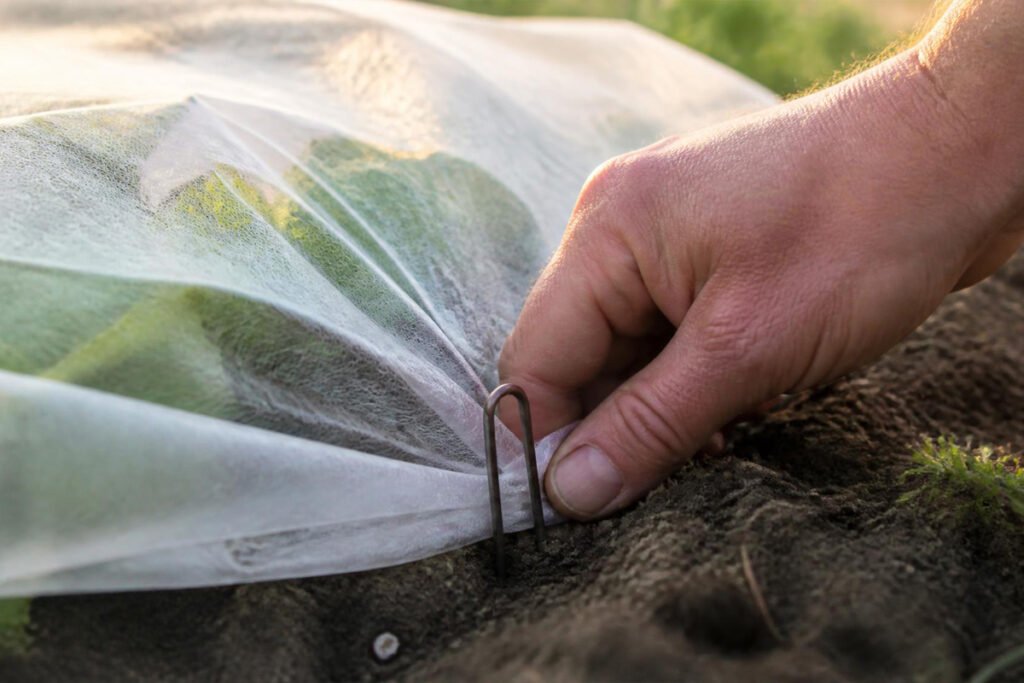
[IMAGE 4 — In Use | Alt text: “row cover draped over vegetable garden bed with hoops”]
Best Row Covers for Different Situations
Protecting Seedlings and New Transplants
A lightweight cover like AG-19 shields tender transplants from both a light frost and early-season pests while they establish, and pairs naturally with the timing guidance in our soil thermometers guide.
Insect Exclusion During the Growing Season
AG-15’s near-total light transmission means it can stay on for weeks during active pest pressure without noticeably slowing growth — a physical-barrier complement to the treatments in our organic pest control guide.
Extending the Fall Harvest
A mid-to-heavy weight like AG-30 buys extra weeks of harvest by buffering against the frosts that would otherwise end the season, especially effective over raised beds that already retain heat better than in-ground soil.
Common Mistakes
- Using too heavy a cover during active growth. A heavy frost blanket in early spring can block enough light to noticeably slow seedling development — match the weight to the actual temperature threat, not just “more protection is always better.”
- Forgetting to remove covers during flowering on insect-pollinated crops. Squash, cucumbers, and other pollinator-dependent vegetables need bees to reach the flowers — leaving an insect barrier on through bloom can prevent pollination entirely. Time removal around flowering, and see our pollinator-friendly plants guide for more on supporting pollinators nearby.
- Not securing the edges properly. Wind can lift loose row cover edges, letting cold air and pests underneath despite the fabric being in place. Weigh down or pin every edge, not just the corners.
Expert Tips
- Keep a couple of different weights on hand rather than one all-purpose cover. A light AG-15 for summer pest pressure and a mid-weight AG-19 or AG-30 for shoulder-season frost covers most situations without over- or under-protecting.
- Use hoops for taller or more delicate crops. Direct floating coverage works for low, sturdy plants, but taller or more fragile crops benefit from hoop support that keeps fabric weight off the foliage entirely.
- Store covers clean and dry between seasons. Dirt and moisture trapped in folded fabric can encourage mildew, shortening the fabric’s usable lifespan — similar to the storage habits covered in our garden storage guide.
Final Thoughts
Best overall: The Agribon AG-19 covers the widest range of seasonal needs without significantly limiting plant growth. Best for pest control: The Agribon AG-15’s near-total light transmission makes it easy to leave on for extended insect protection. Best for serious cold: The Agribon AG-70 handles overwintering and extreme cold protection that lighter covers simply can’t.
Whatever you choose, time your coverage around your actual crops’ needs — check soil and air temperature trends with a soil thermometer, and remember to remove insect barriers during flowering on crops that need pollinators.
Frequently Asked Questions
Do I need different row covers for frost versus insects, or does one cover do both? A single mid-weight cover like AG-19 handles both reasonably well, but dedicated ultra-light covers (AG-15) work better for insect exclusion without limiting light, while heavier covers (AG-30+) are more effective specifically for frost.
Will a row cover block bees from pollinating my plants? Yes — any row cover left on through flowering will prevent pollinators from reaching the blooms on crops like squash, cucumbers, and melons. Remove covers once flowering begins on pollinator-dependent crops, or use them only before and after the bloom period.
How much frost protection does row cover actually provide? It depends on weight: light covers offer only 1–2°F of buffer, while heavier weights can provide 6–8°F or more. No row cover fully prevents frost damage in a hard freeze — it buys a margin, not full immunity.
Can I reuse row covers season after season? Yes, most quality row covers are UV-stabilized and designed for multi-season reuse if stored clean and dry between uses. Tears and UV degradation over years will eventually reduce their effectiveness.
Do row covers need to touch the plants, or should they be supported? Lightweight covers can “float” directly on low, sturdy plants without damage, but taller or more delicate crops benefit from hoop supports that keep the fabric’s weight off the foliage.
What’s the difference between row cover and shade cloth? Row cover is primarily designed for frost and insect protection while allowing high light transmission. Shade cloth is built specifically to block a percentage of sunlight for heat-sensitive plants — some heavier row covers can double as light shade cloth, but they’re not the same product.
How do I secure row cover edges properly? Use landscape staples, sandbags, boards, or soil mounded along the edges — anything that keeps wind from lifting the fabric and letting cold air or insects underneath.
Can row covers be used in a greenhouse or high tunnel too? Yes, row covers are commonly used as an additional inner layer inside greenhouses or high tunnels during particularly cold nights, adding an extra buffer beyond the structure alone.
What weight row cover should I start with if I’m new to this? AG-19 (or a comparable mid-weight from another brand) is the most commonly recommended starting point — versatile enough to handle both light frost and general pest pressure without needing multiple weights right away.
Does row cover work for warm-season crops like tomatoes and peppers? Yes, particularly early in the season to protect transplants from a late frost, or to shield young plants from pests before they’re established. Once temperatures are reliably warm, most warm-season crops don’t need continued frost coverage.
Author: Pamela Reese Last Updated: August 2026