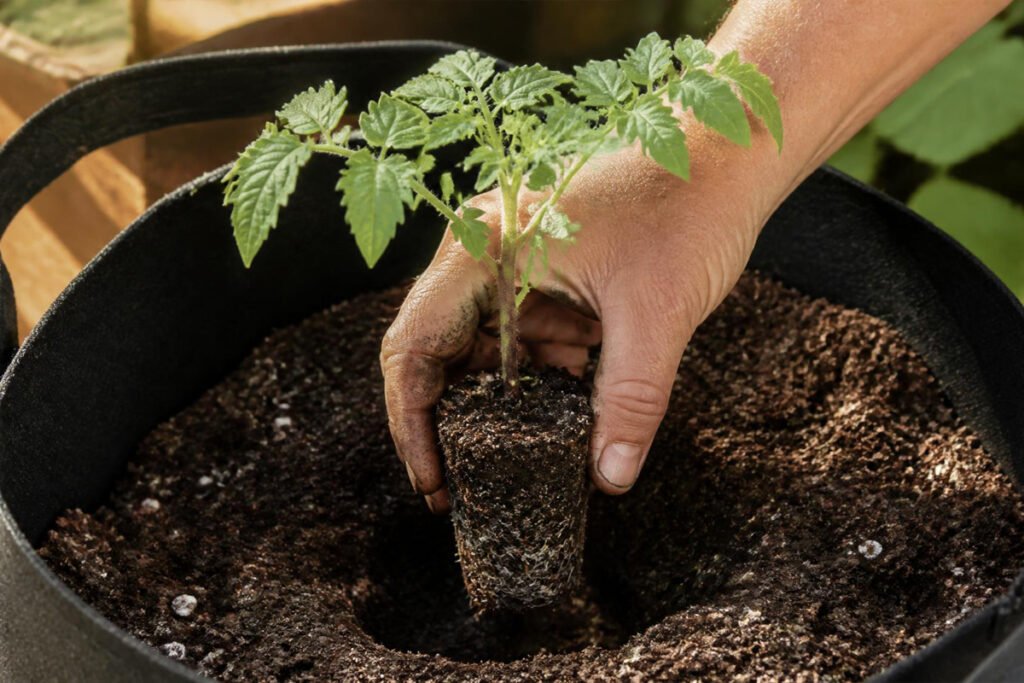
If you’ve ever pulled a tomato plant out of a plastic pot and found the roots circling endlessly around the inside wall, you already understand the problem grow bags solve. Plastic containers trap roots against a smooth surface, and once they hit that wall, they just keep circling instead of branching out — a condition called root-bound growth that stunts plants and limits how much water and nutrients they can actually take up.
Fabric grow bags fix this through a simple mechanism: breathable material lets roots “air prune” naturally at the edge instead of circling, which forces the plant to grow a denser, more fibrous root system. This guide compares the best grow bags for vegetable gardening in 2026, from budget multi-packs to premium recycled-fabric options. If you’re deciding between grow bags and a permanent structure, our raised bed materials guide covers that comparison, and if you’re just getting your plants started, pair this with our seed starting supplies guide.
Quick Picks
| If you need… | Best pick |
|---|---|
| Best all-around value | VIVOSUN 5-Pack 5-Gallon Grow Bags |
| A raised-bed alternative for larger plots | Smart Pots Big Bag Bed |
| Premium, recycled-material construction | Root Pouch 5-Gallon |
| Budget multi-pack | 247Garden Fabric Pots |
| Maximum durability, heaviest fabric | AC Infinity Heavy Duty (500G) |
| Small pots for seedlings & herbs | VIVOSUN 1-Gallon Self-Adhesion |
| All-in-one starter kit | JERIA 5-Gallon with Labels |
Why Grow Bags Work: The Air-Pruning Effect
Grow bags aren’t just a lightweight alternative to plastic pots — the breathable fabric changes how roots actually develop. When a root tip reaches the edge of a fabric bag, exposure to air stops its forward growth, which triggers the plant to send out new branching roots instead of one root that just keeps circling. The result is a denser, more fibrous root system that takes up water and nutrients more efficiently than a root-bound plant ever could.
The trade-off is that this same breathability means grow bags dry out faster than plastic pots, so watering frequency needs to increase — something worth planning for alongside your watering can or irrigation setup rather than an afterthought.
How to Choose the Right Grow Bag
Before buying, consider three things:
- Fabric weight. Look for 300 grams per square meter (GSM) or heavier — lighter fabric tends to break down after a single season, especially with regular sun exposure. Premium bags in the 500 GSM range last multiple seasons.
- Size for your crop. Shallow-rooted vegetables like lettuce and peppers do fine in 3–5 gallon bags, while tomatoes, potatoes, and larger fruiting plants need 7–15 gallons of root room to actually perform well.
- Handles and stitching. You’ll move full, wet bags more than you’d expect. Double-stitched, reinforced handles matter — cheap stitching tears under the weight of soaked soil.
Because drainage and root aeration directly affect plant health, it’s worth understanding the basics of what’s happening underground — our soil testing and pH guide is a useful companion read if you’re filling multiple bags with different soil blends.
Best Grow Bags Available
1. VIVOSUN 5-Pack 5-Gallon Grow Bags
Overview: VIVOSUN is the most consistently recommended grow bag brand among vegetable gardeners, and the 5-gallon size hits the sweet spot for a single tomato or pepper plant. The nonwoven fabric is thick enough to survive multiple seasons without breaking down, and the double-stitched handles hold up under a full load of wet soil.
Key Features:
- Thick, breathable nonwoven fabric (typically 300G+)
- Reinforced double-stitched handles
- BPA-free, food-safe material
- Folds flat for compact off-season storage
Best For: Gardeners starting out with container vegetables, especially tomatoes and peppers.
Pros: ✅ Excellent durability for the price ✅ Reliable handles under heavy loads ✅ Widely available in many sizes Cons: ❌ Dries out faster than plastic pots, needs more frequent watering ❌ Fabric can be hard to fully clean between seasons
Our Verdict: If you’re new to grow bags, this is the sensible starting point — reliable, well-reviewed, and available in enough sizes to cover most vegetable crops in one purchase.
2. Smart Pots Big Bag Bed
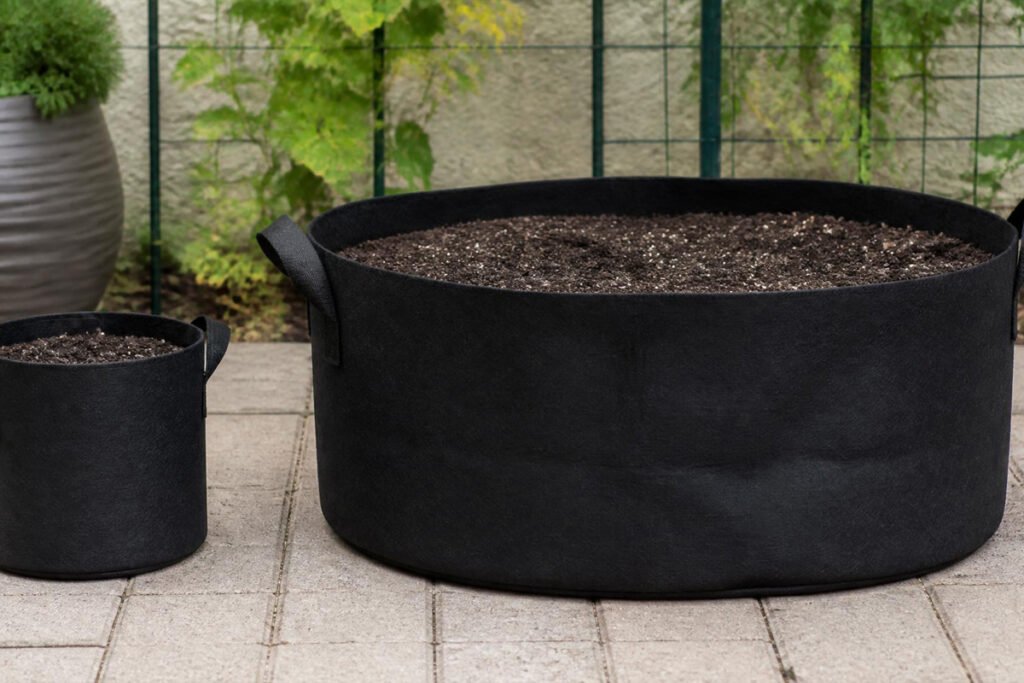
Overview: For gardeners who want raised-bed-style growing without building or buying a permanent structure, the Big Bag Bed is essentially a large, shallow fabric raised bed. It sets up in minutes, covers a substantial footprint, and can be moved or stored flat when not in use — something no wood or metal raised bed can do.
Key Features:
- Large, shallow fabric bed footprint (multiple size options)
- No assembly required — unfolds and fills directly
- Excellent drainage and root aeration across a wide growing area
- Foldable for storage between seasons
Best For: Gardeners who want raised-bed growing on a patio, rental property, or any space where a permanent structure isn’t practical.
Pros: ✅ No building or tools required ✅ Fully portable and storable ✅ Great drainage across a large area Cons: ❌ Less structurally rigid than a wood or metal raised bed ❌ Needs a level, weed-free surface underneath
Our Verdict: A genuinely useful middle ground between container gardening and our raised bed materials guide — ideal if permanence isn’t an option but you still want bed-style growing.
3. Root Pouch 5-Gallon
Overview: Root Pouch bags are made from recycled plastic fibers rather than standard nonwoven polypropylene, giving them a noticeably sturdier, more structured feel while still delivering the same air-pruning benefits. They’re a favorite among gardeners who’ve had cheaper bags sag or lose shape mid-season.
Key Features:
- Made from recycled plastic fiber for a sturdier structure
- Holds its shape better than lightweight nonwoven bags
- Strong stitched handles
- Available in a wide range of sizes
Best For: Gardeners who want a longer-lasting bag with a more structured, less “floppy” feel.
Pros: ✅ Sturdier construction than typical nonwoven bags ✅ Made from recycled material ✅ Holds shape well when full Cons: ❌ Higher price than standard nonwoven options ❌ Slightly heavier material
Our Verdict: Worth the upgrade if you’ve had bags collapse or sag under a full tomato plant’s weight — the recycled fiber construction genuinely holds its shape better.
4. 247Garden Fabric Pots
Overview: 247Garden’s fabric pots are the budget-friendly counterpart to premium brands, covering a huge range of sizes at a lower price per bag. Quality is solid for the price, making it easy to outfit an entire patio or balcony without a large upfront investment.
Key Features:
- Wide range of available sizes, from small herb pots to large vegetable bags
- Nonwoven breathable fabric
- Reinforced handles on larger sizes
- Competitive price per bag
Best For: Gardeners equipping multiple containers at once on a tight budget.
Pros: ✅ Very affordable, especially in multi-packs ✅ Wide size range available ✅ Decent durability for the price Cons: ❌ Fabric is thinner than premium 500G options ❌ Shorter expected lifespan under heavy sun exposure
Our Verdict: If you’re filling out a whole patio’s worth of containers and don’t want to spend premium prices per bag, this is where to start.
5. AC Infinity Heavy Duty Fabric Pots (500G)
Overview: For gardeners who want maximum durability above all else, AC Infinity’s 500-gram fabric is noticeably thicker than the 300G standard most competitors use. It’s built to survive multiple seasons of full sun exposure and repeated moving without thinning or tearing.
Key Features:
- 500G heavy-duty nonwoven fabric — thicker than most competitors
- Reinforced carrying handles rated for heavy, wet soil loads
- Excellent aeration and drainage
- Available in multiple sizes with matching accessory rings for plant training
Best For: Gardeners in hot, sunny climates who want a bag that survives multiple seasons without degrading.
Pros: ✅ Exceptional fabric durability ✅ Handles hold up under repeated heavy use ✅ Good UV resistance for full-sun placement Cons: ❌ Pricier than standard nonwoven bags ❌ Heavier fabric adds slightly more weight to move
Our Verdict: The bag to buy if you’re tired of replacing thin, sun-degraded fabric pots every year or two — the thicker material is a genuine, noticeable upgrade.
6. VIVOSUN 1-Gallon Self-Adhesion Grow Bags
Overview: Scaled down for seedlings and small herbs, these 1-gallon bags include a hook-and-loop closure on one side that “unwraps” the bag entirely, making it far easier to transplant young, delicate roots without disturbing them.
Key Features:
- Compact 1-gallon size, roughly 8 inches tall
- Hook-and-loop side closure for gentle, low-disturbance transplanting
- BPA-free nonwoven fabric with strong drainage
- Reusable across multiple growing seasons
Best For: Starting seedlings for later transplant, or growing herbs and small plants in tight spaces.
Pros: ✅ Unique side-opening design protects delicate roots during transplant ✅ Compact and easy to store many at once ✅ Reusable Cons: ❌ No carrying handles, though less of an issue given the small size ❌ Too small for anything beyond seedlings or herbs
Our Verdict: A smart complement to our seed starting supplies guide — the side-opening design solves the classic problem of disturbing young roots during transplant.
7. JERIA 5-Gallon Fabric Pots with Labels
Overview: JERIA’s set stands out by including plant labels alongside the bags themselves, making it a practical all-in-one option for gardeners managing several different vegetables who don’t want to lose track of what’s growing where.
Key Features:
- 5-gallon nonwoven polyester felt construction
- Includes matching plant labels for easy organization
- Reinforced handles for moving full bags
- Folds flat for off-season storage
Best For: Gardeners growing several different vegetable varieties who want built-in organization.
Pros: ✅ Included labels solve a common organization headache ✅ Solid build quality for the price ✅ Good drainage and root aeration Cons: ❌ Standard fabric weight, not the thickest available ❌ Labels are a nice extra but not a substitute for a full gardening accessories kit
Our Verdict: A convenient starter set if you’re growing multiple crops in bags for the first time and want to keep everything labeled without buying separate markers.
[IMAGE 3 — Comparison | Alt text: “grow bags comparison sizes fabric weight”]
Comparison Table
| Grow Bag | Best For | Size Range | Fabric Weight | Handles |
|---|---|---|---|---|
| VIVOSUN 5-Pack 5-Gal | Overall value | 1–20+ gal | ~300G | Reinforced |
| Smart Pots Big Bag Bed | Raised-bed alternative | Large footprint | Standard | N/A |
| Root Pouch 5-Gal | Structured, long-lasting | 1–65+ gal | Recycled fiber | Reinforced |
| 247Garden | Budget multi-container setups | Small–large | ~250–300G | Varies by size |
| AC Infinity Heavy Duty | Maximum durability | 3–30+ gal | 500G | Heavy-duty |
| VIVOSUN 1-Gal Self-Adhesion | Seedlings & herbs | 1 gal | Standard | None (side closure) |
| JERIA 5-Gal with Labels | Organized multi-crop growing | 5 gal | Standard | Reinforced |
[IMAGE 4 — Step-by-Step | Alt text: “planting tomato seedling in fabric grow bag”]
Best Grow Bags for Different Vegetables
Tomatoes and Peppers
These deep-rooted, heavy feeders do best in 7–15 gallon bags. Pair a larger bag with a sturdy trellis or plant support, since fabric bags don’t offer the rigid structure a raised bed does for staking tall plants.
Potatoes
Look for a bag with a harvest window or roll-down sides — this lets you “hill” the plant as it grows and check for new potatoes without disturbing the whole root system, effectively doubling as a specialized growing system rather than a basic container.
Herbs and Greens
Shallow-rooted crops like lettuce, basil, and other herbs thrive in 1–3 gallon bags, making the smaller sizes ideal for balconies or windowsills where space, not root depth, is the limiting factor.
Common Mistakes
- Choosing a bag too small for the crop. An undersized bag limits root development and directly reduces yield — tomatoes in particular need real room to perform. Always size up if you’re unsure.
- Underestimating watering needs. The same breathability that improves root health also means bags dry out faster than plastic pots, sometimes needing daily watering in full summer sun. Check soil moisture directly with a soil moisture meter rather than guessing.
- Setting bags directly on solid, non-draining surfaces. Placing a grow bag on a solid patio or saucer traps water at the base and defeats the fabric’s drainage benefit. Set bags on bricks, a pallet, or a gravel tray instead.
Expert Tips
- Go up a size if you’re between two options. Undersizing is the single most common grow bag mistake — a slightly larger bag rarely hurts, while an undersized one reliably limits yield.
- Use a light, well-draining potting mix, not garden soil straight from the ground. Garden soil compacts too much in a fabric container; a mix with perlite or coconut coir drains and aerates far better.
- Elevate bags off solid ground. A few inches of clearance underneath — bricks or a pallet work fine — keeps the base from staying soggy and meaningfully extends the bag’s usable life.
[IMAGE 5 — Final Result | Alt text: “thriving vegetable plants growing in fabric grow bags”]
Final Thoughts
Best overall: The VIVOSUN 5-Pack 5-Gallon bags cover the widest range of everyday vegetable gardening needs at a fair price. Best for a raised-bed feel without the build: The Smart Pots Big Bag Bed delivers bed-style growing with zero assembly. Best for durability: The AC Infinity Heavy Duty 500G bags are the clear pick if you’re tired of replacing thin fabric every season.
Whatever you choose, remember that grow bags shift your watering routine — pair them with a reliable watering can or irrigation setup, and check in on soil moisture more often than you would with a traditional pot or raised bed.
Frequently Asked Questions
Do grow bags really work better than plastic pots? For root health, yes — the breathable fabric prevents the root-circling problem common in smooth plastic pots, leading to a denser, more efficient root system. The trade-off is faster drying, which means more frequent watering.
What size grow bag do I need for tomatoes? Most tomato varieties perform best in 10–15 gallon bags. Smaller 5-gallon bags can work for compact or determinate varieties, but larger indeterminate tomatoes need the extra root room to reach full size.
How long do fabric grow bags last? A quality bag with 300G+ fabric typically lasts 3–5 seasons with normal use. Premium 500G options can last even longer, while thinner budget bags may only survive one or two seasons in full sun.
Do I need to replace the soil in my grow bags every year? It’s a good practice to refresh at least part of the soil each season, since fabric bags don’t retain nutrients as long as garden beds do. Mixing in fresh compost or organic fertilizer between seasons keeps the growing medium productive.
Can grow bags be reused season after season? Yes, most fabric grow bags are designed to be reused for multiple seasons. Rinse them out, let them dry fully, and fold them flat for storage between growing seasons.
Why does my grow bag dry out so quickly? This is normal — the same breathable fabric that improves root health also lets moisture evaporate faster than a plastic pot. In hot weather, daily watering is common; checking the soil directly rather than watering on a fixed schedule prevents both over- and under-watering.
Can I grow potatoes in a regular grow bag? Yes, though a bag specifically designed with a harvest window or roll-down sides makes the process easier, letting you check for new potatoes without disturbing the whole plant.
Are fabric grow bags better for small spaces than plastic pots? Yes — most fold flat for storage when empty, which plastic pots can’t do, making them a practical choice for balconies, patios, or anywhere storage space is limited.
What’s the ideal fabric weight to look for? Aim for 300 grams per square meter (GSM) or heavier. Anything lighter tends to break down after a single season, especially with regular sun exposure.
Do grow bags need drainage holes like plastic pots? No — the fabric itself is naturally porous, so water drains through the material rather than through cut holes, which is part of what gives grow bags their aeration advantage over plastic.
Author: Pamela Reese Last Updated: August 2026