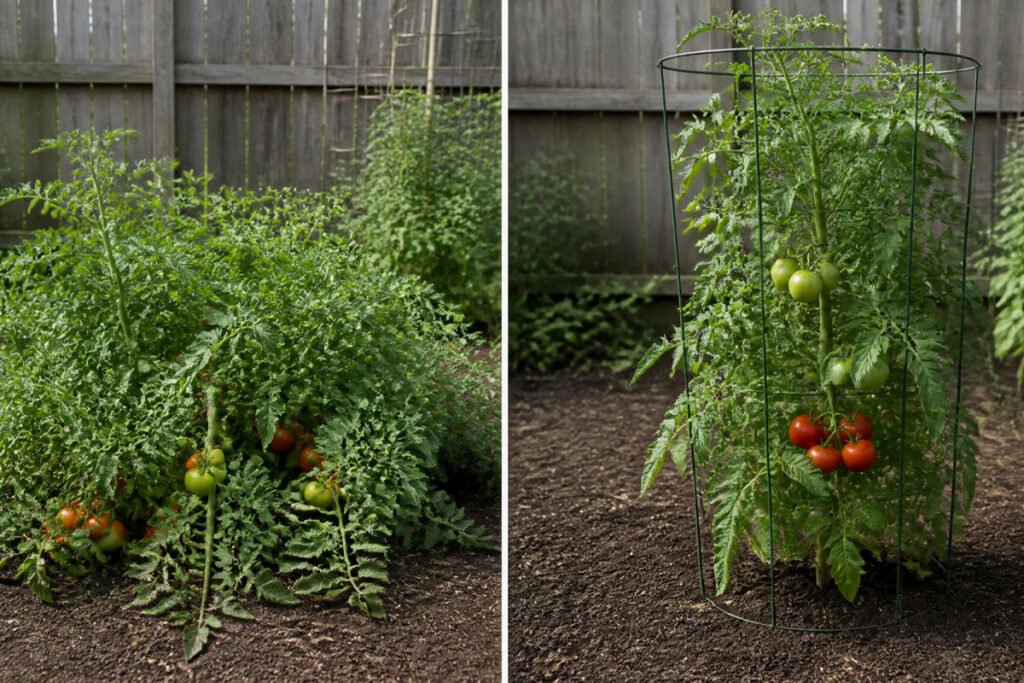
A sprawling, unsupported tomato plant doesn’t just look messy — it actively grows worse fruit. Stems left to flop across the ground put fruit in direct contact with damp soil, inviting rot and pests. Leaves pile on top of each other, cutting off the airflow that keeps fungal disease in check. And a plant that’s constantly repositioning its own weight puts far more energy into just staying upright than into producing the tomatoes, beans, or cucumbers you actually planted it for.
The right plant support solves this before it becomes a problem, and different crops genuinely need different types of support, a consideration that pairs closely with good soil preparation at planting time. A trellis built for climbing cucumbers won’t hold up a heavy, sprawling tomato plant, and a support sized for a single pepper plant does almost nothing for a full row of pole beans. Matching the support to the crop is what separates a trellis that actually works from one that collapses under the first real harvest.
This guide breaks down five plant supports worth knowing, exactly how each one works, what specific growing problem it solves, and why it’s worth the investment — pairing naturally with a good companion planting layout and vertical gardening approach in smaller spaces.
Quick Answer
The best plant support depends on what you’re growing and how much weight it needs to hold. Cattle panel arches handle heavy vining crops like squash and melons with the strongest, most durable support available. Tomato cages offer simple, self-contained support ideal for indeterminate tomato varieties without needing separate stakes. A-frame trellises maximize vertical growing space for cucumbers and pole beans in a small footprint. Bamboo stakes or teepees provide an affordable, flexible option for lighter climbing crops. Vine netting gives lightweight climbers like peas and beans a simple surface to grip without the cost of a rigid structure. Most gardens end up using two or three of these together, matched to each crop’s specific weight and growth habit.
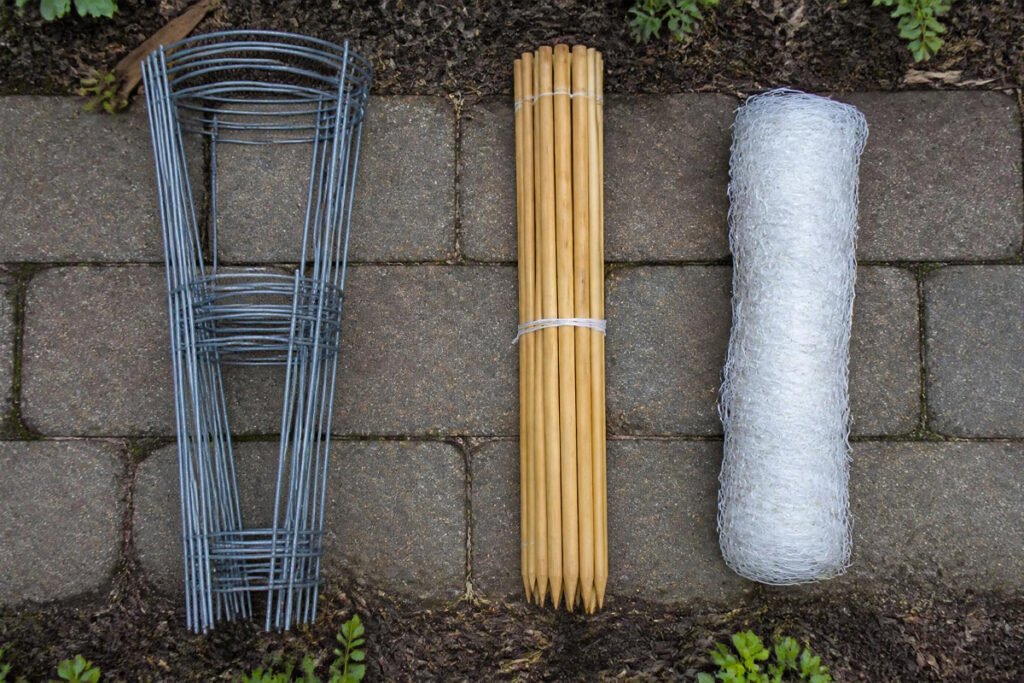
Table of Contents
- Why Plant Support Affects More Than Just Tidiness
- How to Choose the Right Support for Your Crop
- Best Trellises & Plant Supports
- Comparison Table
- Plant Supports for Different Garden Setups
- How to Install Plant Supports Correctly
- Common Trellising Mistakes
- Expert Tips
- Final Thoughts
- Frequently Asked Questions
Why Plant Support Affects More Than Just Tidiness {#why-support-matters}
Vertical support does far more than keep a garden looking organized. Lifting fruit and foliage off the ground dramatically reduces contact with damp soil, which is one of the most common ways rot and soil-borne fungal disease reach fruit before harvest. Better airflow around lifted, upright foliage also reduces the humid, still conditions that many fungal diseases need to spread, complementing the disease-prevention benefits of a good weed control routine.
Support also directly affects yield. A tomato plant sprawled across the ground puts significant energy into supporting its own weight and repositioning stems, while a properly staked or caged plant channels that energy into fruit production instead. Vertical growing additionally makes far better use of limited space, letting vining crops like cucumbers and pole beans grow upward instead of spreading outward — a major advantage in any small-space or vertical garden.
How to Choose the Right Support for Your Crop {#how-to-choose}
Before buying, think through three questions:
How much weight will the support actually need to hold? A single pepper plant needs far less structural support than a heavily fruiting squash or melon vine, which can weigh significantly more once fruit sets.
Does the crop climb naturally, or does it need to be tied? True climbers like peas and pole beans grip netting or string on their own, while sprawling crops like tomatoes and squash need to be tied or caged rather than climbing unassisted.
How permanent do you want the structure to be? A cattle panel arch is a multi-season investment, while bamboo stakes and netting are inexpensive, temporary options suited to smaller or shorter-term plantings.
Best Trellises & Plant Supports {#best-supports}
Cattle Panel Arch/Trellis
Overview: A heavy-duty galvanized wire panel, often bent into an arch between two garden beds, offering the strongest and most durable support available for home vegetable gardens.
Why It Works: The thick, welded wire grid can support significant weight without bending or sagging, making it the only realistic option on this list for genuinely heavy vining crops like winter squash, melons, and large cucumber varieties once they’re loaded with fruit. Because it’s a rigid, permanent structure, it also holds up through wind and storms far better than lighter stake or netting-based systems.
Key Features:
- Galvanized coating resists rust for years of outdoor use
- Rigid structure supports significant weight without sagging
- Arch design doubles as a shaded walkway between beds
Best For: Heavy vining crops like squash, melons, and large cucumber varieties, especially in raised bed layouts with beds positioned close together.
Pros: ✅ Extremely durable and long-lasting ✅ Handles the heaviest fruiting crops without sagging ✅ Multi-season investment that rarely needs replacing
Cons: ❌ Higher upfront cost than other options ❌ Requires more setup effort and permanent placement
Our Verdict: Worth the investment specifically for heavy fruiting vines — this is the one support on this list built to handle a fully loaded squash or melon vine without bending under the weight, making it the best long-term choice for anyone growing these crops regularly.
Tomato Cages
Overview: A cone or cylinder-shaped wire cage placed around a young tomato plant, providing all-around support as the plant grows up through and around the structure.
Why It Works: Unlike a single stake, which only supports one side of a plant, a cage supports the entire plant from multiple directions as it fills out, which matters especially for indeterminate tomato varieties that keep growing and branching throughout the season. The enclosed design also reduces how often a gardener needs to actively tie and retie stems compared to single-stake systems.
Key Features:
- All-around support reduces the need for repeated tying
- Wide openings allow easy access for harvesting through the sides
- Stackable or collapsible designs simplify off-season storage
Best For: Indeterminate tomato varieties that continue growing and branching throughout the season.
Pros: ✅ Supports the whole plant, not just one side ✅ Reduces ongoing tying and maintenance ✅ Reusable for multiple seasons
Cons: ❌ Standard sizes can be too small for very vigorous tomato varieties ❌ Can tip over in wind if not staked down separately
Our Verdict: Worth buying for anyone growing tomatoes regularly — pick a taller, wider cage than the standard small size if you’re growing vigorous indeterminate varieties, since undersized cages are a common reason plants outgrow their support mid-season.
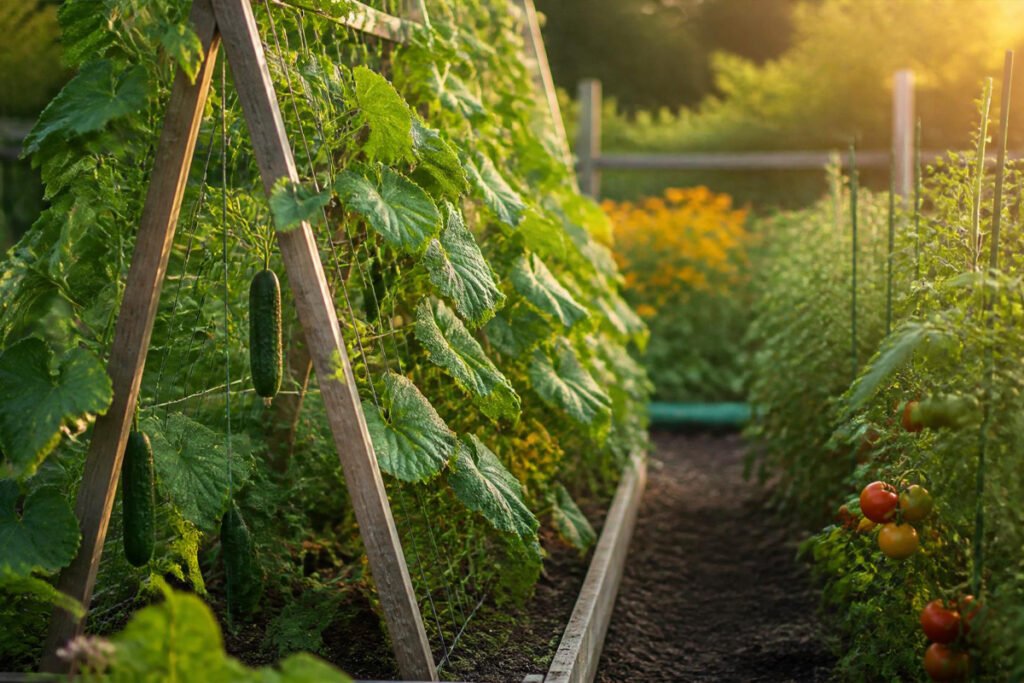
A-Frame Trellis
Overview: A freestanding, hinged trellis in the shape of an “A,” typically covered in netting or wire mesh, giving climbing crops a tall vertical surface without needing to attach to a fence or wall.
Why It Works: The A-shape provides two full trellis surfaces in the footprint of a single bed row, effectively doubling the growing area available for climbing crops like cucumbers and pole beans without expanding the garden’s physical footprint. Because it’s freestanding, it can be positioned wherever it’s needed each season rather than being tied to a fixed structure.
Key Features:
- Two growing surfaces in one compact footprint
- Freestanding design works in beds without a nearby fence or wall
- Often foldable for easy off-season storage
Best For: Cucumbers, pole beans, and other moderate-weight climbers in space-limited raised beds.
Pros: ✅ Maximizes vertical space efficiently ✅ Freestanding and repositionable each season ✅ Good middle-ground weight capacity between netting and cattle panels
Cons: ❌ Less sturdy than a cattle panel for very heavy fruit ❌ Needs secure anchoring in windy locations
Our Verdict: Worth buying specifically for small raised bed gardens trying to maximize vertical growing space — it strikes a strong balance between the low cost of netting and the heavy-duty strength of a cattle panel.
Bamboo Stakes or Teepee
Overview: Simple wooden stakes, often arranged in a teepee shape and tied together at the top, providing an affordable, flexible support structure for lighter climbing and vining crops.
Why It Works: Bamboo’s natural strength-to-weight ratio makes it sturdy enough for moderate climbing crops while remaining lightweight and easy to work with, and the teepee arrangement distributes weight across multiple stakes rather than relying on a single point of support. This makes it especially effective for crops like pole beans that wind naturally around a narrow vertical surface.
Key Features:
- Lightweight and easy to cut to custom heights
- Teepee arrangement distributes plant weight across multiple points
- Fully biodegradable and compostable at end of life
Best For: Pole beans, peas, and lighter vining crops in both raised beds and in-ground plots.
Pros: ✅ Very affordable ✅ Easy to customize height and shape ✅ Environmentally friendly, biodegradable material
Cons: ❌ Less durable than metal supports over multiple seasons ❌ Can weaken or rot with prolonged soil contact if not treated
Our Verdict: Worth buying as the most budget-friendly option on this list — ideal for anyone starting out with pole beans or peas who doesn’t yet need the heavier-duty support that squash or melons eventually require.
Vine Netting
Overview: A lightweight mesh netting stretched between two posts or a frame, giving lightweight climbers a simple surface to grip and climb without the cost of a rigid structure.
Why It Works: Many light climbing crops, particularly peas and some bean varieties, use thin tendrils that need a surface with plenty of small openings to grip onto directly, something solid stakes or wide cage openings don’t provide as effectively. Netting’s fine grid gives these tendrils constant contact points to grab as the plant grows, letting it climb largely on its own with minimal tying required.
Key Features:
- Fine grid gives tendrils constant, easy-to-grip contact points
- Lightweight and simple to hang between posts or an existing frame
- Rolls up compactly for off-season storage
Best For: Peas, light bean varieties, and other tendril-climbing crops that grip rather than wind around a support.
Pros: ✅ Very inexpensive ✅ Minimal tying required once plants start climbing ✅ Compact storage between seasons
Cons: ❌ Not strong enough for heavy fruiting vines ❌ Needs a sturdy frame or posts to actually hold it taut
Our Verdict: Worth buying specifically for tendril climbers like peas — it’s the lowest-cost option here, but pair it with sturdy posts or an existing A-frame, since the netting itself provides climbing surface, not structural strength.
Comparison Table {#comparison-table}
| Support | Best For | Weight Capacity | Cost | Reusability |
|---|---|---|---|---|
| Cattle Panel Arch | Squash, melons, heavy vines | Very High | High | Many seasons |
| Tomato Cages | Indeterminate tomatoes | Moderate–High | Medium | Multiple seasons |
| A-Frame Trellis | Cucumbers, pole beans | Moderate | Medium | Multiple seasons |
| Bamboo Stakes/Teepee | Pole beans, peas | Low–Moderate | Low | 1–2 seasons |
| Vine Netting | Peas, light climbers | Low | Very Low | Multiple seasons |
Plant Supports for Different Garden Setups {#different-setups}
Raised Bed Gardens
An A-frame trellis or cattle panel arch positioned between two raised beds makes efficient use of limited space, letting vining crops grow up and over a shared walkway instead of sprawling across bed surfaces.
Single-Plot In-Ground Gardens
Larger in-ground plots have more room to use bamboo teepees or standalone cattle panels positioned directly in rows, giving climbing crops a dedicated support without needing to share space with adjacent beds.
Container and Small-Space Gardens
Container gardens generally do best with a small tomato cage or a compact section of vine netting attached to a lightweight frame, since heavier structures like cattle panels are usually impractical for pot-based growing.
How to Install Plant Supports Correctly {#how-to-install}
Step 1: Install Supports Early
Set up trellises, cages, or stakes at planting time or shortly after, rather than waiting until a plant is already sprawling, since disturbing established roots to add support later is far more stressful on the plant — the same reasoning behind starting seedlings with proper root space from day one.
Step 2: Anchor Securely Into the Soil
Push stakes and posts deep enough to resist wind and the eventual weight of a fully grown, fruit-loaded plant, especially for taller structures like A-frames and cattle panel arches.
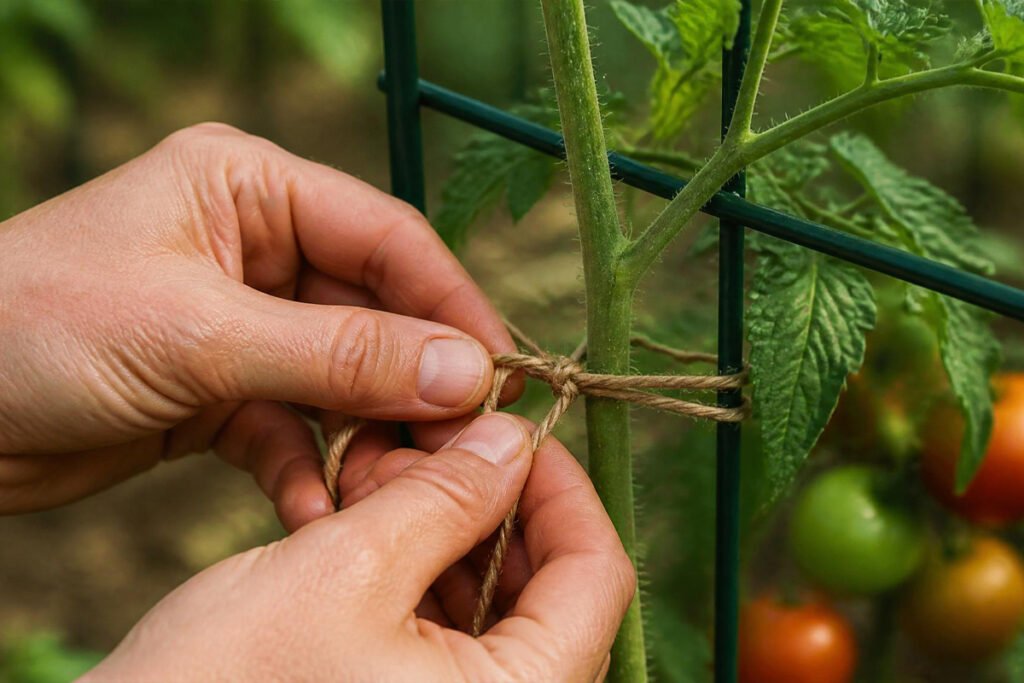
Step 3: Tie Loosely as Plants Grow
Use soft ties or garden twine, checking periodically to loosen any that start cutting into thickening stems as the plant matures.
Step 4: Guide Climbing Crops Early
Gently direct young vines toward netting or a trellis surface in the first few weeks, since establishing the climbing direction early makes later growth far more self-sufficient.
Step 5: Remove and Store Off-Season
Take down netting, stakes, and cages at the end of the season, cleaning off plant debris before storage to reduce disease carryover into the next crop rotation cycle.
Common Trellising Mistakes {#common-mistakes}
Installing support too late in the season. Waiting until a tomato or cucumber plant is already sprawling makes installation far more disruptive to established roots and stems. Set up supports at planting time instead.
Undersizing the support for the crop’s mature weight. A small cage or thin stake that works fine early in the season often fails once fruit sets and adds significant weight. Choose supports rated for the crop’s full mature size, not just its seedling stage.
Skipping cleanup at season’s end. Leftover plant debris left tangled in netting or cages over winter can harbor disease and pests into the next season, undermining an otherwise solid crop rotation plan.
Expert Tips {#expert-tips}
Match support height to the crop’s mature size, not its current size. Indeterminate tomatoes and pole beans can grow much taller than gardeners expect, and undersized supports are one of the most common reasons plants topple mid-season.
Combine supports with good airflow-focused spacing. Trellising works best alongside proper companion planting spacing, since lifted foliage still needs enough room between plants to maintain the airflow that reduces fungal disease risk.
Reuse and rotate support types with your crop rotation plan. Move cages and trellises along with the plant families in your rotation schedule, rather than leaving the same structure in one bed regardless of what’s planted there each year.
Final Thoughts {#final-thoughts}
Best overall: tomato cages, for their reusability and near-universal usefulness across tomato varieties. Best for heavy vines: a cattle panel arch, built to handle the full weight of mature squash and melons. Best budget option: bamboo stakes or a teepee, ideal for pole beans and peas without a big upfront investment.
The right plant support isn’t about buying the most expensive structure available — it’s about matching the support’s strength and design to what a specific crop actually needs as it matures. Combined with good companion planting and crop rotation habits, the right trellis or cage setup keeps vining and fruiting crops healthier, better airflowed, and considerably easier to harvest all season long.
Frequently Asked Questions {#faq}
Do all vegetables need a trellis or support? No — many low-growing crops like lettuce, carrots, and onions never need support, while vining and heavy fruiting crops like tomatoes, cucumbers, squash, and pole beans benefit significantly from one.
What’s the difference between a tomato cage and a stake for tomatoes? A cage supports the plant from all sides as it grows and branches, while a single stake only supports one point, requiring more frequent tying to keep the plant upright as it fills out — a detail worth factoring in alongside your tomato-growing plan for the season.
Can I use a cattle panel trellis for crops other than squash and melons? Yes, cattle panels work well for any heavy vining crop, including large cucumber varieties and some pole bean types, thanks to their high weight capacity and durability.
How tall should a trellis be for pole beans? Pole beans commonly grow six feet or taller, so a trellis or teepee in that height range or taller generally accommodates their full mature growth better than shorter supports.
Is bamboo strong enough for cucumbers? Bamboo works well for lighter cucumber varieties, but larger, heavier-fruiting types are often better supported by a sturdier A-frame trellis or cattle panel to avoid sagging under fruit weight.
Do I need to tie plants to netting, or will they climb on their own? Tendril climbers like peas typically grip netting on their own with minimal help, while heavier or non-tendril crops like tomatoes usually need to be tied to whatever support they’re using.
Can plant supports be reused year after year? Metal supports like cattle panels and tomato cages can last many seasons with basic cleaning, while bamboo stakes typically need replacing every one to two seasons as they weather and weaken.
How early should I install a trellis or cage? Installing at planting time or shortly after is ideal, since adding support once a plant is already sprawling risks damaging established roots and stems.
What’s the best support for a small raised bed garden? An A-frame trellis is often the best fit for small raised beds, since it maximizes vertical growing space for climbers in a compact footprint without needing extra ground space.
Does trellising actually improve yield, not just appearance? Yes — better airflow reduces fungal disease risk, and lifting fruit off damp soil reduces rot, both of which directly protect yield rather than just improving how tidy the garden looks.
Can I mix different types of supports in the same garden? Yes, and most gardens benefit from doing so, matching each crop’s specific weight and growth habit to the most appropriate support rather than using one type for everything.
Do plant supports need to be removed for winter? Lighter supports like netting and bamboo stakes are generally best removed and stored to extend their lifespan, while heavier permanent structures like cattle panel arches can often stay in place year-round.
Author: Pamela Reese
Pingback: 6 Best Tomato Cages for a Bigger, Healthier Harvest: Proven Top Picks & Buying Guide | Pro Gardening Tips – Expert Advice for a Thriving Garden