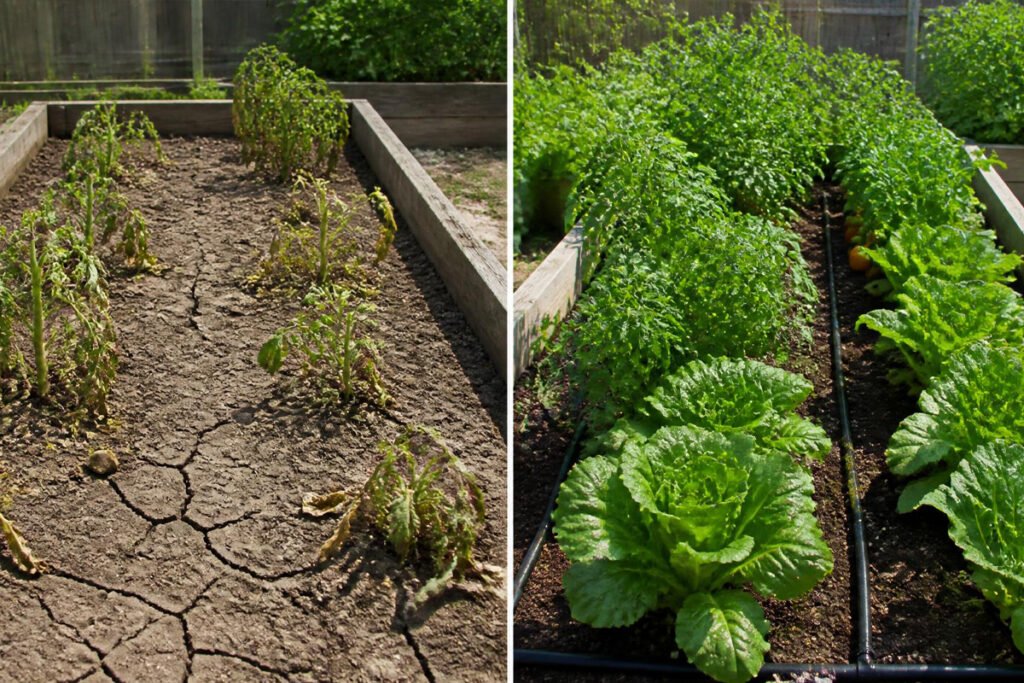
A vegetable garden can have perfect soil, full sun, and healthy transplants — and still underperform because of one overlooked variable: inconsistent watering. Tomatoes that get flooded one week and bone-dry the next develop blossom end rot and split fruit. Beans and squash stall out under drought stress. And hand-watering with a hose, while better than nothing, rarely delivers water evenly across a full bed, which means some plants are overwatered while others just a few feet away are thirsty.
The fix isn’t more effort — it’s the right equipment. A properly matched irrigation setup, whether that’s a full drip system or something as simple as a soaker hose and a timer, delivers water directly to the root zone on a consistent schedule, without daily attention. This guide breaks down the best watering and irrigation tools for vegetable gardens in 2026, how to pick between them, and the mistakes that waste water and stress plants instead of helping them. If you’re setting up beds for the first time, this pairs well with our 5 Best Raised Bed Materials & Kits for Vegetable Gardens guide.
Quick Answer
For most raised bed or in-ground vegetable gardens, a drip irrigation kit with dripline tubing delivers the most even, water-efficient coverage and pays for itself in reduced water use within a season. For simple, budget-friendly coverage along a single row or bed, a soaker hose is the easiest system to set up with zero technical know-how. If you want either system to run without you remembering to turn it on, add a battery-powered water timer. And no matter which system you choose, a good watering can still earns its place for seedlings, containers, and spot-watering that automated systems can’t reach precisely.
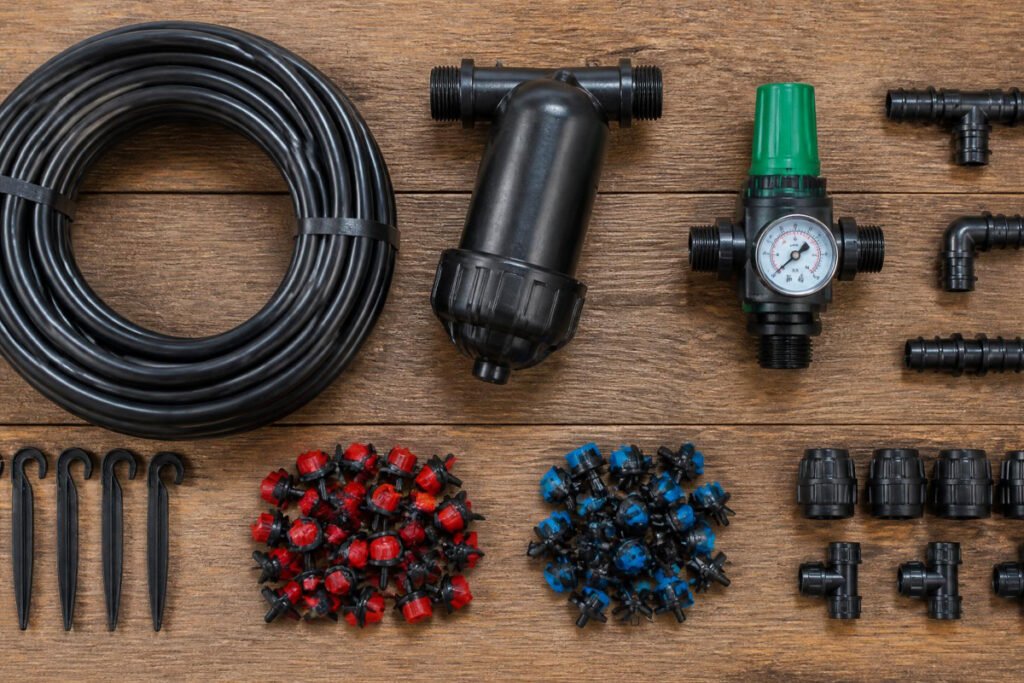
Table of Contents
- Why Watering Equipment Matters
- How to Choose the Right Irrigation Setup
- Best Watering & Irrigation Tools Available
- Comparison Table
- Best Tools for Different Garden Setups
- How to Set Up Drip Irrigation Correctly
- Common Mistakes
- Expert Tips
- Final Thoughts
- Frequently Asked Questions
Why Watering Equipment Matters
Vegetables are far less forgiving of inconsistent moisture than most ornamental plants. Fruiting crops like tomatoes, peppers, and cucumbers need steady, even soil moisture to size and ripen fruit properly — swinging between drought and flood stress is one of the most common causes of blossom end rot, fruit cracking, and bitter-tasting cucumbers.
Manual watering with a hose or can also tends to wet foliage, which raises the risk of fungal disease like powdery mildew and early blight, especially when done in the evening. Drip and soaker systems solve this by delivering water at soil level, directly to the root zone, where plants actually use it — while keeping leaves dry. This connects directly to what we covered in our Backyard Garden Soil Health guide, since consistent moisture is one of the biggest levers for healthy root development.
How to Choose the Right Irrigation Setup
Ask yourself these three questions before buying:
1. How many beds or rows are you watering, and how are they laid out? A single raised bed is easily handled by one soaker hose. Multiple beds or an irregular layout benefit from a modular drip kit with individually routed tubing.
2. Do you want it automated, or are you comfortable turning a tap on and off? If you travel, work long hours, or just don’t want watering on your daily to-do list, a timer is not optional — it’s the single upgrade that makes an irrigation system actually low-maintenance.
3. What’s your water pressure and source like? Standard drip kits are rated for typical municipal hose-bib pressure (usually with an included pressure regulator). Well systems or unusually high or low pressure may need an additional regulator — check your kit’s specifications before buying.
According to horticultural extension research, drip irrigation can reduce garden water use by roughly 30–50% compared to overhead sprinklers, largely by eliminating evaporation and runoff — a meaningful factor if you’re gardening somewhere with water restrictions or a metered supply.
Best Watering & Irrigation Tools Available
1. DripWorks Garden Bed Drip System
Overview: DripWorks specializes in irrigation hardware, and their Garden Bed System uses soaker dripline — tubing with emitters spaced every 6 or 12 inches along its length — rather than individual point emitters. That gives uniform coverage across densely planted vegetable beds without placing a separate emitter at every single plant.
Key Features:
- Soaker dripline with evenly spaced built-in emitters
- Includes filter and pressure regulator
- Scales up to multiple beds
- Designed specifically for dense vegetable plantings
Best For: Gardeners with multiple raised beds who want uniform coverage without fiddling with individual emitters.
Pros: ✅ Even coverage across densely planted rows ✅ Scales well as your garden grows ✅ Includes filter and regulator Cons: ❌ Higher upfront cost than big-box kits ❌ Slight learning curve for first-time installers
Our Verdict: For anyone serious about vegetable gardening across more than one or two beds, this is the system that scales with you instead of needing to be replaced. Pairs naturally with our 5 Best Raised Bed Materials & Kits for Vegetable Gardens picks.
2. MIXC Quick-Connect Drip Irrigation Kit
Overview: A budget-friendly, beginner-oriented drip kit built around quick-connect fittings, meaning no barbed connectors or specialty tools are needed for setup. It includes both ¼” and ½” tubing plus adjustable nozzles, making it flexible enough for garden beds, potted plants, and small greenhouses alike.
Key Features:
- Tool-free quick-connect fittings
- Adjustable drip and misting nozzles
- Covers roughly 230 feet of tubing runs
- Works across beds, containers, and greenhouse setups
Best For: First-time drip irrigation users who want an affordable, low-hassle entry point.
Pros: ✅ Very easy setup, no special tools ✅ Flexible for mixed bed/container layouts ✅ Affordable Cons: ❌ Individual emitters need more manual placement than dripline systems ❌ Fittings are less rugged than pro-grade hardware
Our Verdict: A smart starting point if you’ve never run drip irrigation before and want to test it out before investing in a larger system.
3. Swan Soaker Hose
Overview: A straightforward, no-electronics soaker hose made from recycled rubber that weeps water slowly along its entire length when connected to a spigot. It’s the simplest possible upgrade from hand-watering — lay it along a row, turn on the tap, and walk away.
Key Features:
- Porous rubber construction weeps water evenly
- No emitters, fittings, or programming required
- Can be snaked around curved bed shapes
- Available in multiple lengths
Best For: Single beds or rows, and gardeners who want the simplest possible upgrade from a hose.
Pros: ✅ Extremely simple to set up ✅ Inexpensive ✅ No moving parts to clog or break Cons: ❌ Less precise water distribution than drip emitters ❌ Water pressure affects how evenly it weeps along its length
Our Verdict: If your whole garden is one or two beds, a soaker hose gets you 80% of the benefit of a full drip system for a fraction of the cost and effort.
4. Orbit Battery-Powered Water Timer
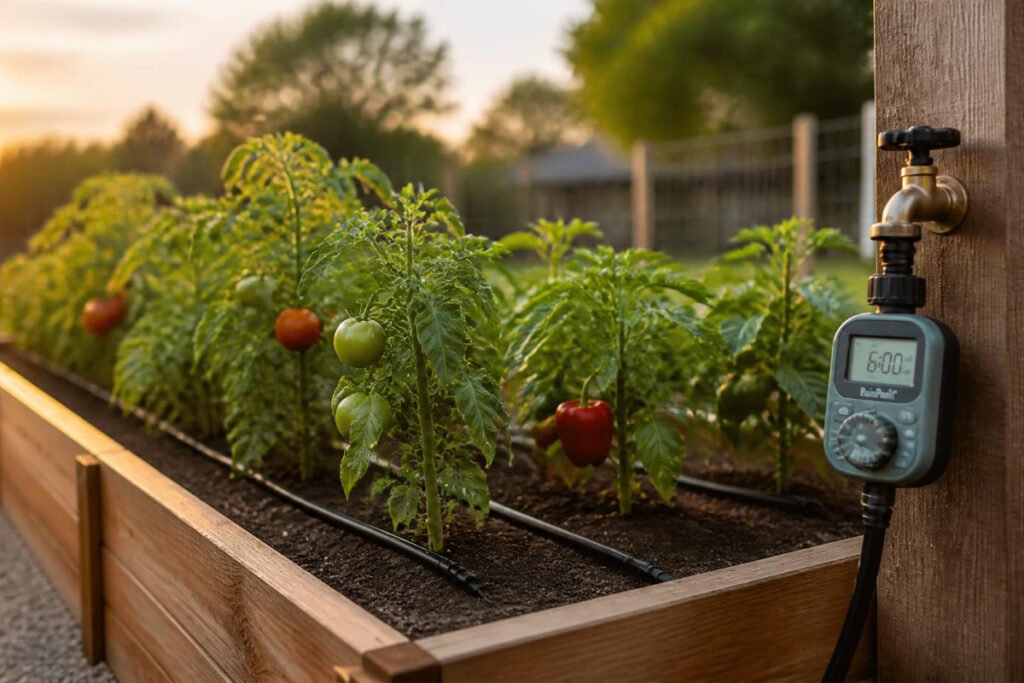
Overview: A hose-end timer that automates any of the above systems — drip kit, soaker hose, or even a sprinkler — by turning water on and off on a programmed schedule. It runs on a simple battery and mounts directly onto an outdoor spigot.
Key Features:
- Programmable start times and run durations
- Manual override for on-demand watering
- Battery-powered, no wiring required
- Compatible with standard hose threading
Best For: Anyone who wants consistent morning watering without remembering to do it by hand, or who travels regularly during growing season.
Pros: ✅ Removes the “did I water today” mental load ✅ Ensures watering happens at the ideal early-morning time ✅ Works with almost any hose-based system Cons: ❌ Battery needs periodic replacement ❌ Doesn’t adjust automatically for rain unless paired with a rain sensor
Our Verdict: This is the single cheapest upgrade that makes any watering setup meaningfully more reliable — pair it with a soaker hose or drip kit rather than running either manually.
5. Haws Long-Reach Watering Can
Overview: A classic British-made metal watering can with a long spout and a fine “rose” nozzle attachment, designed for precise, gentle watering of seedlings, transplants, and containers that automated systems can’t target as accurately.
Key Features:
- Long spout for reaching into dense beds without stepping on plants
- Interchangeable fine and coarse rose attachments
- Galvanized steel or plastic construction options
- Balanced design reduces wrist strain when full
Best For: Seedlings, transplants, container plants, and any spot-watering that a fixed irrigation system doesn’t reach precisely.
Pros: ✅ Gentle enough for delicate seedlings ✅ Precise control exactly where you want water ✅ Durable, long-lasting build Cons: ❌ Not a substitute for automated watering of full beds ❌ Premium metal versions cost more than basic plastic cans
Our Verdict: Even with a full drip system installed, this is the tool you’ll still reach for constantly — especially during our 5 Best Seed Starting Supplies for Vegetable Gardens stage, when young seedlings need gentle, controlled watering.
Comparison Table
| Product | Best For | Automation | Setup Difficulty | Approx. Cost |
|---|---|---|---|---|
| DripWorks Garden Bed System | Multiple raised beds | Manual (timer-compatible) | Moderate | $$$ |
| MIXC Quick-Connect Kit | First-time drip users | Manual (timer-compatible) | Easy | $$ |
| Swan Soaker Hose | Single beds/rows | Manual (timer-compatible) | Very Easy | $ |
| Orbit Water Timer | Automating any hose-based system | Fully Automated | Easy | $ |
| Haws Long-Reach Watering Can | Seedlings, containers, spot-watering | Manual | None | $$ |
Best Tools for Different Garden Setups
For Multiple Raised Beds
A modular dripline system like the DripWorks Garden Bed System gives the most even coverage across several beds without watering some rows more than others. Combine it with our 5 Best Raised Bed Materials & Kits for Vegetable Gardens guide when planning a new bed layout.
For a Single Bed or Small Garden
A soaker hose paired with a battery timer covers most small vegetable gardens for a fraction of the cost of a full drip system, with almost no learning curve.
For Container and Balcony Gardens
Containers dry out much faster than ground beds and often need daily attention that a full drip system can help automate — but a good watering can remains essential for fine-tuning individual pots. Our 5 Best Composting Bins & Systems for Vegetable Gardens guide is a useful next step, since compost-enriched potting mix holds moisture better between waterings.
How to Set Up Drip Irrigation Correctly
Step 1: Plan Your Layout
Sketch your beds and measure the distance from your water source to each one before buying tubing, so you don’t run short mid-install.
Step 2: Install a Filter and Pressure Regulator
Even municipal water carries fine sediment that can clog emitters over time. A filter at the spigot protects the whole system.
Step 3: Run the Mainline and Branch Tubing
Lay the mainline along the length of your beds, then branch smaller tubing or dripline to each row, keeping runs as short and direct as possible.
Step 4: Place Emitters or Position Dripline
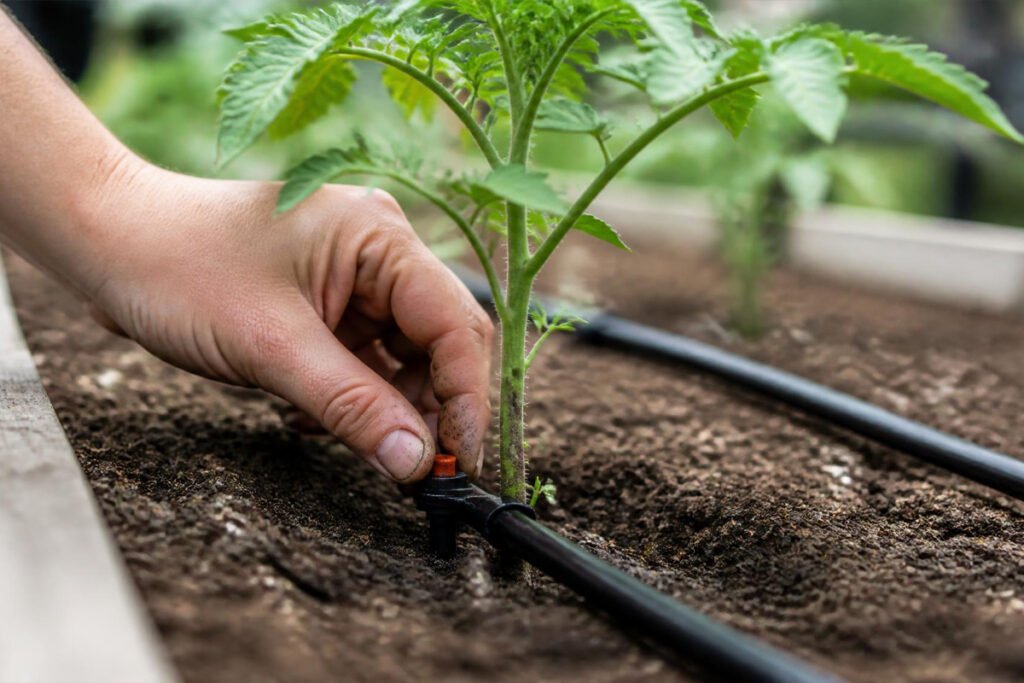
For point-source kits, place one emitter per plant at the base of the stem. For dripline systems, simply run the line along each row.
Step 5: Test, Adjust, and Add a Timer
Run the system and check for even coverage and any leaks at connection points, then attach a timer so watering happens automatically going forward.
Common Mistakes
1. Watering on a fixed schedule regardless of weather. Automated systems make it easy to “set and forget,” but a rainy week means your plants don’t need the extra water. Check soil moisture before assuming the schedule is correct.
2. Skipping the pressure regulator. Running drip tubing at full hose-bib pressure blows out fittings and creates uneven flow. The regulator included with most kits isn’t optional hardware — it protects the whole system.
3. Watering foliage instead of soil. Overhead watering with a hose or sprinkler wets leaves, which raises disease risk, especially in humid climates. Direct water at soil level whenever possible.
Expert Tips
1. Water early in the morning, not the evening. Morning watering lets foliage dry during the day, which meaningfully reduces the risk of fungal disease compared to watering that leaves leaves wet overnight.
2. Mulch after installing drip irrigation. A layer of mulch over drip lines reduces evaporation further and keeps emitters from getting buried in soil splash-back over time.
3. Check emitters monthly for clogs. Mineral buildup and fine sediment can slow or stop individual emitters over a season — a quick monthly check keeps coverage even across the whole bed.
Final Thoughts
For most home vegetable gardeners, the right setup pairs a soaker hose or modular drip system with a simple battery-powered timer — that combination handles the bulk of watering automatically and evenly, without daily effort. Round it out with a good watering can for seedlings and container plants, and you’ve covered nearly every watering scenario a vegetable garden throws at you. For next steps, see our Backyard Garden Soil Health and 5 Best Raised Bed Materials & Kits for Vegetable Gardens guides.
Frequently Asked Questions
Is drip irrigation really worth it for a small backyard garden? Yes, even for a single bed. Beyond water savings, the bigger benefit for most home gardeners is consistency — drip systems eliminate the swings between drought stress and overwatering that cause problems like blossom end rot in tomatoes.
How long should I run a drip irrigation system each session? This depends on your emitter flow rate and soil type, but a common starting point is 30–45 minutes per session, adjusted based on how deeply the soil is moistened afterward. Check by digging a small test hole after watering.
Can I use a soaker hose and a drip kit together? Yes. Many gardeners use dripline or soaker hose for main beds and a separate quick-connect drip kit for containers or a greenhouse, both run off the same timer-equipped spigot.
Do I need a water timer, or can I just water manually? Manual watering works fine if you’re consistent, but a timer removes the risk of forgetting, especially during hot stretches when even one missed day can stress fruiting plants.
How often should vegetable gardens be watered? Most vegetable gardens need roughly 1–1.5 inches of water per week, either from rainfall or irrigation, delivered deeply and less frequently rather than in frequent shallow doses.
Will drip irrigation work with my well or low-pressure water source? Most kits are designed for standard municipal pressure, but low-pressure sources can usually still run drip systems — just skip the pressure regulator or use a low-pressure-rated kit designed for gravity-fed setups.
What’s the biggest sign my current watering setup isn’t working? Inconsistent fruit development — cracked tomatoes, bitter cucumbers, or blossom end rot — is usually the clearest sign that soil moisture is swinging too much between waterings.
Author: ProGardeningTips Editorial Team Last Updated: July 2026