
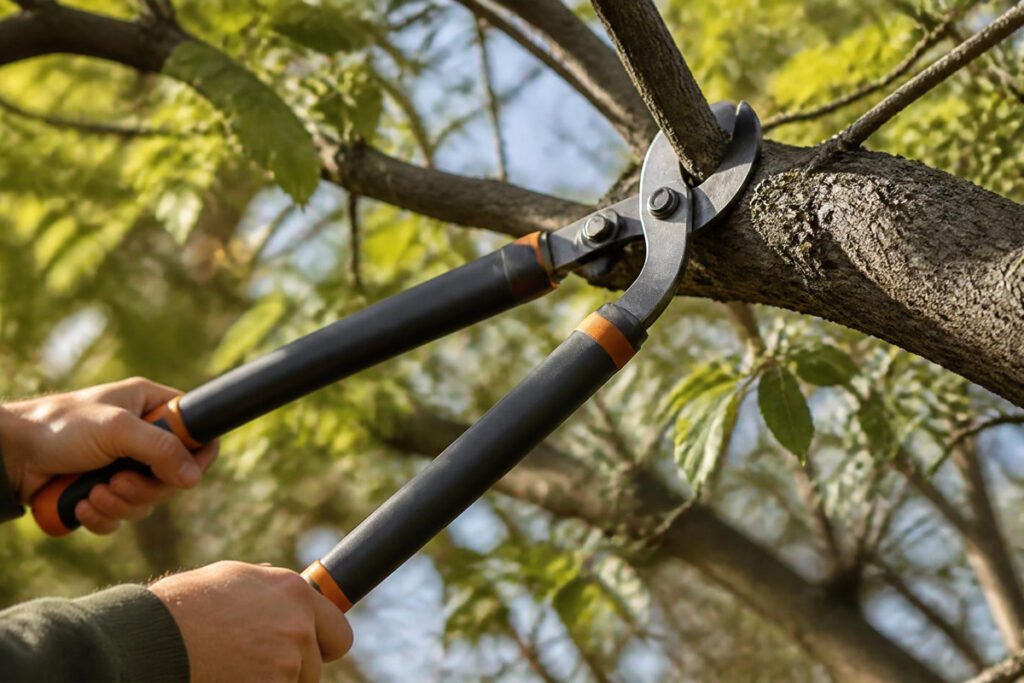
There’s a clear moment when pruning shears stop being enough — you’re bearing down on a branch thicker than your thumb, the blades barely close, and you’re one awkward twist away from either a ragged, torn cut or a strained wrist. That’s exactly the gap loppers are built to fill: two-handed leverage that turns a branch your hand pruner can’t touch into a clean, single cut.
This guide compares the best loppers for 2026, from gear-driven bypass models built for live wood to compound-action anvil loppers made for storm cleanup and deadwood. If you’re already equipped for smaller cuts, this pairs directly with our best pruning shears guide — loppers pick up exactly where a hand pruner’s capacity ends.
Quick Picks
| If you need… | Best pick |
|---|---|
| Best overall, easiest cutting | Fiskars 32″ PowerGear2 Bypass Lopper |
| Best value for typical homeowner use | Fiskars 28″ Heavy Duty Bypass Lopper |
| Best premium, professional-grade | Corona X Series Pro Bypass Lopper |
| Best for deadwood & storm cleanup | Corona Compound Action Anvil Lopper |
| Lightest, most affordable | Corona 30″ ComfortGEL Bypass Lopper |
| Best extended reach for tall branches | Corona DualLINK MAXFORGED Lopper |
Bypass vs. Anvil Loppers: What’s the Real Difference?
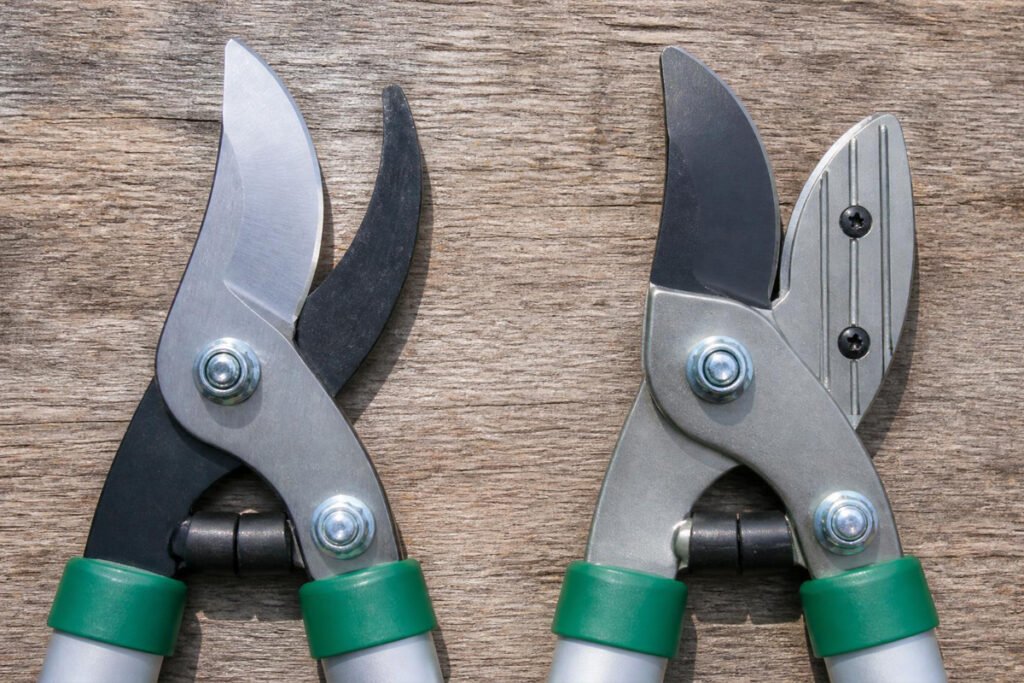
Bypass loppers use two curved blades that slide past each other like large scissors, producing a clean cut on live, green wood without crushing the surrounding tissue — the same principle as a bypass hand pruner, just with more leverage. Anvil loppers use a single blade that closes onto a flat surface, applying more crushing force, which makes them better suited to dead, dry wood where a clean cut matters less than raw cutting power. Using an anvil lopper on live branches tends to leave a torn, ragged wound that heals more slowly and is more vulnerable to disease — the same mistake covered in our pruning shears guide.
Beyond blade type, the mechanism matters just as much. Standard loppers rely purely on handle length for leverage, while compound-action or gear-driven models add a pivot mechanism that multiplies your hand’s force through the cut, making noticeably thicker branches manageable without straining.
How to Choose the Right Loppers
Before buying, consider:
- Cutting capacity. Loppers are typically rated for branches up to 1.5–2.5 inches. Check the rated capacity against what you actually prune most — buying under-capacity loppers just means forcing the tool beyond its limit.
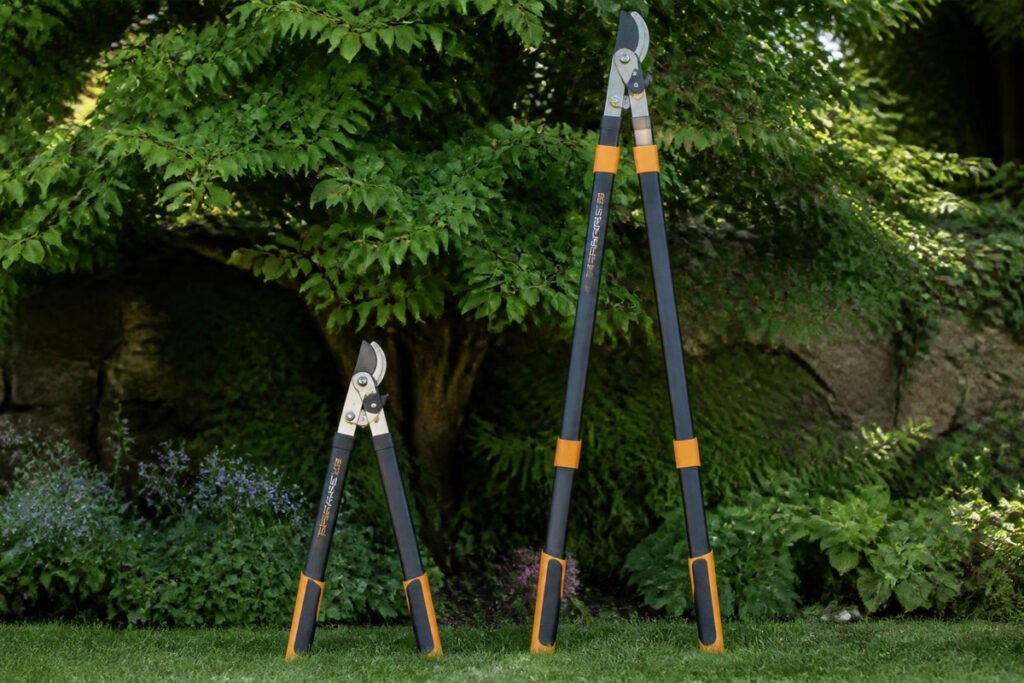
- Handle length. Longer handles (28–32+ inches) give more leverage and reach into taller shrubs, but add weight and can feel unwieldy in tight spaces. Shorter loppers are easier to maneuver around dense plantings.
- Gear or compound mechanism. If you’re cutting branches regularly near your lopper’s max rated capacity, a geared model meaningfully reduces the physical effort required compared to a standard straight-lever design.
Best Loppers Available
1. Fiskars 32″ PowerGear2 Bypass Lopper
Overview: The PowerGear2’s compound gear mechanism is the standout feature here — instead of fighting through a cut with brute leverage alone, the gear converts the motion into a smooth, rolling action that builds momentum through even a 1.75–2 inch branch, finishing the cut with noticeably less effort than a standard lopper.
Key Features:
- Compound gear mechanism for reduced cutting effort
- Rated 2-inch cutting capacity
- Steel bypass blades with low-friction coating
- Fiskars lifetime warranty
Best For: Gardeners regularly cutting near the top of a lopper’s capacity who want the gear mechanism’s effort reduction.
Pros: ✅ Noticeably easier cutting than standard-leverage loppers ✅ Handles branches right up to its rated capacity cleanly ✅ Backed by a lifetime warranty Cons: ❌ Heavier than basic loppers due to the gear mechanism ❌ Premium price versus standard-leverage models
Our Verdict: If you’re regularly cutting branches near 1.5–2 inches, the gear mechanism here is a genuine, noticeable upgrade — not a marketing gimmick.
2. Fiskars 28″ Heavy Duty Bypass Lopper
Overview: For the average homeowner, the 28-inch Heavy Duty model covers the vast majority of residential pruning needs — a 1.5-inch cutting capacity, a shock-absorbing handle to reduce hand fatigue, and a price point that leaves budget room for other tools.
Key Features:
- 1.5-inch bypass cutting capacity
- Shock-absorbing bumper reduces hand fatigue on each cut
- Lightweight steel construction
- Comfortable, non-slip grip
Best For: Everyday homeowner pruning — shrubs, small trees, and general yard cleanup.
Pros: ✅ Covers most residential pruning needs ✅ Comfortable, low-fatigue design ✅ Affordable Cons: ❌ Lower capacity than premium gear-driven models ❌ Standard leverage only, no compound mechanism
Our Verdict: For most home gardeners, this is the sensible starting point — it handles roughly 90% of what a residential yard actually needs without paying for capacity you won’t use.
3. Corona X Series Pro Bypass Lopper
Overview: Built for gardeners and landscapers who use a lopper daily, the X Series Pro’s 2.25-inch cutting capacity and rugged forged construction are designed to be serviced and sharpened for years rather than replaced after a season or two.
Key Features:
- 2.25-inch bypass cutting capacity
- Rugged forged steel construction
- Serviceable, resharpenable blades
- Comfortable grip designed for extended daily use
Best For: Landscapers, homesteaders, or anyone using loppers frequently enough to justify a premium, long-term tool.
Pros: ✅ Excellent cutting capacity ✅ Built to be maintained and resharpened over years ✅ Rugged, professional-grade construction Cons: ❌ Higher price than homeowner-grade loppers ❌ More tool than occasional users need
Our Verdict: If loppers are getting regular, near-daily use — think orchard maintenance or fruit tree care at scale — this is the tool that justifies the investment.
4. Corona Compound Action Anvil Lopper
Overview: For deadwood removal and storm cleanup — situations where cut quality matters less than raw cutting power through dry, tough wood — the compound-action anvil design drives through material that would defeat most bypass loppers, homeowner-grade or otherwise.
Key Features:
- Compound-action leverage for maximum cutting power
- Anvil blade design suited to dead, dry wood
- Rugged construction for tough cleanup jobs
- Comfortable, cushioned grip
Best For: Deadwood removal, storm cleanup, and dry, tough branches where an anvil design outperforms bypass blades.
Pros: ✅ Handles tough, dry wood other loppers struggle with ✅ Compound leverage reduces effort on hard cuts ✅ Durable for heavy cleanup work Cons: ❌ Not suited for live, green stems — will crush rather than cut cleanly ❌ Bulkier than bypass-only designs
Our Verdict: Keep this as a second, dedicated tool for dead branches and cleanup — pair it with a bypass lopper for live pruning rather than trying to use one tool for both.
5. Corona 30″ ComfortGEL Bypass Lopper
Overview: The ComfortGEL delivers premium-feeling cushioned bumpers and smooth cutting at a price well under half of many competitors, with the trade-off being a slightly lower 1.5-inch capacity than larger, pricier models.
Key Features:
- Comfort-gel cushioned bumpers reduce hand shock on each cut
- 1.5-inch bypass cutting capacity
- Lightweight for extended use
- Snaps cleanly shut through most branches that fit the jaws
Best For: Budget-conscious gardeners who still want a comfortable, low-fatigue cutting experience.
Pros: ✅ Excellent comfort for the price ✅ Lightweight and easy to handle ✅ Genuinely smooth cutting action Cons: ❌ Capped at 1.5-inch branches ❌ No compound gear mechanism for extra-thick cuts
Our Verdict: Among the best value picks available — it delivers a premium-feeling cut without the premium price, as long as your pruning stays under the 1.5-inch mark.
6. Corona DualLINK MAXFORGED Lopper (33-inch)
Overview: When reach matters as much as cutting power — tall shrubs, overhead branches, dense hedges — the DualLINK’s 33-inch length and forged construction combine durability with the extra distance shorter loppers can’t offer.
Key Features:
- Extended 33-inch handle length for maximum reach
- MAXFORGED durable steel construction
- Dual-link leverage design
- Comfortable grip suited to extended overhead use
Best For: Tall shrubs, overhead branches, and dense hedges where reach matters as much as capacity.
Pros: ✅ Excellent reach for tall or overhead branches ✅ Durable, forged construction ✅ Strong leverage for its length Cons: ❌ Longer handles are less maneuverable in tight spaces ❌ Heavier to hold overhead for extended periods
Our Verdict: The right pick if you’re constantly straining to reach branches too high for a standard-length lopper — the extra reach solves that problem directly.
Comparison Table
| Lopper | Best For | Cutting Capacity | Type | Handle Length |
|---|---|---|---|---|
| Fiskars 32″ PowerGear2 | Easiest cutting, near-max capacity | 2 in | Bypass (geared) | 32 in |
| Fiskars 28″ Heavy Duty | Everyday homeowner use | 1.5 in | Bypass | 28 in |
| Corona X Series Pro | Professional, daily use | 2.25 in | Bypass | Standard |
| Corona Compound Action | Deadwood & storm cleanup | Varies | Anvil (compound) | Standard |
| Corona 30″ ComfortGEL | Budget-friendly comfort | 1.5 in | Bypass | 30 in |
| Corona DualLINK MAXFORGED | Tall/overhead branches | Varies | Bypass | 33 in |
Best Loppers for Different Garden Needs
Fruit Trees and Ornamental Shrubs
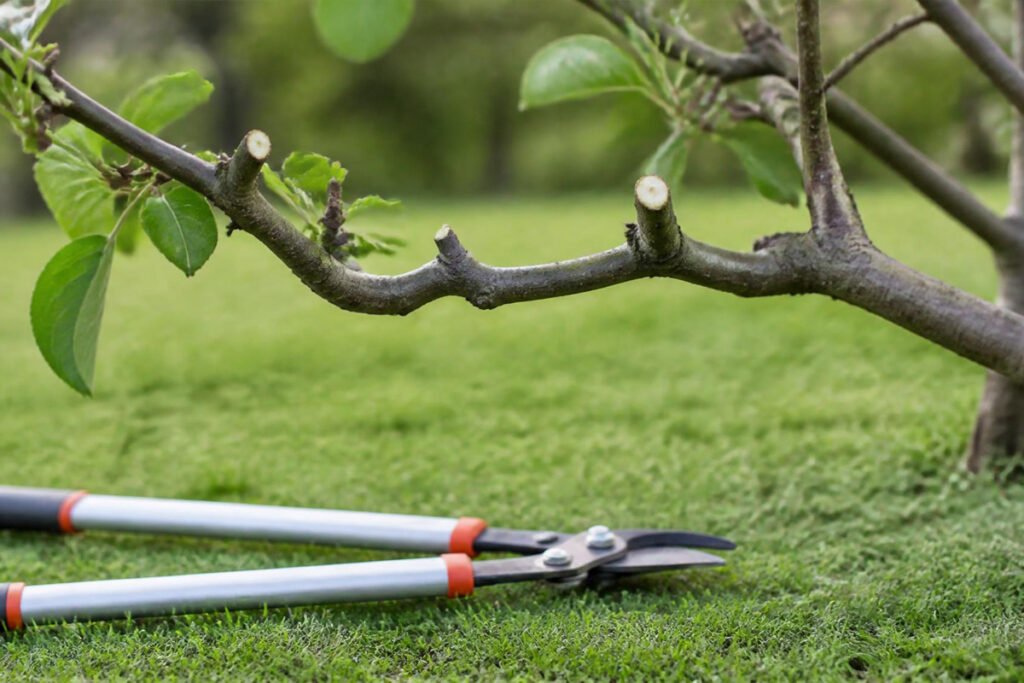
A gear-driven bypass lopper like the Fiskars PowerGear2 handles the thicker live branches common in fruit tree maintenance without the strain of straight-leverage loppers, pairing well with the pruning fundamentals in our pruning guide.
Storm Cleanup and Deadwood
An anvil-style compound-action lopper is purpose-built for this — dry, tough wood where a clean bypass cut isn’t the priority, just efficient removal.
Hedges and Tall Shrubs
An extended-reach model like the DualLINK MAXFORGED solves the overhead-branch problem that shorter loppers struggle with, especially useful alongside vertical gardening structures or trained climbing plants that grow tall quickly.
Common Mistakes
- Using anvil loppers on live, green branches. This crushes plant tissue instead of cutting cleanly, slowing healing and increasing disease risk — the same principle covered in our pruning shears guide applies at lopper scale.
- Forcing a branch beyond the rated cutting capacity. This strains the blades and pivot, often bending the tool permanently rather than making the cut. If you’re regularly exceeding a lopper’s capacity, it’s time for a larger model, not more force.
- Skipping blade maintenance. A dull lopper blade crushes and tears instead of cutting cleanly, no matter how much leverage the handles provide. Regular sharpening keeps cut quality — and plant health — where it should be.
Expert Tips
- Let the mechanism do the work. With gear or compound-action loppers, a smooth, steady squeeze through the full range of motion is more effective than short, forceful jerks — fighting the mechanism actually makes cutting harder.
- Keep both a bypass and an anvil lopper on hand if you manage both live pruning and deadwood removal regularly — using the wrong type on the wrong wood is the single most common lopper mistake.
- Store loppers open, not clamped shut, between uses if space allows — constant tension on a closed spring mechanism can weaken it over years of storage.
Final Thoughts
Best overall: The Fiskars 32″ PowerGear2 makes near-max-capacity cuts genuinely easy thanks to its gear mechanism. Best value: The Fiskars 28″ Heavy Duty covers the vast majority of homeowner pruning without excess cost. Best for deadwood: The Corona Compound Action Anvil Lopper handles tough, dry wood that would strain a bypass-only design.
Whichever you choose, keep it paired with a good pair of pruning shears for smaller cuts and a solid pair of gardening gloves for the job — loppers handle what pruners can’t, not everything at once.
Frequently Asked Questions
When should I use loppers instead of pruning shears? Once a branch is thicker than your thumb — roughly beyond what a hand pruner can comfortably close around — loppers give you the two-handed leverage needed for a clean cut without straining the tool or your wrist.
Bypass or anvil loppers — which do I actually need? For live, green branches, bypass loppers give a cleaner cut that heals faster. For dead, dry wood or storm cleanup, anvil loppers apply more crushing force, which matters more than precision in that situation. Many serious gardeners keep both.
What does a “gear” or “compound action” lopper actually do? It adds a pivot or gear mechanism that multiplies your hand’s force through the cut, making thicker branches noticeably easier to cut compared to a standard straight-lever design of the same handle length.
How thick a branch can loppers actually cut? Most consumer loppers are rated between 1.5 and 2.5 inches. Anything thicker typically needs a pruning saw or small chainsaw rather than forcing a lopper beyond its rated capacity.
Do longer-handled loppers cut better than shorter ones? Longer handles provide more leverage and reach, which helps with thicker branches and taller shrubs, but they’re heavier and less maneuverable in tight, dense plantings — shorter loppers suit close-quarters pruning better.
How do I keep my loppers cutting cleanly over time? Regular sharpening and cleaning the blades after use, especially after cutting sappy or diseased wood, keeps the cut quality consistent and prevents the crushing that comes with a dull blade.
Can loppers replace a pruning saw? Only up to their rated capacity. Beyond roughly 2–2.5 inches, a pruning saw handles the thickness and wood density that loppers aren’t built for, without the risk of bending or breaking the lopper’s blades.
Are expensive loppers actually worth it over budget models? For occasional homeowner use, a solid mid-range pair like the Fiskars 28″ covers most needs. For daily or professional use, premium options like the Corona X Series Pro pay off through serviceability and long-term durability that budget models don’t offer.
Should I disinfect loppers between plants like I would pruning shears? Yes, especially when working around diseased branches — the same disease-spread risk that applies to hand pruners applies at lopper scale, just less frequently needed since loppers handle fewer total cuts per session.
What’s the difference between loppers and hedge shears? Loppers make individual, precise cuts on single branches, typically up to a couple inches thick. Hedge shears are built for shaping foliage across a broad surface — trimming many thin stems at once rather than cutting single thick branches.
Author: Pamela Reese Last Updated: August 2026
Pingback: 7 Best Pruning Shears & Secateurs: Proven Top Picks & Buying Guide | Pro Gardening Tips – Expert Advice for a Thriving Garden