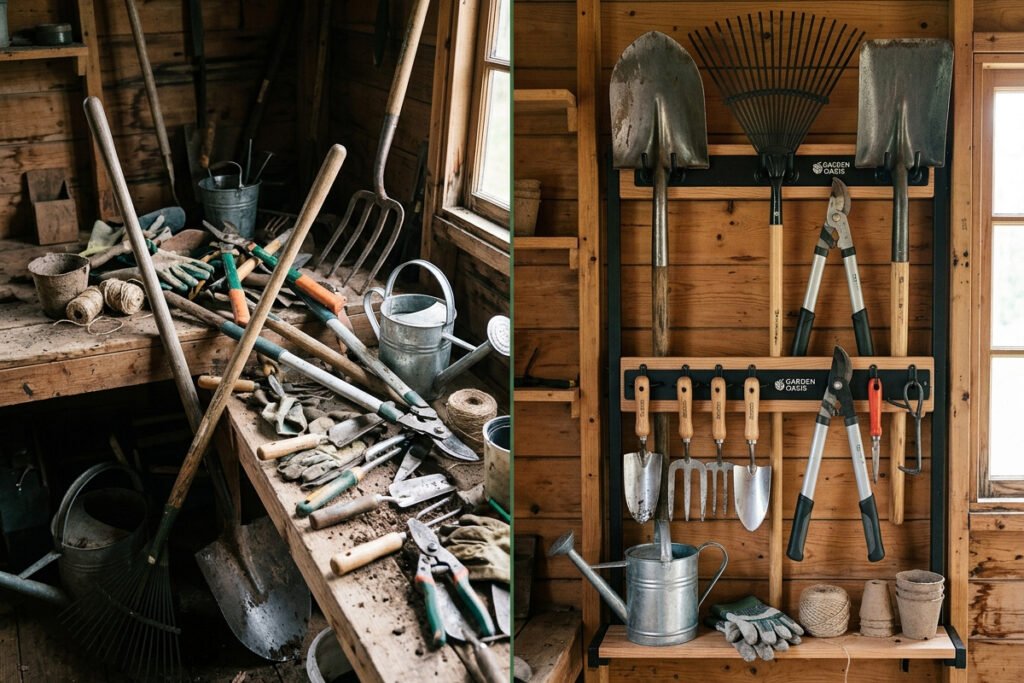
A growing vegetable garden accumulates tools faster than most people expect. What started as a trowel and a pair of pruners becomes a tangle of hoses, half-used bags of amendments, seed packets, stakes, and a watering can that’s always somehow in the wrong spot. Without a real storage system, tools end up left outside where they rust, or scattered across a garage floor where they’re impossible to find when you actually need them.
Good garden storage isn’t just about tidiness — it directly protects the investment already made in quality tools and supplies, the same protective logic behind proper gardening tool maintenance. A pruner left out in the rain rusts within a season regardless of how good the steel was to begin with, and a disorganized pile of stakes and netting often gets replaced simply because the original set can’t be found. The right storage solution keeps tools dry, organized, and quick to grab, which in practice means they actually get used and maintained rather than abandoned.
This guide breaks down five garden storage and organization solutions worth knowing, exactly how each one works, what specific storage problem it solves, and why it’s worth the investment — protecting the tools and accessories already covered elsewhere on the site.
Quick Answer
The best garden storage solution depends on how much you need to store and how much space you have. A deck storage box offers weatherproof, ground-level storage for hoses, cushions, and larger supplies without needing a dedicated shed. A tool wall or pegboard organizer keeps frequently used hand tools visible and instantly accessible rather than buried in a bin. A potting bench with storage combines a dedicated workspace with built-in storage for soil, pots, and small tools in one unit. A garden shed provides the most complete, weatherproof storage for a full range of tools, equipment, and supplies. A rolling garden cart with storage compartments offers mobile, on-the-go organization that moves with you as you work through the garden. Most gardens benefit from combining a tool wall for daily-use items with one larger storage solution for everything else.
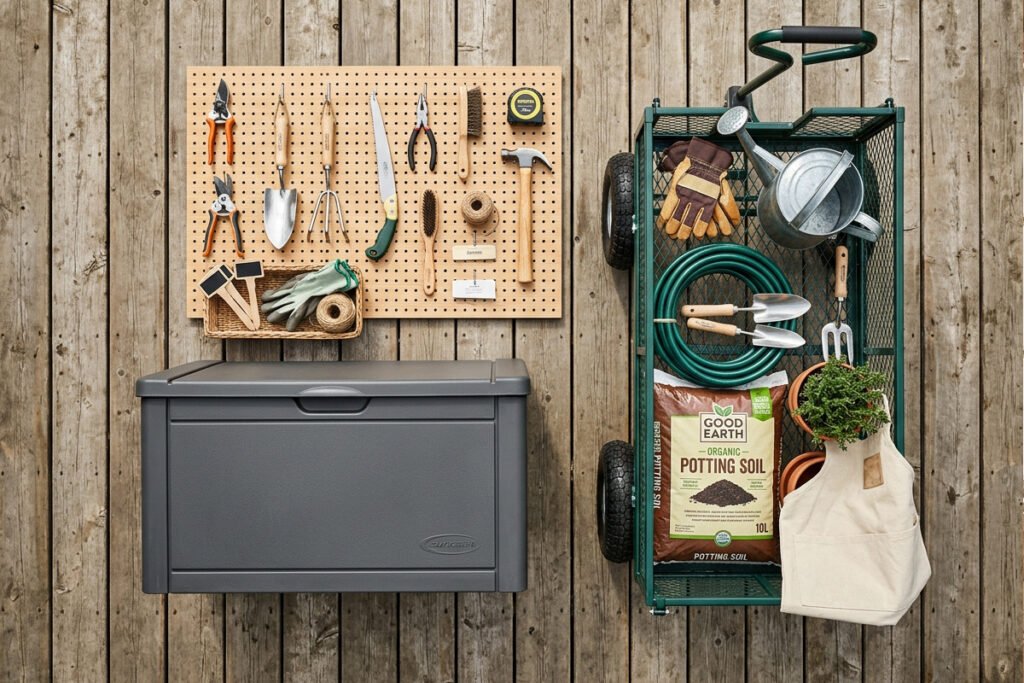
Table of Contents
- Why Storage Affects Tool Lifespan, Not Just Tidiness
- How to Choose the Right Storage Solution
- Best Garden Storage & Organization Solutions
- Comparison Table
- Storage Solutions for Different Garden Setups
- How to Set Up an Organized Garden Storage System
- Common Garden Storage Mistakes
- Expert Tips
- Final Thoughts
- Frequently Asked Questions
Why Storage Affects Tool Lifespan, Not Just Tidiness {#why-storage-matters}
Tools left exposed to rain and humidity rust and dull far faster than properly stored ones, regardless of how well they were made to begin with. A quality pair of pruners left on a damp bench overnight can develop surface rust within days, undoing much of the durability advantage that led to buying a better tool in the first place. Proper storage isn’t a luxury add-on — it’s part of what actually makes investing in quality tools worthwhile.
Organization also has a real time cost when it’s missing. A gardener who spends ten minutes searching for a misplaced trowel or a specific size of stake before every gardening session loses meaningful time across a season that a simple, consistent storage system would have saved entirely. Good storage, in other words, protects both the tools themselves and the time spent actually using them, freeing up more time for the parts of gardening that matter, like weeding and harvesting.
How to Choose the Right Storage Solution {#how-to-choose}
Before buying, think through three questions:
How much do you actually need to store? A handful of hand tools fits easily on a wall organizer, while hoses, bags of soil, and larger equipment need a deck box or shed-sized solution.
Do you need stationary or mobile storage? A tool wall or shed stays fixed in one place, while a rolling cart moves with you as you work across different parts of the garden.
How much space do you have available? A small yard may only accommodate a deck box or wall organizer, while a larger property can support a full garden shed.
Best Garden Storage & Organization Solutions {#best-solutions}
Deck Storage Box
Overview: A weatherproof storage container, often resembling a bench or low chest, designed to hold hoses, cushions, bags of soil, and other supplies while protecting them from rain and sun.
Why It Works: The sealed, weatherproof design keeps contents dry and protected without requiring the space or cost of a full shed, making it an efficient middle-ground solution for gardens with more to store than a wall organizer can handle but not enough to justify a dedicated structure. Many designs also double as extra outdoor seating, adding functional value beyond storage alone.
Key Features:
- Weatherproof seal protects contents from rain and sun exposure
- Compact footprint compared to a full garden shed
- Many designs double as additional outdoor seating
Best For: Storing hoses, bagged supplies, and mid-sized equipment without needing a full shed.
Pros: ✅ Protects contents from weather without a shed’s footprint ✅ Often doubles as seating ✅ Lower cost than a full shed structure
Cons: ❌ Limited capacity compared to a shed ❌ Ground-level access can be less convenient than shelving or wall storage
Our Verdict: Worth buying as a practical middle-ground option — it handles significantly more storage than a wall organizer without the space and cost commitment of a full garden shed, and it keeps watering equipment protected and organized in one spot.
Tool Wall or Pegboard Organizer
Overview: A wall-mounted panel with hooks, slots, or pegs for hanging frequently used hand tools, keeping them visible and immediately accessible rather than stored in a closed container.
Why It Works: Visible, hanging storage means tools are grabbed and returned quickly during actual gardening sessions, since there’s no bin to dig through or lid to open before getting to work. This visibility also makes it immediately obvious when a tool is missing or hasn’t been returned, which helps prevent the slow tool loss that happens when everything gets tossed into a shared bin.
Key Features:
- Visible hanging storage speeds up finding and returning tools
- Customizable hook and peg layout for different tool shapes and sizes
- Compact footprint suited to a garage, shed wall, or fence
Best For: Frequently used hand tools like trowels, pruners, and hand forks that benefit from quick, visible access.
Pros: ✅ Fast, visible access to daily-use tools ✅ Compact wall-mounted footprint ✅ Makes missing tools immediately obvious
Cons: ❌ Not suited to larger equipment or bagged supplies ❌ Requires a suitable wall or fence for mounting
Our Verdict: Worth installing specifically for the handful of tools used every single gardening session — pairing a wall organizer for daily tools with a larger storage solution for everything else covers both ends of the storage need effectively.
Potting Bench with Storage
Overview: A dedicated workbench for potting, transplanting, and general garden tasks, typically built with integrated shelving, drawers, or bins for storing soil, pots, and small tools directly at the workspace.
Why It Works: Combining a dedicated work surface with built-in storage means supplies needed for a task, like potting mix or transplant containers, are stored exactly where they’re used rather than requiring a separate trip to a shed or storage box mid-task. This proximity between storage and workspace meaningfully speeds up common tasks like potting up seedlings or repotting container plants.
Key Features:
- Integrated storage keeps supplies at the point of use
- Dedicated work surface for potting, transplanting, and general tasks
- Often includes a mix of open shelving and enclosed storage for different item types
Best For: Gardeners who regularly pot up seedlings, transplant, or work with bagged soil and amendments.
Pros: ✅ Storage located directly at the point of use ✅ Dedicated work surface improves task efficiency ✅ Mix of storage types suits different supplies
Cons: ❌ Larger footprint than simpler storage options ❌ Best suited to a patio, shed, or covered area rather than fully open exposure
Our Verdict: Worth the investment for anyone regularly potting, transplanting, or working with soil and amendments — having storage built directly into the workspace removes a surprising amount of friction from routine garden tasks.
Garden Shed
Overview: A dedicated, fully enclosed structure for storing the complete range of garden tools, equipment, and supplies, offering the most comprehensive weatherproof storage of any option on this list.
Why It Works: A shed’s enclosed, weatherproof structure protects everything from hand tools to larger equipment like wheelbarrows and bagged soil from rain, sun, and temperature extremes, extending the lifespan of tools significantly compared to any partial or open storage solution. Its size also allows for organized zones within the structure, keeping hand tools, larger equipment, and bulk supplies separated rather than mixed together in a single container.
Key Features:
- Fully enclosed structure protects the widest range of tools and equipment
- Enough space to organize tools into separate zones by type
- Houses larger equipment like wheelbarrows that other options can’t accommodate
Best For: Gardens with a substantial tool and equipment collection needing comprehensive, organized, weatherproof storage.
Pros: ✅ Most comprehensive protection of any storage option ✅ Enough space for organized zones by tool type ✅ Accommodates larger equipment other options can’t
Cons: ❌ Highest cost and largest footprint of any option here ❌ Requires a dedicated, level spot in the yard
Our Verdict: Worth the investment once a tool collection outgrows smaller storage options — this is the only solution here that comprehensively protects everything from hand tools to larger equipment like a wheelbarrow or garden cart in one weatherproof structure.
Rolling Garden Cart with Storage Compartments
Overview: A wheeled cart with built-in bins, trays, or compartments, designed to hold tools and supplies while moving with the gardener from bed to bed rather than staying in one fixed location.
Why It Works: Unlike stationary storage, a rolling cart brings tools and supplies directly to wherever work is happening, eliminating repeated trips back to a shed or storage box mid-task. This mobility is particularly valuable in larger gardens where the distance between beds and fixed storage adds up significantly over the course of a single gardening session.
Key Features:
- Wheeled mobility brings storage directly to the work area
- Multiple compartments organize different tool and supply types
- Reduces repeated trips back to fixed storage during a single session
Best For: Larger gardens where moving between beds makes fixed storage locations inconvenient mid-task.
Pros: ✅ Mobile storage reduces repeated trips ✅ Multiple compartments keep supplies organized on the go ✅ Doubles as general hauling capacity like a standard cart
Cons: ❌ Smaller total capacity than a shed or deck box ❌ Still needs a home base for storage when not in active use
Our Verdict: Worth adding for larger gardens specifically — the mobility factor solves a real time-cost problem that fixed storage can’t address, though it works best as a complement to, not a replacement for, a larger fixed storage solution.
Comparison Table {#comparison-table}
| Solution | Best For | Capacity | Mobility | Weatherproof |
|---|---|---|---|---|
| Deck Storage Box | Hoses, bagged supplies | Medium | Fixed | Yes |
| Tool Wall/Pegboard | Daily-use hand tools | Low | Fixed | Depends on location |
| Potting Bench with Storage | Potting, transplanting tasks | Medium | Fixed | Depends on placement |
| Garden Shed | Full tool/equipment collection | Very High | Fixed | Yes |
| Rolling Garden Cart | On-the-go, larger gardens | Low–Medium | Mobile | Partial |
Storage Solutions for Different Garden Setups {#different-setups}
Small Yards and Patios
A deck storage box or tool wall organizer fits easily into a small yard without requiring the footprint a full shed demands, covering most storage needs for a modest raised bed or container setup.
Mid-Sized Gardens with Multiple Beds
A potting bench with storage, paired with a tool wall for daily items, supports the increased task volume of managing several beds without needing a full shed’s capacity.
Larger Properties and In-Ground Plots
A garden shed makes the most sense for larger properties with substantial tool and equipment collections, often paired with a rolling cart for moving supplies efficiently across a bigger growing area.
How to Set Up an Organized Garden Storage System {#how-to-set-up}
Step 1: Sort Tools by Frequency of Use
Separate daily-use hand tools from occasional or seasonal equipment, since these two categories benefit from very different storage approaches.
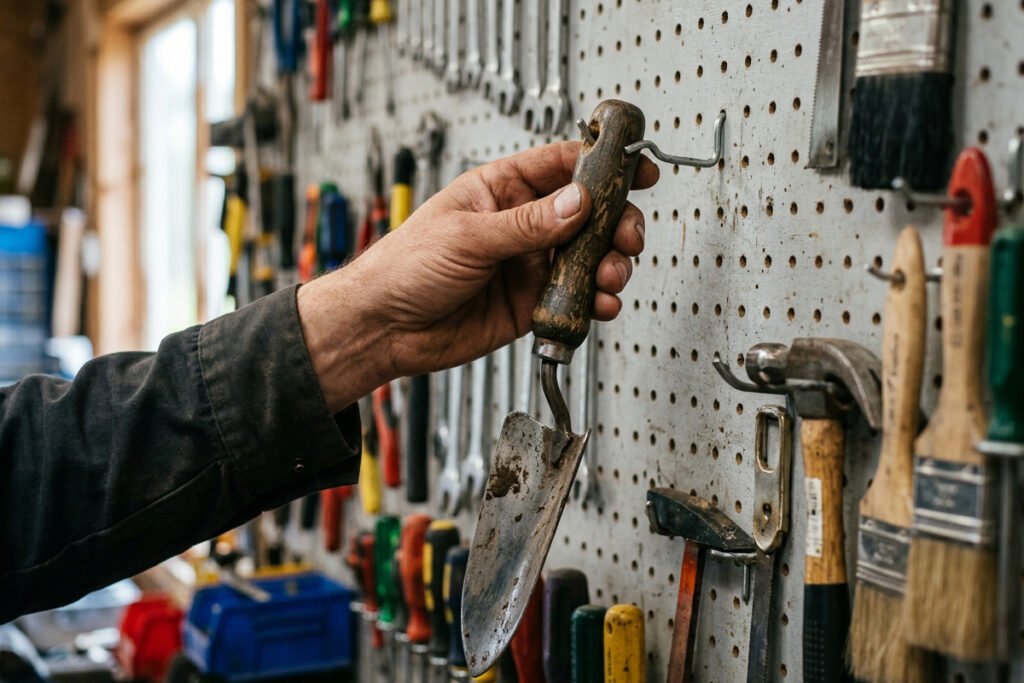
Step 2: Assign Visible Storage to Daily Tools
Mount a wall organizer or pegboard for the handful of tools used every session, keeping them fast to grab and return.
Step 3: Choose Enclosed Storage for Everything Else
Use a deck box, shed, or bench storage for bagged supplies, larger equipment, and seasonal items that don’t need daily access.
Step 4: Label or Zone Storage by Category
Group similar items together, whether by zone in a shed or by compartment in a rolling cart, so specific items are easy to locate without searching through everything.
Step 5: Clean and Dry Tools Before Storing
Follow the same tool maintenance habits of cleaning and drying tools before they go into storage, since even the best storage system won’t prevent rust on tools put away wet or dirty.
Common Garden Storage Mistakes {#common-mistakes}
Leaving tools out after use instead of returning them to storage. Even the best storage system fails if tools consistently get left on the ground or bench after a task. Build returning tools into the end of every gardening session.
Storing everything in one undifferentiated container. Mixing hand tools, bagged supplies like organic fertilizer, and larger equipment in a single bin makes finding anything slower and increases the chance of damage from items pressing against each other.
Choosing storage capacity too small for the actual collection. A storage solution sized for a beginner’s tool kit quickly overflows as a garden and its tool collection grow. Plan for some growth room rather than exactly matching current needs.
Expert Tips {#expert-tips}
Store seasonal items separately from year-round tools. Season-extension products like row covers and cold frames only need retrieving a few times a year, so storing them in a less accessible spot than daily tools keeps prime storage space for frequently used items.
Keep a small mobile kit for quick sessions. A small bucket or apron with a trowel and pruners, kept near the garden rather than in main storage, supports the kind of quick five-minute checks that a full storage trip would discourage.
Match storage location to tool sensitivity. Metal tools benefit from the driest, most weatherproof storage available, while sturdier items like a wheelbarrow can tolerate a less protected spot if space is limited.
Final Thoughts {#final-thoughts}
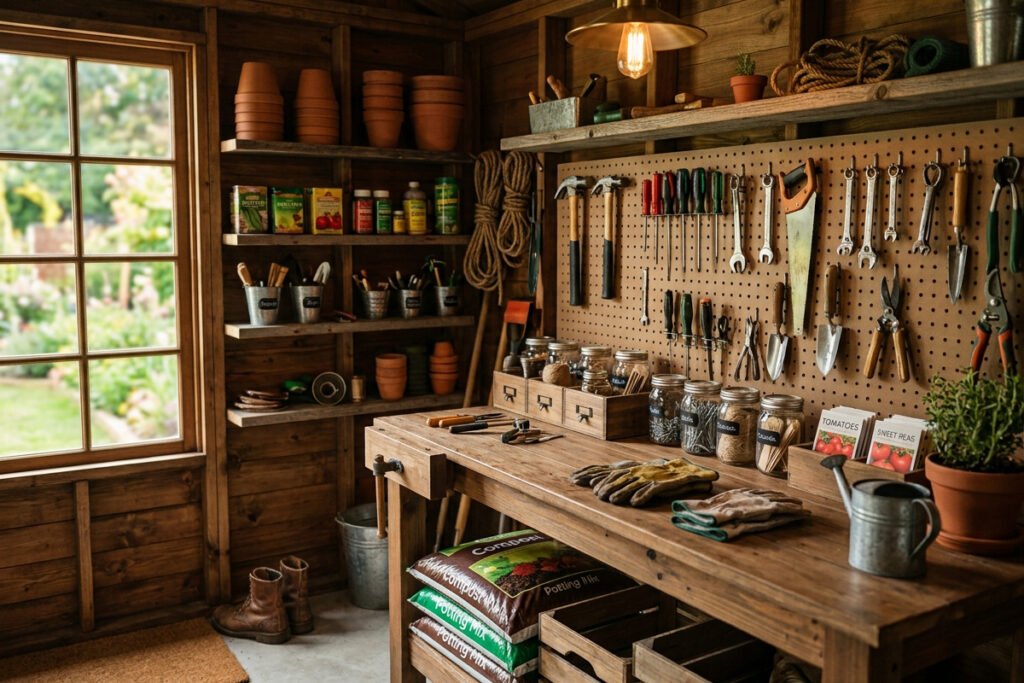
Best overall: a tool wall organizer paired with a deck storage box, covering both daily-use visibility and weatherproof capacity for everything else. Best for serious tool collections: a garden shed, offering the most comprehensive protection and organization available. Best for larger gardens: a rolling cart, solving the real time cost of moving between beds with fixed storage far away.
Good garden storage isn’t about buying the most impressive-looking solution — it’s about matching storage type and capacity to what you actually own and how you actually work through the garden. Combined with consistent tool maintenance habits, the right storage system protects the investment already made in quality tools and keeps them ready to use every time you head out to the garden.
Frequently Asked Questions {#faq}
Do I need a shed if I only have a small tool collection? Not necessarily — a deck storage box or tool wall organizer often covers a small collection’s needs without the cost and footprint of a full shed.
Is a rolling cart worth it for a small garden? It’s less essential in a small garden where fixed storage is always nearby, but becomes more valuable as garden size and the distance between beds and storage increases.
Can I store bagged soil and fertilizer in a deck storage box? Yes, as long as the box is properly weatherproof, bagged supplies generally store well in a deck box, protected from rain and sun exposure.
What’s the best way to prevent tools from rusting in storage? Clean and thoroughly dry tools before storing them, and choose the most weatherproof storage option available for metal tools specifically, since moisture is the primary cause of rust.
Do potting benches need to be covered or under a roof? It’s not strictly required, but placing a potting bench under some form of cover extends its lifespan and better protects any stored supplies from direct weather exposure.
How much does a garden shed typically cost compared to smaller storage options? Sheds generally cost significantly more than a deck box or tool wall organizer, reflecting their much larger capacity and more comprehensive weatherproof protection.
Can I build my own tool wall organizer instead of buying one? Yes, a simple pegboard or hook-and-rail system is straightforward to build and customize to your specific tool collection, often at a lower cost than a pre-made organizer.
What size garden shed do I actually need? This depends entirely on your tool and equipment collection size — a small shed suits a modest hand tool and supply collection, while larger equipment like wheelbarrows and mowers requires a bigger footprint.
Should seasonal items be stored differently than daily-use tools? Yes, seasonal items like row covers are accessed far less often and can be stored in a less convenient spot, freeing up prime, easy-access storage for daily-use tools.
Can a rolling cart replace a shed entirely? No, a rolling cart’s capacity is much smaller than a shed’s and it still needs a home base for storage when not actively in use, making it a complement rather than a replacement for fixed storage.
How do I organize storage for a garden with both hand tools and larger equipment? Separating storage by tool type — a wall organizer for hand tools and a shed or deck box for larger equipment — generally works better than trying to fit everything into one storage solution.
Is it worth investing in storage before expanding my garden further? Yes, since tool and supply collections tend to grow alongside garden size, setting up adequate storage early prevents the disorganization and tool damage that often comes with outgrowing a storage system already in use.
Author: Pamela Reese