Most home gardeners plant, water, and fertilize religiously, then treat pruning as an afterthought — something they’ll get to if there’s time. That’s a mistake. A tomato plant left to sprawl unpruned can put most of its energy into leafy growth instead of fruit. A cucumber vine allowed to tangle across the ground invites the exact soil-borne diseases that organic pest control strategies are designed to prevent. Pruning isn’t cosmetic maintenance; it’s one of the highest-leverage things you can do for plant health and yield, and it costs nothing but a few minutes with a clean pair of shears.
This guide walks through exactly how and when to prune the vegetables most home gardeners grow — tomatoes, cucumbers, peppers, squash, pole beans, and container herbs — along with the general principles that apply across almost every crop. Whether you’re working in a traditional row garden or a raised bed, the same core techniques apply.
Why Pruning Vegetable Plants Actually Matters
Every plant has a finite amount of energy produced through photosynthesis each day. Left unpruned, many vegetables — tomatoes and cucumbers especially — will pour a large share of that energy into vegetative growth: more leaves, more side shoots, more stem. That growth doesn’t put food on your table. Pruning redirects the plant’s energy toward the fruit you actually want by removing the growth that competes with it.
There’s a second, equally important reason to prune: airflow. Dense, unpruned foliage traps humidity around the base of the plant, and that humidity is exactly what fungal diseases like early blight, powdery mildew, and septoria leaf spot need to take hold. Opening up the canopy with strategic pruning is one of the simplest forms of disease prevention available to a home gardener, and it pairs naturally with the practices covered in our guide to vegetable garden pest control.
Finally, pruning makes gardens easier to manage. A pruned, trellised cucumber vine or a tomato plant trained to one or two leaders is far easier to inspect for pests, water at the base, and harvest from than a wall of unpruned foliage.
The Tools You’ll Need
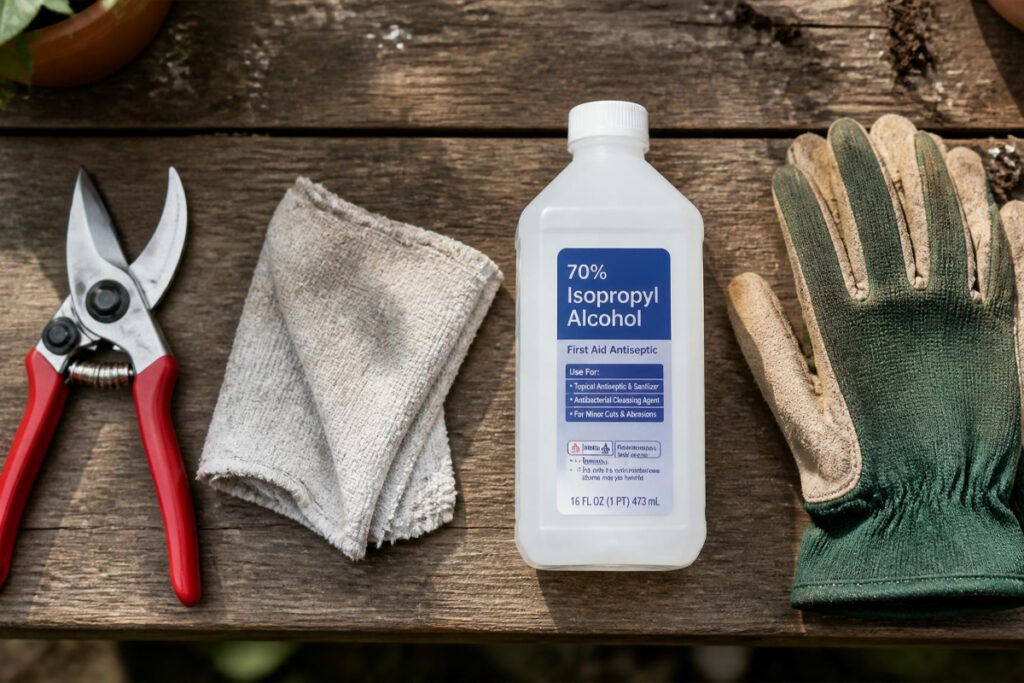
You don’t need a large kit to prune a vegetable garden well. A pair of sharp bypass pruning shears handles woody stems, while your fingers are often the best tool for soft, young suckers and shoots — pinching is gentler on the plant than cutting and closes the wound faster. If you’re assembling a kit from scratch, our roundup of the best garden hand tools for every gardener covers pruners worth buying, and our broader guide to essential gardening tools for vegetable gardens rounds out the rest of the toolkit.
Whatever shears you use, keep them clean. Wipe the blades with rubbing alcohol between plants — and especially between plants that show any sign of disease — so you don’t spread pathogens on the blade itself. This single habit prevents a huge share of the disease transmission that happens through careless pruning.
General Pruning Principles Before You Start
- Prune in the morning, on a dry day. Wounds close faster in dry conditions, and morning pruning gives the cut time to seal before evening humidity sets in.
- Never remove more than a third of a plant’s foliage in a single session. Aggressive pruning stresses the plant and can trigger sunscald on fruit that’s suddenly exposed to direct sun.
- Cut cleanly, close to the main stem, without leaving a stub. Jagged or torn wounds heal slower and are more vulnerable to disease.
- Remove any leaves touching the soil first. Soil-splash is one of the most common ways fungal spores reach a plant, so this single cut does outsized work.
- When in doubt, prune less. Most home gardeners under-prune; over-pruning is the rarer mistake, but it does happen, especially with peppers and eggplant.
These principles apply whether you’re growing in-ground, in a raised bed, or — for smaller crops — in containers, as covered in our guide to container vegetable gardening.
How to Prune Tomatoes (Suckering, Explained)
Tomatoes are the crop most home gardeners think of first when it comes to pruning, and for good reason — how you prune a tomato plant depends entirely on its growth habit. If you haven’t already, it’s worth reading our complete guides on how to grow tomatoes from seed to harvest and the ultimate beginner’s guide to growing tomatoes for the full growing picture — this section focuses specifically on pruning.
Determinate vs. Indeterminate Tomatoes
Determinate tomatoes (most paste and container varieties) grow to a fixed size, set fruit over a relatively short window, and need very little pruning — over-pruning a determinate variety can actually reduce your total yield, since it produces most of its fruit on the growth you’d otherwise remove.
Indeterminate tomatoes (most beefsteak, cherry, and heirloom varieties) keep growing and producing new fruit clusters until frost. These are the varieties that benefit most from regular pruning throughout the season.
Removing Suckers
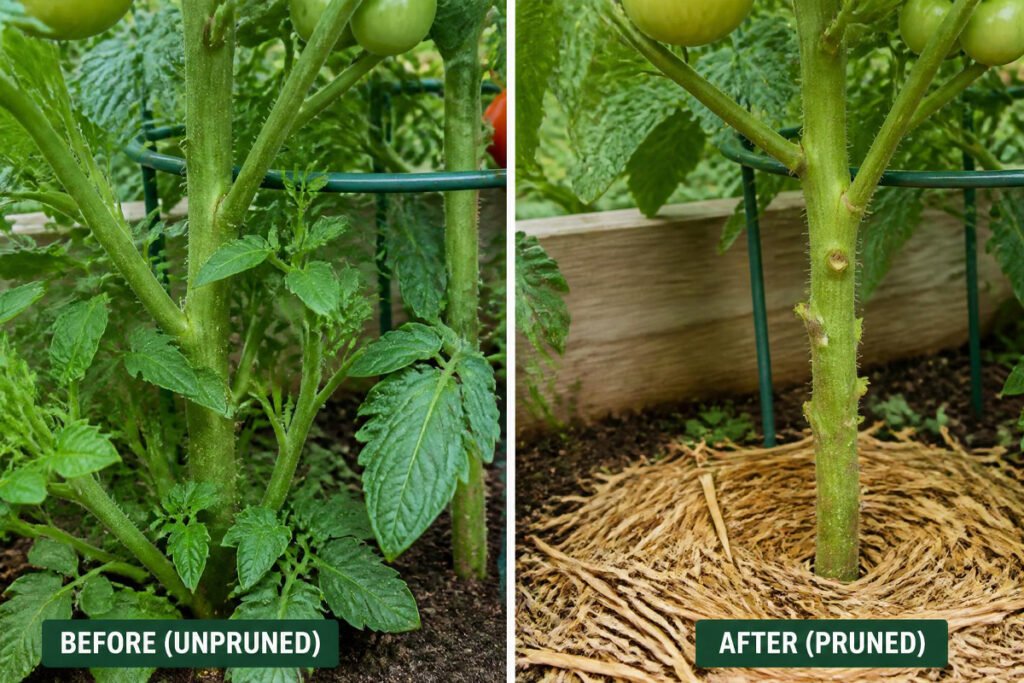
A sucker is the small shoot that emerges in the axil — the V-shaped notch where a leaf branch meets the main stem. Left alone, every sucker will grow into a full new stem with its own leaves, flowers, and fruit, which sounds appealing but spreads the plant’s energy across far more foliage than it can support well.
For an indeterminate tomato trained to one or two main leaders (a common approach with staked or trellised plants), pinch out suckers weekly while they’re still small — under two or three inches — simply by snapping them off with your fingers. If you’re training to two leaders, choose one strong sucker below the first flower cluster to become the second main stem, and remove the rest.
Also remove the lowest leaves and side shoots on the bottom six to twelve inches of the plant, especially any foliage close to or touching the soil. This is the single most effective pruning step for preventing early blight and other soil-borne diseases from splashing up onto the plant.
How to Prune Cucumbers and Other Vining Crops
Cucumbers grown on the ground sprawl in every direction and are notoriously prone to powdery mildew and fruit rot from soil contact. Growing them vertically on a trellis — see our guides to vertical gardening for small spaces and the best vertical gardening systems and planters — solves most of that problem before pruning even comes into play. For the full growing process, see our complete guide to how to grow cucumbers.
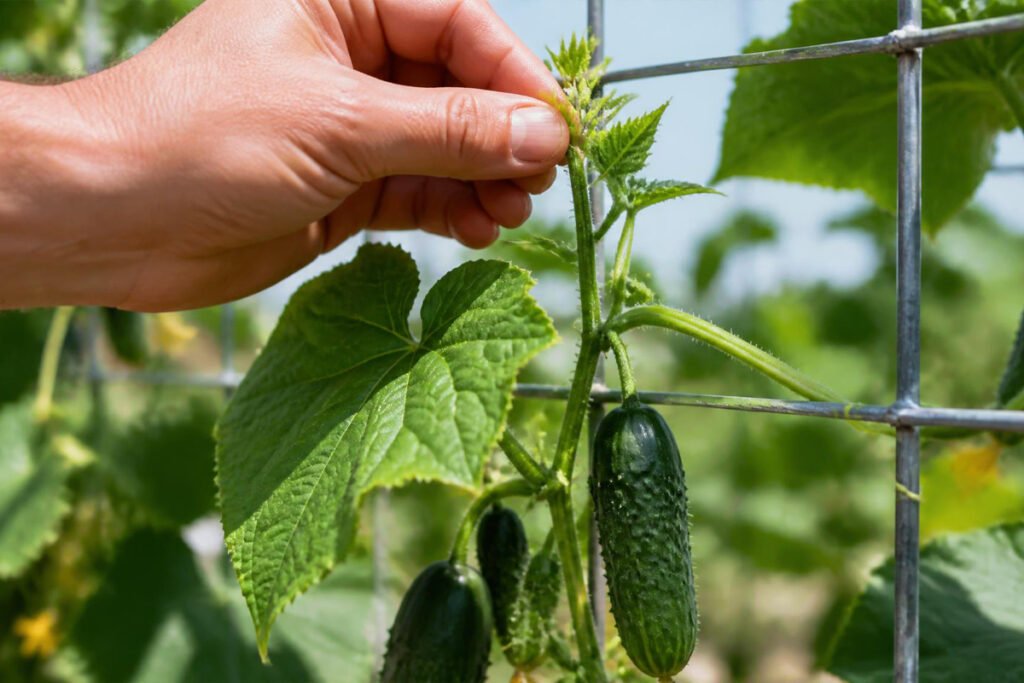
Once a trellised cucumber vine reaches the top of its support, pinch the growing tip to stop upward growth and encourage the plant to put energy into side shoots and fruit instead. Remove the lowest few leaves and any side shoots below the first fruit cluster to improve airflow at the base, and trim off any yellowing or diseased leaves as soon as you spot them rather than waiting for a scheduled pruning session.
How to Prune Peppers and Eggplant
Peppers and eggplant need far less pruning than tomatoes or cucumbers — see our complete guide to growing peppers for the full seed-to-harvest process. The main pruning task is topping: pinching out the growing tip of a young pepper plant once it reaches about six inches tall encourages it to branch out into a bushier, sturdier plant that supports more fruit and is less likely to snap in wind.
Later in the season, remove any leaves that are yellowing, diseased, or blocking airflow around developing fruit, and stake heavily loaded branches rather than pruning them away — the goal with peppers is support, not restriction.
How to Prune Squash, Zucchini, and Melons
Bush-type summer squash and zucchini need almost no pruning beyond removing yellowing lower leaves as the season progresses. Vining winter squash, pumpkins, and melons are a different story — left unchecked, a single vine can sprawl twenty feet or more. If space is tight, pinch the growing tip of the main vine once it has set three or four fruit, which redirects the plant’s energy into ripening what it already has instead of setting more fruit than it can mature before frost.
As with cucumbers, keeping the base of the plant clear of excess foliage improves airflow and makes it far easier to spot the earliest signs of powdery mildew, which spreads quickly through a dense squash canopy.
Pruning Pole Beans and Peas
Pole beans and peas need minimal pruning. The main task is simply keeping them trained onto their support — a trellis, fence, or the corn stalks used in a traditional Three Sisters planting, described in our companion planting guide. Pinch the growing tip once a vine reaches the top of its support to encourage bushier side growth and more pods, and remove any yellowing lower leaves that are shaded out by the canopy above them.
Pinching Back Herbs for Bushier Growth
Herbs respond to pruning differently than fruiting vegetables — the goal isn’t fewer stems, it’s more of them. Regularly pinching the growing tips of basil, mint, and other soft-stemmed herbs just above a leaf node forces the plant to branch at that node, producing a fuller, bushier plant instead of one tall, leggy stem. Our guides to growing herbs indoors, including this beginner’s guide to indoor herbs and our guide to fresh herbs year-round, cover the growing conditions that make this kind of frequent, light pruning most effective.
With basil specifically, pinch out any flower spikes as soon as they appear — flowering signals the plant to shift energy from leaf production to seed production, and the leaves that follow tend to turn bitter.
How Often Should You Prune?
Most vegetable gardens benefit from a light pruning pass once a week during active growing season, rather than one big session every few weeks. Suckers grow fast — a tomato sucker you pinch when it’s an inch long takes seconds and barely stresses the plant; the same sucker left for two weeks becomes a thick stem that requires shears and leaves a larger wound. A short weekly walk-through, pinching what’s small and checking for yellowing leaves, is far less work over a season than periodic heavy pruning sessions.
The exception is topping — the late-season removal of a plant’s growing tip to stop new fruit set — which is a one-time cut done a set number of weeks before your first expected frost, not a recurring task.
Pruning in Raised Beds, Containers, and In-Ground Gardens
The pruning techniques in this guide apply regardless of where you’re growing, but the setting does change how urgent airflow becomes. Plants in a raised bed are typically spaced more tightly than an in-ground row garden, which means the lower-leaf removal and sucker pinching described above matter even more — there’s simply less room for air to move between crowded plants.
Container-grown vegetables, covered in our guide to container vegetable gardening, benefit from slightly more aggressive pruning than the same variety grown in open ground, since a smaller root system has less capacity to support unchecked vegetative growth. If a container tomato looks like it’s outgrowing its pot, pruning is often a better first response than repotting mid-season.
Seasonal Pruning Calendar
- Early season (after transplanting): Light pruning only — remove damaged leaves and any suckers below the first flower cluster on tomatoes.
- Mid-season (active growth): Weekly sucker removal on indeterminate tomatoes, tip-pinching on peppers and vining crops, regular pinching on herbs.
- Late season (four to six weeks before your first fall frost): Top your indeterminate tomato and vining squash plants — remove the growing tip entirely so the plant stops setting new fruit and redirects its energy into ripening what’s already on the vine.
For exact regional timing, cross-reference these windows with our seasonal planting calendar and our broader year-round seasonal gardening tips.
Common Pruning Mistakes to Avoid
- Pruning with dirty tools. A blade that touched a diseased plant can carry that disease straight to the next healthy one you cut.
- Removing too much at once. Stripping more than a third of a plant’s foliage in one session shocks it and can expose fruit to sunscald.
- Pruning determinate tomatoes like indeterminate ones. Heavy suckering on a determinate variety removes the growth that would have produced most of your harvest.
- Ignoring the lower six inches of the plant. This is the zone most exposed to soil splash, and it’s the area gardeners most often forget to clear.
- Skipping weed control around pruned plants. A newly opened canopy still needs clear ground beneath it — see our complete guide to weed control for vegetable gardens for a full strategy.
For more on the last point, our full weed control guide walks through keeping the base of pruned plants clear without resorting to harsh chemicals.
Pruning and Disease Prevention
Good pruning is, at its core, a disease-prevention strategy. Improved airflow and reduced soil contact are two of the biggest factors in keeping fungal and bacterial diseases from taking hold in the first place. That said, pruning works best as part of a broader plan — see our guides to natural and eco-friendly garden pest control and the best organic pest control products for vegetable gardens for the rest of an integrated approach.
According to Iowa State University Extension’s guide to pruning tomatoes in the home garden, removing lower leaves and side shoots improves air circulation around the stem and reduces the spread of soil-borne foliar diseases — the same principle that applies across nearly every vegetable covered in this guide.
Frequently Asked Questions
Do I need to prune my vegetable garden at all?
No pruning is strictly required for most vegetables to survive, but skipping it usually means smaller fruit, more disease pressure, and a harder-to-manage garden. For high-value crops like indeterminate tomatoes, pruning makes a measurable difference in yield and fruit size.
Is it better to pinch suckers off with my fingers or cut them with shears?
Pinching with your fingers is preferred for young, soft suckers under a few inches long — it closes faster and carries less disease risk than a blade. Reach for shears only once a sucker has thickened and hardened.
Can I prune too much?
Yes. Removing more than about a third of a plant’s foliage at once is stressful and can expose fruit to sunscald. If a plant looks overgrown, spread the pruning across two or three sessions a week or so apart rather than doing it all at once.
Should I prune during a heatwave or drought?
Hold off if you can. Pruning removes leaf surface the plant relies on for water regulation, and cutting during heat stress compounds that stress. Wait for a cooler, calmer stretch of weather when possible.
What should I do with the suckers and cuttings I remove?
Healthy tomato suckers can actually be rooted in water and replanted to start a second flush of plants for a fall crop — a useful trick if your growing season is long enough. Diseased material should go in the trash, not the compost bin, since most home compost piles don’t reach a temperature high enough to reliably kill plant pathogens.
Does pruning delay my harvest?
Light, regular pruning generally speeds ripening rather than delaying it, since the plant redirects energy away from foliage and toward the fruit that’s already set. A single aggressive pruning session can cause a brief pause while the plant recovers, which is exactly why the weekly, incremental approach described above tends to outperform occasional heavy cutting.
Do determinate tomatoes need any pruning at all?
A little. Even determinate varieties benefit from having their lowest leaves removed to reduce soil splash, and from having any obviously damaged or diseased foliage trimmed away. What they don’t need is regular sucker removal — leave those in place so the plant can produce its full, concentrated harvest.
Putting It All Together
Pruning doesn’t need to be complicated to be effective. A weekly pass through the garden — pinching tomato suckers, clearing the lowest leaves, topping vines that have reached their support — does more for plant health and yield than almost any other five minutes you’ll spend outside. If you’re just getting your garden established, pair these habits with our guides on how to start a vegetable garden from scratch and how to water a vegetable garden for a complete foundation, then make pruning part of your regular routine from the very first sucker.
Last Updated: August 2026
Pingback: 5 Best Pruning Shears for Every Gardener: Proven Top Picks & Buying Guide | Pro Gardening Tips – Expert Advice for a Thriving Garden