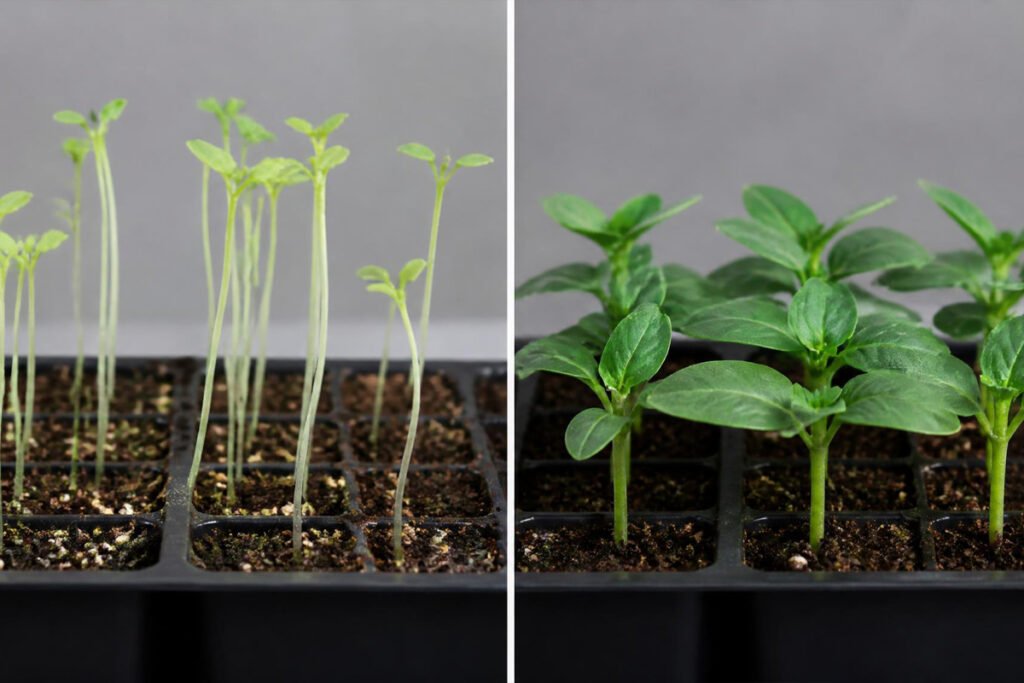
A windowsill looks bright enough to a person walking past it, but to a seedling, it’s often nowhere close to what it actually needs. Even a strong south-facing window typically delivers only a fraction of the light intensity direct outdoor sun provides, and that light only comes from one direction. The result is the same frustrating pattern every seed-starting season: thin, pale, stretched-out seedlings leaning hard toward the glass, using up energy reaching for light instead of building the sturdy stems and roots they’ll need after transplanting.
Grow lights solve this by delivering consistent, strong, all-directional light exactly where seedlings need it, for exactly as long as they need it, regardless of the weather or time of year outside, complementing the heat mat and humidity dome side of the germination equation. But not every grow light is built for the same job — some are compact and ideal for a small windowsill tray, others are designed to cover a full shelving unit of seedlings, and the technology behind each type affects both light quality and long-term cost.
This guide breaks down five grow light options worth knowing, exactly how each one works, what specific setup problem it solves, and why it’s worth the investment — building on the broader supply list covered in a seed starting supplies guide.
Quick Answer
The best grow light depends on how many seedlings you’re growing and how permanent you want the setup to be. A full-spectrum LED panel offers efficient, long-lasting light closely mimicking natural daylight, ideal for a dedicated seed-starting station. A T5 fluorescent fixture provides strong, even light across a wide tray at a lower upfront cost than premium LED panels. A clip-on grow lamp offers a flexible, low-commitment option for a single small tray on a windowsill or desk. An LED light bar or strip fits neatly into tight shelving spaces where a bulkier fixture wouldn’t work. A grow light stand or shelving system combines multiple light fixtures with adjustable shelving for growing large batches of seedlings at different heights simultaneously. Most home gardeners starting out do well with a single LED panel or T5 fixture, scaling up to a full stand system as their seed-starting needs grow.
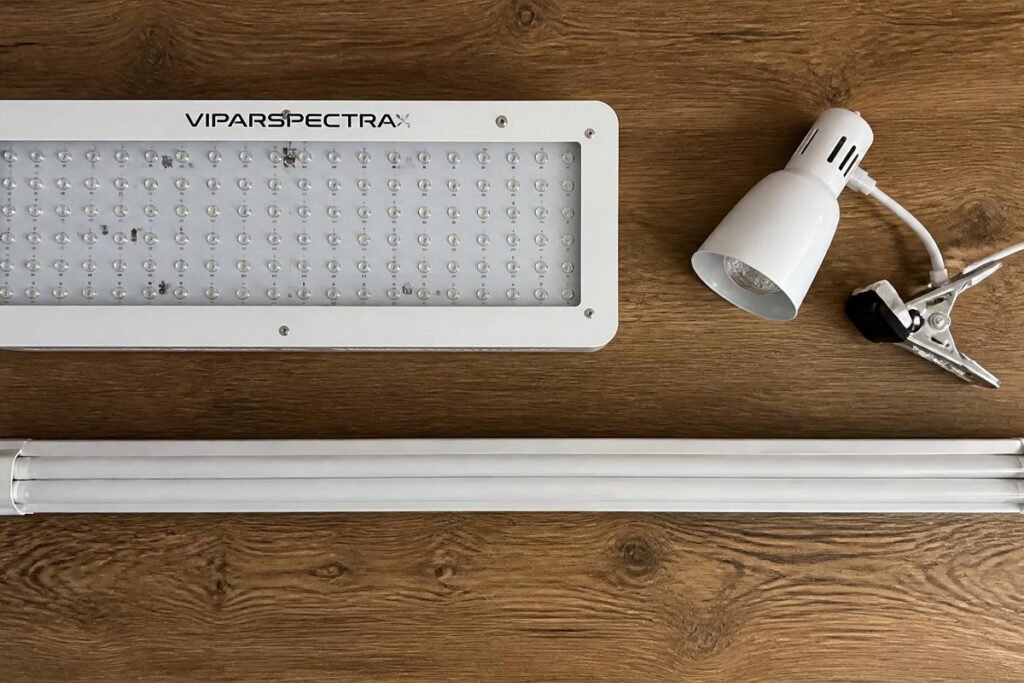
Table of Contents
- Why Grow Lights Matter More Than a Sunny Window
- How to Choose the Right Grow Light
- Best Grow Lights for Seedlings
- Comparison Table
- Grow Lights for Different Setups
- How to Set Up and Use Grow Lights Correctly
- Common Grow Light Mistakes
- Expert Tips
- Final Thoughts
- Frequently Asked Questions
Why Grow Lights Matter More Than a Sunny Window {#why-lights-matter}
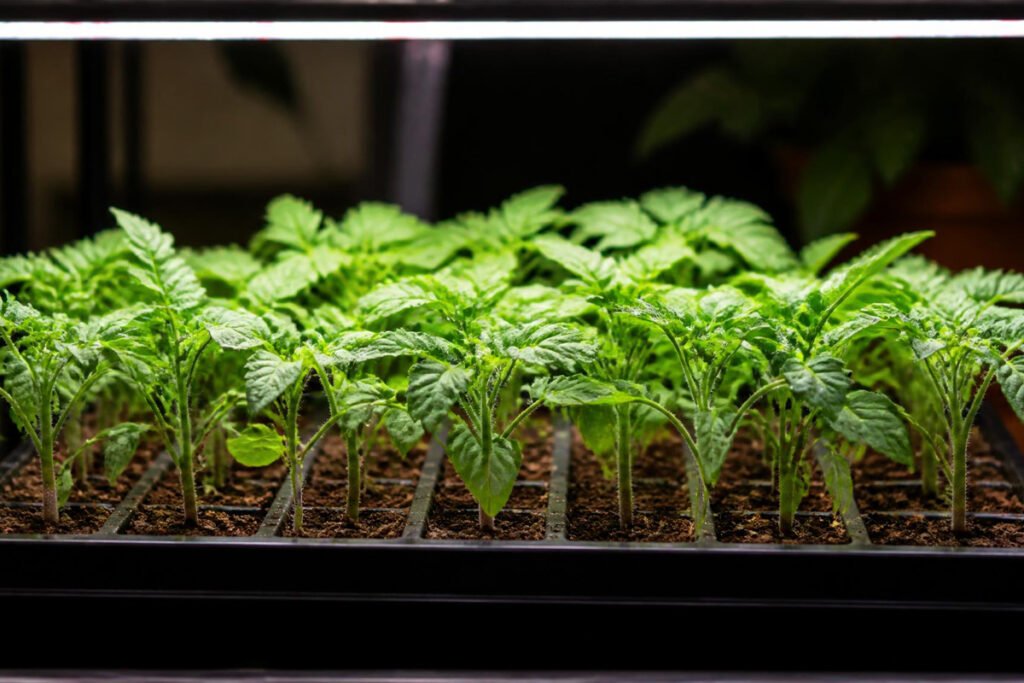
Seedlings need significantly more light intensity and duration than most indoor spaces naturally provide, especially during late winter and early spring when seed starting typically begins and outdoor daylight hours are still limited. Without enough light, seedlings stretch upward searching for a stronger source, producing the classic thin, leggy, weak-stemmed growth that struggles to support the plant once it’s transplanted outdoors.
Grow lights solve this by delivering light intensity and spectrum specifically suited to plant growth, positioned close enough and long enough each day to prevent the stretching that inadequate window light causes. Beyond just preventing legginess, proper lighting also speeds up overall seedling development, often producing sturdier, more transplant-ready plants in less time than window-light-only setups achieve, ready for hardening off and eventual transplanting.
How to Choose the Right Grow Light {#how-to-choose}
Before buying, think through three questions:
How many seedlings are you starting? A single tray on a windowsill or desk suits a clip-on lamp, while multiple trays need a wider panel, fixture, or full shelving system.
How permanent is your seed-starting setup? A dedicated, reusable station benefits from an LED panel or full stand system, while occasional or small-scale starting may only need a simple clip-on lamp.
What’s your available space and budget? T5 fluorescent fixtures often cost less upfront than premium LED panels, while LED strips fit into tighter shelving spaces that bulkier fixtures can’t accommodate.
Best Grow Lights for Seedlings & Indoor Growing {#best-lights}
Full-Spectrum LED Panel
Overview: A flat panel light using LED technology to closely replicate the full spectrum of natural daylight, widely considered the modern standard for serious indoor seed starting.
Why It Works: Full-spectrum LEDs emit a broad range of light wavelengths similar to natural sunlight, supporting healthy growth throughout every stage of a seedling’s development rather than favoring only one part of the spectrum. LEDs also run significantly cooler and more energy-efficiently than older lighting technologies, meaning they can be positioned closer to seedlings without heat stress while also costing less to run over an extended growing season.
Key Features:
- Broad spectrum closely mimics natural daylight for healthy overall growth
- Runs cool enough to position close to seedlings without heat damage
- Energy-efficient, reducing long-term electricity costs compared to older technology
Best For: A dedicated, reusable seed-starting setup used season after season.
Pros: ✅ Closely mimics natural daylight spectrum ✅ Energy-efficient with low long-term running cost ✅ Long lifespan compared to fluorescent alternatives
Cons: ❌ Higher upfront cost than basic fluorescent options ❌ Quality varies significantly between budget and premium models
Our Verdict: Worth the higher upfront investment for anyone starting seeds regularly year after year — the combination of daylight-quality spectrum, low heat output, and long lifespan makes this the strongest long-term choice on this list.
T5 Fluorescent Fixture
Overview: A slim fluorescent tube fixture, widely used in seed-starting setups for decades, offering strong, even light across a wide tray area at a lower cost than premium LED panels.
Why It Works: T5 tubes provide bright, even light output across their full length, making them particularly effective for covering a wide seed tray uniformly rather than concentrating light in one central area the way some smaller fixtures do. While they run warmer and use more electricity over time than LED alternatives, their lower upfront cost makes them an accessible entry point for gardeners not ready to invest in premium LED technology.
Key Features:
- Even light distribution across a wide tray area
- Lower upfront cost than most full-spectrum LED panels
- Multiple tube fixtures can be linked for larger seed-starting areas
Best For: Budget-conscious gardeners wanting strong, even light coverage across a full seed tray.
Pros: ✅ Lower upfront cost than premium LED options ✅ Even light distribution across wide trays ✅ Widely available and simple to replace tubes when needed
Cons: ❌ Higher long-term electricity cost than LED ❌ Runs warmer, requiring slightly more distance from seedlings
Our Verdict: Worth buying as a budget-friendly entry point into serious seed starting — it delivers strong, even coverage that a small clip-on lamp can’t match, at a noticeably lower upfront cost than a comparable LED panel, especially useful for a beginner’s first garden starting several trays at once.
Clip-On Grow Lamp
Overview: A compact, adjustable lamp that clips onto a shelf, desk, or tray edge, offering a low-commitment lighting option for a single small seed tray.
Why It Works: Its small size and flexible clip mount let a clip-on lamp position light directly and closely over a single tray without requiring a dedicated stand or fixture setup, making it the simplest possible entry point into supplemental grow lighting. This makes it especially useful for gardeners testing out seed starting for the first time or those with only a small handful of seedlings who don’t need a wider fixture’s coverage area.
Key Features:
- Compact clip mount attaches to shelves, desks, or tray edges without a stand
- Adjustable positioning for close, direct light over a single tray
- Lowest-cost entry point into supplemental grow lighting
Best For: A single small tray of seedlings on a desk, shelf, or windowsill without a dedicated seed-starting station.
Pros: ✅ Very affordable ✅ No stand or fixture setup required ✅ Flexible positioning for a single tray
Cons: ❌ Limited coverage area for more than one small tray ❌ Generally lower light intensity than panel or tube fixtures
Our Verdict: Worth buying as a low-risk way to try supplemental lighting for the first time — ideal for a single tray, though anyone starting more than a few seedlings will likely outgrow its limited coverage quickly.
LED Light Bar or Strip
Overview: A slim, low-profile LED fixture designed to fit into tight shelving spaces where bulkier panel or tube fixtures don’t comfortably fit.
Why It Works: The narrow, low-profile design allows an LED bar to be mounted directly under a shelf with minimal vertical clearance needed, solving a specific space constraint that wider panel fixtures can create in a multi-tier shelving setup. Despite the compact form factor, quality LED bars still deliver strong, full-spectrum light output, making them a practical choice for maximizing the number of usable shelf tiers in a tight space.
Key Features:
- Low-profile design fits tight shelving spaces with minimal clearance
- Full-spectrum LED output despite the compact form factor
- Often available in linkable sections for covering longer shelf spans
Best For: Multi-tier shelving setups where vertical clearance between shelves is limited.
Pros: ✅ Fits spaces bulkier fixtures can’t ✅ Full-spectrum output in a compact form ✅ Linkable for covering longer shelf spans
Cons: ❌ Narrower coverage width than a full panel ❌ May need multiple units for very wide trays
Our Verdict: Worth buying specifically for tight multi-shelf setups — this is the fixture that solves a clearance problem no other option on this list addresses as directly, letting you fit more growing tiers into the same vertical space.
Grow Light Stand or Shelving System
Overview: A complete shelving unit with integrated adjustable-height grow lights built into each tier, designed for growing multiple trays of seedlings simultaneously at scale.
Why It Works: By combining the shelving structure and lighting into one integrated system, a stand solves both the physical space problem and the lighting problem at once, with height-adjustable lights on each tier that can be raised as seedlings grow taller. This makes it the most scalable option on this list, capable of supporting a full seed-starting operation across multiple trays and tiers rather than a single tray or small cluster.
Key Features:
- Integrated shelving and lighting solve space and light needs together
- Height-adjustable lights on each tier accommodate growing seedlings
- Scales to support many trays simultaneously across multiple tiers
Best For: Gardeners starting a large number of seedlings across multiple trays for a full garden or several raised beds.
Pros: ✅ Most scalable option for large seedling counts ✅ Adjustable height lights accommodate growth over time ✅ Integrated design simplifies setup compared to assembling separate components
Cons: ❌ Highest upfront cost and largest footprint of any option here ❌ Requires dedicated indoor space for the full unit
Our Verdict: Worth the investment for anyone starting seedlings at real scale — for a gardener filling several raised beds each spring, this system’s combination of space and adjustable lighting justifies its higher cost and footprint.
Comparison Table {#comparison-table}
| Grow Light | Best For | Upfront Cost | Running Cost | Coverage |
|---|---|---|---|---|
| Full-Spectrum LED Panel | Dedicated long-term setup | High | Low | Wide |
| T5 Fluorescent Fixture | Budget-friendly wide coverage | Medium | Medium–High | Wide |
| Clip-On Grow Lamp | Single small tray | Very Low | Low | Narrow |
| LED Light Bar/Strip | Tight shelving spaces | Medium | Low | Narrow–Medium |
| Grow Light Stand System | Large-scale seed starting | Very High | Low–Medium | Very Wide (multi-tier) |
Grow Lights for Different Setups {#different-setups}
Small Windowsill or Desk Setups
A clip-on grow lamp fits a single small tray without needing dedicated shelving, making it the simplest option for a first-time seed-starting attempt or a small handful of seedlings.
Dedicated Shelving Units
An LED light bar or strip solves the clearance problem common in multi-tier shelving, letting each tier stay lit without bulky fixtures eating into vertical space between shelves.
Large-Scale Seed Starting for Multiple Beds
A full grow light stand system suits gardeners starting enough seedlings to fill several raised beds or a large in-ground plot, since its scale matches the volume a smaller setup couldn’t support.
How to Set Up and Use Grow Lights Correctly {#how-to-set-up}
Step 1: Position Lights Close to Seedlings
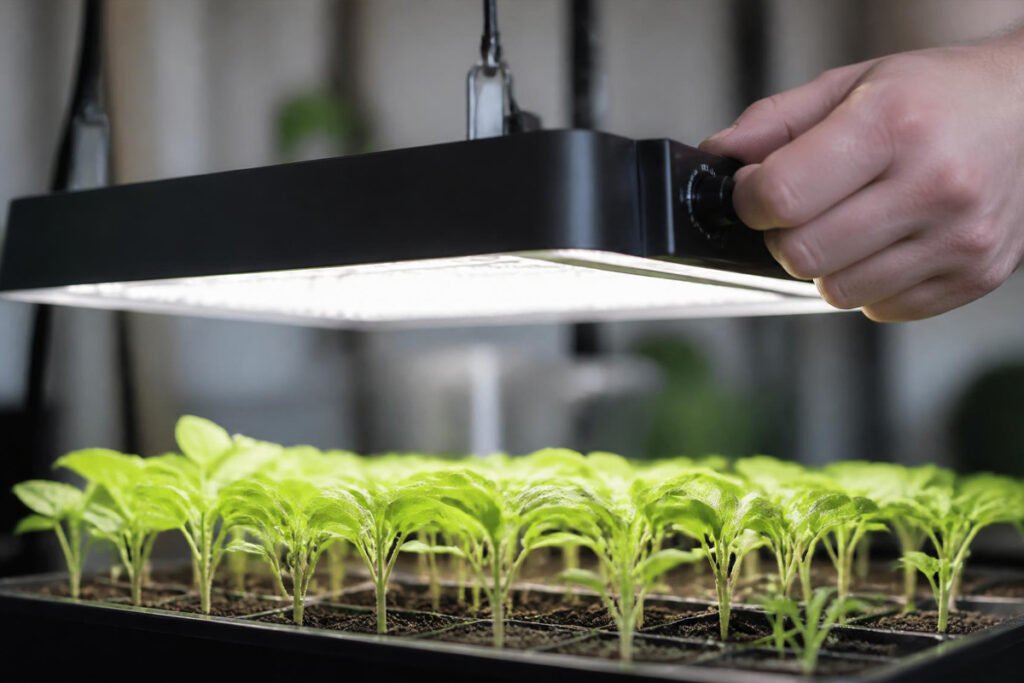
Most grow lights work best positioned just a few inches above seedlings, close enough to prevent stretching without touching the foliage directly.
Step 2: Set a Consistent Daily Light Duration
Use a timer to provide a consistent light duration each day, typically covering a longer period than natural daylight alone would provide during early spring.
Step 3: Raise Lights as Seedlings Grow
Adjust light height upward as seedlings gain height, maintaining that same close-but-not-touching distance throughout their growth.
Step 4: Monitor for Signs of Too Much or Too Little Light
Watch for pale, stretched growth, which signals insufficient light, or bleached, damaged leaf tips, which can indicate lights positioned too close.
Step 5: Transition Gradually to Outdoor Light
Before transplanting, gradually acclimate seedlings to outdoor light conditions over about a week, since even strong grow lights don’t fully replicate direct outdoor sun intensity.
Common Grow Light Mistakes {#common-mistakes}
Positioning lights too far from seedlings. Light intensity drops off quickly with distance, and a light mounted too high often provides barely more benefit than a bright window alone. Keep lights just a few inches above the seedlings.
Running lights for too few hours per day. Seedlings generally need more daily light exposure than typical early-season daylight hours provide. Use a timer to ensure consistent, adequate daily duration, cross-checked against your seasonal planting calendar for when transplants actually need to be ready.
Choosing a light too small for the number of trays being grown. A single clip-on lamp stretched across multiple trays leaves some seedlings under-lit. Match the fixture’s coverage area to your actual seed-starting setup size.
Expert Tips {#expert-tips}
Combine a timer with your grow light for consistency. A simple outlet timer removes the need to remember daily on-and-off switching, ensuring seedlings get the same light duration every day without gaps.
Match light choice to your transplant timeline. Gardeners transplanting into raised beds on a set spring schedule benefit from starting seeds under lights early enough that seedlings are properly sized and hardened off by transplant time.
Don’t rely on grow lights alone for warm-season crop germination. Pairing a grow light with a seedling heat mat addresses both the light and temperature needs of crops like tomatoes and peppers more completely than light alone.
Final Thoughts {#final-thoughts}
Best overall: a full-spectrum LED panel, for its combination of daylight-quality spectrum, low heat, and long-term energy efficiency. Best budget option: a T5 fluorescent fixture, offering strong, even coverage at a lower upfront cost. Best for large-scale seed starting: a grow light stand system, built to support multiple trays across several tiers at once.
The right grow light isn’t about buying the most powerful option available — it’s about matching light coverage and setup scale to how many seedlings you’re actually growing. Combined with the rest of a solid seed starting supply kit, the right grow light is often the single biggest factor separating thin, leggy seedlings from short, sturdy ones ready to thrive after transplanting.
Frequently Asked Questions {#faq}
Do I really need a grow light if I have a sunny window? Most windows, even bright south-facing ones, provide less light intensity and only one-directional exposure compared to a grow light, making supplemental lighting noticeably beneficial for preventing leggy growth.
How many hours a day should grow lights run for seedlings? Many seedlings do well with a longer daily light duration than typical early-season daylight hours provide, commonly set and maintained consistently using a simple timer.
Is LED or fluorescent better for starting seeds? LED generally offers better long-term energy efficiency, lower heat output, and longer lifespan, while fluorescent fixtures like T5 tubes offer a lower upfront cost with strong, even coverage.
How close should a grow light be positioned to seedlings? Most grow lights work best just a few inches above seedlings, adjusted upward gradually as the plants grow taller to maintain that close but non-touching distance.
Can a clip-on lamp cover more than one seed tray? Its coverage area is generally limited to one small tray, so multiple trays typically need a wider panel, fixture, or multiple clip-on lamps positioned separately.
Do grow lights work for warm-season crops like tomatoes and peppers? Yes, though pairing a grow light with a seedling heat mat addresses both the light and soil temperature needs these crops benefit from during germination and early growth.
How do I know if my grow light setup is too weak? Pale, thin, stretched-out seedlings leaning or reaching are the clearest sign that light intensity or duration isn’t sufficient for healthy, sturdy growth.
Can I use a grow light stand system for a small number of seedlings? It’s possible, but a full stand system is generally more space and cost than a small seedling count requires — a clip-on lamp or single LED panel is usually a better match for smaller setups.
Do grow lights use a lot of electricity? LED options are generally quite energy-efficient and inexpensive to run over a typical seed-starting season, while older fluorescent technology tends to use somewhat more electricity for comparable light output.
How long should I run a grow light before transplanting seedlings outdoors? Seedlings typically stay under grow lights for several weeks until they’ve developed a few sets of true leaves and are ready to begin the outdoor hardening-off process.
Can grow lights replace natural sunlight entirely for young plants? For the seedling stage, yes, grow lights can fully substitute for natural light, though transplants still benefit from a gradual hardening-off transition before facing full outdoor sun intensity.
What’s the biggest difference between a basic and premium LED grow light? Premium LED panels typically offer a more complete, balanced light spectrum and more consistent output across their lifespan compared to budget models, which can vary significantly in build quality and spectrum accuracy.
Author: Pamela Reese