A small yard, a shallow balcony, or a single sunny wall can still produce a meaningful vegetable harvest — the limitation usually isn’t sunlight or interest, it’s horizontal square footage. Vertical gardening systems solve this by using height instead of ground space, letting a gardener grow the same number of plants, or more, in a fraction of the floor area a traditional row garden would need.
Not every vertical system solves the same problem, though. Some are built for growing many small plants like herbs and lettuce in a compact footprint. Others are designed specifically to support heavier vining crops climbing upward. And some exist purely to make use of unused vertical wall space that would otherwise sit empty. Picking the wrong system for your actual growing goals means either underusing an expensive setup or overloading a lightweight one beyond what it’s built to handle, much like choosing the wrong raised bed material for your climate leads to a bed that underperforms.
This guide breaks down five vertical gardening systems and planters worth knowing, exactly how each one works, what specific space problem it solves, and why it’s worth the investment — building on the space-saving principles covered in a vertical gardening guide for small spaces.
Quick Answer
The best vertical gardening system depends on what you’re growing and how much wall or floor space you actually have. A stackable planter tower grows many small plants like lettuce, strawberries, or herbs in a compact rotating column. Wall-mounted pocket planters turn a bare fence or wall into usable growing space for shallow-rooted crops. A tiered ladder shelf planter offers a freestanding option that doesn’t require wall mounting, ideal for renters. Hanging planters make use of overhead space for trailing or cascading crops like cherry tomatoes and strawberries. A trellis planter box combo pairs a built-in growing bed with vertical support, ideal for climbing vegetables like cucumbers and pole beans. Most small-space gardeners get the most value combining a stackable tower or wall planter for leafy crops with a trellis planter box for vining vegetables.
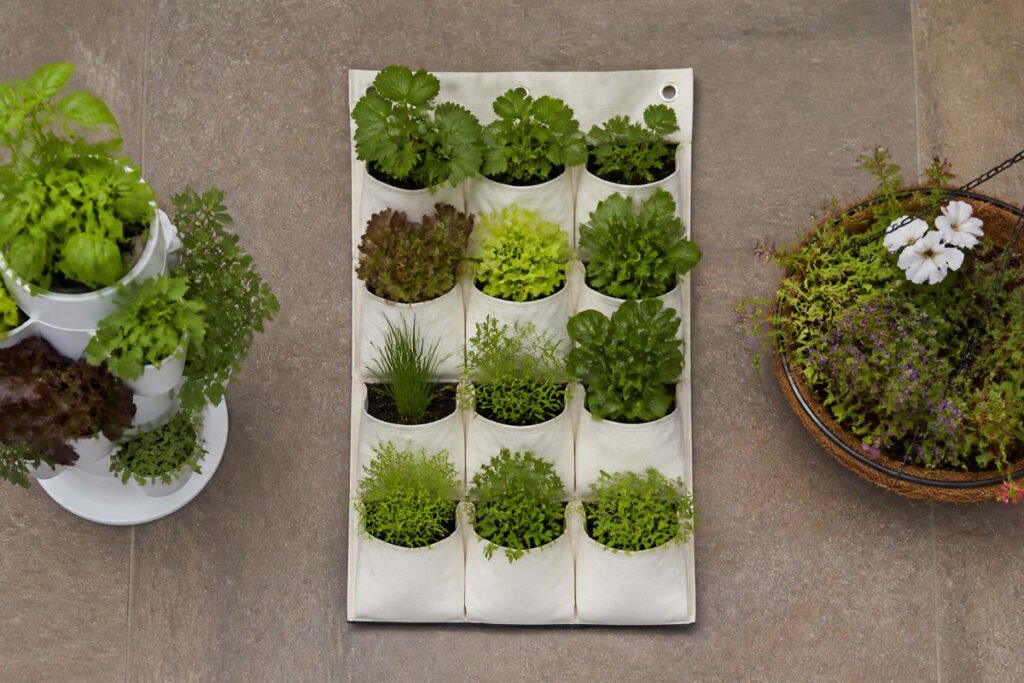
Table of Contents
- Why Vertical Systems Aren’t All Solving the Same Space Problem
- How to Choose the Right Vertical Gardening System
- Best Vertical Gardening Systems & Planters
- Comparison Table
- Vertical Systems for Different Living Situations
- How to Set Up a Vertical Garden Correctly
- Common Vertical Gardening Mistakes
- Expert Tips
- Final Thoughts
- Frequently Asked Questions
Why Vertical Systems Aren’t All Solving the Same Space Problem {#why-systems-differ}
Vertical gardening covers a wide range of very different physical structures, and each one is built around a specific type of plant and a specific type of unused space. A stackable planter tower makes efficient use of a small floor footprint by growing upward in a column, which works well for shallow-rooted plants but isn’t designed to support the weight of a heavily fruiting vine. A trellis planter box, by contrast, is specifically engineered to support that same climbing vine’s growing weight, but takes up more floor space than a tower does.
Matching the system to both the plant type and the specific unused space you’re trying to use — a bare wall, empty air above a patio, or a narrow floor footprint — is what determines whether a vertical system actually gets used to its full potential or ends up overloaded, underused, or simply the wrong shape for the space available, the same matching logic behind choosing the right container size for a given crop.
How to Choose the Right Vertical Gardening System {#how-to-choose}
Before buying, think through three questions:
What space are you actually trying to use? A bare wall or fence calls for wall-mounted pockets, while empty floor space calls for a freestanding tower or ladder shelf instead.
What are you growing? Shallow-rooted crops like lettuce and herbs work well in most vertical systems, while heavier vining crops like cucumbers need a structurally supportive option like a trellis planter box.
Do you need a permanent or portable setup? Wall-mounted systems are more permanent, while freestanding towers, ladder shelves, and hanging planters can be moved or relocated as needed.
Best Vertical Gardening Systems & Planters {#best-systems}
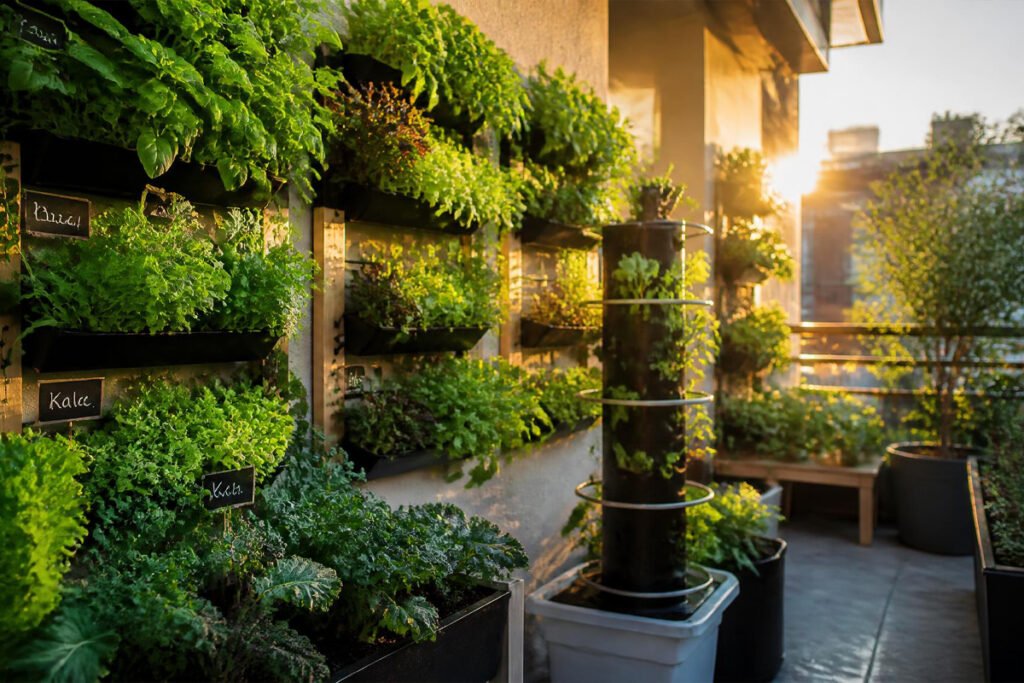
Stackable Planter Tower
Overview: A column of stacked planting pockets or tiers, allowing multiple plants to grow in a small floor footprint by using vertical height instead of horizontal spread.
Why It Works: By arranging planting space in a vertical column rather than a flat bed, a stackable tower fits significantly more individual plants into the same floor footprint a single traditional pot would occupy, since each tier adds growing space without expanding the base. Many designs also incorporate a central watering channel that distributes moisture down through each tier, simplifying watering compared to managing several completely separate containers.
Key Features:
- Multiple growing tiers fit into a single small floor footprint
- Many designs include a built-in watering channel for simplified irrigation
- Can often rotate for even sun exposure across all sides
Best For: Growing multiple small plants like lettuce, strawberries, and herbs in a compact patio or balcony footprint.
Pros: ✅ Maximizes plant count per square foot of floor space ✅ Simplified watering in many designs ✅ Portable and can be relocated as needed
Cons: ❌ Limited to shallow-rooted, lightweight plants ❌ Lower tiers can receive less direct sunlight depending on placement
Our Verdict: Worth buying specifically for small patios and balconies where floor space, not wall space, is the main constraint — this is the system that gets the most individual plants into the smallest footprint on this list, especially when paired with a light, regular organic fertilizer routine.
Wall-Mounted Pocket Planter
Overview: A fabric or rigid panel with multiple individual planting pockets, mounted directly onto a wall or fence to convert unused vertical surface into growing space.
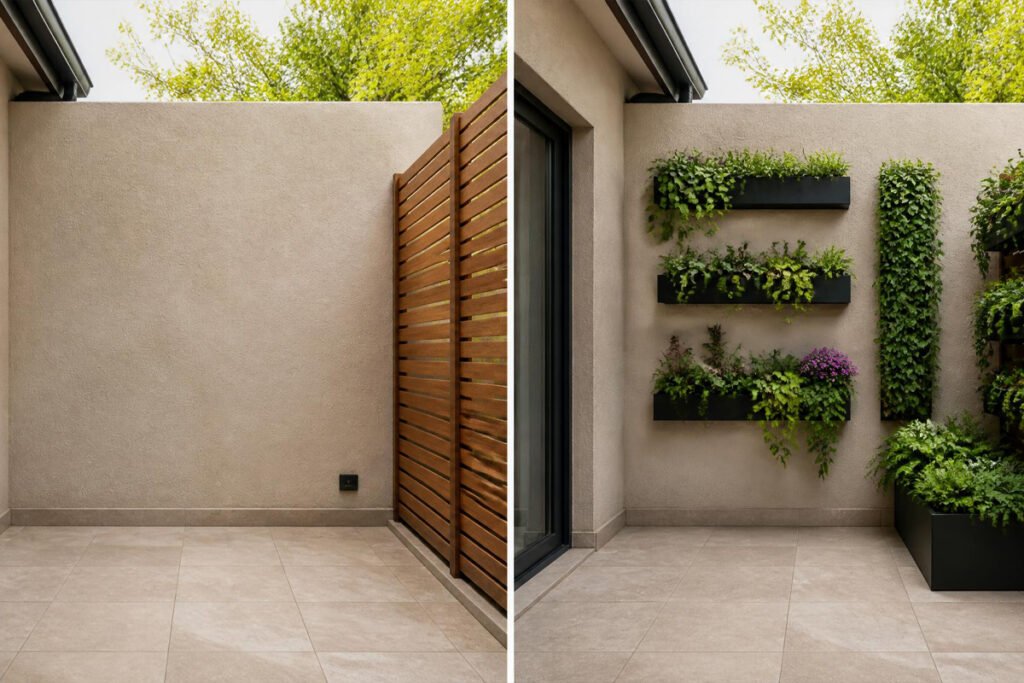
Why It Works: Rather than using any floor space at all, a wall-mounted system takes advantage of vertical surfaces that would otherwise serve no growing purpose, making it uniquely effective for gardeners with minimal floor area but an available bare wall or fence. The individual pockets also isolate each plant’s root system, similar to a cell tray, reducing the competition for water and nutrients that can occur in a shared planting bed.
Key Features:
- Uses vertical wall or fence space rather than any floor footprint
- Individual pockets isolate each plant’s root system
- Lightweight designs are easy to mount on most fences and walls
Best For: Gardeners with a bare wall or fence and little to no available floor space for traditional planters.
Pros: ✅ Uses otherwise unused wall space entirely ✅ Individual pockets reduce root competition ✅ Wide range of sizes to fit different wall areas
Cons: ❌ Requires secure wall or fence mounting hardware ❌ Fabric versions may need replacing after a few seasons of outdoor exposure
Our Verdict: Worth mounting on any unused sunny wall or fence — it’s the only system on this list that adds growing space without using any floor area at all, making it especially valuable for extremely tight spaces.
Tiered Ladder Shelf Planter
Overview: A freestanding, ladder-shaped shelving unit designed to hold multiple pots or planters at different heights, offering vertical growing space without requiring wall mounting.
Why It Works: Because it’s freestanding rather than wall-mounted, a ladder shelf can be positioned anywhere with adequate sun exposure and moved seasonally to follow changing light patterns, which matters especially for renters or anyone who can’t drill into a wall or fence. The stepped, angled design also helps ensure each tier gets meaningful sun exposure rather than shading the tier below it the way a straight vertical stack sometimes can.
Key Features:
- Freestanding design requires no wall mounting or drilling
- Angled tiers reduce shading between levels compared to straight stacks
- Easily repositioned to follow seasonal sun patterns
Best For: Renters or anyone wanting a portable vertical growing option without permanent wall installation.
Pros: ✅ No wall mounting or drilling required ✅ Fully portable and repositionable ✅ Angled design reduces inter-tier shading
Cons: ❌ Takes up more floor footprint than wall-mounted options ❌ Can be less stable outdoors in high wind if not weighted or anchored
Our Verdict: Worth buying specifically for renters or anyone who wants vertical growing space without committing to permanent wall hardware — its portability is the clearest advantage over fixed wall-mounted systems.
Hanging Planters
Overview: Suspended pots or baskets hung from an overhead structure like a pergola, hook, or railing, using overhead air space that ground-level planters can’t access.
Why It Works: By using overhead space rather than any floor or wall area, hanging planters add growing capacity in a dimension no other system on this list accesses, making them uniquely useful for cascading or trailing crops like cherry tomatoes and strawberries that naturally spill over a container’s edge. Their elevated position also improves airflow around the plant compared to ground-level growing, which can reduce some fungal disease pressure.
Key Features:
- Uses overhead space rather than floor or wall area
- Ideal for trailing and cascading growth habits
- Elevated position improves airflow around plants
Best For: Trailing crops like cherry tomatoes and strawberries, especially in spaces with an available overhead structure like a pergola or railing.
Pros: ✅ Uses overhead space no other system accesses ✅ Well-suited to trailing, cascading crops ✅ Improved airflow compared to ground-level planting
Cons: ❌ Requires a secure overhead structure to hang from ❌ Can dry out faster than ground-level containers due to increased air exposure
Our Verdict: Worth using specifically for trailing crops and cascading growth habits — this is the only system here that makes meaningful use of overhead space, but budget for slightly more frequent watering given its increased air exposure.
Trellis Planter Box Combo
Overview: A planter box with an integrated trellis structure built directly into the design, combining a growing bed with vertical support for climbing crops in one unit.
Why It Works: Unlike lightweight towers or wall pockets, a trellis planter box is specifically engineered to handle the weight and growth pattern of climbing vegetables, providing both adequate soil depth for root development and a structurally sound support for vines to climb as they mature. This combination solves two problems at once — limited floor space and the need for climbing support — in a single unit rather than requiring a separate planter and trellis purchased and assembled independently.
Key Features:
- Integrated trellis provides structural support for climbing crops
- Adequate soil depth for the root systems of vining vegetables
- Combines planting bed and vertical support in a single unit
Best For: Climbing vegetables like cucumbers and pole beans in space-limited patios or small yards.
Pros: ✅ Handles heavier climbing crops other systems can’t support ✅ Combines planter and trellis in one purchase ✅ Efficient use of floor space for vining crops specifically
Cons: ❌ Larger and heavier than lightweight towers or wall planters ❌ Higher cost than a basic planter without integrated support
Our Verdict: Worth buying specifically for climbing vegetables — this is the only system on this list built to handle both the soil depth and structural support that vining crops like cucumbers genuinely need, making it a better match than a lightweight tower or wall pocket for that specific crop type.
Comparison Table {#comparison-table}
| System | Best For | Space Used | Weight Capacity | Portability |
|---|---|---|---|---|
| Stackable Planter Tower | Multiple small plants, patios | Floor (small footprint) | Light | High |
| Wall-Mounted Pocket Planter | Bare walls/fences | Wall (no floor) | Light | Low (fixed) |
| Tiered Ladder Shelf | Renters, portable setups | Floor (moderate footprint) | Light–Moderate | High |
| Hanging Planters | Trailing/cascading crops | Overhead | Light | Moderate |
| Trellis Planter Box | Climbing crops | Floor (moderate–large) | High | Low (heavy) |
Vertical Systems for Different Living Situations {#different-setups}
Apartments and Balconies
A stackable planter tower or hanging planters make the most of limited balcony space without requiring any wall mounting, which many rental agreements restrict or prohibit entirely.
Small Suburban Yards with a Fence or Wall
Wall-mounted pocket planters take advantage of an existing fence line, freeing up ground space for a raised bed or trellis planter box elsewhere in the yard.
Patios with Overhead Structures
A pergola or covered patio with overhead beams is ideal for hanging planters, adding a growing dimension that ground-level containers and raised beds can’t access on their own.
How to Set Up a Vertical Garden Correctly {#how-to-set-up}
Step 1: Assess Your Available Space Types
Identify whether your main opportunity is floor space, wall space, or overhead space before choosing a system, since each type suits a different vertical option.
Step 2: Match Plant Choice to System Weight Capacity
Confirm a system’s structural capacity matches what you intend to grow — lightweight towers and wall pockets suit shallow-rooted plants, while trellis planter boxes are needed for heavier climbing crops.
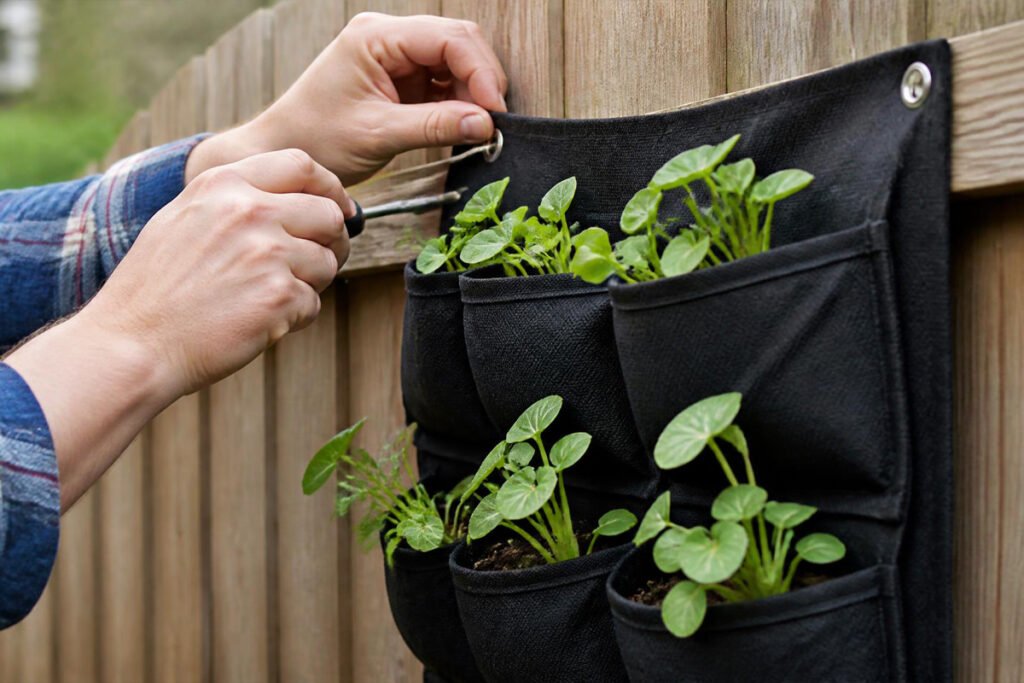
Step 3: Secure Mounting Hardware Properly
For wall-mounted and hanging systems, use hardware rated for the fully grown, watered weight of the system, not just its empty weight.
Step 4: Plan for Watering Access
Vertical systems, especially towers and hanging planters, can dry out faster than ground-level beds, so plan watering access before finalizing placement.
Step 5: Position for Adequate Sun Exposure
Check that all tiers or pockets receive enough direct sunlight, adjusting placement or rotating portable systems as needed throughout the season.
Common Vertical Gardening Mistakes {#common-mistakes}
Overloading a lightweight system with heavy climbing crops. Stackable towers and wall pockets aren’t built to support the weight of mature vining crops like squash. Use a trellis planter box or dedicated trellis for heavier climbers instead.
Underestimating how quickly vertical systems dry out. Increased air exposure on towers and hanging planters means faster moisture loss than ground-level beds. Plan for more frequent watering or a self-watering solution to reduce the burden.
Mounting wall systems without checking hardware weight ratings. A fully watered, mature wall planter is significantly heavier than its empty weight, and inadequate mounting hardware can fail under that load. Confirm hardware ratings before installation, and pair with a reliable garden tool kit for proper setup.
Expert Tips {#expert-tips}
Combine multiple vertical systems for different crop types. Using a wall planter for herbs, a trellis planter box for cucumbers, and hanging planters for trailing strawberries covers a wide range of crops without needing much floor space at all, similar to the layered approach behind good companion planting.
Rotate portable systems for even sun exposure. Towers and ladder shelves that can be turned or moved benefit from periodic repositioning to prevent one side from consistently receiving less light than the other.
Feed vertical systems more frequently than ground beds. Limited soil volume in most vertical systems depletes nutrients faster, so a light, regular application of organic fertilizer helps maintain healthy growth throughout the season.
Final Thoughts {#final-thoughts}
Best overall: a stackable planter tower, for maximizing plant count in the smallest possible floor footprint. Best for bare walls: wall-mounted pocket planters, which add growing space without using any floor area at all. Best for climbing crops: a trellis planter box combo, the only system here built to handle both soil depth and structural support for vining vegetables.
Vertical gardening isn’t about squeezing a full-size garden into a small space — it’s about matching the right system to the specific unused space and plant type you’re actually working with. Whether that’s a bare wall, empty overhead beam, or a small patch of patio floor, the right vertical system turns previously unused space into a genuinely productive part of your small-space vegetable garden, especially when paired with consistent watering suited to each system’s soil volume.
Frequently Asked Questions {#faq}
Can I grow tomatoes in a vertical system? Cherry and smaller tomato varieties work well in hanging planters or trellis planter boxes, though larger indeterminate varieties generally need the sturdier support a trellis planter box or dedicated trellis provides.
Do vertical gardening systems need more watering than regular pots? Generally yes — increased air exposure on towers, wall pockets, and hanging planters causes faster moisture loss, so more frequent watering or a self-watering solution helps maintain consistent moisture.
Is a stackable tower or a trellis planter box better for a small patio? It depends on what you’re growing — towers suit multiple small, shallow-rooted plants, while trellis planter boxes are better matched to a smaller number of climbing crops that need structural support.
Can wall-mounted planters damage a fence or wall? Properly rated mounting hardware installed correctly generally doesn’t damage a sound wall or fence, though checking weight capacity and material compatibility before installation is worthwhile.
Do I need special soil for vertical gardening systems? A lightweight, well-draining potting mix generally works best across most vertical systems, since it supports good drainage in the limited soil volume these systems typically offer.
Are hanging planters safe to use outdoors year-round? This depends on your climate and the planter material — in areas with harsh winters, bringing hanging planters down or emptying them before freezing temperatures helps prevent material damage and root loss.
Can renters use vertical gardening without wall mounting? Yes, freestanding options like tiered ladder shelves, stackable towers, and hanging planters (hung from an existing structure rather than a mounted hook) work well without requiring any permanent wall installation.
How much sun do vertical gardening systems need? Most vegetables still need at least six hours of direct sun regardless of the system, so positioning towers, wall planters, and trellis boxes in the sunniest available spot matters just as much as with ground-level planting.
Can I grow root vegetables like carrots in a vertical system? Root vegetables generally need more consistent soil depth than most vertical systems provide, making them a less practical fit compared to shallow-rooted leafy greens or compact fruiting crops.
Do trellis planter box combos work for pole beans as well as cucumbers? Yes, the integrated support structure suits any moderate-weight climbing crop, including pole beans, in addition to cucumbers and similar vining vegetables.
How do I prevent lower tiers on a stackable tower from getting too little light? Positioning the tower where sunlight can reach from multiple angles, and rotating it periodically if it’s portable, helps ensure lower tiers receive more even light exposure throughout the day.
Can multiple vertical systems be combined in one small yard or patio? Yes, combining a wall planter, a trellis planter box, and hanging planters lets a small space support a much wider variety of crops than relying on a single vertical system alone.
Author: Pamela Reese