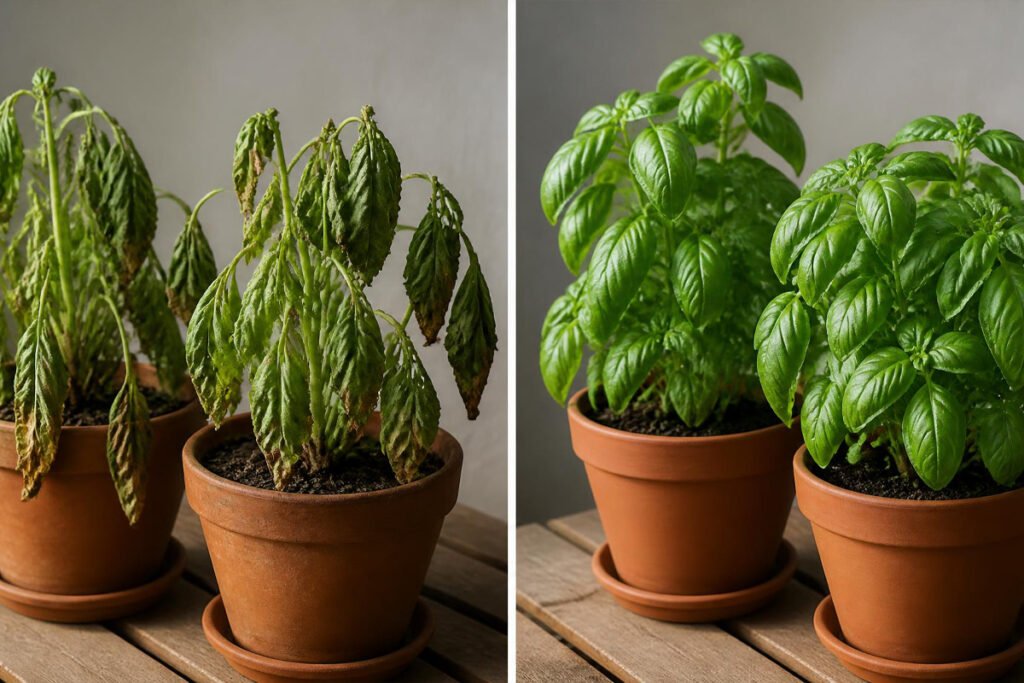
Inconsistent watering is one of the most common, and most preventable, reasons vegetable gardens underperform. Tomatoes that go from bone-dry to soaked develop cracked fruit and blossom end rot, a problem closely tied to the soil testing and pH work many gardeners already do to keep nutrients available. Lettuce left to dry out between waterings turns bitter and bolts early. And a gardener manually hauling a watering can to every bed every single day eventually starts skipping days, which shows up in the plants before it shows up as a habit change.
The right irrigation solution doesn’t just save time — it delivers water more consistently and efficiently than manual watering typically can, directly improving plant health and reducing water waste at the same time. Different systems solve different problems: some deliver slow, targeted moisture directly to roots, some cover a wide area quickly, and some capture and store water that would otherwise be wasted entirely.
This guide breaks down five watering and irrigation solutions worth knowing, exactly how each one works, what specific watering problem it solves, and why it’s worth the investment — building on the fundamentals covered in a complete watering guide.
Quick Answer
The best watering solution depends on your garden size, budget, and how hands-off you want the process to be. A drip irrigation kit delivers slow, precise water directly to plant roots with minimal waste, ideal for raised beds and rows. A soaker hose offers a simpler, lower-cost alternative that still targets water at the root zone rather than spraying it overhead. Self-watering containers use a reservoir system that’s especially valuable for container gardens prone to drying out quickly. An oscillating sprinkler covers large areas quickly, though less efficiently than targeted systems. A rain barrel captures free rainwater to reduce reliance on a hose entirely. Most gardens do best combining drip irrigation or soaker hose for beds with a rain barrel to reduce overall water costs.
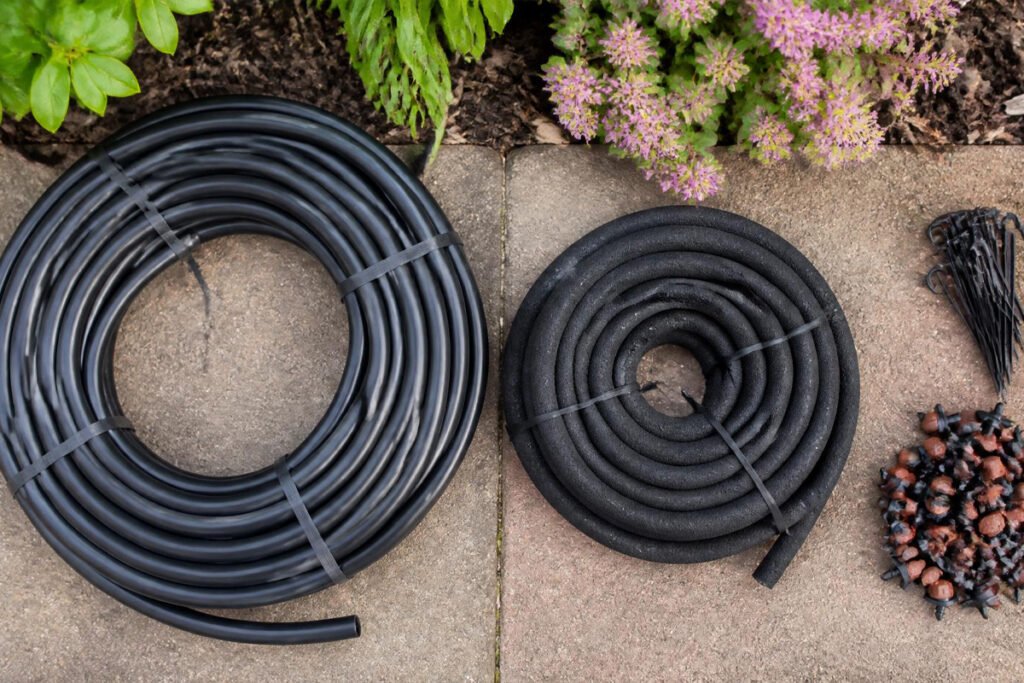
Table of Contents
- Why Watering Method Affects More Than Convenience
- How to Choose the Right Watering Solution
- Best Watering & Irrigation Solutions
- Comparison Table
- Watering Solutions for Different Garden Setups
- How to Set Up an Irrigation System Correctly
- Common Watering System Mistakes
- Expert Tips
- Final Thoughts
- Frequently Asked Questions
Why Watering Method Affects More Than Convenience {#why-method-matters}
How water reaches a plant matters just as much as how much water it gets. Overhead watering methods, including hoses and many sprinklers, wet the foliage along with the soil, which increases the humid, damp leaf conditions that many fungal diseases need to spread. Targeted methods that deliver water directly to the soil and root zone avoid this problem entirely, keeping foliage dry while still fully hydrating the root system that actually needs it.
Watering method also directly affects efficiency. A significant portion of water from overhead sprinklers evaporates before it ever reaches the soil or gets lost to wind drift, while drip and soaker systems deliver water slowly and directly where roots can use it, dramatically reducing waste. Choosing the right system for your specific garden layout is what separates watering that actually supports plant health from watering that just gets water somewhere in the general vicinity of the plants, similar to how matching the right organic fertilizer to an actual deficiency beats blanket-applying every product available.
How to Choose the Right Watering Solution {#how-to-choose}
Before buying, think through three questions:
How is your garden laid out? Rows and raised beds work well with drip irrigation or soaker hoses run along planting lines, while containers benefit more from self-watering reservoirs.
How much time can you dedicate to watering? Drip irrigation on a timer requires the least ongoing attention, while manual sprinkler use requires being present to turn it on and off.
Do you want to reduce water costs over time? A rain barrel pays for itself gradually by capturing free rainwater, particularly valuable in areas with metered water costs or drought restrictions.
Best Watering & Irrigation Solutions {#best-solutions}
Drip Irrigation Kit
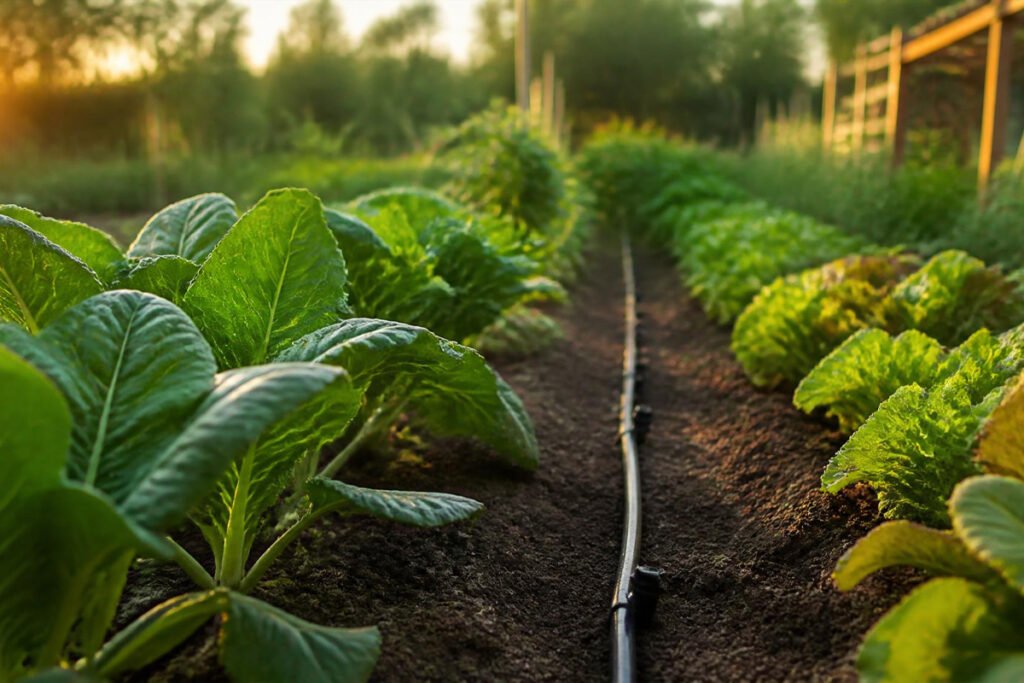
Overview: A system of narrow tubing with emitters placed at each plant, delivering a slow, steady drip of water directly to the root zone rather than spraying water over a wide area.
Why It Works: By releasing water slowly and directly at the soil surface near each plant’s roots, drip irrigation minimizes evaporation loss and avoids wetting foliage entirely, directly reducing the fungal disease risk that comes with overhead watering. The slow, steady delivery also allows water to soak deeply into the root zone rather than running off the surface, which is especially valuable in raised beds and rows where consistent moisture matters for crops like tomatoes that are prone to inconsistent-watering problems like blossom end rot.
Key Features:
- Delivers water directly to root zones with minimal evaporation loss
- Compatible with timers for fully automated watering schedules
- Customizable emitter placement for different plant spacing
Best For: Raised beds and row gardens where consistent, targeted watering matters most for fruiting crops.
Pros: ✅ Highly water-efficient ✅ Keeps foliage dry, reducing disease risk ✅ Works well with automated timers
Cons: ❌ More setup effort than a simple hose or sprinkler ❌ Emitters can clog and need occasional cleaning
Our Verdict: Worth the setup effort for anyone serious about consistent watering — this is the most efficient, plant-health-focused option on this list, especially valuable for water-sensitive crops like tomatoes and peppers.
Soaker Hose
Overview: A porous hose that weeps water slowly along its entire length when connected to a spigot, providing a simpler, lower-cost alternative to a full drip irrigation kit.
Why It Works: The porous material allows water to seep out gradually along the hose’s full length, delivering it directly to the soil surface near root zones in a similar way to drip irrigation, but with far less setup complexity since there are no individual emitters to place and configure. This makes it an efficient middle-ground option that still avoids most of the evaporation and foliage-wetting issues of overhead watering, without requiring the same level of system planning as a full drip kit.
Key Features:
- Simple setup with no individual emitters required
- Delivers water along the entire hose length evenly
- Can be woven through existing rows and beds without major reconfiguration
Best For: Gardeners wanting drip-style efficiency without the setup complexity of a full drip irrigation kit.
Pros: ✅ Simple to install ✅ More affordable than a full drip kit ✅ Still avoids most foliage-wetting issues
Cons: ❌ Less precise water distribution than individual drip emitters ❌ Can degrade faster than solid drip tubing over multiple seasons
Our Verdict: Worth buying as a lower-effort entry point into targeted watering — a great choice for gardeners wanting the efficiency benefits of drip-style watering without committing to a full irrigation kit setup, especially in a beginner’s first garden.
Self-Watering Containers
Overview: Pots with a built-in water reservoir at the base, allowing plants to draw up moisture as needed through wicking action rather than depending on frequent manual watering.
Why It Works: The reservoir acts as an on-demand water supply, with the soil wicking moisture upward as it dries, which means the plant draws exactly as much water as it needs rather than experiencing the feast-or-famine cycle common in traditional containers that dry out quickly between waterings. This is particularly valuable since containers generally lose moisture much faster than in-ground beds due to their limited soil volume and greater exposure to air and sun.
Key Features:
- Built-in reservoir reduces watering frequency significantly
- Wicking action delivers water on-demand rather than on a fixed schedule
- Reduces the risk of both underwatering and overwatering common in standard pots
Best For: Container and patio vegetable gardens prone to drying out quickly between manual waterings.
Pros: ✅ Reduces watering frequency dramatically ✅ Buffers against both under- and overwatering ✅ Ideal for balconies and patios without irrigation access
Cons: ❌ Higher upfront cost than standard containers ❌ Reservoir still needs periodic refilling and monitoring
Our Verdict: Worth the investment for anyone growing vegetables in containers, especially in hot climates or for gardeners who can’t water daily — the reservoir buffer solves one of the most common container gardening frustrations.
Oscillating Sprinkler
Overview: An overhead watering device that sweeps a fan-shaped spray back and forth across a wide area, covering significantly more ground than hand watering or targeted drip systems.
Why It Works: The sweeping spray pattern covers a large rectangular area efficiently, making it the fastest way to water a sizable garden without installing a dedicated irrigation system. While it’s less water-efficient than targeted methods since some water evaporates or falls between plants rather than directly at root zones, its speed and simplicity make it a practical choice for large in-ground plots where a full drip system isn’t yet in place.
Key Features:
- Covers a wide rectangular area quickly
- No installation required beyond connecting to a standard hose
- Adjustable spray width and distance on most models
Best For: Large in-ground plots needing quick, broad coverage without a dedicated irrigation system.
Pros: ✅ Fast coverage of large areas ✅ No installation required ✅ Simple to move between different garden zones
Cons: ❌ Wets foliage, increasing fungal disease risk ❌ Less water-efficient than targeted drip or soaker systems
Our Verdict: Worth having as a practical, no-installation option for larger plots, though pairing it with morning watering timing helps foliage dry quickly and reduces the disease risk that comes with any overhead watering method.
Rain Barrel
Overview: A large storage container connected to a gutter downspout, collecting and storing rainwater for later use in the garden instead of relying entirely on a hose or municipal water supply.
Why It Works: By capturing water that would otherwise run off the roof and into storm drains, a rain barrel provides a free, readily available water source that reduces dependence on metered water, which matters both for cost savings and in areas with drought-related watering restrictions. Collected rainwater is also naturally free of the chlorine and other treatment chemicals found in municipal water, which some gardeners find beneficial for soil biology over time.
Key Features:
- Connects directly to an existing gutter downspout
- Reduces reliance on metered municipal water
- Provides untreated water that some gardeners prefer for soil health
Best For: Reducing water costs and providing a backup water source during watering restrictions or dry spells.
Pros: ✅ Free water source once installed ✅ Reduces dependence on municipal water ✅ Provides untreated water for garden use
Cons: ❌ Limited storage capacity compared to unlimited hose access ❌ Requires a gutter and downspout setup to collect water effectively
Our Verdict: Worth adding alongside any other watering system on this list — it won’t replace a hose entirely, but it meaningfully reduces water costs and provides a valuable backup supply during dry periods or local watering restrictions, especially for a garden already following a seasonal planting calendar.
Comparison Table {#comparison-table}
| Solution | Best For | Water Efficiency | Setup Effort | Foliage Stays Dry |
|---|---|---|---|---|
| Drip Irrigation Kit | Raised beds, rows | Very High | Moderate–High | Yes |
| Soaker Hose | Simple targeted watering | High | Low | Yes |
| Self-Watering Containers | Containers, patios | High | Low (per container) | Yes |
| Oscillating Sprinkler | Large open plots | Low–Moderate | Very Low | No |
| Rain Barrel | Reducing water costs | N/A (supply source) | Low–Moderate | N/A |
Watering Solutions for Different Garden Setups {#different-setups}
Raised Bed Gardens
Drip irrigation or soaker hoses fit naturally along the length of a raised bed, delivering consistent moisture directly to the root zones of closely spaced plantings without wetting foliage.
Single-Plot In-Ground Gardens
Larger in-ground plots often combine drip irrigation along planted rows with an oscillating sprinkler for quick, broad coverage during establishment or particularly dry stretches.
Container and Small-Space Gardens
Self-watering containers are particularly well-suited to container gardens, directly solving the fast drying-out problem that standard pots are especially prone to.
How to Set Up an Irrigation System Correctly {#how-to-set-up}
Step 1: Map Your Garden Layout First
Sketch your beds, rows, or containers before choosing a system, since layout determines whether drip irrigation, soaker hose, or self-watering containers fit best.
Step 2: Connect to a Reliable Water Source
Ensure your chosen system connects securely to a spigot or rain barrel outlet, checking for leaks at every connection point before relying on it long-term.
Step 3: Position Emitters or Hoses Near Root Zones
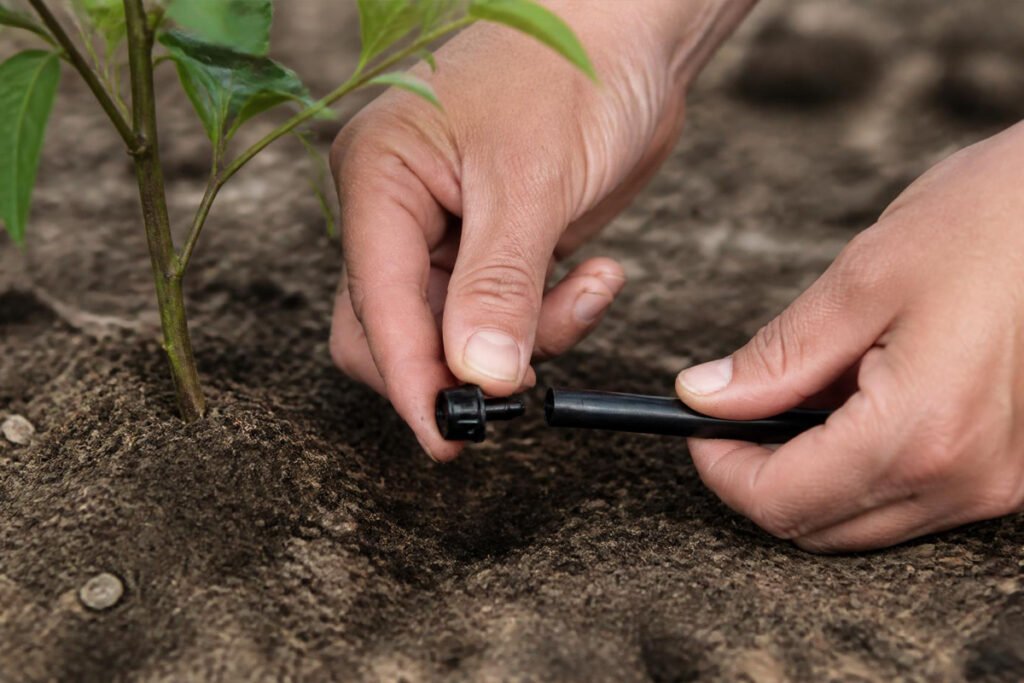
Place drip emitters or soaker hose sections directly along planting lines, close enough to root zones to deliver water where it’s actually needed.
Step 4: Add a Timer for Consistency
A simple timer removes the need to remember daily watering, delivering water on a consistent schedule even when you’re not available to do it manually.
Step 5: Monitor and Adjust Based on Weather
Check soil moisture periodically and adjust watering frequency during unusually hot, dry, or rainy stretches rather than running a fixed schedule year-round regardless of conditions.
Common Watering System Mistakes {#common-mistakes}
Watering overhead in the evening. Overnight moisture on foliage significantly increases fungal disease risk. Water in the morning instead, or switch to a targeted system like drip irrigation that avoids wetting leaves altogether.
Overwatering with automated systems left unmonitored. A timer set once and forgotten can lead to overwatering during rainy stretches. Check and adjust automated systems periodically rather than assuming a fixed schedule is always correct.
Ignoring water pressure and clogging in drip systems. Emitters can clog with mineral deposits or debris over time, leading to uneven watering across a bed. Periodic cleaning, alongside a well-stocked tool kit, keeps a drip system performing consistently.
Expert Tips {#expert-tips}
Combine a rain barrel with any active irrigation system. Using stored rainwater to feed a drip system or fill watering cans reduces both water costs and reliance on municipal supply.
Water deeply but less frequently rather than lightly every day. Deep, less frequent watering encourages roots to grow downward seeking moisture, building more resilient plants than shallow, frequent watering — a habit that also supports stronger crop rotation outcomes season over season.
Adjust watering around your mulch coverage. A well-mulched bed retains moisture significantly longer than bare soil, often allowing irrigation frequency to be reduced once mulch is properly established.
Final Thoughts {#final-thoughts}
Best overall: a drip irrigation kit, for the best combination of water efficiency and plant health benefits. Best budget option: a soaker hose, offering similar targeted watering with a simpler setup. Best for containers: self-watering pots, which directly solve the fast-drying problem containers are especially prone to.
The right watering solution isn’t about choosing the single best product — it’s about matching the system to your garden’s actual layout and your available time for maintenance. Combined with good mulching, soil preparation, and consistent weed control, the right irrigation setup keeps a vegetable garden consistently, efficiently watered with far less daily effort than manual watering alone.
Frequently Asked Questions {#faq}
Is drip irrigation worth it for a small garden? Yes, even a small garden benefits from the water efficiency and disease-reducing dry foliage that drip irrigation provides, though the setup effort may feel like more than a small area strictly requires.
How is a soaker hose different from a regular garden hose? A soaker hose has a porous surface that weeps water slowly along its entire length, delivering it directly to the soil, while a regular hose simply delivers a stream or spray without any targeted, slow-release design.
Do self-watering containers work for all vegetables? Most vegetables do well in self-watering containers, though very large or deep-rooted plants may need bigger reservoir capacity than smaller container designs offer.
Can I use an oscillating sprinkler for a vegetable garden without harming plants? Yes, though watering in the morning rather than evening helps foliage dry before nightfall, reducing the fungal disease risk that comes with any overhead watering method.
How much rainwater can a typical rain barrel actually collect? This varies by barrel size and rainfall amount, but even a modest rain event can fill a standard-sized barrel quickly given an average roof’s collection area feeding into the downspout.
Do I need a timer for drip irrigation, or can I turn it on manually? A timer isn’t strictly necessary, but it removes the risk of forgetting to water or leaving the system running too long, making it a worthwhile addition for consistency.
Can I combine multiple watering solutions in the same garden? Yes, many gardeners combine drip irrigation for raised beds, self-watering containers for potted plants, and a rain barrel to supply water to both, rather than relying on a single system for everything.
How often should I check my irrigation system for clogs or leaks? A quick visual check every few weeks helps catch clogged emitters or hose leaks early, before they lead to uneven or insufficient watering across the garden.
Does using a rain barrel affect water quality for my vegetables? Rainwater collected from a clean roof and gutter system is generally safe for vegetable gardens and is free of the chlorine and treatment chemicals found in municipal water.
What’s the most water-efficient option for a hot, dry climate? Drip irrigation combined with good mulch coverage is typically the most water-efficient combination for hot, dry climates, since both minimize evaporation loss significantly.
Is a soaker hose reusable across multiple seasons? Yes, though the porous material can degrade faster than solid drip tubing over time, especially with prolonged sun exposure, so periodic inspection for wear is worthwhile.
Can self-watering containers overwater plants if I forget to check them? The reservoir design generally prevents overwatering better than manual watering does, since the plant draws water as needed rather than receiving it all at once, though the reservoir still needs periodic refilling to remain effective.
Author: Pamela Reese
Pingback: 6 Best Rain Barrels for Free Garden Water: Proven Top Picks & Buying Guide | Pro Gardening Tips – Expert Advice for a Thriving Garden
Pingback: 5 Best Garden Hoses That Won't Kink or Crack: Proven Top Picks & Buying Guid | Pro Gardening Tips – Expert Advice for a Thriving Garden
Pingback: 7 Best Watering Cans for Indoor & Outdoor Plants: Proven Top Picks & Buying Guide | Pro Gardening Tips – Expert Advice for a Thriving Garden