
Every tomato grower knows the moment: a branch heavy with almost-ripe fruit, and the flimsy cone-shaped cage underneath it has folded like paper in a summer storm. A thin cage looks perfectly fine holding up a small seedling in May — the problem shows up in August, when a mature indeterminate plant loaded with fruit needs real structural support, not the wire cones sold at most big-box stores.
This guide compares the best tomato cages for 2026, from heavy-gauge folding squares to adjustable-height designs, so your support system matches what your plants will actually weigh by harvest time. If you’re deciding between a cage and a broader support system, our trellises and plant supports guide covers that comparison, and for getting plants into the ground in the first place, see our grow bags guide.
Quick Picks
| If you need… | Best pick |
|---|---|
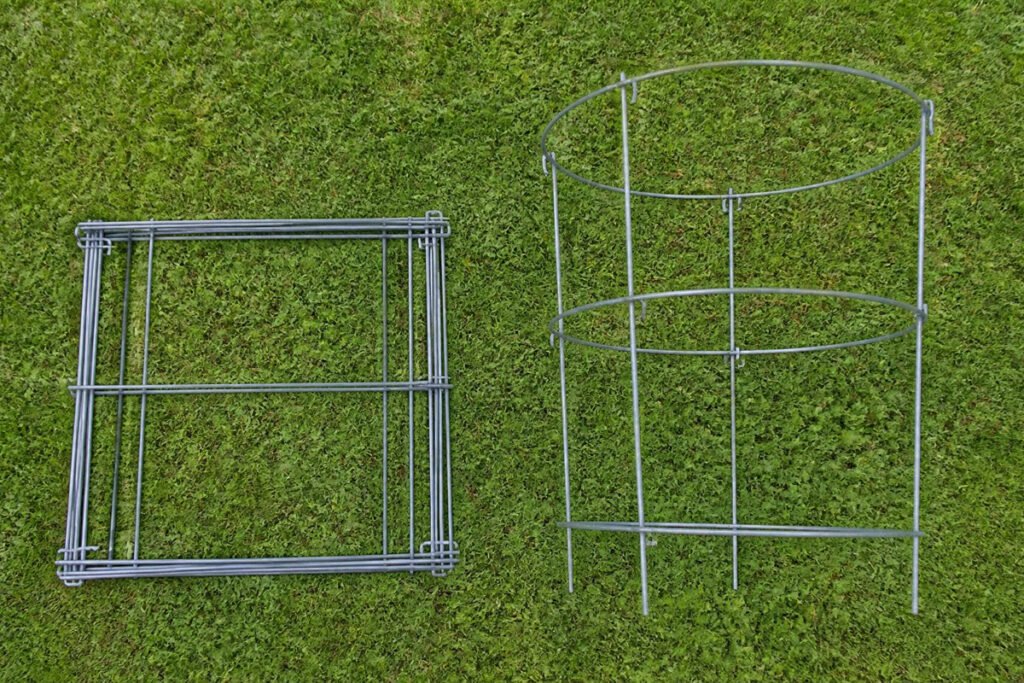
| Best overall, easiest to store | Gardener’s Supply Co. Folding Square Cage |
| Best for large, heavy indeterminate tomatoes | Texas-Style Rectangular Heavy Duty Cage |
| Best for determinate/bush varieties | Panacea Round Tomato & Pepper Tower |
| Best fold-flat durability | Happy Trees Large Heavy Duty Cage |
| Best adjustable & budget-friendly | 3-Tier Adjustable Height Cage |
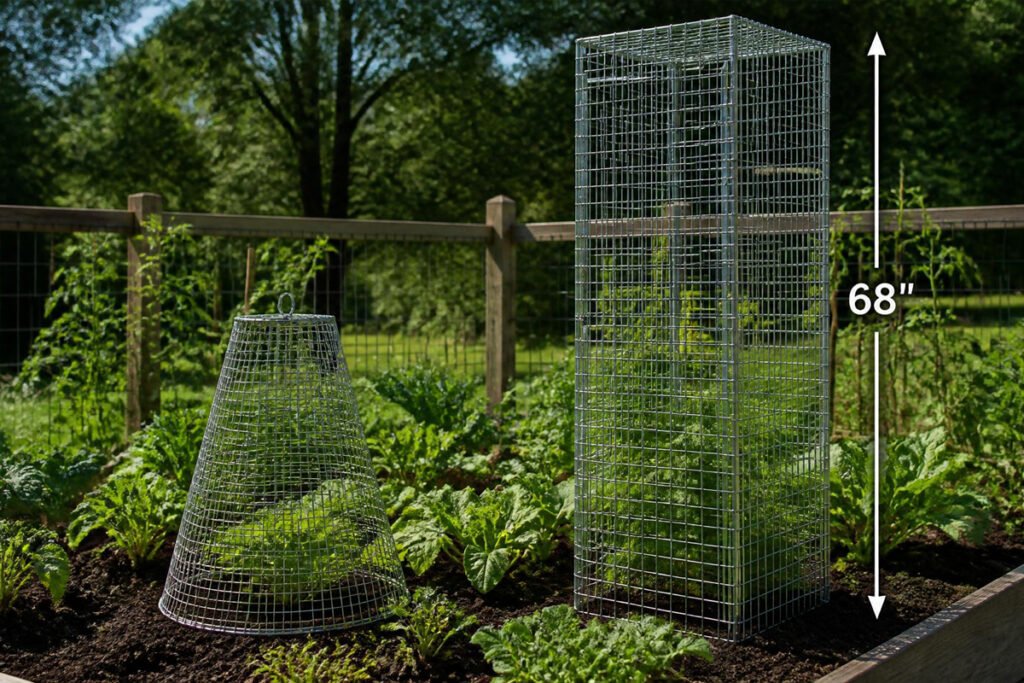
| Best for tall indeterminate varieties | K-Brands 68-Inch Tomato Cage |
Why Most Store-Bought Cages Fail
The thin, cone-shaped wire cages sold cheaply at most garden centers are built for looks in the seedling stage, not the reality of a mature plant. A healthy indeterminate tomato can weigh well over 20 pounds once loaded with fruit and foliage, and thin-gauge wire simply bends or collapses under that load, especially combined with wind. The fix isn’t complicated — it’s steel gauge, not shape, that determines whether a cage survives the season. Look specifically for heavy-gauge galvanized steel (thicker wire, genuine welds rather than twisted joints) rather than judging by size or price alone.
How to Choose the Right Tomato Cage
Before buying, consider:
- Determinate or indeterminate? Determinate (bush) varieties stay compact and are well-served by shorter cone or round cages. Indeterminate varieties keep growing all season and need taller cages — 48 inches minimum, often 60+ inches for larger heirloom types.
- Steel gauge, not just size. A tall, thin-gauge cage will still bend under fruit weight. Prioritize thicker wire and genuine welded joints over cage height alone.
- Storage and reusability. Fold-flat designs take up far less space in the off-season than rigid round cages, which matters if you’re storing several cages for multiple plants year after year.
Best Tomato Cages Available
1. Gardener’s Supply Company Folding Square Cage
Overview: Repeatedly rated the top overall pick by independent testers who compared seven different cage styles side by side, this heavy-gauge galvanized square cage stands out for genuinely easy setup, a wide opening for harvesting and pruning, and a powder-coated finish that stays cooler in direct sun than bare metal.
Key Features:
- Heavy-gauge galvanized steel wire construction
- Folds flat for compact off-season storage
- Wide opening for easy harvesting and pruning access
- Powder-coated finish (red or green) reduces heat absorption in sun
Best For: Gardeners who want the most tested, easiest-to-store heavy-duty option available.
Pros: ✅ Genuinely sturdy under real fruit loads ✅ Folds flat, unlike round cages ✅ Wide access opening for pruning and harvest Cons: ❌ Higher price than basic cone cages ❌ Square footprint takes more bed space than round designs
Our Verdict: If you only buy one style of tomato cage, this is the one testers keep landing on — durable, easy to store, and built to actually last multiple seasons rather than one.
2. Texas-Style Rectangular Heavy Duty Cage
Overview: Trading the standard circular shape for a rectangular footprint gives this cage more usable base area, which translates to better stability for large, sprawling indeterminate varieties, while still folding flat for storage between the shipped two-part assembly.
Key Features:
- Rectangular shape provides a wider base for stability
- Genuinely heavy-gauge wire construction
- Ships in two parts for easier assembly
- Folds for off-season storage
Best For: Large indeterminate varieties that need more base stability than a standard round or square cage offers.
Pros: ✅ Excellent stability for sprawling plants ✅ Durable, thick-gauge wire ✅ Foldable for storage Cons: ❌ Premium price for the durability ❌ Rectangular footprint takes more bed space than compact round cages
Our Verdict: If you’re growing large heirloom or beefsteak varieties known for sprawling growth, the extra base stability here genuinely earns its keep by August.
3. Panacea Round Tomato & Pepper Tower
Overview: A true heavy-duty version of the classic cone shape, the Panacea tower uses noticeably thicker steel gauge than typical store-bought cones, with multiple support rings and a tapered design that stays stable once pushed into soil — ideal for the more concentrated growth habit of determinate varieties.
Key Features:
- Heavy-gauge galvanized steel, thicker than typical cone cages
- Tapered design for stable soil insertion
- Multiple support rings at different heights
- Works well for both tomatoes and peppers
Best For: Determinate (bush) tomato varieties and peppers that don’t need the height of indeterminate support systems.
Pros: ✅ Genuine heavy-duty construction unlike typical cones ✅ Stable, tapered base ✅ Multi-level support rings Cons: ❌ Not tall enough for sprawling indeterminate varieties ❌ Doesn’t fold flat like square designs
Our Verdict: For compact bush varieties like ‘Roma’ or ‘Celebrity,’ this is a stout, reliable classic-shape option that avoids the flimsiness of typical cone cages.
4. Happy Trees Large Heavy Duty Cage
Overview: Combining thick-gauge galvanized steel with a genuinely clever fold-flat design, this cage has built a strong track record among owners who report it lasting for years of repeated seasonal use without bending or rusting.
Key Features:
- Thick-gauge galvanized steel construction
- Fold-flat design for compact storage
- Strong reported longevity across multiple seasons
- Tall enough for most indeterminate varieties
Best For: Gardeners who want proven multi-season durability without the premium price of some competitors.
Pros: ✅ Strong long-term durability track record ✅ Folds flat for storage ✅ Good height for indeterminate varieties Cons: ❌ Assembly required, though straightforward ❌ Mid-range price versus basic cages
Our Verdict: A reliable middle-ground pick between budget cone cages and premium folding squares — genuinely built to last multiple seasons.
5. 3-Tier Adjustable Height Cage
Overview: For gardeners who want one cage that grows with the plant, this rust-resistant, plastic-coated steel design adjusts across three height tiers, with pointed stakes that push directly into soil without tools — a practical, budget-friendly option rated for holding up to roughly 22 pounds of fruit.
Key Features:
- Three adjustable height tiers as the plant grows
- Plastic-coated steel resists rust
- Tool-free, pointed-stake installation
- Rated to support approximately 22 lbs of fruit load
Best For: Budget-conscious gardeners who want flexibility to adjust support height as the season progresses.
Pros: ✅ Genuinely useful adjustable height ✅ Easy, tool-free setup ✅ Good value for the fruit-load capacity Cons: ❌ Plastic coating is a step below full galvanized steel in long-term durability ❌ Doesn’t fold as compactly as premium square designs
Our Verdict: A smart budget pick if you’re outfitting several plants at once and want flexibility without paying premium prices per cage.
6. K-Brands 68-Inch Tomato Cage
Overview: Built specifically with height in mind, the K-Brands cage handles the tallest indeterminate varieties — heirlooms and vining types that easily outgrow standard 48-inch cages by midsummer — without needing a separate staking system to catch the overflow growth.
Key Features:
- Extra-tall 68-inch height for the largest indeterminate varieties
- Sturdy galvanized wire construction
- Wide diameter accommodates substantial foliage growth
- Weather-resistant finish
Best For: The tallest, most vigorous indeterminate tomato varieties that outgrow standard-height cages.
Pros: ✅ Genuine height advantage for vigorous varieties ✅ Sturdy construction handles the extra growth ✅ Reduces need for supplemental staking Cons: ❌ Tall height can be unwieldy in windy locations without secure staking ❌ Bulkier storage footprint than shorter cages
Our Verdict: If your indeterminate tomatoes have outgrown standard cages by midsummer in past seasons, this solves that specific problem directly rather than forcing supplemental stakes onto an undersized cage.

Comparison Table
| Cage | Best For | Height | Shape | Foldable |
|---|---|---|---|---|
| Gardener’s Supply Co. Square | Overall, easy storage | Standard | Square | Yes |
| Texas-Style Rectangular | Large sprawling plants | Tall | Rectangular | Yes |
| Panacea Round Tower | Determinate/bush varieties | Shorter | Round/tapered | No |
| Happy Trees Heavy Duty | Multi-season durability | Tall | Rectangular | Yes |
| 3-Tier Adjustable | Budget, flexible height | Adjustable | Round | Partial |
| K-Brands 68″ | Tallest indeterminate varieties | 68 in | Round | No |
Best Cages for Different Tomato Varieties
Determinate (Bush) Varieties
Compact growers like ‘Roma’ or ‘Celebrity’ don’t need extreme height — a stout, tapered cone like the Panacea tower provides plenty of support without unnecessary bulk.
Indeterminate (Vining) Varieties
These keep growing all season and need real height and stability — the Texas-style rectangular or K-Brands 68-inch cages are built specifically for this ongoing growth, pairing well with organic fertilizers that fuel that extended growing period.
Container and Grow Bag Tomatoes
A compact folding square cage works well in containers, though check that the cage base fits comfortably within your grow bag diameter before buying — oversized cages can be unstable in smaller containers.
Common Mistakes
- Buying by height alone, ignoring steel gauge. A tall, thin-wire cage still bends under real fruit weight. Prioritize thick, welded construction over height as the primary durability factor.
- Installing the cage too late. Cages are far easier to place over young plants than to force around an already-sprawling mature tomato. Install support at transplant time, not once the plant has outgrown easy access.
- Underestimating indeterminate growth. A 36-inch cage that looked plenty tall in June is often outgrown by August for vigorous indeterminate varieties — size up if you’re uncertain, especially for known heirloom or beefsteak types.
Expert Tips
- Anchor cages in windy locations with a stake through the base, even sturdy heavy-duty models. Wind combined with a full fruit load is the most common cause of a cage tipping over entirely, not just bending.
- Match cage diameter to expected plant width, not just height. A tall but narrow cage still crowds a wide, bushy variety, forcing branches through gaps rather than supporting them properly.
- Install cages before flowering begins, giving the plant time to grow into the structure naturally rather than forcing mature branches through cage openings later.
Final Thoughts
Best overall: The Gardener’s Supply Co. Folding Square Cage combines genuine durability with easy storage, making it the pick most testers land on. Best for large plants: The Texas-Style Rectangular Cage’s wider base handles sprawling indeterminate varieties with real stability. Best budget option: The 3-Tier Adjustable Cage offers flexibility and solid fruit-load capacity without a premium price.
Whichever you choose, install it early, match it to your variety’s actual mature size, and pair it with the growing guidance in our trellises and plant supports guide for vining crops that need more than a cage alone.
Frequently Asked Questions
How tall should a tomato cage be? Determinate varieties do fine with 36–42 inch cages. Indeterminate varieties, which keep growing all season, generally need at least 48 inches, and vigorous heirloom or beefsteak types often perform better with 60+ inch cages.
Are folding tomato cages as sturdy as rigid ones? Quality folding cages made from heavy-gauge steel with genuine welded joints hold up just as well as rigid designs — the folding mechanism itself doesn’t compromise strength if the base construction is solid.
Do I need a different cage for determinate versus indeterminate tomatoes? Not strictly, but it helps. Shorter, tapered cages suit the compact growth of determinate varieties, while taller, sturdier square or rectangular cages better support the extended, heavier growth of indeterminate varieties through a full season.
Why did my tomato cage collapse under fruit weight? This is almost always a steel gauge issue — thin wire simply can’t handle the weight of a mature, fruit-loaded plant, regardless of the cage’s height or shape. Look specifically for heavy-gauge, welded construction next time.
Can I reuse tomato cages year after year? Yes, especially galvanized steel cages, which resist rust well over multiple seasons. Fold-flat designs make storage between seasons significantly easier than bulky rigid round cages.
Should I install the cage before or after transplanting? Install it at transplant time, or shortly after. Placing a cage around an already-sprawling mature plant is far more difficult and risks damaging branches compared to letting the plant grow into the structure from the start.
Is a tomato cage or a stake better for support? Cages provide all-around support without needing to tie and re-tie branches as the plant grows, making them lower-maintenance. Stakes work well for determinate varieties or when space is tight, but generally need more active tying throughout the season.
How do I keep a tall cage from tipping in wind? Drive a separate stake through the cage base into the ground for extra anchoring, especially for taller cages supporting heavy, wind-exposed plants — this matters more than most gardeners expect once a plant is fully loaded with fruit.
What’s the weight capacity I should look for? Look for cages explicitly rated for at least 20+ pounds of fruit load if you’re growing larger indeterminate varieties — this rating is a more reliable durability indicator than height or price alone.
Can tomato cages be used for other vining plants? Yes — many gardeners use the same cages for peppers, cucumbers, beans, peas, and small squash, since the support principle works the same for any plant that benefits from all-around structural support.
Author: Pamela Reese Last Updated: August 2026