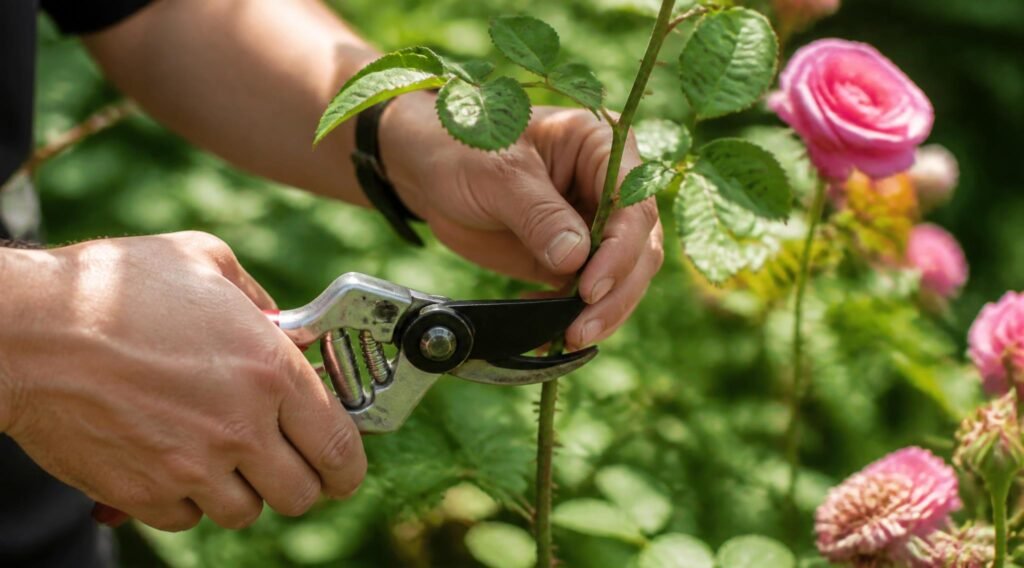
Every gardener eventually reaches for the same tool more than any other in the shed: a pair of pruning shears. Deadheading roses, shaping shrubs, harvesting herbs, cutting back perennials before winter — it all comes down to one clean snip. Yet the best pruning shears aren’t just the sharpest pair on the shelf at the hardware store. The wrong pruner crushes stems instead of cutting them, leaves ragged wounds that invite disease, and turns a ten-minute trim into a hand-cramping chore.
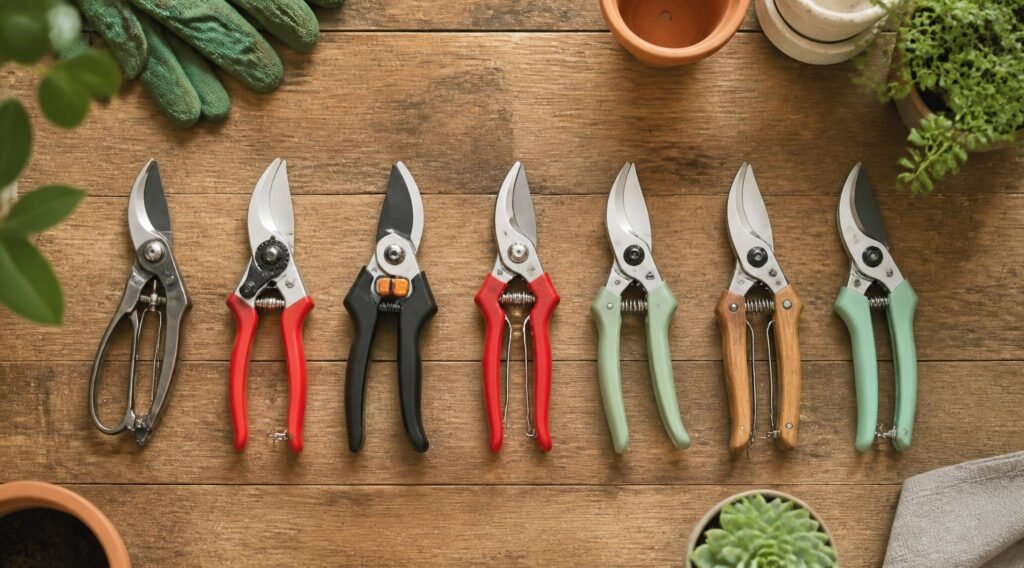
This guide breaks down seven of the best pruning shears and secateurs on the market in 2026, covering bypass, anvil, and ratchet styles for every hand size, budget, and gardening task. Whether you’re maintaining a rose garden, harvesting a vegetable patch, or tackling woody shrubs, there’s a pair here built for the job — plus a complete buying guide so you know exactly what to look for before you spend a single dollar.
(Looking for something to handle branches too thick for hand pruners? See our guide to the best loppers for thick branches. For a full toolkit rundown, check out our best garden hand tools guide.)
Quick Comparison: Best Pruning Shears at a Glance
| Product | Type | Best For | Cutting Capacity |
|---|---|---|---|
| Felco 2 Classic Manual | Bypass | Best Overall | Up to 1 inch |
| Corona ClassicCUT BP 3180 | Bypass | Best Value / Budget | Up to 3/4 inch |
| Fiskars Bypass Pruning Shears | Bypass | Best for Beginners | Up to 5/8 inch |
| ARS HP-VS8Z | Bypass | Best Lightweight Feel | Up to 3/4 inch |
| Felco 6 Compact | Bypass | Best for Small Hands | Up to 3/4 inch |
| Gonicc Professional Anvil Pruner | Anvil | Best for Dead or Dried Wood | Up to 1 inch |
| Garden ratchet anvil pruner (e.g., Ames-style) | Ratchet | Best for Weak Grip / Arthritis | Up to 3/4 inch |
How We Chose These Pruning Shears
Before ranking anything, we looked at the factors that actually determine whether a pair of secateurs earns a permanent spot in your tool belt or ends up rusting in a drawer:
- Blade steel quality – high-carbon or hardened steel blades that hold an edge through a full pruning season
- Cutting mechanism – bypass, anvil, or ratchet, and how each affects plant health
- Ergonomics and hand fatigue – handle shape, grip material, and overall weight
- Cutting capacity – the maximum stem diameter the tool can handle cleanly
- Durability and replaceable parts – whether springs, blades, and bolts can be serviced instead of thrown away
- Value for money – performance relative to price across budget, mid-range, and premium tools
With those criteria in mind, here are our top picks.
1. Felco 2 Classic Manual — Best Overall
The Felco 2 has been a professional standard for decades, and it’s the pruner most commercial growers and arborists reach for first. The forged aluminum handle keeps the tool light without sacrificing strength, and the hardened, narrow-profile steel blade shears through green wood with almost no resistance.
Key features:
- Fully hand-sharpenable, narrow steel blade for precision cuts
- Every component — blade, spring, bumper, bolt — is individually replaceable
- Rotating handle option available to reduce wrist strain on long sessions
- Cushioned shock absorber reduces hand fatigue on repetitive cuts
Best for: Gardeners who want one high-quality pruner that will genuinely last decades with basic maintenance.
Consider instead: If your hands are on the smaller side, the compact version further down this list will feel more comfortable.
2. Corona ClassicCUT BP 3180 — Best Value for Money
You don’t need to spend premium-tool money to get a genuinely sharp, durable pruner, and the Corona ClassicCUT proves it. It uses a fully hardened, high-carbon steel blade that takes a beating from woody stems without chipping, wrapped in a simple, no-frills design with very few moving parts to fail.
Key features:
- High-carbon steel blade holds its edge through heavy seasonal use
- Simple non-slip rubber grip works well for right- and left-handed gardeners
- Sap groove on the blade helps prevent sticking on resinous plants
- Backed by a limited lifetime warranty
Best for: Budget-conscious gardeners who still want a bypass pruner that performs like a pricier one.
3. Fiskars Bypass Pruning Shears — Best for Beginners
Fiskars built its reputation on tools that are dependable without requiring a learning curve, and its bypass pruning shears are the easiest recommendation for anyone buying their first “real” pair of secateurs. The precision-ground blade is coated to resist sap buildup, and the softgrip handle is comfortable straight out of the packaging.
Key features:
- Low-friction coating keeps the blade cutting cleanly through sappy stems
- Rust-resistant coated blade needs less maintenance than raw steel
- Spring-action opening reduces hand effort on repeated cuts
- Lightweight enough for extended deadheading or harvesting sessions
Best for: New gardeners, container gardeners, and anyone who wants light-duty performance at an approachable price.
4. ARS HP-VS8Z — Best for an Effortless Cutting Feel
ARS pruners are a favorite among growers who prune for hours at a time, and the HP-VS8Z is built specifically to reduce the effort needed per cut. The blade geometry is angled to slice rather than pinch, which matters enormously if you’re pruning fruit trees, roses, or dense hedging stems all afternoon.
Key features:
- Thin, angled blade design reduces the force needed to close each cut
- Lightweight aluminum handles minimize wrist and forearm fatigue
- Replaceable blade and spring extend the tool’s working life
- Compact size suits gardeners who prefer a lighter daily-carry pruner
Best for: Gardeners doing high-volume pruning who want to avoid hand fatigue by the end of the day.
5. Felco 6 Compact — Best for Small Hands
Standard pruners are sized around an average adult male grip, which leaves a lot of gardeners working with a tool that’s simply too big. The Felco 6 solves that with a narrower handle spread and lighter overall weight, without giving up the durability the Felco name is known for.
Key features:
- Narrower handle opening designed for smaller or shorter hands
- Same hardened steel blade quality as the full-size Felco line
- Fully serviceable with individually replaceable parts
- Aluminum alloy handles keep overall weight low
Best for: Gardeners with smaller hands, or anyone who finds standard-size bypass pruners awkward to grip.
6. Gonicc Professional Anvil Pruning Shears — Best Anvil Pruner
Bypass pruners aren’t the right tool for every job. Once a stem is dead, dried out, or thicker than a bypass blade is comfortable cutting, an anvil pruner takes over. The Gonicc anvil pruner uses a straight, hardened blade that closes directly onto a flat anvil plate, applying more crushing force for less physical effort.
Key features:
- High-carbon steel blade holds an edge through dense, dry wood
- Anvil design generates more cutting force with less hand strength
- Ergonomic non-slip handle reduces blisters on extended use
- Sap groove and non-stick coating limit resin buildup
Best for: Cutting back dead canes, dried perennial stalks, and woody growth that bypass pruners struggle with. (Avoid using anvil pruners on live, healthy stems — the crushing action can damage plant tissue and slow healing.)
7. Ratchet Anvil Pruner — Best for Limited Hand Strength
Ratchet pruners are technically a category of anvil pruner, but the mechanism sets them apart: instead of closing the blade in one squeeze, a ratcheting action lets you cut through a stem in two or three smaller squeezes. That makes them the single best option for gardeners managing arthritis, carpal tunnel, or general grip weakness.
Key features:
- Ratcheting mechanism cuts thick stems in stages instead of one hard squeeze
- Reduces the hand and wrist strain associated with high-force single cuts
- Anvil-style blade suited to dry or woody stems rather than delicate live growth
- Typically priced at the budget-to-mid range of the pruner market
Best for: Gardeners with reduced hand strength who still need to tackle thicker, drier stems safely.
Bypass vs. Anvil vs. Ratchet: Which Type Do You Actually Need?
This is the single most important decision in choosing pruning shears, and it matters more than brand or price.
Bypass pruners work like scissors — one sharp blade slides past a curved lower blade. This produces a clean, precise cut that seals faster and is far less likely to crush the stem. Use bypass pruners on live, healthy growth: roses, herbs, vegetable stems, soft new shoots, and most everyday deadheading and shaping.
Anvil pruners close a single sharp blade straight down onto a flat surface, like a knife on a cutting board. This design delivers more cutting force but tends to crush the stem slightly on either side of the cut. Anvil pruners are best reserved for dead, dried, or hard woody material where a slightly crushed cut doesn’t matter, because the tissue is no longer living.
Ratchet pruners are a variation on the anvil design that lets you apply cutting force in stages rather than all at once. They sacrifice a small amount of precision for a significant reduction in required grip strength, making them the practical choice for gardeners who struggle with traditional pruners.
The simple rule: if the stem is alive, use bypass. If it’s dead or you need extra leverage with less hand strength, reach for anvil or ratchet instead.
What to Look For When Buying Pruning Shears
Blade Material
High-carbon steel is the benchmark for sharpness and edge retention. Stainless steel resists rust more easily but generally needs sharpening more often. Coated blades (Teflon-style non-stick finishes) reduce sap buildup and are a good match for gardeners who prune a lot of resinous or sticky plants.
Cutting Capacity
Every pair of pruning shears lists a maximum stem diameter, typically between 1/2 inch and 1 inch. Buying a pruner rated below what you actually need is the fastest way to bend a blade or strip a spring — if you regularly cut branches near an inch thick, size up or move to loppers instead.
Handle Design and Ergonomics
Look for a handle shape that matches your hand size, a cushioned grip, and — if you prune for long stretches — a rotating handle model, which lets the tool pivot slightly with your wrist and meaningfully reduces fatigue over a full pruning session.
Locking Mechanism
A secure locking mechanism keeps the blades closed for safe storage and transport. Test how easily it opens and closes one-handed, especially if you’ll be wearing gloves — some locks are noticeably harder to operate with thick garden gloves on. (Our best gardening gloves guide is a useful companion resource here.)
Replaceable Parts
Premium pruners from brands like Felco and ARS are built to be serviced rather than replaced — springs, blades, and bolts are sold individually. This adds a small amount of long-term cost but dramatically extends the useful life of the tool compared to a fully sealed, disposable design.
Left-Handed and Small-Hand Options
Several manufacturers offer left-handed or narrow-grip versions of their standard models. If a pruner feels awkward in a five-minute test, it will feel worse after an hour of real garden work — always check for a size or handedness option before assuming discomfort is unavoidable.
How to Maintain and Sharpen Pruning Shears
Even the best pruning shears lose their edge without basic care. A few habits will keep any pair cutting cleanly for years:
- Wipe the blade after every use. Sap and plant residue left on the blade accelerates dulling and can spread disease between plants.
- Disinfect between plants when pruning diseased material. A quick wipe with isopropyl alcohol prevents cross-contamination, particularly important when cutting back anything showing signs of fungal or bacterial disease.
- Sharpen the blade regularly, not just when it feels dull. A honing stone or dedicated pruner-sharpening tool used every few weeks during peak season keeps cuts clean and reduces the effort needed per snip.
- Oil the pivot point every few uses to keep the action smooth and prevent rust at the joint.
- Store shears closed and dry. Leaving pruners open or damp in a shed is one of the most common causes of premature rust and spring failure.
Frequently Asked Questions
What’s the difference between pruning shears and secateurs? Nothing functional — “secateurs” is simply the more common term in the UK, Australia, and much of Europe, while “pruning shears” or “hand pruners” is more common in the US. They refer to the exact same handheld cutting tool.
Can I use pruning shears on thick branches? Most hand pruners are rated for stems up to about 3/4 inch to 1 inch. Beyond that, the blade and spring are put under too much stress, and you risk both a damaged tool and a torn, unhealthy cut on the plant. Switch to loppers or a pruning saw for anything thicker.
Are anvil or bypass pruners better for roses? Bypass pruners are the better choice for roses and other live, flowering shrubs. The scissor-style cut minimizes crushing at the wound site, which helps the plant heal faster and reduces the entry point for disease.
How often should pruning shears be sharpened? For regular home use, sharpening two to three times per growing season is usually enough. If you’re pruning daily or working with tougher woody plants, a quick touch-up with a sharpening stone every couple of weeks will keep performance consistent.
Do more expensive pruning shears actually last longer? Generally, yes — premium pruners use higher-grade steel and offer replaceable parts, meaning a single pair can realistically last decades with basic maintenance, while budget models are often designed to be replaced every season or two.
Final Verdict
For most home gardeners, a quality bypass pruner like the Felco 2 or the more budget-friendly Corona ClassicCUT will cover the vast majority of everyday pruning tasks. If your hands are smaller or you prune for long stretches, sizing down to something like the Felco 6 or ARS HP-VS8Z makes a noticeable difference in comfort. Keep a dedicated anvil pruner on hand for dead or dried material, and consider a ratchet model if grip strength is a limiting factor.
Whichever pair you choose, the real return on investment comes from basic maintenance — a clean, sharp, well-oiled blade will outperform an expensive but neglected pruner every time. Pair your new shears with a solid pair of gloves and the rest of your core toolkit, and you’ll have everything needed to keep your garden healthy through every season.
Related reading: Best Garden Hand Tools for Every Gardener · Best Loppers for Thick Branches · Best Gardening Gloves for Every Task