
Every gardener eventually hits the same wall: a truckload of mulch, a pile of soil, or a season’s worth of yard debris that needs to move from point A to point B, and no easy way to do it without a sore back and a dozen trips carrying armloads by hand. A wheelbarrow or garden cart isn’t a glamorous purchase, but it’s one of the few tools that directly changes how much physical strain a gardening season puts on your body.
The trouble is that “wheelbarrow” now covers a wide range of very different tools — traditional single-wheel steel trays, stable dual-wheel poly carts, multi-purpose convertible haulers — and picking the wrong one for your yard means fighting tipping, poor maneuverability, or a bed that’s the wrong shape for the job. This guide breaks down the best garden carts and wheelbarrows of 2026, how to choose between them, and the mistakes that lead to a cart gathering dust in the shed instead of earning its keep. Once you’re moving materials efficiently, pair this with our 5 Best Mulches for Vegetable Gardens guide for what you’ll likely be hauling first.
Quick Answer
For traditional single-wheel maneuverability on uneven ground, a steel-tray wheelbarrow like the True Temper remains the classic, reliable choice for navigating tight spaces between beds. For stability without the balancing act, a dual-wheel or four-wheel poly dump cart like Gorilla Carts sacrifices a little maneuverability for a bed you can load, set down, and walk away from without it tipping. For smaller yards or lighter loads, a lightweight dual-wheel yard cart like the Marathon Yard Rover is easier to handle, especially for gardeners who find traditional wheelbarrows tippy. And if you want one tool that replaces several, a convertible multi-use hauler like the Worx Aerocart trades some capacity for genuine versatility.
Table of Contents
- Why the Right Cart Matters
- How to Choose the Right Cart or Wheelbarrow
- Best Garden Carts & Wheelbarrows Available
- Comparison Table
- Best Options for Different Yard Sizes
- How to Load and Haul Safely
- Common Mistakes
- Expert Tips
- Final Thoughts
- Frequently Asked Questions
Why the Right Cart Matters
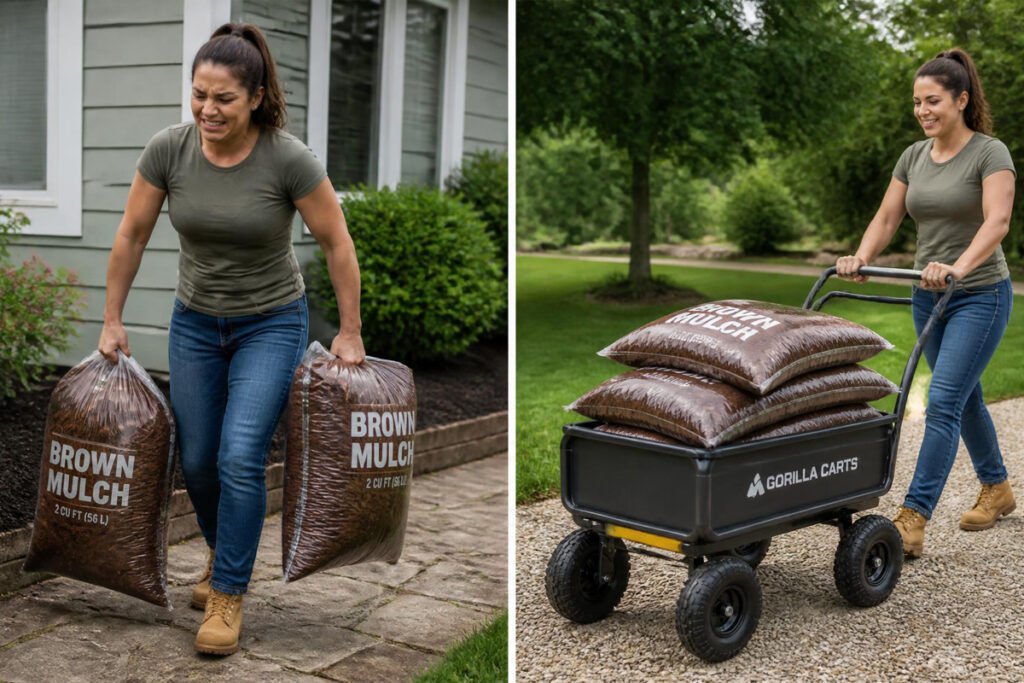
Moving heavy garden materials by hand — mulch bags, bagged soil, potted plants, yard waste — adds up to real physical strain over a full season, and repeated heavy lifting is one of the more common causes of gardening-related back injury. A properly matched cart or wheelbarrow moves that same material in a fraction of the trips, with far less strain on your back and joints.
The right choice also depends heavily on your terrain and yard layout. A single-wheel wheelbarrow that’s ideal for weaving between narrow raised beds can feel unstable on a large, open, hilly property where a wider, multi-wheel cart handles better. This is why matching the tool to your specific yard matters more than simply buying the highest-capacity option available.
How to Choose the Right Cart or Wheelbarrow
Ask yourself these three questions before buying:
1. How tight or open is your yard layout? Narrow paths between raised beds favor a single-wheel wheelbarrow’s tighter turning radius. Open yards and driveways favor the stability and capacity of a multi-wheel cart.
2. What will you mostly be hauling? Loose materials like mulch and soil benefit from a deep tray or dump-style bed. Potted plants, tools, and mixed loads do better in a flatter, wider cart bed.
3. How much strength and balance do you want the tool to require? Single-wheel wheelbarrows require active balancing, especially on uneven ground. Dual- and four-wheel carts are far more forgiving and easier for anyone with limited upper-body strength or balance concerns.
Best Garden Carts & Wheelbarrows Available
1. True Temper Wheelbarrow
Overview: A traditional single-wheel steel-tray wheelbarrow widely regarded as a best-overall pick for its sturdy build, comfortable handles, and smooth rolling even on uneven terrain. It handles well on slopes, giving good control when hauling heavy loads up or down grade changes.
Key Features:
- Sturdy steel tray built for heavy loads
- Comfortable, well-positioned handles
- Smooth-rolling pneumatic tire
- Strong control on slopes and uneven ground
Best For: Traditional single-wheel maneuverability in yards with narrow paths, slopes, or tight turns between beds.
Pros: ✅ Excellent control on slopes and uneven terrain ✅ Sturdy, durable steel construction ✅ Comfortable handles for extended use Cons: ❌ Requires active balancing, unlike multi-wheel carts ❌ Heavier to maneuver when empty than poly alternatives
Our Verdict: For gardeners who already know how to handle a traditional wheelbarrow and need to navigate tight spaces, this remains the dependable classic choice.
2. Gorilla Carts Poly Garden Dump Cart
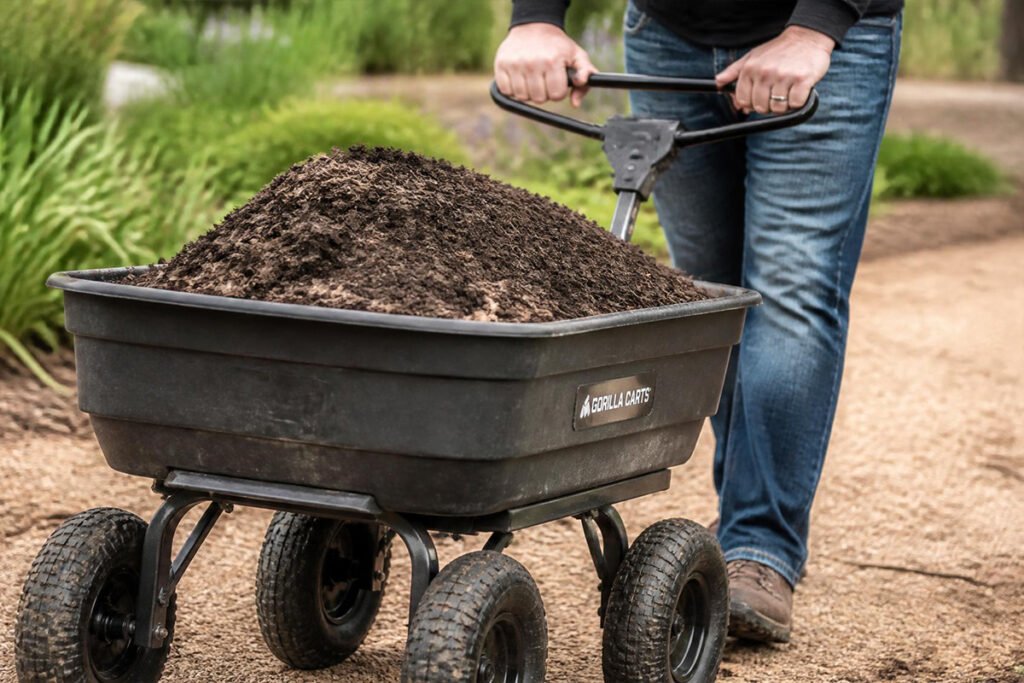
Overview: A four-wheel poly dump cart that consistently rates as a top overall pick for combining hauling capacity, durability, and ease of use. Its wide wheelbase and pneumatic tires roll smoothly even loaded with heavy materials like mulch or concrete blocks, and articulating front wheels make tight turns manageable without stopping.
Key Features:
- Wide, stable wheelbase with pneumatic tires
- One-handed dump mechanism for easy unloading
- Articulating front wheels for tight turns
- High weight capacity for a poly cart
Best For: Gardeners who want a stable, no-balancing-required cart for hauling mulch, soil, or debris around a mid-to-large yard.
Pros: ✅ Excellent stability, no tipping risk when parked loaded ✅ Easy one-handed dumping ✅ Handles heavy loads smoothly across varied terrain Cons: ❌ Larger footprint, less ideal for very narrow paths ❌ Poly bed isn’t ideal for mixing concrete or similarly abrasive tasks
Our Verdict: The best all-around choice for most home gardeners — the stability alone makes it dramatically easier to use than a traditional single-wheel wheelbarrow.
3. Marathon Yard Rover
Overview: A lightweight, dual-wheel residential wheelbarrow that trades some maximum capacity for a noticeably easier, more stable ride. Its two pneumatic tires provide smooth handling over grass and garden paths without the balancing effort a single-wheel model demands.
Key Features:
- Dual pneumatic tires for smooth, stable rolling
- Lightweight poly tub construction
- Easier maneuvering for smaller loads
- More affordable than heavy-duty steel or four-wheel options
Best For: Smaller yards, lighter loads, and gardeners who want an easy, stable ride without a large cart’s footprint.
Pros: ✅ Very easy to maneuver and control ✅ Lightweight, doesn’t add fatigue when empty ✅ Budget-friendly Cons: ❌ Lower capacity than heavy-duty steel or dump-cart options ❌ Less suited to consistently heavy hauling like large landscaping projects
Our Verdict: A smart pick for smaller properties or anyone who wants an easy, everyday hauler rather than a heavy-duty workhorse.
4. Worx Aerocart
Overview: An 8-in-1 convertible hauler that reconfigures between a wheelbarrow, hand truck, dolly, and more, using leverage-based “Turbo Lift” technology to make heavy loads feel noticeably lighter to tip and move than a standard wheelbarrow.
Key Features:
- Converts between multiple hauling configurations
- Turbo Lift leverage system reduces effort needed to tip loads
- Large wheels for smoother rolling over uneven ground
- Compact footprint for storage compared to owning several separate tools
Best For: Gardeners with limited storage space who want one tool that handles hauling, moving potted plants, and light dolly work.
Pros: ✅ Genuinely reduces physical effort for heavy loads ✅ Replaces several separate tools ✅ Compact storage footprint Cons: ❌ Lower weight capacity than dedicated dump carts ❌ Higher price point than a single-purpose wheelbarrow
Our Verdict: Worth the premium if garage or shed space is limited and you’d otherwise need separate tools for hauling, moving pots, and light dolly work.
5. VIVOHOME Heavy Duty Mesh Steel Garden Cart
Overview: A high-capacity steel mesh cart built for serious hauling volume, with removable sides that convert it into a flatbed for longer materials like lumber or plant stakes when needed.
Key Features:
- High weight capacity steel mesh construction
- Removable sides convert to flatbed configuration
- Sturdy build for repeated heavy-duty use
- Mesh bed allows debris and soil to shed easily
Best For: Larger properties, heavy landscaping projects, and hauling bulky or oddly shaped materials.
Pros: ✅ High weight capacity for serious hauling ✅ Versatile flatbed conversion ✅ Durable steel construction Cons: ❌ Bulkier and heavier than poly carts ❌ Steel construction requires more attention to rust prevention
Our Verdict: The right choice if you regularly move heavy volumes of material or need a cart that can also double as a flatbed hauler.
Comparison Table
| Product | Best For | Wheels | Capacity | Approx. Cost |
|---|---|---|---|---|
| True Temper Wheelbarrow | Tight paths, slopes | 1 (pneumatic) | Standard | $$ |
| Gorilla Carts Poly Dump Cart | Overall stability & capacity | 4 (pneumatic) | High | $$$ |
| Marathon Yard Rover | Small yards, light loads | 2 (pneumatic) | Moderate | $$ |
| Worx Aerocart | Multi-use, limited storage | 2 (large) | Moderate | $$$ |
| VIVOHOME Mesh Steel Cart | Heavy-duty, bulky materials | 4 | Very High | $$$ |
Best Options for Different Yard Sizes
For Small Yards and Raised Bed Gardens
A lightweight dual-wheel cart like the Marathon Yard Rover, or a compact multi-use tool like the Worx Aerocart, fits tighter spaces without sacrificing too much stability.
For Mid-to-Large Yards With Regular Hauling
The Gorilla Carts Poly Dump Cart handles the bulk of everyday hauling — mulch, soil, debris — with enough stability and capacity to cover most yards without upgrading further. Pair it with our 5 Best Composting Bins & Systems for Vegetable Gardens guide for moving finished compost to beds.
For Heavy Landscaping and Large-Volume Projects
A high-capacity steel cart like the VIVOHOME model handles the heaviest, bulkiest loads that smaller poly carts aren’t built for.
How to Load and Haul Safely
Step 1: Check the Weight Rating
Know your cart’s maximum capacity before loading, especially with dense materials like wet soil, gravel, or concrete.
Step 2: Load Heavier Items Toward the Wheels
Positioning heavy items closer to the wheel axle (rather than the handles) reduces the lifting effort needed to move the load.
Step 3: Use Proper Lifting Form
Bend at the knees rather than the back when lifting the handles of a loaded wheelbarrow, the same way you would lifting any heavy object.
Step 4: Push Rather Than Pull on Uneven Ground
Pushing gives more control and better visibility over the load than pulling, especially on slopes or rough terrain.
Step 5: Dump Gradually on Slopes
Tip loads slowly rather than all at once on an incline to avoid sudden shifts in balance that can tip the cart or strain your back.
Common Mistakes
1. Buying based on capacity alone, without considering yard layout. A high-capacity cart that can’t maneuver through your actual paths and gates isn’t useful no matter how much it can theoretically hold.
2. Overloading beyond the rated capacity. This strains the frame, wheels, and your back simultaneously, and is one of the most common causes of premature cart failure.
3. Leaving steel carts outside uncovered. Steel trays and mesh carts left exposed to rain rust over time, even with a painted or coated finish. Store under cover when not in use, or choose a poly cart if outdoor storage is unavoidable.
Expert Tips
1. Test maneuverability with your actual gates and paths in mind. A cart that seems fine in a showroom or driveway can be frustratingly wide for a narrow side-yard gate — measure your tightest access point before buying.
2. Match wheel type to your terrain. Pneumatic (air-filled) tires handle uneven ground and grass far better than solid plastic wheels, though they do require occasional air pressure checks.
3. Consider a second, smaller cart for frequent light tasks. Many gardeners find that a large cart for big jobs and a small, easy-to-grab cart for daily light hauling covers more ground than trying to make one cart do everything.
Final Thoughts
For most home gardeners, a four-wheel poly dump cart like Gorilla Carts offers the best combination of stability, capacity, and ease of use for everyday hauling. Traditional single-wheel wheelbarrows still earn their place in tight, winding garden layouts where maneuverability matters more than raw stability, and a multi-use hauler like the Worx Aerocart is worth considering if storage space is limited. Whatever you choose, matching the tool to your actual yard layout matters more than chasing maximum capacity. For next steps, see our 5 Best Mulches for Vegetable Gardens and 5 Best Composting Bins & Systems for Vegetable Gardens guides.
Frequently Asked Questions
Is a single-wheel wheelbarrow or a two-wheel cart better? Single-wheel wheelbarrows offer a tighter turning radius, useful for narrow paths, but require active balancing. Two-wheel and four-wheel carts sacrifice some maneuverability for dramatically better stability — you can load and set them down without them tipping over.
How much weight can a typical garden cart hold? This varies widely by model, from around 300 pounds for lighter multi-use haulers up to 1,000+ pounds for heavy-duty steel mesh carts — always check the specific manufacturer’s rated capacity.
Are poly or steel carts better? Poly (plastic) carts resist rust and are typically lighter, making them easier to maneuver empty. Steel carts generally handle higher weight capacities and abrasive materials better but need more attention to rust prevention if stored outdoors.
What size cart do I need for a small backyard garden? A lightweight dual-wheel cart or a compact multi-use hauler is usually sufficient for small yards — a large four-wheel dump cart’s capacity often goes unused and its footprint can be cumbersome in tight spaces.
Can garden carts handle hills and slopes? Yes, but single-wheel wheelbarrows generally offer better control on slopes since a skilled user can balance and steer more precisely than with a wider multi-wheel cart, which can feel less stable on a steep grade.
How do I prevent my garden cart from rusting? Store steel and mesh carts under cover when not in use, and consider a poly-bed model if your climate is especially wet or you don’t have covered storage available.
Is it worth paying more for a convertible multi-use cart like the Worx Aerocart? It’s worth it primarily for storage-limited yards where owning separate tools (wheelbarrow, hand truck, dolly) isn’t practical — for straightforward hauling needs, a dedicated single-purpose cart is usually more cost-effective.
Author: ProGardeningTips Editorial Team Last Updated: August 2026