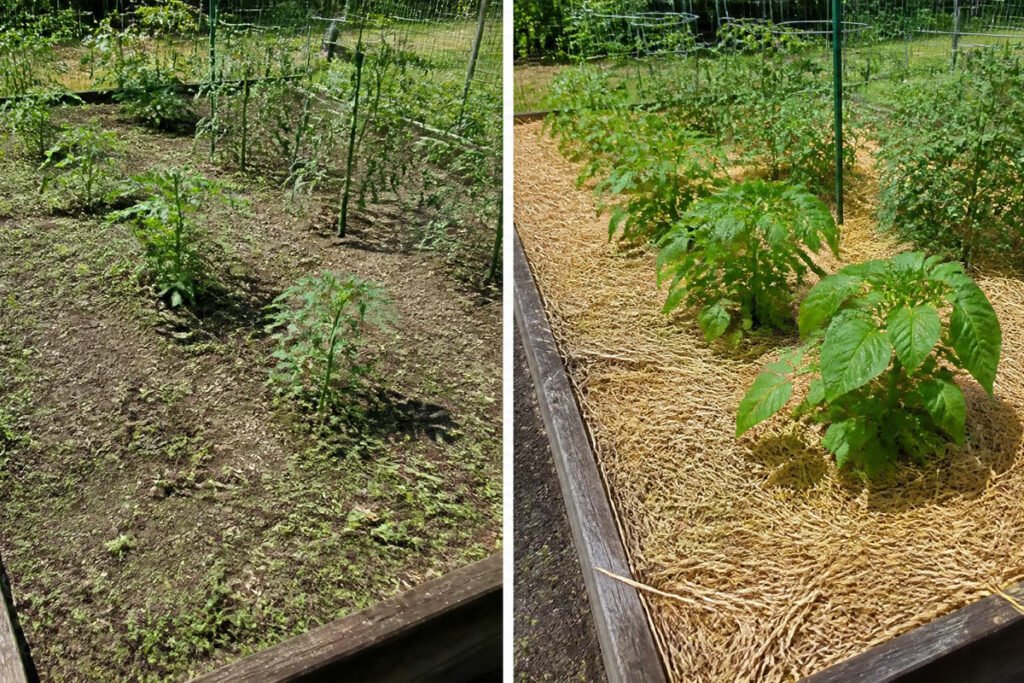
Bare soil between vegetable plants isn’t just an aesthetic gap — it’s an open invitation for weeds, a fast track to moisture loss, and a surface that bakes hard in summer heat. Gardeners who skip mulch often end up watering more, weeding constantly, and watching soil health decline season after season, while a two-to-three-inch layer of the right material would have solved all three problems at once.
The challenge is that not all mulch works the same way in a vegetable bed. Wood chips that are perfect around fruit trees can tie up nitrogen if tilled into annual vegetable beds, and hay — often confused with straw — can seed your garden with weeds you’ll be fighting for years. This guide breaks down the best mulches for vegetable gardens in 2026, how to choose between them, and the mistakes that turn a helpful layer of mulch into a garden problem. Once your beds are mulched, this pairs well with our 5 Best Watering & Irrigation Tools for Vegetable Gardens guide, since mulch and irrigation work together to keep soil moisture consistent.
Quick Answer
For annual vegetable beds, weed-free straw is the standard choice — it breaks down within a season, adds organic matter, and suppresses weeds without tying up nitrogen the way fresh wood products can. Shredded leaves are the free, high-value alternative if you have access to deciduous trees in fall. Compost works as both a mulch and a soil amendment in one layer, ideal for beds that need a nutrient boost. Aged wood chips are better suited to pathways between beds or around perennial herbs and berries than annual vegetable rows. And landscape fabric is the practical choice for covering large areas or persistent weed pressure, at the cost of the organic matter other mulches contribute.
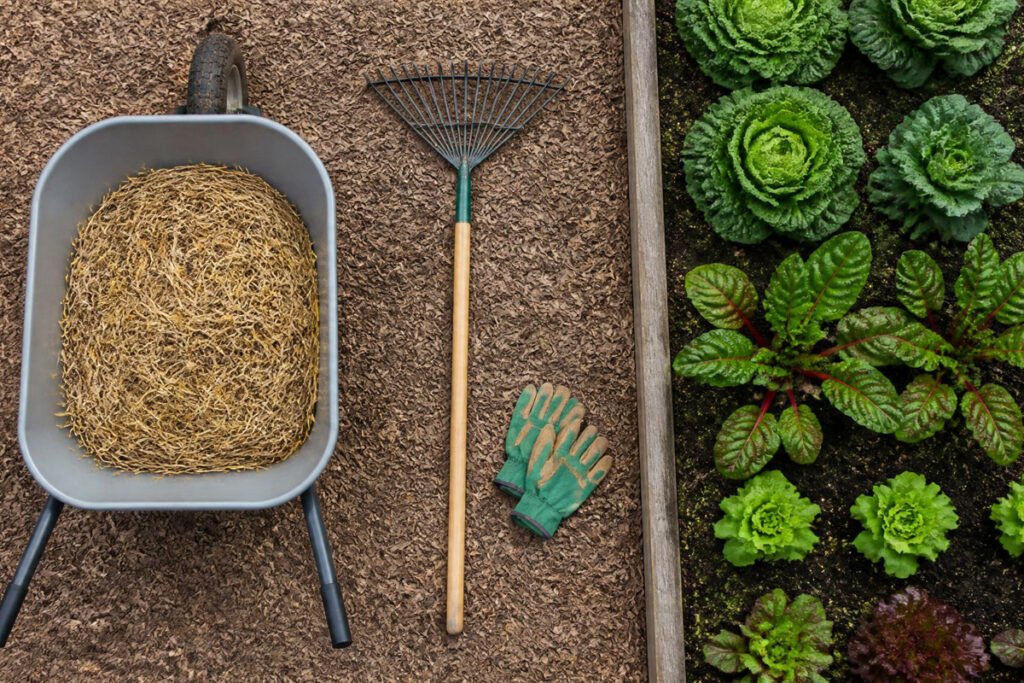
Table of Contents
- Why Mulch Matters in a Vegetable Garden
- How to Choose the Right Mulch
- Best Mulches Available
- Comparison Table
- Best Mulch for Different Garden Situations
- How to Apply Mulch Correctly
- Common Mistakes
- Expert Tips
- Final Thoughts
- Frequently Asked Questions
Why Mulch Matters in a Vegetable Garden
A proper mulch layer does three jobs simultaneously: it reduces water loss from soil evaporation, it blocks sunlight from reaching weed seeds so they can’t germinate, and — for organic mulches — it slowly breaks down and feeds the soil. Applying two to three inches of mulch can cut a garden’s watering needs meaningfully during dry stretches, which connects directly to what we covered in our 5 Best Watering & Irrigation Tools for Vegetable Gardens guide.
Mulch also protects soil structure. Bare soil compacts under rain and foot traffic and can crust over, making it harder for water to soak in at all. A mulch layer absorbs that impact and keeps the soil surface loose and biologically active underneath.
How to Choose the Right Mulch
Ask yourself these three questions before buying or gathering mulch:
1. Is this bed annual or permanent? Fast-decomposing mulches like straw and shredded leaves are ideal for annual vegetable beds you replant each year, since they break down and can be tilled in. Slower-decomposing mulches like wood chips are better suited to permanent plantings like berries, asparagus, or perennial herb beds.
2. How much weed pressure are you dealing with? For beds with persistent weed problems, a thicker layer or a landscape fabric barrier may be worth the tradeoff in organic matter contribution.
3. What’s actually available and affordable near you? Shredded leaves and grass clippings are often free. Straw, compost, and wood chips usually need to be purchased or sourced from a local supplier — check with municipal composting programs or local arborists, who often give away wood chips for the cost of pickup.
Iowa State University Extension specifically recommends against wood chips for annual vegetable beds, since a fresh wood product tilled into soil each year competes with plants for nitrogen as it decomposes — a detail worth keeping in mind when choosing between mulch types for different parts of your garden.
Best Mulches Available
1. Weed-Free Wheat or Oat Straw
Overview: The standard mulch for annual vegetable beds — clean, golden straw made from the dry stems left after grain harvest. Properly harvested “weed-free” straw contains minimal seed content, unlike hay, which is cut grass or legumes and typically full of viable seeds.
Key Features:
- Breaks down within a single growing season
- Lightweight and easy to move around established plants
- Allows water and air to reach soil while blocking weed germination
- Adds organic matter back into soil as it decomposes
Best For: Tomatoes, peppers, potatoes, and other annual vegetable beds that are replanted each year.
Pros: ✅ Fast, easy to apply and remove ✅ Improves soil as it breaks down ✅ Doesn’t tie up soil nitrogen the way fresh wood does Cons: ❌ Must be labeled “weed-free” or it can introduce grain or weed seeds ❌ Needs reapplying each season since it decomposes quickly
Our Verdict: For most annual vegetable beds, this is the default mulch choice — just make sure the bag specifically says weed-free straw, not hay.
2. Shredded Fall Leaves
Overview: Free mulch for anyone with access to deciduous trees. Whole leaves mat together and can block water infiltration, but running them through a mower once or twice first breaks them into a light, effective mulch that decomposes into rich humus over time.
Key Features:
- Completely free if you have or can source deciduous leaves
- Shredding prevents matting and improves water penetration
- Breaks down into humus, improving long-term soil structure
- Can be stockpiled in fall for use through the following season
Best For: Gardeners who want a free, high-value mulch and are willing to shred leaves before applying.
Pros: ✅ Free ✅ Excellent long-term soil-building value ✅ Widely available in fall Cons: ❌ Must be shredded first or it mats and blocks water ❌ Availability is seasonal unless stockpiled
Our Verdict: If you have deciduous trees nearby, this is the best value mulch available — the only real cost is the time to shred and store it.
3. Compost
Overview: A dual-purpose material that acts as both a soil amendment and a mulch layer in one application. A thick top layer of finished compost suppresses weeds and retains moisture while directly feeding the soil beneath it, rather than only contributing nutrients after it fully breaks down.
Key Features:
- Immediately available nutrients, unlike slower-decomposing mulches
- Suppresses weeds while improving soil structure
- Can be homemade or purchased in bulk or bagged form
- Works well combined with a thinner top layer of straw for weed suppression
Best For: Beds that need a nutrient boost alongside moisture retention and weed control.
Pros: ✅ Feeds soil immediately, not just after decomposition ✅ Improves soil structure and microbial activity ✅ Reduces need for separate fertilizing Cons: ❌ Less effective at weed suppression alone than straw or fabric ❌ Quality varies significantly between sources
Our Verdict: An excellent layer to combine with a thin straw topping rather than a strict either/or choice — see our 5 Best Composting Bins & Systems for Vegetable Gardens guide if you want to produce your own.
4. Aged Wood Chips
Overview: Long-lasting, foot-friendly mulch best suited to pathways between beds and around perennial plantings rather than tilled into annual vegetable rows. Aged wood chips (as opposed to fresh) have already begun breaking down, which reduces the nitrogen competition that fresh wood chips cause.
Key Features:
- Long-lasting, often 2–4 years before fully breaking down
- Excellent for suppressing weeds in high-traffic pathway areas
- Often available free or low-cost from local arborists or municipal programs
- Foot-friendly surface for walkways between beds
Best For: Pathways, around fruit trees and berries, and other permanent, non-tilled areas.
Pros: ✅ Very long-lasting ✅ Often free from local tree services ✅ Excellent for permanent plantings and pathways Cons: ❌ Not recommended for annual vegetable beds due to nitrogen tie-up ❌ Slow to break down compared to straw or leaves
Our Verdict: Keep wood chips out of your annual vegetable rows and reserve them for pathways and perennial plantings, where their durability actually works in your favor.
5. Landscape Fabric / Weed-Barrier Mulch
Overview: A woven or non-woven synthetic fabric laid down before planting, with holes cut for individual plants — the practical choice for covering large garden areas or beds with especially persistent weed pressure, at the cost of the organic matter contribution other mulches provide.
Key Features:
- Highly effective, long-lasting weed suppression
- Covers large areas more affordably than straw or wood chips at scale
- Reusable across multiple seasons if handled carefully
- Often paired with drip irrigation run underneath the fabric
Best For: Large garden areas, persistent weed problems, or gardeners who want to minimize weeding time above all else.
Pros: ✅ Excellent, long-lasting weed control ✅ Cost-effective for large areas ✅ Reusable season to season Cons: ❌ Contributes no organic matter to soil ❌ Can restrict water and air movement if not paired with proper irrigation
Our Verdict: A practical trade-off for gardeners prioritizing low weeding effort over soil-building — pair it with drip tubing underneath for best results, as covered in our 5 Best Watering & Irrigation Tools for Vegetable Gardens guide.
Comparison Table
| Mulch Type | Best For | Decomposition Time | Cost | Adds Organic Matter |
|---|---|---|---|---|
| Weed-Free Straw | Annual vegetable beds | 1–2 seasons | $ | Yes |
| Shredded Leaves | Annual beds, soil building | 1–2 seasons | Free | Yes |
| Compost | Nutrient-poor beds | Ongoing | $$ | Yes (immediately) |
| Aged Wood Chips | Pathways, perennials | 2–4 years | Free–$ | Slowly |
| Landscape Fabric | Large areas, heavy weed pressure | Does not decompose | $$ | No |
Best Mulch for Different Garden Situations
For Tomatoes, Peppers, and Potatoes
Weed-free straw applied 3–4 inches thick after soil has warmed in late spring is the standard recommendation for these annual crops, helping reduce disease pressure from soil splash-back during watering.
For Raised Beds
A combination of compost topped with a thin layer of straw works well in raised beds, feeding soil while still suppressing weeds. Pair this with our 5 Best Raised Bed Materials & Kits for Vegetable Gardens guide when planning a new bed.
For Pathways Between Beds
Aged wood chips are ideal here — durable, foot-friendly, and kept separate from the annual beds where fresh wood mulch would compete with plants for nitrogen.
How to Apply Mulch Correctly
Step 1: Weed the Bed First
Remove existing weeds before mulching, since mulch prevents new weed seeds from germinating but won’t smother plants already established.
Step 2: Water the Soil Before Mulching
Apply mulch to already-moist soil so you’re locking in existing moisture rather than sealing in dry soil.
Step 3: Apply 2–3 Inches Thick
This depth is generally enough to suppress weeds and retain moisture without smothering shallow-rooted crops.
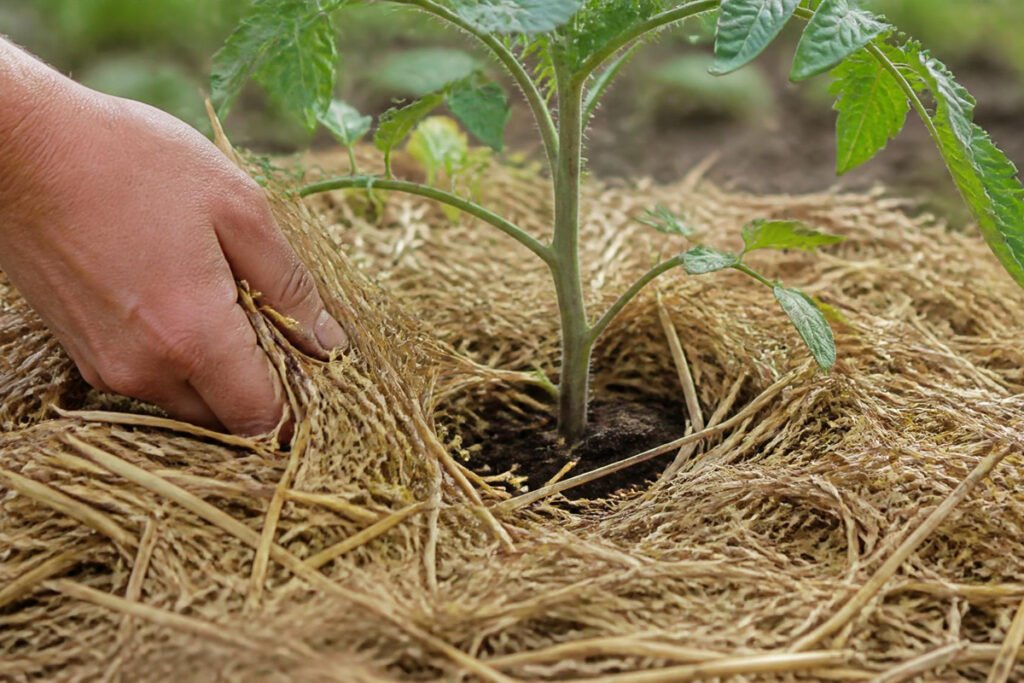
Step 4: Keep Mulch Away From Stems
Leave a small gap around plant stems to prevent trapped moisture from causing rot or attracting pests.
Step 5: Replenish as It Breaks Down
Organic mulches thin out as they decompose over the season — top up as needed, especially with fast-decomposing options like straw and leaves.
Common Mistakes
1. Using hay instead of weed-free straw. Hay typically contains viable seeds that will sprout throughout your bed. Always confirm bags are labeled weed-free straw specifically.
2. Tilling fresh wood chips into annual vegetable beds. Fresh, undecomposed wood competes with plants for nitrogen as soil microbes break it down. Reserve wood chips for pathways and perennial plantings instead.
3. Piling mulch directly against plant stems. This traps moisture against the stem, increasing the risk of rot and pest problems. Always leave a small gap around the base of each plant.
Expert Tips
1. Layer compost under straw for the best of both. Compost feeds the soil immediately while a thin straw topping handles weed suppression — combining materials often outperforms any single mulch type alone.
2. Time straw application to soil temperature, not the calendar. Applying mulch too early in spring can keep soil cooler than warm-season crops like tomatoes and peppers need to establish well — wait until soil has warmed.
3. Save fall leaves specifically for spring mulching. Shredded leaves stockpiled over winter are ready to go as soon as spring planting begins, rather than scrambling for mulch material in the busiest planting weeks.
Final Thoughts
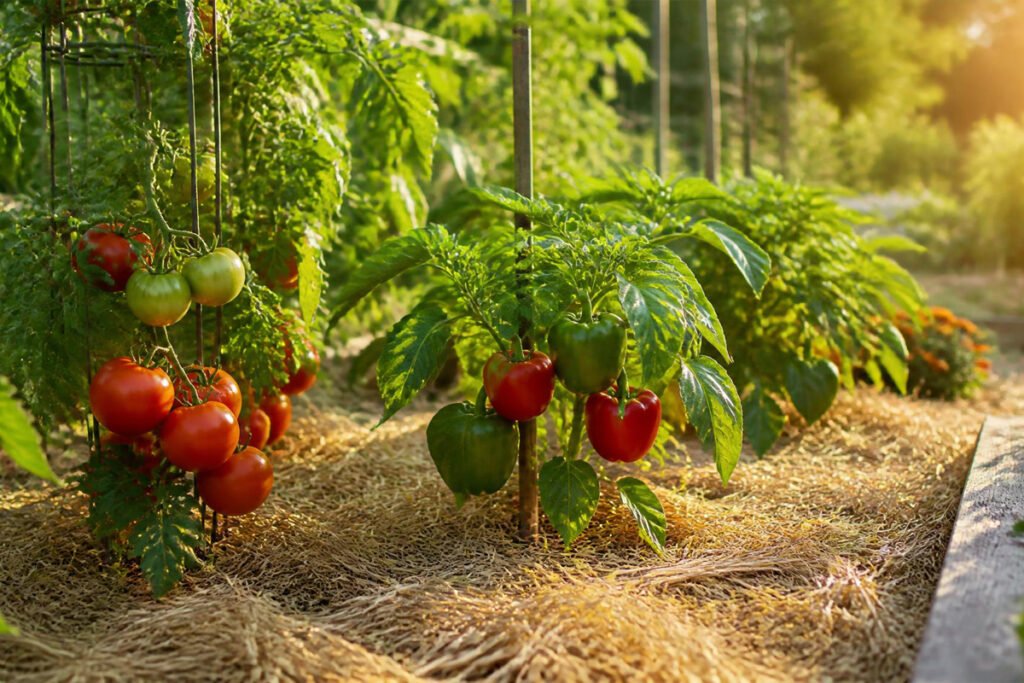
For most annual vegetable beds, weed-free straw remains the reliable default — easy to apply, quick to break down, and gentle on soil nitrogen. Free alternatives like shredded leaves deliver excellent long-term soil health if you’re willing to shred and stockpile them, while compost doubles as both mulch and fertilizer for beds that need a nutrient boost. Save wood chips for pathways and perennial plantings, and reach for landscape fabric only if weed pressure or scale genuinely calls for it. For next steps, see our 5 Best Watering & Irrigation Tools for Vegetable Gardens and 5 Best Composting Bins & Systems for Vegetable Gardens guides.
Frequently Asked Questions
Is straw or hay better for vegetable garden mulch? Straw, specifically labeled weed-free straw. Hay is cut grass or legumes and typically contains viable seeds that will sprout throughout your garden bed, creating exactly the weed problem mulch is supposed to prevent.
How thick should mulch be in a vegetable garden? Two to three inches is the general recommendation — enough to suppress weeds and retain moisture without smothering shallow-rooted crops or restricting airflow to the soil.
Can I use grass clippings as mulch? Yes, as long as the lawn hasn’t been treated with herbicides and clippings are applied in thin layers, since thick fresh clippings can mat together and develop an unpleasant odor as they decompose.
Why shouldn’t I use fresh wood chips in my vegetable beds? Fresh wood competes with plants for nitrogen as soil microbes work to break it down, which can temporarily reduce nutrients available to your vegetables. Aged wood chips have less of this effect, but pathways and perennial plantings are still the better fit.
Does mulch attract pests to my vegetable garden? Some mulches can create habitat for slugs and other pests in consistently damp conditions, but the moisture retention and weed suppression benefits generally outweigh this for most gardeners — keeping mulch away from stems helps reduce the risk.
How often do I need to reapply mulch during the growing season? Fast-decomposing mulches like straw and shredded leaves typically need topping up once or twice per season as they break down. Wood chips in pathways can last several years before needing replenishment.
Can I till mulch into the soil at the end of the season? Yes, for fast-decomposing organic mulches like straw and shredded leaves — tilling them in at season’s end adds organic matter directly to the soil for next year’s planting.
Author: ProGardeningTips Editorial Team Last Updated: August 2026
Pingback: 5 Best Garden Carts & Wheelbarrows: Proven Top Picks & Buying Guide | Pro Gardening Tips – Expert Advice for a Thriving Garden
Pingback: Best Garden Hoes: Proven Top Picks for Easy Weeding | Pro Gardening Tips – Expert Advice for a Thriving Garden