If you’ve ever pulled up a potato plant in late summer expecting a basket of golden tubers and found instead a handful of marble-sized potatoes — or worse, a few green, bitter ones — you’re not alone. Potatoes have a reputation as a “plant it and forget it” crop, but that reputation causes more disappointing harvests than good ones.
Most of the trouble comes down to a handful of avoidable mistakes: starting with grocery store potatoes instead of certified seed potatoes, skipping the “hilling” step that protects developing tubers, planting in soil that’s too rich in nitrogen (which grows beautiful leaves and disappointing tubers), or harvesting too early or too late. None of these mistakes are complicated to fix once you know they’re coming.
This guide walks through exactly how to grow potatoes from seed potato to harvest, whether you’re working with a traditional garden row, a raised bed, or a container on a patio. If your soil needs work before you start, our guide on how to prepare soil for a vegetable garden is a good place to begin.
Quick Answer
The best way to grow potatoes depends on your space and climate. In-ground rows suit gardeners with open soil and a long, cool growing season — potatoes need 70 to 120 days depending on variety. Raised beds work well if your native soil is heavy clay or poorly drained, since potatoes rot quickly in soggy ground. Containers or grow bags are the best option for patios, balconies, or small yards, and make harvesting almost mess-free. Whichever method you choose, the core principles are the same: start with certified seed potatoes, plant in loose, well-drained soil with a pH around 6.0–6.5, hill soil around the stems as they grow, and keep moisture consistent through tuber development.
Table of Contents
- How Growing Potatoes Works
- How to Choose the Right Potato Variety
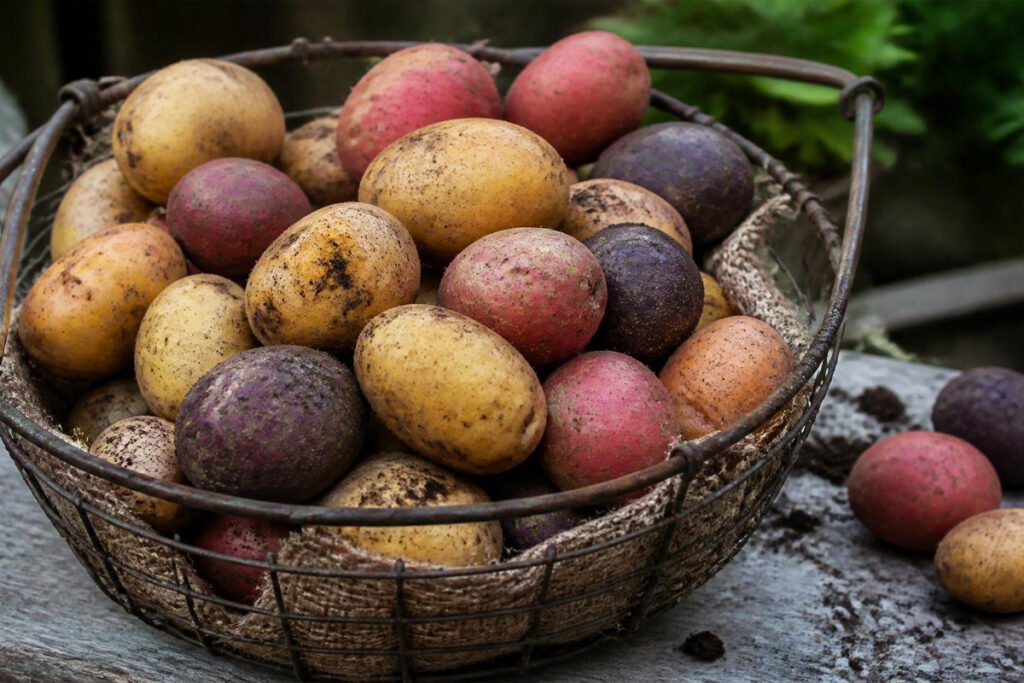
- Best Potato Varieties for Home Gardens
- Comparison Table
- Best Growing Methods for Different Spaces
- How to Plant and Grow Potatoes Correctly
- Common Mistakes
- Expert Tips
- Final Thoughts
- Frequently Asked Questions
How Growing Potatoes Works
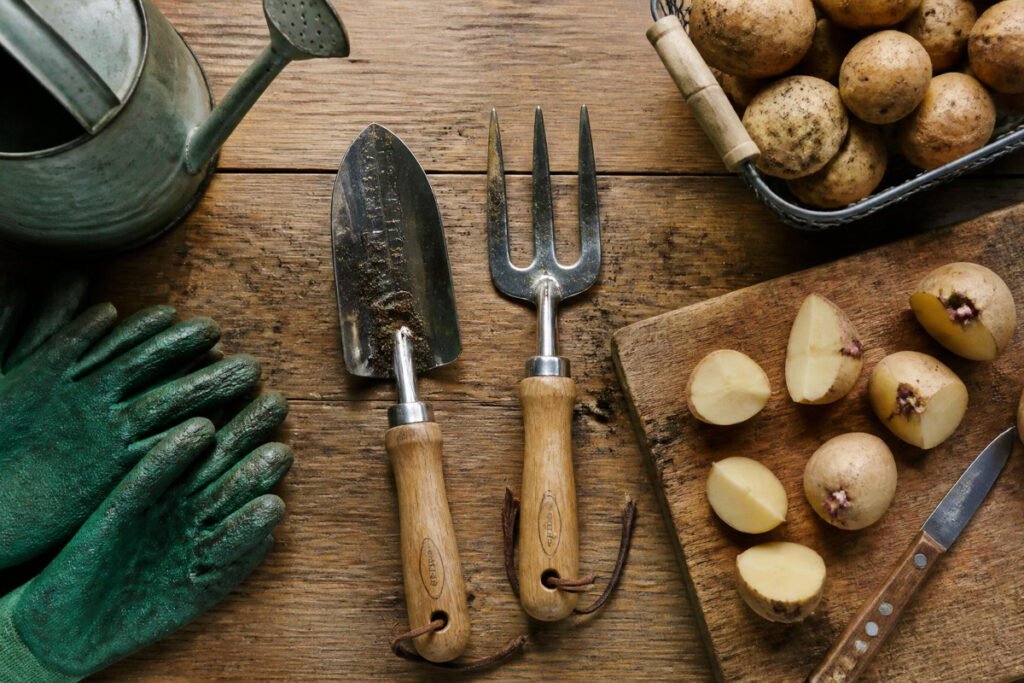
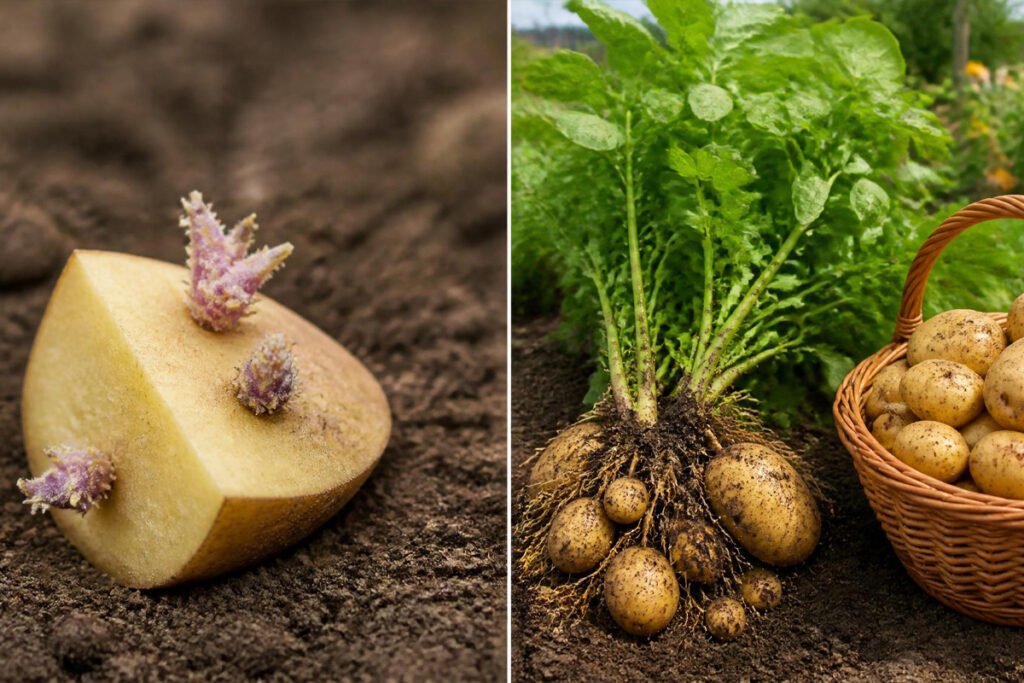
Unlike most vegetables, potatoes aren’t grown from true seed — they’re grown from seed potatoes, which are small whole tubers or cut pieces of a tuber, each containing at least one “eye” (a small indentation that sprouts into a new plant). This is vegetative propagation: the new plant is a genetic clone of the parent tuber, which is why buying certified, disease-free seed potatoes matters so much more for potatoes than it does for, say, tomatoes or peppers.
Once planted, a seed potato sends up a leafy stem while the original piece feeds the growing plant. Underground, the plant produces stolons — horizontal stems — and it’s the tips of these stolons that swell into new tubers. This is the reason “hilling” (mounding soil around the base of the plant as it grows) is so central to potato growing: hilling gives the stolons more loose soil to develop in, increases yield, and — critically — keeps developing tubers covered so they don’t turn green from sun exposure. Green skin means the tuber has produced solanine, a bitter, mildly toxic compound, and that portion should be cut away before eating.
Potatoes are a cool-season crop but are frost-tender above ground. Getting the timing and soil right is most of the battle, and the foundation is soil. If you haven’t already, it’s worth reading through our guide to preparing soil for a vegetable garden before you plant.
How to Choose the Right Potato Variety
Before you buy seed potatoes, ask yourself three questions:
How long is your growing season? Early varieties mature in 70–90 days and are ideal for short seasons or an early “new potato” harvest. Mid- and late-season varieties take 100–135 days but typically yield more and store longer.
Do you want potatoes for immediate eating or for storage? Thin-skinned, waxy varieties are best eaten fresh within a few weeks. Thick-skinned, starchy varieties cure well and can store for months in a cool, dark space.
How much space do you have? Sprawling in-ground rows need the most room; raised beds and grow bags let you produce a respectable harvest in a fraction of the footprint, which pairs well if you’re also working with container vegetable gardening.
According to the University of Minnesota Extension, potatoes grow best in well-drained soil with a pH between 6.0 and 6.5, and gardeners should always start with certified seed potatoes rather than grocery-store tubers, since store-bought potatoes can carry undetectable diseases and are often treated to prevent sprouting.
Best Potato Varieties for Home Gardens
Yukon Gold
Overview: Yukon Gold is the classic all-purpose potato: medium-sized, gold-fleshed, with a naturally buttery flavor that holds up whether you’re roasting, mashing, or boiling. It’s a mid-season variety, typically ready in 90–110 days, and is forgiving for first-time growers.
Key Features:
- Smooth, thin gold skin with yellow flesh
- Mid-season maturity (90–110 days)
- Good disease resistance compared to older heirlooms
- Performs well in containers and raised beds
Best For: Beginners and gardeners who want one reliable, all-purpose variety.
Pros: ✅ Versatile in the kitchen ✅ Reliable yields ✅ Widely available as certified seed Cons: ❌ Only moderate storage life (a few months) ❌ Average disease resistance to late blight
Our Verdict: If you’re only growing one variety this year, Yukon Gold is the safest bet. It pairs especially well in a bed planned around our companion planting guide, since it tolerates neighboring beans and corn well.
Russet Burbank
Overview: The classic baking potato — oblong, rough brown skin, dry starchy white flesh. Russets are a late-season variety that need a longer growing window but reward the wait with excellent storage life.
Key Features:
- High starch content, ideal for baking and frying
- Late-season maturity (110–135 days)
- Thick skin that cures and stores exceptionally well
- Needs deep, loose, well-drained soil
Best For: Gardeners with a long growing season who want potatoes that store through winter.
Pros: ✅ Best long-term storage of any common variety ✅ High yields in loose soil ✅ Classic baking texture Cons: ❌ Long time to maturity ❌ More prone to scab in heavy or alkaline soil
Our Verdict: Worth the wait if you have the season length. Get your bed’s fertility right first — our organic fertilizers guide explains how to avoid the high-nitrogen mistake that produces lush leaves and small tubers.
Red Pontiac
Overview: A red-skinned, white-fleshed, waxy potato that’s a favorite for boiling, roasting, and potato salad. It’s vigorous and relatively pest-resistant, making it a good choice for organic growers.
Key Features:
- Smooth red skin, moist white flesh
- Mid-season maturity (around 100 days)
- Vigorous plant that competes well with weeds
- Good tolerance for a range of soil types
Best For: Organic growers and anyone wanting a reliable “new potato” harvest.
Pros: ✅ Vigorous, low-maintenance plant ✅ Good pest tolerance ✅ Great for boiling and salads Cons: ❌ Waxy texture isn’t ideal for baking ❌ Shorter storage life than russets
Our Verdict: A strong pick if you’re leaning on natural, eco-friendly pest control rather than chemical treatments, since Red Pontiac handles minor pest pressure better than most.
Fingerling (Russian Banana)
Overview: Small, elongated, knobby tubers with a dense, waxy, slightly nutty flesh. Fingerlings are a specialty variety — you won’t find them cheap at the grocery store, which is exactly why they’re worth growing at home.
Key Features:
- Small, finger-shaped tubers
- Mid- to late-season maturity
- Dense, waxy texture that holds up to roasting
- Higher price point if bought, making home-growing worthwhile
Best For: Gardeners who want a specialty, high-value crop.
Pros: ✅ Distinctive flavor and texture ✅ Rarely found affordably at stores ✅ Attractive for market gardeners Cons: ❌ Lower yield by weight than standard varieties ❌ More labor to harvest due to small size
Our Verdict: Great in a raised bed where you can control soil texture closely, since fingerlings are picky about loose, stone-free soil.
Purple Majesty
Overview: A striking purple-skinned, purple-fleshed potato with a mild, earthy flavor. Purple Majesty holds its color even after cooking, making it a favorite for visually interesting dishes, and it’s packed with anthocyanin antioxidants.
Key Features:
- Deep purple skin and flesh
- Mid-season maturity (around 90–100 days)
- Good disease resistance
- Retains color through cooking
Best For: Gardeners who want visual variety and don’t mind a smaller yield in exchange for novelty.
Pros: ✅ Unique color holds through cooking ✅ Higher antioxidant content ✅ Good disease resistance Cons: ❌ Less widely available as certified seed ❌ Slightly lower yields than Yukon Gold
Our Verdict: A fun addition if you’re already growing a couple of standard varieties and want something to round out the harvest table.
Comparison Table
| Variety | Best For | Days to Maturity | Storage Life | Skin/Flesh Color |
|---|---|---|---|---|
| Yukon Gold | All-purpose, beginners | 90–110 | 2–3 months | Gold skin, yellow flesh |
| Russet Burbank | Baking, long storage | 110–135 | 6–8 months | Brown skin, white flesh |
| Red Pontiac | Boiling, organic growing | ~100 | 2–3 months | Red skin, white flesh |
| Fingerling | Specialty, roasting | 100–120 | 3–4 months | Tan skin, waxy flesh |
| Purple Majesty | Color, antioxidants | 90–100 | 2–3 months | Purple skin and flesh |
Best Growing Methods for Different Spaces
In-Ground Rows
Traditional row planting works best if you have open garden space and soil that’s loose to at least 12 inches deep. Space rows 30–36 inches apart and seed pieces 10–12 inches apart within the row. This method gives the highest yields per seed potato but takes up the most space and requires the most hilling labor. If disease or scab has been a problem in your garden before, review our crop rotation guide for vegetable gardens before choosing a planting site — potatoes should not follow tomatoes, peppers, or eggplants in the same soil.
Raised Beds
Raised beds are the best middle ground: you get more control over soil texture and drainage than in-ground rows, without the footprint of a full row. Fill beds with a loose, well-draining mix and hill by adding soil or straw mulch as the plants grow rather than mounding native soil, which can be heavier. Our raised bed gardening guide and raised bed gardening for beginners guide both cover the setup basics if you’re building a new bed specifically for potatoes.
Containers and Grow Bags
Fabric grow bags or large containers (at least 15–20 gallons) are ideal for patios, balconies, and renters. Start with 4–6 inches of soil in the bottom, plant your seed potatoes, and add more soil or mulch as the plants grow — essentially “hilling in a bag.” Harvesting is as simple as dumping the bag out at the end of the season. If you’re new to growing in containers generally, our container gardening for beginners guide is a useful companion read.
How To Plant and Grow Potatoes Correctly
Step 1: Prepare Your Seed Potatoes
A few days before planting, cut larger seed potatoes into chunks about 1.5–2 inches across, making sure each piece has at least one or two “eyes.” Let the cut pieces sit at room temperature for 1–2 days so the cut surface calluses over — this prevents rot once they’re in the ground. Small seed potatoes (under 2 inches) can be planted whole.
Step 2: Prepare the Soil
Work the soil to a loose, crumbly texture at least 8–10 inches deep, and mix in compost for organic matter without overdoing high-nitrogen fertilizer. If you haven’t built your soil up yet, our guides on preparing soil for a vegetable garden and composting for beginners will get you there.
Step 3: Plant
Dig furrows 4–6 inches deep. Place seed pieces cut-side down, spaced 10–12 inches apart, with rows 30–36 inches apart. Cover with 3–4 inches of soil, leaving the furrow slightly unfilled for now.
Step 4: Hill and Water
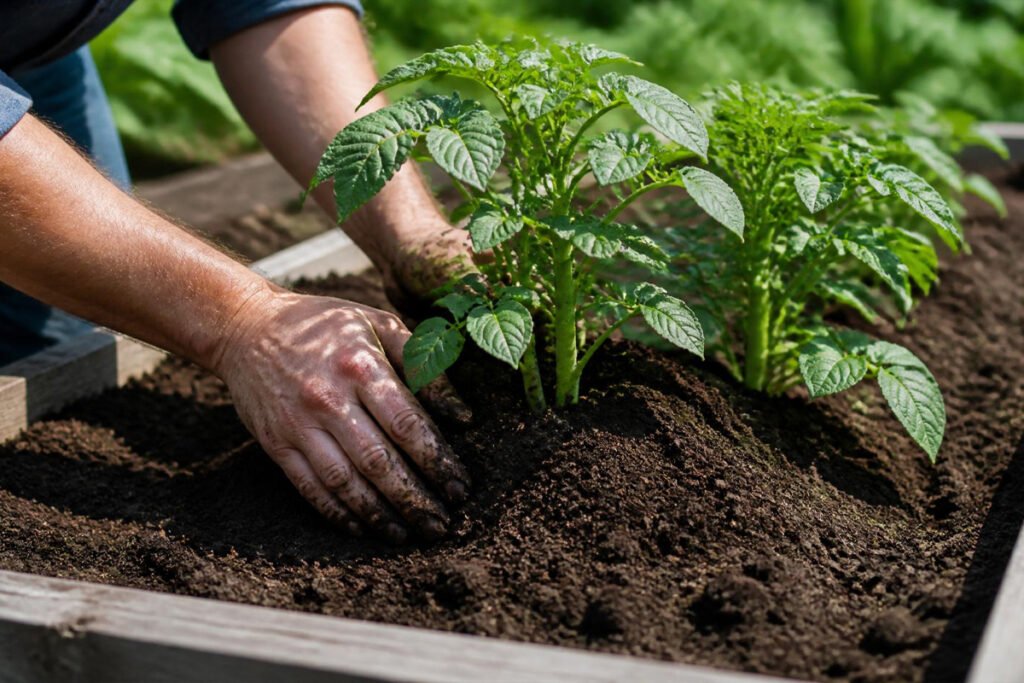
Once shoots reach 6–8 inches tall, mound soil (or straw) up around the base of the stem, burying about half the plant. Repeat this hilling process every 2–3 weeks as the plant grows. Keep soil consistently moist, especially once tubers begin forming — inconsistent watering causes cracking and hollow centers. Our guide to watering a vegetable garden covers how to keep moisture even without overwatering.
Step 5: Harvest and Cure
For “new potatoes,” you can dig gently around the base a few weeks after flowering. For storage potatoes, wait until the foliage yellows and dies back, then leave tubers in the ground undisturbed for another 2 weeks to toughen their skins. Dig carefully with a garden fork, brush off loose soil (don’t wash), and cure in a cool, dark spot at 50–60°F for 1–2 weeks before moving to long-term storage.
Common Mistakes
Using grocery store potatoes as seed. Store-bought potatoes are often treated to prevent sprouting and can carry undetected diseases that persist in your soil for years. Always start with certified seed potatoes.
Skipping hilling. Without regular hilling, tubers push up near the surface, turn green from sun exposure, and develop solanine, which makes them bitter and mildly toxic. Hill every 2–3 weeks as the plant grows.
Planting in the same spot every year. Potatoes are part of the nightshade family and are vulnerable to soil-borne diseases that build up with repeated planting. Rotate potatoes with unrelated crops using our crop rotation for vegetable gardens guide, and avoid following tomatoes or peppers.
Expert Tips
Mulch heavily once hilling is done. A layer of straw mulch on top of your final hilling conserves moisture, suppresses weeds, and makes harvest far less messy — you can often just pull mulch aside instead of digging.
Watch your fertilizer ratio. High-nitrogen fertilizer grows lush foliage at the expense of tuber size. A balanced or slightly phosphorus-and-potassium-leaning fertilizer, applied as described in our organic fertilizers guide, produces better yields.
Plan pest control before you see a problem. Potatoes are a magnet for Colorado potato beetles. Prevention — floating row covers early in the season, and the natural, eco-friendly methods in our garden pest control guide — is far easier than treating an established infestation.
Final Thoughts
For most home gardeners, Yukon Gold is the best overall choice — reliable, versatile in the kitchen, and forgiving of minor mistakes. If storage matters most to you, go with Russet Burbank and plan for its longer season. For the best budget option, Red Pontiac gives vigorous, low-maintenance yields without a big investment in specialty seed. And if you’re short on space, container growing paired with our container vegetable gardening guide will get you a real harvest without a traditional row.
Whichever variety and method you choose, the fundamentals stay the same: certified seed potatoes, loose well-drained soil, consistent hilling, and even moisture through tuber development. Get those right and potatoes are one of the most forgiving, rewarding crops you can grow — pair the harvest with what you’ve already got going in a companion-planted bed for a genuinely productive season.
Frequently Asked Questions
Do I need special “seed potatoes,” or can I use ones from the grocery store? You should use certified seed potatoes rather than grocery store potatoes. Store-bought potatoes are often treated with sprout inhibitors and may carry diseases that aren’t visible but can persist in your soil for years.
How long does it take to grow potatoes? Most varieties take 70–120 days from planting to harvest, depending on whether they’re early, mid-season, or late-season. Early varieties can be ready in as little as 70 days for “new potatoes.”
How much water do potatoes need? Potatoes need about 1–2 inches of water per week, with consistency mattering more than volume. Inconsistent watering during tuber formation causes cracking, knobby growth, and hollow centers.
Are containers or in-ground rows better for potatoes? Neither is universally better — containers are ideal for small spaces and easy harvesting, while in-ground rows typically produce higher total yields if you have the space and well-drained soil.
Why are my potatoes green? Green skin means the tuber was exposed to sunlight, which triggers solanine production, a mildly toxic, bitter compound. This is almost always caused by insufficient hilling. Cut away green portions before eating, or discard heavily green tubers.
Is it safe to eat potatoes with scabby skin? Yes. Potato scab is a cosmetic bacterial disease that causes rough, corky patches but doesn’t affect the edible flesh underneath. Peeling removes the affected skin.
When should I harvest my potatoes? For fresh “new potatoes,” harvest a few weeks after the plants flower. For storage potatoes, wait until the foliage yellows and dies back, then leave tubers in the ground for about two weeks before digging.
Can I grow potatoes in the same spot every year? It’s not recommended. Potatoes are prone to soil-borne diseases that build up with repeated planting in the same location. Rotate them with unrelated crops on a 3–4 year cycle.
How many potatoes does one plant produce? A healthy plant typically yields 5–10 usable tubers, though this varies by variety, soil fertility, and consistency of watering and hilling.
What’s the ideal soil pH for potatoes? Potatoes prefer slightly acidic soil, ideally between 6.0 and 6.5. In gardens where potato scab has been a recurring problem, a lower pH between 4.8 and 5.8 can help suppress the disease.
Can I plant potatoes near tomatoes? It’s best to avoid it. Potatoes and tomatoes are both nightshades and share many of the same pests and diseases, including late blight, so planting them near each other increases disease risk.
Do potatoes need full sun? Yes. Potatoes need at least 6 hours of direct sunlight per day to produce a good yield of foliage and, in turn, tubers.
Author: Pamela Reese Last Updated: July 2026