If you have ever fought compacted clay, rocky ground, or soil that drains too slowly, you already know why so many gardeners switch to raised beds. The easiest way to get started is with one of the many raised garden bed kits on the market. They arrive with pre-cut panels, hardware, and instructions, so you can go from box to planting bed in an afternoon.
The problem is choice. Cedar, galvanized steel, aluzinc, and plastic kits all promise durability, and prices range from about $50 to several hundred dollars. This guide compares five of the best raised garden bed kits for 2026, based on materials, design, size options, and what owners report. It also covers how to choose the right size, depth, and material for your own yard.
If you are brand new to growing food in beds, read our Raised Bed Vegetable Gardening for Beginners guide first. Then come back here to pick your kit.
Quick Picks: Best Raised Garden Bed Kits at a Glance
| Category | Pick | Material | Best For |
| Best overall | Vego Garden 9-in-1 Modular Metal Kit | Aluzinc steel | Flexibility and long life |
| Best cedar | Greenes Fence Premium Cedar 4×8 | Cedar | Classic look, most gardeners |
| Best budget metal | Land Guard Galvanized Oval Kit (4×2×1 ft) | Galvanized steel | Small spaces, low cost |
| Best budget overall | Lifetime 60069 HDPE 4×4 | Plastic (HDPE) | Testing raised beds cheaply |
| Best elevated | Veikous 6×3 ft Elevated Cedar | Cedar | Saving your back |
Why Choose Raised Garden Bed Kits Instead of Building Your Own?
You can absolutely build a bed from lumber. But raised garden bed kits have real advantages, especially for first-time growers.
- Speed. Most kits assemble in 30 to 90 minutes, often with basic tools only.
- Predictable sizing. Panels are cut to fit, so there is no measuring, no waste, and no crooked corners.
- Better materials. Many kits use rot-resistant cedar or rust-resistant coated steel that lasts years longer than cheap framing lumber.
- Modular layouts. Metal kits in particular let you change shape, length, or height later.
The trade-off is cost. A custom bed from rough lumber can be cheaper if you already own tools. For most people, though, the time saved and the longer lifespan make kits worth it.
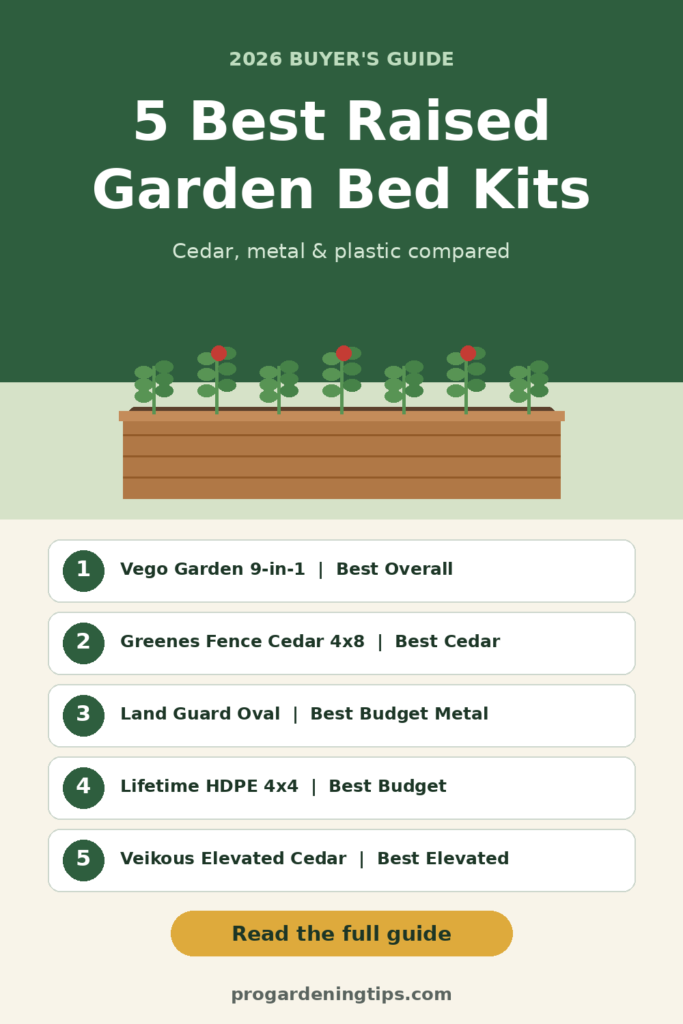
The 5 Best Raised Garden Bed Kits for 2026
1. Vego Garden 9-in-1 Modular Metal Kit: Best Overall
The Vego Garden 17-inch tall modular kit is one of the most talked-about raised garden bed kits right now, and it keeps showing up at the top of 2026 roundups. At the time of writing, the olive green version on Tractor Supply’s site carried a 4.8-star average from roughly 1,690 reviews.
The big selling point is the “9-in-1” design. The same set of panels can be arranged in nine different configurations, from a long rectangle to an L-shape or a set of smaller squares. If your garden plans change, the bed can change with it. The panels are made from coated steel that is described as food-safe and corrosion-resistant, and metal beds in this class typically last 20 years or more.
Pros
- Nine layout options from one kit
- 17-inch depth gives vegetable roots plenty of room
- Metal construction resists rot, insects, and warping
- Strong owner ratings across multiple retailers
Cons
- Higher upfront price than plastic or basic galvanized kits
- Metal warms quickly in full sun, so soil in hot climates may need extra watering
- Assembly takes patience because there are many panels and bolts
Best for: Gardeners who want one long-term investment and may reconfigure their garden later.
2. Greenes Fence Premium Cedar 4×8: Best Cedar Kit
Not everyone wants a metal bed in the backyard. If you prefer the natural look of wood, a cedar kit is hard to beat, and the Greenes Fence Premium Cedar 4×8 is a frequent top pick for cedar. Greenes has made cedar garden beds in the US for decades, and reviewers credit its board thickness and assembly method.
Cedar contains natural oils that resist rot and insects, so you do not need chemical treatment. Untreated cedar generally lasts about 10 to 15 years, which is a good return for a bed you may fill with soil and reuse every season. The 4×8 size is a classic: wide enough to plant a lot, narrow enough to reach the center from either side.
Pros
- Natural, attractive appearance that suits most yards
- Untreated cedar is a comfortable choice for edible gardens
- Soil stays at a more moderate temperature than metal
- 4×8 footprint is easy to plan around
Cons
- Shorter lifespan than steel
- Wood will gray and weather over time
- Cedar kits are usually heavier and cost more than plastic
Best for: Gardeners who want a traditional wooden bed and plan to stay in the same spot for a decade or so.
3. Land Guard Galvanized Oval Kit (4×2×1 ft): Best Budget Metal
Land Guard is one of the most common brand names you will see on affordable metal beds, and its 4×2×1 ft oval galvanized kit is a popular small-space option. It uses galvanized steel sheet in an open-bottom design, so roots can reach the soil underneath and water can drain freely.
The rounded corners look tidy and are friendlier on the hands than sharp metal edges. At about one foot tall, this bed is best for salad greens, herbs, radishes, bush beans, and other shallow-rooted crops. If you want something deeper, Land Guard also sells larger and taller versions, including 24-inch-deep models for root crops.
Pros
- Budget-friendly entry into metal raised beds
- Compact size fits patios, side yards, and small lots
- Open bottom allows natural drainage
- Fast, simple assembly
Cons
- One-foot height limits deep-rooted crops like carrots and parsnips
- Thinner steel than premium kits, so it may flex on large beds
- Less modular than Vego-style kits
Best for: Beginners with limited space who want a durable bed without paying premium prices.
4. Lifetime 60069 HDPE 4×4: Best Budget Overall
If you are not sure you will stick with raised bed gardening, you do not have to commit hundreds of dollars. The Lifetime 60069 HDPE kit sits around $50 per unit, according to one 2026 roundup, which makes it one of the cheapest raised garden bed kits that still feels well made.
HDPE (high-density polyethylene) will not rot, rust, or splinter. It shrugs off rain and is easy to wipe clean. The 4×4 size is also a handy format: you can stack several together to create a larger garden, or use a single bed as a test run.
Pros
- Lowest cost on this list
- No rot, rust, or splinters
- Lightweight and easy to move before filling
- Good starter size for a first season
Cons
- Plastic can look less attractive than wood or metal
- UV exposure may fade or weaken it over many years
- Not as rigid as steel or thick cedar when filled with heavy soil
Best for: First-time raised bed gardeners and renters who want a low-cost, low-risk trial.
5. Veikous 6×3 ft Elevated Cedar Kit: Best Elevated Bed
Ground-level beds mean a lot of bending and kneeling. An elevated bed solves that by lifting the planting box on legs, which brings the soil up to a comfortable working height. The Veikous 6×3 ft elevated cedar kit is regularly named the best ergonomic cedar option.
This style is a smart choice for patios, decks, and driveways where you cannot dig, and for anyone with a sore back or limited mobility. Because the bed is raised on legs, it also keeps most crawling pests and rabbits away from your plants. Keep in mind that elevated beds hold less soil than ground-level beds, so they dry out faster and need more frequent watering.
Pros
- Comfortable working height reduces back strain
- Works anywhere, including hard surfaces
- Cedar construction with a natural look
- Easier to protect from slugs, rabbits, and other ground pests
Cons
- Shallower soil volume means more frequent watering
- Heavy once filled, so position it before adding soil
- Higher cost per square foot of planting area
Best for: Patio gardeners and anyone who wants to avoid bending and kneeling.
Side-by-Side Comparison
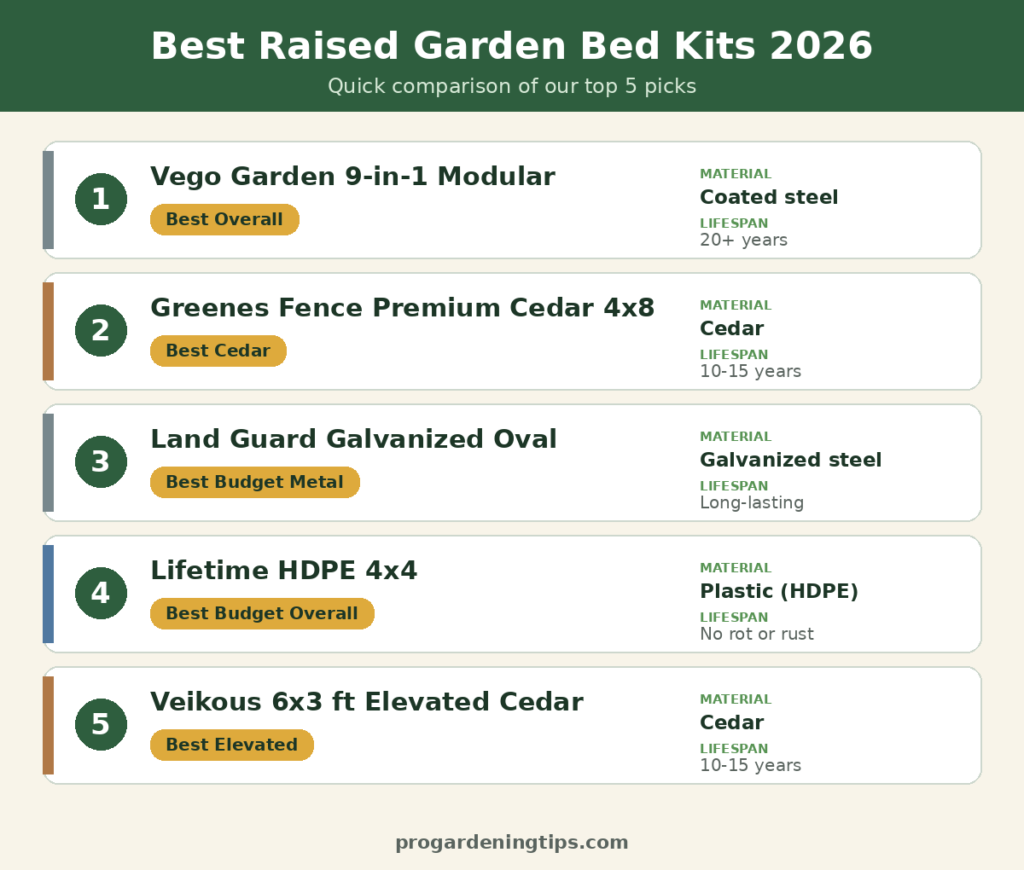
| Kit | Material | Typical Lifespan | Soil Heat | Maintenance |
| Vego Garden 9-in-1 | Coated steel | 20+ years | Warms fast | Very low |
| Greenes Fence Premium Cedar | Cedar | 10–15 years | Moderate | Low |
| Land Guard Oval | Galvanized steel | Long, depends on gauge | Warms fast | Very low |
| Lifetime HDPE | Plastic | Varies with UV exposure | Moderate | Very low |
| Veikous Elevated Cedar | Cedar | 10–15 years | Moderate | Low |
Lifespan figures are general estimates from material guides. Actual life depends on climate, soil moisture, and how well you assemble the bed.
How to Choose the Right Raised Garden Bed Kit
With so many raised garden bed kits available, a few questions will narrow your options quickly.
1. Pick the Right Material
- Cedar: Natural, rot-resistant, and a safe, popular choice for vegetables. It lasts 10 to 15 years and looks good in most landscapes.
- Galvanized or coated steel: Very long-lasting and low-maintenance. It heats up faster than wood, which can help in cool climates and hurt in hot ones. Look for kits that state they use food-safe coatings.
- HDPE plastic: The cheapest option and impossible to rot. It is a good trial bed but is usually less rigid and less handsome.
- Pressure-treated lumber: Modern treatments are considered much safer than older formulas, but many gardeners still avoid it for edible beds. Cedar or metal kits sidestep the question.
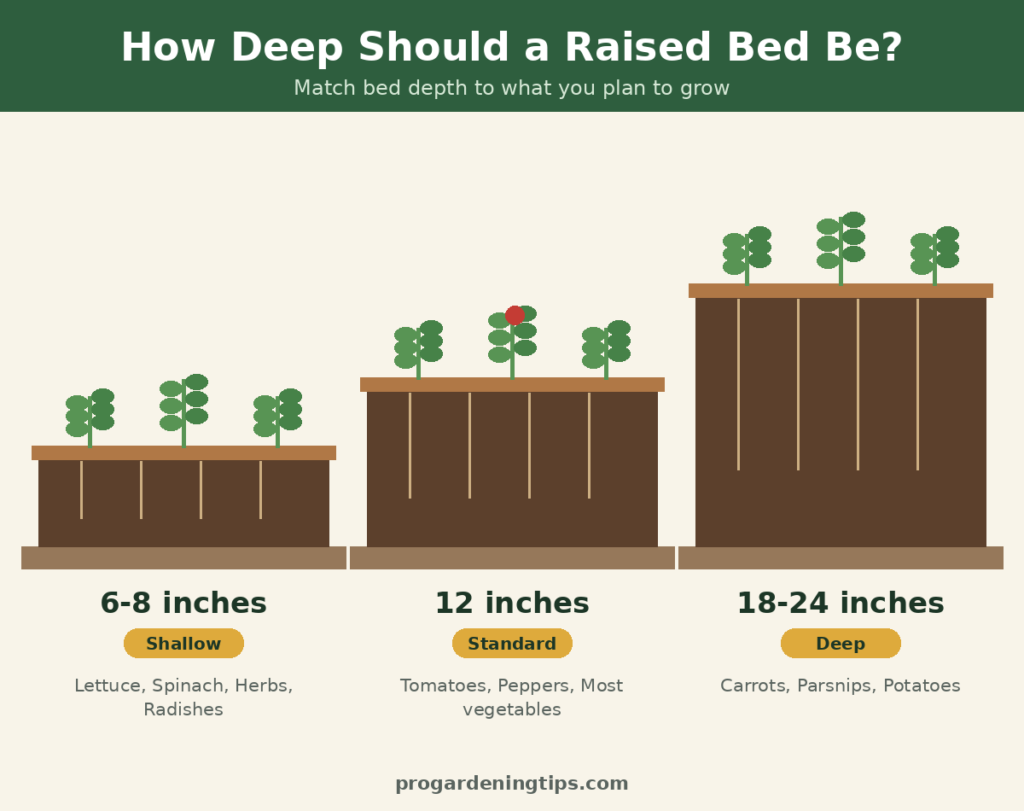
2. Choose the Right Depth
Depth matters more than most beginners expect. A 6- to 8-inch bed works for lettuce, spinach, and herbs. For tomatoes, peppers, and most vegetables, aim for at least 12 inches, and go deeper for carrots, parsnips, and potatoes. Remember that an open-bottom bed lets roots grow into the ground beneath, so the real root space is often more than the bed height. If you are planting peppers or other deep feeders, extra depth gives better yields.
3. Match Size to Your Reach
A bed about 3 to 4 feet wide lets you reach the center from either side without stepping on the soil. Stepping on a bed compacts it and undoes your hard work. Length is flexible, so choose what fits your space. A 4×8 bed gives you 32 square feet of planting area, which is plenty for a family salad and tomato garden.
4. Think About Assembly and Hardware
Read the reviews for comments on assembly. Cedar kits with interlocking corners are often tool-free or nearly so. Large modular metal kits have many parts, so budget extra time, wear gloves for sharp edges, and check that every bolt and panel is included before you start.
5. Consider Drainage and Pests
Open-bottom kits drain naturally. If gophers or moles are common where you live, line the bottom with hardware cloth before filling. If you have a patio or deck, choose an elevated bed with a solid or lined base.
6. Check Food Safety Labels
Edible gardens deserve safe materials. Choose cedar, plastic labeled food-safe, or steel with a coating that the manufacturer says is safe for growing food. Avoid kits with vague materials descriptions.
7. Place It in the Right Spot
Most vegetables want six to eight hours of direct sun. Choose a level site, away from large tree roots, and close enough to a hose that watering never feels like a chore. Once a bed is filled, it is very hard to move.
How to Set Up Your Raised Garden Bed Kit
- Pick and level the site. Remove grass or lay cardboard to smother it. Level the ground so the frame sits evenly.
- Assemble the frame. Follow the instructions in the place you want it to stay, then check that corners are square.
- Add drainage and pest protection if needed. Hardware cloth under the frame stops burrowing animals.
- Fill with good soil. Use a blend of quality topsoil, compost, and an aeration material like coco coir or perlite. A simple, popular approach is roughly equal parts compost, a moisture-holding material, and a drainage material. A 4×8 bed that is 12 inches deep holds about 32 cubic feet, a little over a cubic yard.
- Plant and water in. Water slowly so soil settles, then top up if it sinks.
- Mulch the surface. A layer of mulch keeps moisture in and weeds down. See our guide to the best mulch for vegetable gardens [ADD LINK] for the right material.
Filling in fall gives the soil time to settle over winter, so the bed is ready to plant as soon as spring arrives.
What to Plant in a New Raised Bed
Raised beds suit nearly every vegetable, but a few crops are especially rewarding in a new bed.
- Salad greens, spinach, and radishes: Fast and shallow-rooted.
- Tomatoes and peppers: Love the warm, well-drained soil of a raised bed.
- Carrots and beets: Loose raised bed soil lets them grow straight.
- Herbs: Basil, parsley, and chives thrive in smaller beds.
To get more from a small bed, try companion planting and rotate plant families each year. Our crop rotation guide explains how to plan this even with a single bed. If space is tight, you can also grow upward, as covered in our guide to vertical gardening for small spaces [ADD LINK].
Maintenance Tips to Make Your Kit Last
- Tighten hardware each spring. Soil pressure and freezing cycles can loosen bolts.
- Refresh the soil yearly. Add a few inches of compost each season to replace what plants use.
- Water consistently. Raised beds drain fast, especially metal and elevated models.
- Protect wood from standing moisture. Keep mulch slightly away from cedar boards to reduce rot.
- Inspect for sharp edges. On metal kits, check edge caps or trims and replace them if damaged.
Frequently Asked Questions
What is the best material for raised garden bed kits?
Cedar and coated or galvanized steel are the two most popular options. Cedar is natural and long-lasting, usually 10 to 15 years. Steel can last 20 years or more and needs almost no maintenance. The best choice depends on your climate, budget, and style preferences.
How deep should a raised garden bed be?
Aim for at least 12 inches for most vegetables. Shallow crops like lettuce and herbs can grow in 6 to 8 inches, while carrots, parsnips, and potatoes do better in 18 to 24 inches or in an open-bottom bed that lets roots go deeper.
Are metal raised garden beds safe for vegetables?
Reputable metal kits use coatings that manufacturers describe as food-safe and corrosion-resistant. Check the product listing for material details, and choose a brand that states the safety of its coating clearly.
Do metal raised beds get too hot?
Metal warms faster than wood, which can help early spring planting. In very hot climates, soil in metal beds can dry out quickly, so use mulch, water deeply, and consider afternoon shade for sensitive crops.
Do I need to line the bottom of a raised bed?
Only if you have burrowing pests such as gophers or moles. Hardware cloth under the frame protects roots. Landscape fabric is optional and mainly helps suppress weeds.
How much soil do I need for a raised garden bed?
Multiply length by width by depth in feet to get cubic feet. A 4×8 bed that is 1 foot deep needs about 32 cubic feet. Divide by 27 to convert to cubic yards, which is how bulk soil is often sold.
When is the best time to set up a raised bed?
Fall and early spring are both good. Fall setup lets soil settle over winter, so you can plant right away in spring.
Are raised garden bed kits worth the money?
For most gardeners, yes. They save time, offer good materials, and often outlast homemade beds built from cheap lumber. If you have the tools and enjoy building, a DIY bed can be cheaper, but kits remove the guesswork.
Final Verdict: Which Raised Garden Bed Kit Should You Buy?
The right pick depends on how you garden:
- Best overall: The Vego Garden 9-in-1 Modular Metal Kit for flexibility and a very long lifespan.
- Best cedar: The Greenes Fence Premium Cedar 4×8 for a classic, natural look.
- Best budget metal: The Land Guard Galvanized Oval Kit for small spaces and a low price.
- Best budget overall: The Lifetime HDPE 4×4 for a cheap, no-risk first bed.
- Best elevated: The Veikous 6×3 ft Elevated Cedar Kit if bending is the problem.
Whichever of these raised garden bed kits you choose, the principles are the same: pick a sunny spot, fill with rich soil, and water consistently. Start with one bed, learn what works in your yard, and add more next season.
Ready to plant? Read our how to grow peppers guide or plan your layout with our companion planting guide.