New vegetable gardeners often make the same expensive mistake in their first season: buying a big box store combo pack of ten tools, half of which never leave the shed, while the two or three they actually reach for every single week are missing entirely or too flimsy to last past June.
Good tools don’t need to be expensive or numerous. A small, well-chosen set does almost everything a home vegetable garden needs — preparing soil, planting, weeding, and light pruning — without cluttering the shed or draining the budget. The trick is knowing which five tools actually earn their place in regular use, and which features separate a tool that lasts for years from one that bends, rusts, or breaks within a season.
This guide breaks down the five gardening tools worth buying first, what to look for in each one, and how to build the rest of your kit around them as your garden grows, whether you’re working raised beds, containers, or a garden started from scratch.
Quick Answer
The best gardening tools for a vegetable garden depend on the task at hand, but five cover almost everything a home gardener needs: a hand trowel for planting and transplanting, a garden hoe for weeding and bed prep, bypass pruners for harvesting and light trimming, a digging fork for loosening and turning soil, and a watering can or wand for controlled, gentle watering. Beginners with a small garden or containers can start with just the trowel and pruners, while anyone managing multiple beds or an in-ground plot benefits from all five from day one.
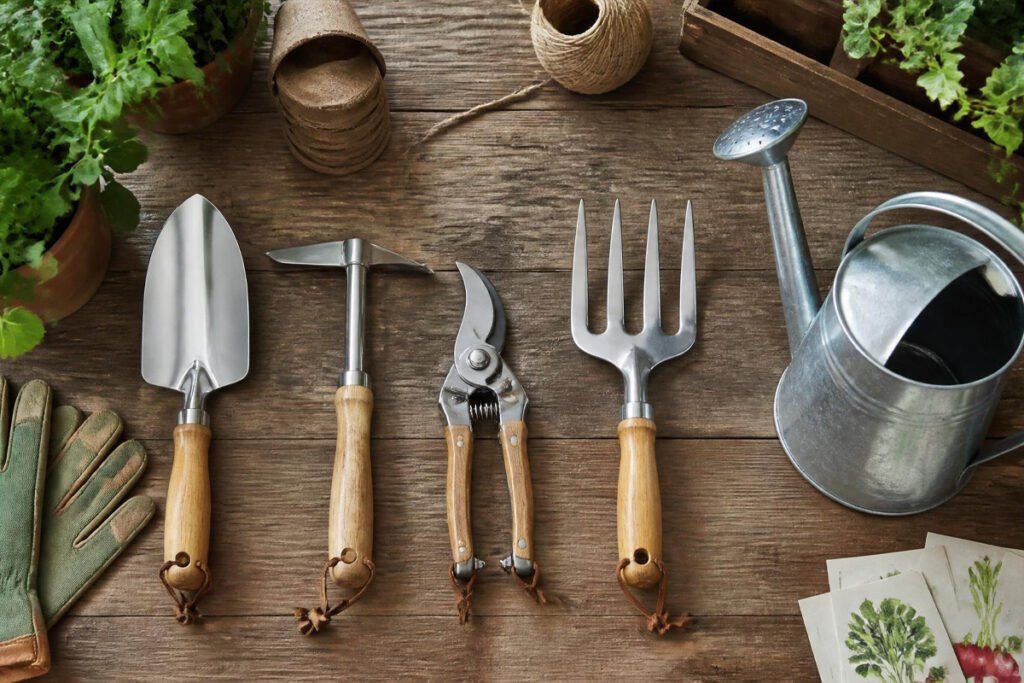
Table of Contents
- Why the Right Tools Matter More Than the Number of Tools
- How to Choose the Right Tools for Your Garden
- Best Gardening Tools for Vegetable Gardens
- Comparison Table
- Best Tools for Different Garden Setups
- How to Care for Your Garden Tools
- Common Tool-Buying Mistakes
- Expert Tips
- Final Thoughts
- Frequently Asked Questions
Why the Right Tools Matter More Than the Number of Tools {#why-tools-matter}
A vegetable garden doesn’t reward owning the most tools — it rewards owning the right few, in good enough quality that they hold up under regular use. A trowel with a blade that bends the first time it hits compacted soil, or pruners that dull within a month, cost more in frustration and eventual replacement than spending slightly more upfront on tools built to last.
Beyond durability, the right tools directly affect plant health, which matters just as much as good companion planting or fertilizing. Dull pruners crush stems instead of cutting cleanly, leaving ragged wounds that are slower to heal and more open to disease. A trowel that’s too wide disturbs more root mass than necessary when transplanting delicate seedlings. Choosing tools sized and built for the actual job — not just whatever’s cheapest on the shelf — pays off directly in how well your vegetables grow.
How to Choose the Right Tools for Your Garden {#how-to-choose}
Before buying anything, think through three questions:
What size is your growing space? A container or small-space garden rarely needs a full-size digging fork, while a larger in-ground plot benefits from having one on hand for soil prep season.
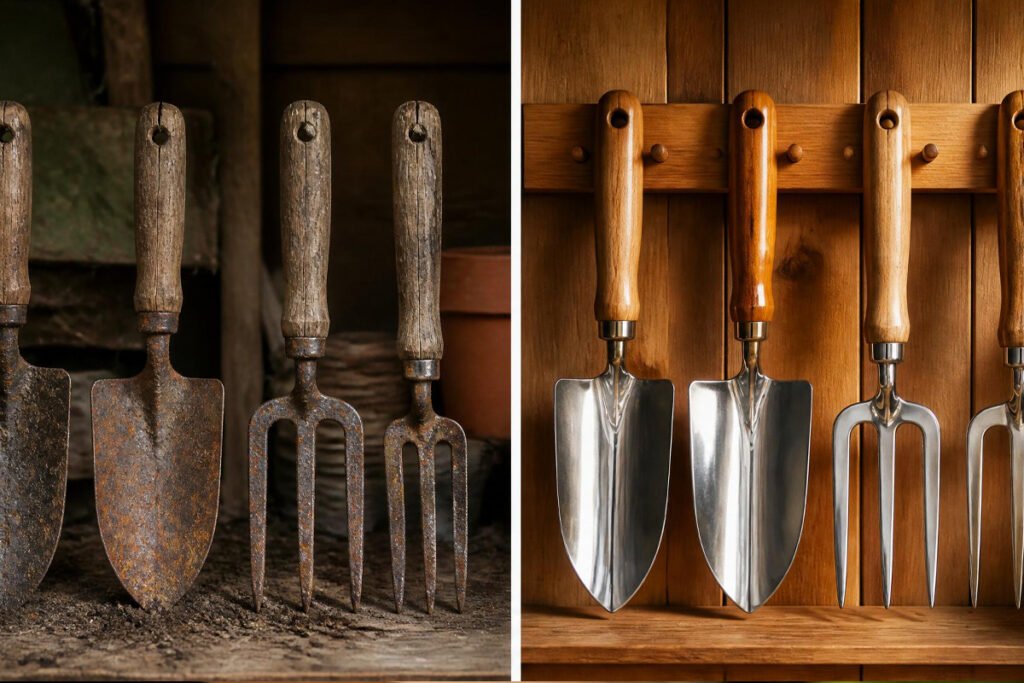
What material and finish should you look for? Stainless or carbon steel blades resist rust far better than basic painted metal, and a tool that resists corrosion will outlast several cheaper replacements.
How does the handle feel in your hand? Comfort and grip matter more than most gardeners expect — a tool that’s slightly uncomfortable to hold gets used less often, no matter how good the blade is.
Best Gardening Tools for Vegetable Gardens {#best-tools}
Hand Trowel
Overview: The single most-used tool in almost any vegetable garden, a hand trowel handles digging small holes, transplanting seedlings, and mixing in compost at planting time.
Key Features:
- Narrow, pointed blade for precise digging in tight spaces
- Stainless steel resists rust better than painted metal
- Depth markings on the blade help with consistent planting depth
Best For: Transplanting seedlings, container gardening, and general planting in raised beds.
Pros: ✅ Inexpensive ✅ Essential for nearly every planting task ✅ Compact and easy to store
Cons: ❌ Too small for larger digging jobs ❌ Cheap versions can bend under compacted soil
Our Verdict: This is the one tool no vegetable gardener should be without, whether working in containers or full in-ground beds — invest in a solid stainless steel version rather than the cheapest option available.
Garden Hoe
Overview: A long-handled tool used to sever weeds at the soil surface and shape planting rows, making it one of the fastest ways to clear larger areas without bending over repeatedly.
Key Features:
- Sharp, flat blade for slicing weeds just below the surface
- Long handle reduces strain on the back during extended use
- Some styles double as a furrow-maker for planting rows
Best For: Weeding larger open beds and pathways, and shaping soil into planting rows.
Pros: ✅ Fast for covering large areas ✅ Reduces bending and kneeling ✅ Doubles as a row-making tool
Cons: ❌ Less precise near delicate seedlings ❌ Requires occasional sharpening to stay effective
Our Verdict: An essential pairing with a good weed control routine — most effective on younger weeds and open rows rather than tight raised bed plantings.
Bypass Pruners
Overview: Scissor-style pruners that make clean, precise cuts, used constantly for harvesting vegetables, trimming damaged foliage, and light plant maintenance throughout the season.
Key Features:
- Two curved blades pass by each other for a clean, crush-free cut
- Comfortable, non-slip grips reduce hand fatigue over long sessions
- Compact size fits easily in a pocket or garden apron
Best For: Harvesting, deadheading, and trimming damaged or diseased plant material.
Pros: ✅ Clean cuts reduce plant stress and disease risk ✅ Useful nearly every time you’re in the garden ✅ Long lifespan with proper care
Cons: ❌ Needs regular sharpening ❌ Can rust quickly if left outdoors or unclean
Our Verdict: A worthwhile upgrade from kitchen scissors almost immediately — clean cuts genuinely reduce the risk of disease entering through a ragged wound.
Digging Fork
Overview: A sturdy, multi-tined tool used for loosening compacted soil, turning compost, and lifting root vegetables without slicing through them the way a shovel often does.
Key Features:
- Square tines resist bending better than flat tines in rocky or clay soil
- Ideal for breaking up compacted ground before planting
- Doubles as a tool for turning compost piles
Best For: Seasonal soil preparation, harvesting root crops, and maintaining a compost pile.
Pros: ✅ Loosens compacted soil better than a shovel ✅ Reduces root vegetable damage during harvest ✅ Doubles as a compost tool
Cons: ❌ Bulkier to store than smaller hand tools ❌ Overkill for small container gardens
Our Verdict: Skip this one if you’re only working in containers, but treat it as essential for any in-ground plot or multiple-raised-bed setup, especially at the start of each crop rotation cycle when beds get reworked.
Watering Can or Watering Wand
Overview: A controlled watering tool that delivers water gently at the base of plants, reducing the soil splash onto leaves that spreads many fungal diseases.
Key Features:
- Fine rose or spray head softens water flow for seedlings
- Long-necked wands reach hanging baskets and back rows easily
- Cans offer more precise control than a hose for small areas
Best For: Seedlings, containers, and any garden where controlled, gentle watering matters more than speed.
Pros: ✅ Reduces disease-spreading soil splash ✅ Gentle enough for delicate seedlings ✅ No hose hookup needed for small spaces
Cons: ❌ Slower than a hose for larger gardens ❌ Requires repeated refilling for bigger areas
Our Verdict: Pairs directly with good watering practices — ideal for containers and raised beds, though larger in-ground plots may eventually want to add a soaker hose alongside it.
Comparison Table {#comparison-table}
| Tool | Best For | Price Range | Storage Space | Beginner-Friendly |
|---|---|---|---|---|
| Hand Trowel | Planting, transplanting | Low | Minimal | Yes |
| Garden Hoe | Weeding, row-making | Low–Medium | Moderate | Yes |
| Bypass Pruners | Harvesting, trimming | Low–Medium | Minimal | Yes |
| Digging Fork | Soil prep, compost, root crops | Medium | Moderate | Moderate |
| Watering Can/Wand | Gentle, controlled watering | Low–Medium | Moderate | Yes |
Best Tools for Different Garden Setups {#different-setups}
Raised Bed Gardens
A raised bed vegetable garden rarely needs a full-size digging fork for routine maintenance, since the soil stays loose season to season, but a trowel, pruners, and watering can cover nearly all regular tasks.
Single-Plot In-Ground Gardens
Larger in-ground plots get the most value from the full five-tool set, especially the hoe and digging fork, which handle the larger-scale weeding and soil turning that in-ground beds require more often than raised beds.
Container and Small-Space Gardens
Container gardens can often get by with just a trowel, pruners, and a watering can, since there’s rarely enough soil volume to justify a hoe or digging fork in a purely container-based setup.
How to Care for Your Garden Tools {#how-to-care}
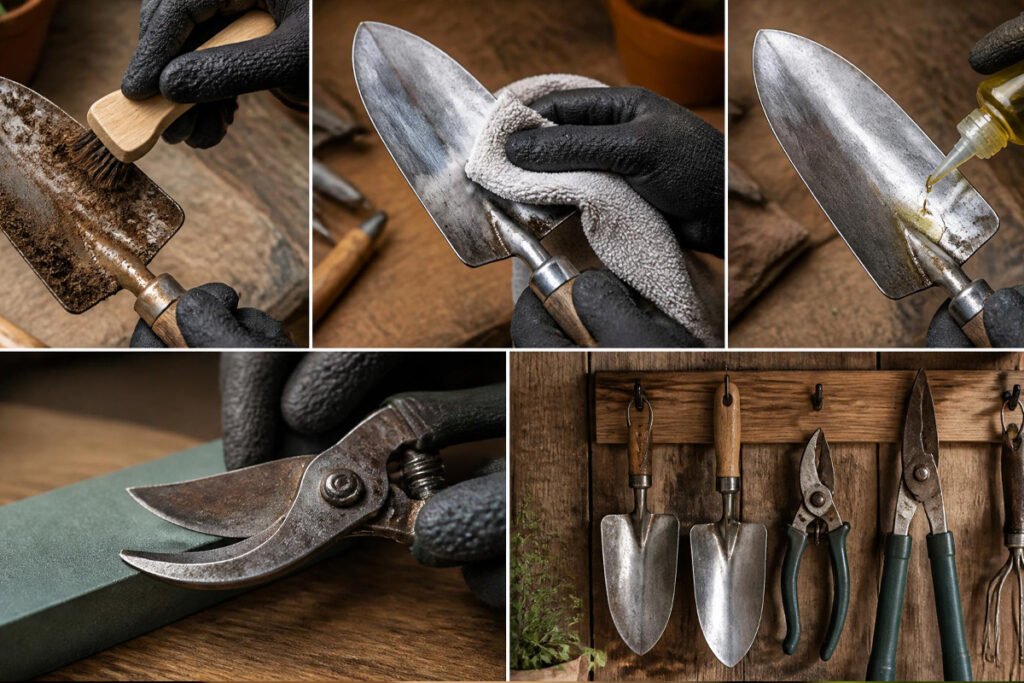
Step 1: Clean After Every Use
Wipe or rinse off soil before storing tools, since leftover dirt holds moisture against metal and speeds up rust.
Step 2: Dry Thoroughly Before Storage
Let tools air dry completely, or towel them off, before putting them away — storing damp tools is one of the fastest ways to invite rust.
Step 3: Sharpen Blades Regularly
Keep pruners and hoe blades sharp with a simple file or sharpening stone; dull blades crush rather than cut, which stresses plants and slows healing.
Step 4: Oil Metal Parts Seasonally
A light coat of oil on blades and moving parts protects against rust during storage, especially over winter months when tools sit unused.
Step 5: Store Tools Off the Ground
Hanging tools or keeping them in a rack rather than piled on a shed floor prevents moisture buildup and accidental damage to blades and handles.
Common Tool-Buying Mistakes {#common-mistakes}
Buying a large combo pack instead of a few quality tools. Bundled sets often include several tools that rarely get used, at the cost of lower quality on the ones that matter most. A well-chosen set of five beats a cluttered box of twelve.
Choosing based on price alone. The cheapest trowel or pruners often bend or dull within a season, costing more in replacements than a mid-range tool built to last. Pair tool quality with good soil preparation habits for the best long-term results.
Skipping maintenance entirely. Even quality tools rust and dull quickly if left dirty and wet after use. A two-minute cleaning habit after each gardening session extends tool life dramatically.
Expert Tips {#expert-tips}
Buy one quality tool at a time rather than a full set at once. Starting with a trowel and pruners, then adding a hoe, fork, and watering can as your garden grows, avoids overspending on tools you may not need for your specific setup.
Match tool size to your own strength and reach. A digging fork or hoe that’s too heavy gets used less often regardless of quality — try holding a tool before buying whenever possible.
Keep a small kit near your most-used bed. Storing a trowel and pruners in a small bucket or apron near your raised beds means quick five-minute garden checks actually happen, instead of being skipped because the shed felt too far away.
Final Thoughts {#final-thoughts}
Best overall: the hand trowel, since it’s used in nearly every planting task regardless of garden size. Best for larger plots: the garden hoe and digging fork together, for efficient weeding and soil prep. Best for beginners: starting with just a trowel and pruners before expanding the kit as the garden grows.
Building a good tool kit doesn’t require buying everything at once, whether you’re mapping out a beginner’s first vegetable garden or expanding an established one. Start with the trowel and pruners, add a watering can for controlled watering, and bring in a hoe and digging fork once your garden expands beyond containers or a single raised bed. Combined with solid soil preparation and a consistent weeding routine, a well-chosen small tool set will carry most home vegetable gardens through every season without needing constant replacement.
Frequently Asked Questions {#faq}
Do I need all five tools to start a vegetable garden? No — a trowel and pruners cover most early tasks, especially in containers or a single raised bed. The hoe, digging fork, and watering can become more valuable as the garden grows.
How much should I expect to spend on a basic garden tool kit? A solid starter set of a trowel, pruners, and a watering can typically costs less than a single low-quality combo pack, especially since quality versions of these three tools rarely need early replacement.
What’s the difference between bypass and anvil pruners? Bypass pruners use two curved blades that pass by each other for a clean, scissor-like cut, ideal for live plant material, while anvil pruners use one blade against a flat surface, better suited to dead or dry wood.
Do I really need a digging fork if I have raised beds? Not usually — raised beds tend to stay loose from season to season, so a digging fork matters more for in-ground plots or seasonal deep soil turning than for routine raised bed maintenance.
How often should garden tools be sharpened? Pruners and hoes benefit from sharpening once or twice a season with regular use, or sooner if you notice them crushing rather than cleanly cutting through stems or weeds.
Can I use a regular kitchen knife instead of a hori hori or trowel? It’s possible in a pinch, but purpose-built garden tools are shaped and reinforced for repeated outdoor use and soil contact in ways kitchen tools aren’t designed to handle long-term.
What’s the best material for garden tool blades? Stainless or carbon steel resists rust and holds an edge far longer than basic painted or coated metal, making it worth the small price difference for tools used regularly.
Do watering cans work as well as a hose for a vegetable garden? For containers, raised beds, and seedlings, yes — the controlled flow reduces soil splash onto leaves. Larger in-ground plots eventually benefit from adding a hose or soaker system alongside a watering can.
How should I store garden tools to prevent rust? Clean and dry tools after each use, apply a light coat of oil to metal parts seasonally, and store them off the ground in a dry space rather than piled on a shed floor.
Is it worth buying tools with ergonomic handles? Yes, especially for tools used frequently like trowels and pruners — a comfortable grip reduces hand fatigue and makes it more likely the tool actually gets used regularly instead of left in the shed.
What tools should I add once I outgrow the basic five? As gardens expand into larger plots, a wheelbarrow for hauling soil and compost, and loppers for thicker branches, are common next additions beyond the core five-tool starter set — especially useful once you’re following a full seasonal planting calendar across multiple beds.
Do tools need to be different for raised beds versus in-ground gardens? The core five tools work for both setups, but in-ground gardens benefit more from the hoe and digging fork for larger-scale weeding and soil turning than raised beds typically require.
Author: Pamela Reese Last Updated: July 2026
Pingback: How to Prune Vegetable Plants: The Complete Guide for Bigger Harvests | Pro Gardening Tips – Expert Advice for a Thriving Garden