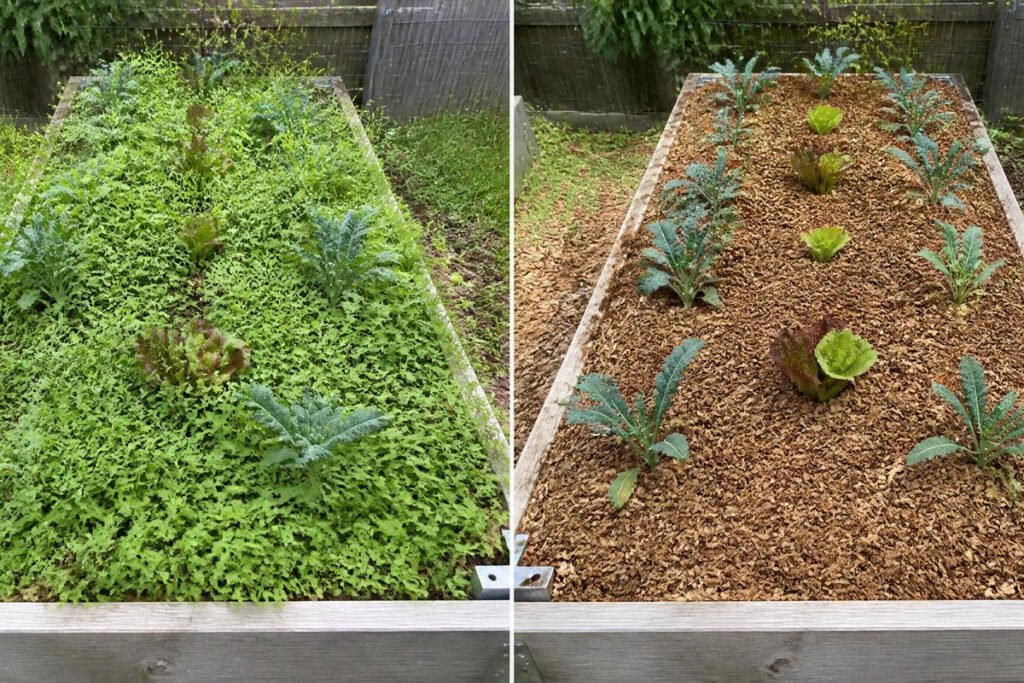
Weeds don’t just look untidy. They compete directly with your vegetables for water, nutrients, and light, and a bed left unchecked for even two or three weeks in midsummer can go from a few stray seedlings to a solid green carpet that swallows young transplants whole. Left long enough, weeds can cut vegetable yields dramatically, and some also host the same pests and diseases that threaten your actual crop.
The frustrating part is that weeding often feels like the one garden chore that never actually ends — pull them today, and a fresh batch is back within the week. But most of that endless cycle comes down to timing and prevention, not effort. A garden with good mulch coverage, a sound crop rotation plan, and a consistent early-season weeding routine needs a fraction of the ongoing maintenance that a neglected bed does.
This guide covers how weeds actually spread, how to choose the right prevention and removal method for your garden, and how to build a weed-control routine that works with your existing soil preparation and watering habits instead of fighting against them.
Quick Answer
The best weed control for a vegetable garden combines prevention with early, consistent removal. A 2–4 inch layer of organic mulch blocks the vast majority of weed seeds from germinating in the first place. For weeds that do come up, hand-pulling or hoeing while they’re small — ideally before they reach two inches tall — is far faster and less disruptive to vegetable roots than waiting until they’re established. Chemical herbicides are rarely necessary or advisable in a vegetable garden, since residue risk to edible crops outweighs the time saved. In short: mulch first, weed early, and stay consistent rather than reactive.
Table of Contents
- Why Weeds Are a Bigger Problem Than They Look
- How to Choose the Right Weed Control Method
- Best Weed Control Methods for Vegetable Gardens
- Weed Control Comparison Table
- Weed Control for Different Garden Setups
- How to Build a Weeding Routine That Actually Works
- Common Weed Control Mistakes
- Expert Tips
- Final Thoughts
- Frequently Asked Questions

Why Weeds Are a Bigger Problem Than They Look {#why-weeds-matter}
Weeds compete with vegetables for the same limited resources — water, nutrients, and sunlight — and they’re often better at winning that competition than the crops you actually want. Many common garden weeds have deeper or faster-growing root systems than young vegetable transplants, which means they can out-compete a new seedling within days if left unchecked.
Beyond direct competition, weeds create hiding places and alternate food sources for many of the same insects covered in a typical organic pest control routine. Tall weeds also reduce airflow around vegetable foliage, which raises humidity at leaf level and increases the risk of the same fungal diseases that soil splashing and overcrowding contribute to.
Perhaps most importantly for long-term garden health, many weeds go to seed quickly — some in as little as three to four weeks — and a single mature weed can drop thousands of seeds into the soil, creating a weed problem that resurfaces for years afterward if it isn’t caught before flowering.
How to Choose the Right Weed Control Method {#how-to-choose}
Before settling on a weeding approach, think through three factors:
How much of your garden is already mulched? A well-mulched bed needs far less active weeding than bare soil, since most weed seeds simply never get enough light to germinate.
How established are the weeds already? Small, recently sprouted weeds can be dealt with quickly by hand or hoe. Deep-rooted perennial weeds that have been established for a season or more often need repeated removal or smothering to fully exhaust their root reserves.
Are you willing to use any chemical products? Most home vegetable gardeners prefer to avoid herbicides near edible crops entirely, which makes manual and cultural methods — not chemical ones — the primary tools worth learning well.
Best Weed Control Methods for Vegetable Gardens {#best-methods}
Mulching
Overview: The single most effective preventive weed control method available to home gardeners. A consistent mulch layer blocks sunlight from reaching weed seeds sitting in the soil, stopping the majority of them before they ever sprout.
Key Features:
- Straw, shredded leaves, or compost applied 2–4 inches deep
- Prevents new weed seeds from germinating rather than removing existing ones
- Doubles as moisture retention and soil improvement
Best For: Every vegetable garden, as a first line of defense before any other method.
Pros: ✅ Prevents weeds instead of just removing them ✅ Low ongoing effort once applied ✅ Improves soil at the same time
Cons: ❌ Doesn’t stop weeds that are already established ❌ Needs periodic top-up as mulch breaks down
Our Verdict: This should be the foundation of any weed control plan — see our full mulching guide for application details specific to vegetable beds.
Hand Pulling
Overview: The most precise removal method, especially valuable around young vegetable transplants where a hoe or tiller risks damaging shallow roots.
Key Features:
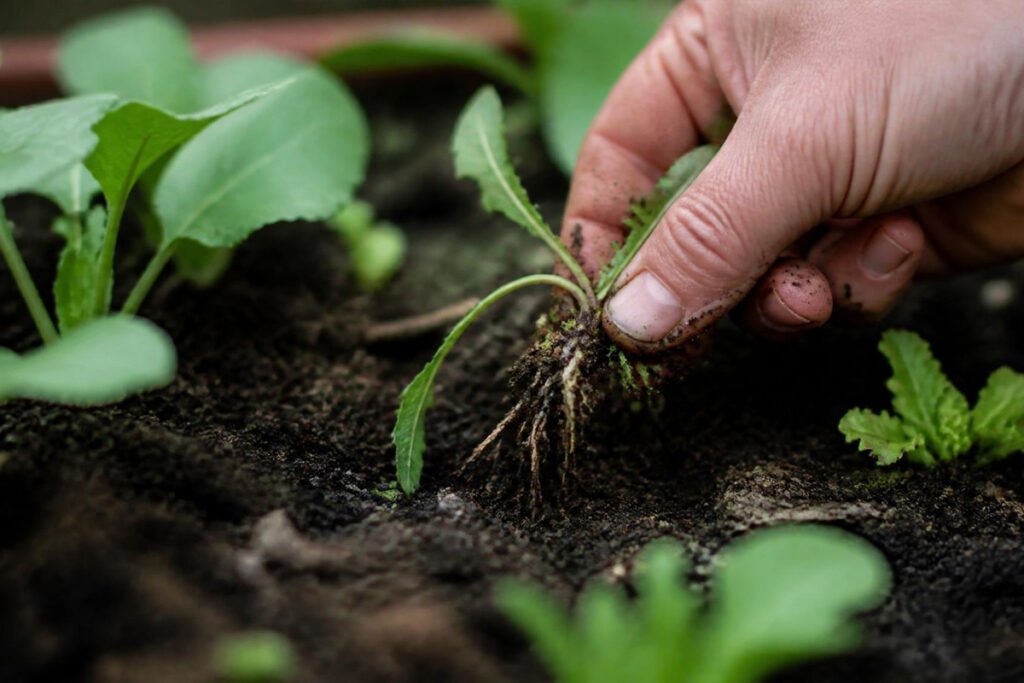
- Best performed after rain or watering, when soil is loose enough for full root removal
- Most effective on weeds under two inches tall, before roots anchor deeply
- No cost beyond time
Best For: Small gardens, raised beds, and any area close to young or shallow-rooted plants.
Pros: ✅ No equipment needed ✅ Removes full root system ✅ Safe around delicate seedlings
Cons: ❌ Time-consuming for larger gardens ❌ Repetitive if done reactively instead of on a schedule
Our Verdict: Ideal for raised beds and container-adjacent areas where precision matters more than speed.
Hoeing
Overview: A faster method for larger open areas, using a sharp hoe to sever weeds at the soil surface just below ground level.
Key Features:
- Most effective on small, recently sprouted weeds
- Covers ground far faster than hand pulling
- Works best in dry conditions so severed weeds shrivel rather than re-root
Best For: Larger in-ground plots and pathways between rows.
Pros: ✅ Fast for covering large areas ✅ Minimal soil disturbance compared to tilling
Cons: ❌ Less effective on deep-rooted perennial weeds ❌ Can damage shallow vegetable roots if used carelessly close to plants
Our Verdict: A strong middle-ground option for open plots, best reserved for pathways and wider row spacing rather than tight raised bed rows.
Solarization and Smothering
Overview: A longer-term method using clear or black plastic, or thick cardboard and mulch layers, to block light and heat weeds out of an area over several weeks before planting.
Key Features:
- Clear plastic uses trapped heat to kill weed seeds and roots
- Cardboard smothering blocks light without adding heat, making it safer near existing plants
- Best used on new beds or during an off-season fallow period
Best For: New garden beds being prepared from scratch, or badly weed-infested areas needing a reset before replanting.
Pros: ✅ Very effective on stubborn perennial weeds ✅ Chemical-free ✅ Improves soil as cardboard breaks down
Cons: ❌ Takes several weeks to work ❌ Not practical mid-season on actively planted beds
Our Verdict: The best option for reclaiming a badly overgrown bed before it goes into your crop rotation plan for the season.
Weed Control Comparison Table {#comparison-table}
| Method | Best For | Speed | Effort Level | Works on Established Weeds |
|---|---|---|---|---|
| Mulching | Prevention, all gardens | Ongoing | Low after setup | No |
| Hand Pulling | Raised beds, near seedlings | Slow | Moderate | Yes |
| Hoeing | Open plots, pathways | Fast | Low–Moderate | Only if young |
| Solarization/Smothering | New or badly weedy beds | Slow (weeks) | Low, but passive | Yes |
Weed Control for Different Garden Setups {#different-setups}
Raised Bed Gardens
Raised beds tend to have fewer weed problems overall since they use fresh, controlled soil, but any weeds that do appear should be hand-pulled quickly to avoid competing with the more tightly spaced plantings common in a raised bed vegetable garden.
Single-Plot In-Ground Gardens
Larger in-ground plots benefit most from a combination approach — mulch within rows, hoe the pathways between them, and reserve hand-pulling for weeds growing close to plant stems where a hoe would risk damage.
Container and Small-Space Gardens
Weed pressure is much lower in containers since the growing medium starts fresh each season, but any weed seeds blown in from nearby beds should be pulled immediately, since containers offer weeds very little competition for the limited soil volume available.
How to Build a Weeding Routine That Actually Works {#how-to-build}
Step 1: Mulch First
Apply a proper mulch layer before weeds become a problem, not after. Prevention is always less work than removal.
Step 2: Do a Quick Weekly Walkthrough
Spend five to ten minutes each week scanning beds for new weed growth. Catching seedlings early means most can be removed in seconds by hand.
Step 3: Remove Weeds Before They Flower
Prioritize any weed that’s close to flowering, since a single mature weed can seed the bed for years if left even one extra week.
Step 4: Water Before Hand-Weeding Established Growth
Loosen the soil with a light watering an hour or two beforehand so root systems come out fully instead of snapping off at the surface.
Step 5: Refresh Mulch as Needed
Top up thinning mulch throughout the season, since bare patches that reappear as mulch breaks down are exactly where new weeds take hold first.
Common Weed Control Mistakes {#common-mistakes}
Waiting until weeds are already established. A weed pulled at two inches tall takes seconds; the same weed at eight inches tall with a deep taproot can take minutes and still leave root fragments behind. Pair a weekly walkthrough with your existing watering routine so weeding never falls too far behind.
Tilling weedy soil instead of removing weeds first. Tilling established weeds often chops roots into pieces that regrow into multiple new plants rather than destroying them. Remove weeds fully before tilling or amending a bed.
Skipping mulch because “the bed already looks fine.” Bare soil between mulching applications is exactly when new weed seeds get their chance. Treat mulch top-ups as part of your regular crop rotation and bed refresh routine, not a one-time task.
Expert Tips {#expert-tips}
Learn your most common weeds by name. Recognizing a young dandelion, crabgrass, or bindweed seedling before it’s obvious lets you remove it days or weeks earlier than waiting for it to become unmistakable.
Never let weeds go to seed, even in unused areas. A weedy corner of the yard next to the garden can reseed your beds for years — treat nearby unused ground with the same attention as the garden itself.
Combine weeding with your composting routine carefully. Most home compost piles don’t reach a high enough temperature to kill weed seeds reliably, so keep seeded weeds out of the compost bin and dispose of them separately instead.
Final Thoughts {#final-thoughts}
Best overall: mulching, since it prevents the majority of weed growth before it starts. Best for established weeds: hand pulling after a light watering. Best for badly overgrown beds: solarization or smothering before the season begins.
Weed control is rarely about finding one perfect method — it’s about layering prevention with a consistent, low-effort routine. Combine a good mulch layer, a weekly walkthrough, and a solid soil preparation routine at planting time, and most gardeners find weeding drops from a dreaded weekend chore to a five-minute habit within a single season.
Frequently Asked Questions {#faq}
How often should I weed my vegetable garden? A quick five- to ten-minute check once a week is usually enough to catch new weeds while they’re still small and easy to remove by hand.
Is mulch really enough to stop most weeds? Mulch blocks the majority of weed seeds from ever getting enough light to germinate, though it won’t stop windblown seeds landing on top of the mulch itself, which still need occasional hand removal.
What’s the difference between hoeing and tilling for weed control? Hoeing severs weeds at the surface with minimal soil disturbance, while tilling turns over a deeper layer of soil and can actually spread established weed roots into multiple new plants if done before removing them.
Can I use vinegar or homemade sprays as a natural weed killer? Household vinegar-based sprays can scorch the leaves of young weeds but rarely kill the root system, so they typically only slow regrowth rather than fully eliminating established weeds, and shouldn’t be sprayed near edible crops.
Do I need to remove weeds from pathways between beds too? Yes — weedy pathways are a major source of seeds blowing or spreading into your growing beds, so mulching or hoeing paths is just as important as weeding the beds themselves.
How do weeds affect crop rotation planning? Badly weedy beds should be cleared and ideally solarized or smothered before starting a new crop rotation cycle, since established weeds compete with whichever plant family moves into that bed next.
Can weeds actually attract garden pests? Yes, many weeds host the same insects that damage vegetable crops, so consistent weed control is a meaningful part of an overall organic pest control strategy, not a separate task.
Is it safe to compost pulled weeds? Only if they haven’t gone to seed. Home compost piles rarely get hot enough to reliably kill weed seeds, so seeded weeds should be disposed of separately rather than added to the compost bin.
What’s the best time of day to weed? Weeding after rain or a light watering, when soil is loose, makes hand-pulling far easier and more likely to remove the full root system rather than snapping the top off.
Do raised beds really get fewer weeds than in-ground gardens? Generally yes, since raised beds start with fresh, controlled soil that’s less likely to already contain a large bank of weed seeds compared to long-used ground soil.
Are landscape fabric and weed barriers worth using in a vegetable garden? They can help in permanent pathways, but they’re less practical in annual vegetable beds where crops rotate and are replanted each season, since cutting new holes for each planting reduces their effectiveness over time.
How long does it take to get a badly weedy garden under control? With consistent mulching and weekly removal, most gardens see a dramatic reduction within one full season, though beds with established perennial weeds may need a full season of solarization or smothering first for a complete reset.
Author: Pamela Reese Last Updated: July 2026
Pingback: 6 Best Hand Weeders & Cultivators for Effortless Weeding: Proven Top Picks & Buying Guide | Pro Gardening Tips – Expert Advice for a Thriving Garden
Pingback: Best Garden Hoes: Proven Top Picks for Easy Weeding | Pro Gardening Tips – Expert Advice for a Thriving Garden