If your tomatoes keep splitting after a rainstorm, your soil dries out two days after you water it, or you spend every Saturday morning pulling the same weeds you pulled last Saturday, the fix probably isn’t more effort — it’s a missing layer. Mulch is the single most under-used tool in the average vegetable garden, and skipping it is one of the quiet reasons harvests fall short even when soil preparation and watering routines are otherwise solid.
Most new gardeners either skip mulch entirely or grab whatever bag is cheapest at the garden center, without realizing that the wrong material can rob nitrogen from the soil, mat down and suffocate roots, or introduce a fresh crop of weed seeds. The right mulch, applied at the right depth and the right time, does the opposite: it locks in moisture so you’re watering less, keeps weed pressure down without chemicals, moderates soil temperature swings, and — with organic types — feeds your soil as it breaks down.
This guide walks through every major mulch type available for vegetable gardens, compares them head-to-head, and shows exactly how and when to apply each one so your raised beds or in-ground rows get the maximum benefit this season.
Quick Answer
The best mulch for a vegetable garden depends on what you’re growing and how hands-on you want to be. Weed-free straw is the classic all-around choice for in-ground vegetable rows — it’s cheap, breathable, and breaks down over a season. Compost is the best option if you want a mulch that also feeds the soil, and it works beautifully in raised beds. Grass clippings are a free, nitrogen-rich choice for anyone with an untreated lawn, provided they’re applied in thin layers. Black plastic mulch earns its place around heat-loving crops like tomatoes and peppers, where warming the soil a few extra degrees speeds up ripening. There’s no single “best” material — there’s a best material for your bed, your climate, and your crop.
Table of Contents
- What Is Mulch and How Does It Work?
- How to Choose the Right Mulch for Your Garden
- Best Mulch Options for Vegetable Gardens
- Mulch Comparison Table
- Best Mulch for Different Garden Setups
- How to Apply Mulch Correctly
- Common Mulching Mistakes
- Expert Tips
- Final Thoughts
- Frequently Asked Questions
What Is Mulch and How Does It Work? {#what-is-mulch}
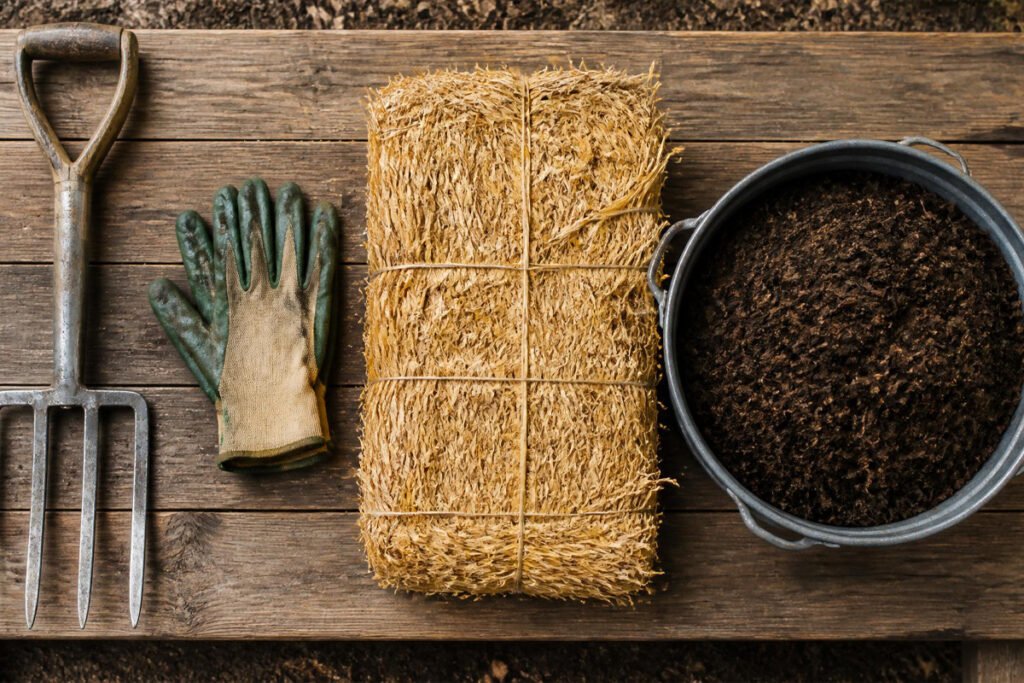
Mulch is any material spread over the surface of the soil around your plants. It isn’t a soil amendment worked into the ground — it sits on top, acting as a protective layer between bare soil and the sun, wind, and rain. Choosing the best mulch for your vegetable garden starts with understanding what that layer is actually doing for you underneath the surface.
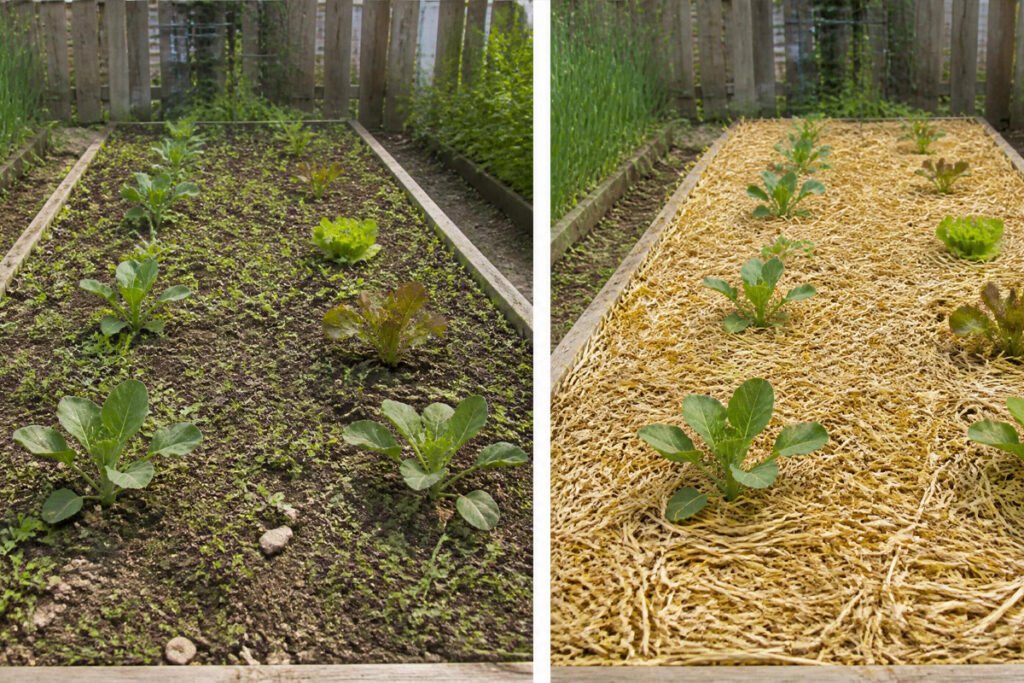
A good mulch layer does four jobs at once. First, it slows evaporation, which means the moisture you put into the soil during watering — or during a rain — stays available to roots longer instead of baking off. Second, it blocks sunlight from reaching the soil surface, which prevents most weed seeds from germinating in the first place, cutting way down on hand-weeding. Third, it insulates the soil, keeping it cooler during a summer heatwave and warmer during a cold snap, which reduces stress on root systems. Fourth — for organic mulches specifically — it slowly breaks down and adds organic matter back into the soil, improving structure and feeding the microbial life that your plants depend on.
Mulch also plays a quieter but important role in disease prevention. Many soil-borne fungal spores spread onto plant leaves and fruit through rain splash. A mulch layer acts as a physical barrier, keeping soil-borne pathogens from bouncing up onto lower leaves and touching fruit like tomatoes, squash, and cucumbers that would otherwise sit directly on bare earth. That’s part of why mulched gardens tend to see less blossom end rot and fewer rot spots on low-hanging fruit than unmulched ones.
The primary keyword here — best mulch for vegetable garden — really comes down to matching the material’s properties to your goals: moisture retention, weed suppression, soil temperature, or soil feeding. Most gardeners end up using more than one type in different parts of the same garden, and that’s the right instinct.
How to Choose the Right Mulch for Your Garden {#how-to-choose}
Before grabbing the first bag or bale you see, ask yourself three questions.
What am I growing, and does it want warm or cool soil? Heat-loving crops like tomatoes, peppers, and melons benefit from mulches that warm the soil, such as black plastic, applied early in the season. Cool-season crops like lettuce, spinach, and broccoli prefer mulches that keep soil temperatures down, such as straw or shredded leaves.
Do I want the mulch to feed my soil, or just protect it? Organic mulches like compost, straw, and grass clippings break down over a season and contribute nutrients and organic matter. Synthetic options like plastic and landscape fabric last longer and control weeds more aggressively, but they add nothing back to the soil and need to be removed at season’s end.
How much am I willing to spend, and what do I already have access to? Grass clippings and shredded leaves are often free if you already maintain a lawn or have deciduous trees nearby. Straw and compost typically need to be purchased or made ahead of time through composting at home. According to <a href=”https://extension.umn.edu/news/mulching-101-secret-healthy-and-happy-garden” target=”_blank” rel=”noopener”>University of Minnesota Extension</a>, matching mulch type to bed function — vegetables versus walkways versus perennial beds — matters more than chasing a single “best” material, since each mulch type has a different decomposition rate and weed-seed risk.
Best Mulch Options for Vegetable Gardens {#best-options}
Weed-Free Straw
Overview: Straw is the most widely recommended mulch for in-ground vegetable gardens, and for good reason. It’s lightweight, easy to spread by hand, and allows air and water to pass through freely while still blocking sunlight from reaching weed seeds. Straw is the dried stalk left over after grain harvest (wheat, oat, rye, or barley), which is why it’s important to buy certified weed-free straw rather than generic hay — hay is cut while still green and often carries seed heads that will sprout right in your beds.
Key Features:
- Breathable layer that won’t suffocate roots or trap excess moisture
- Breaks down over one growing season, adding organic matter
- Insulates soil against summer heat spikes
- Naturally moderates soil temperature without warming it
Best For: In-ground vegetable rows, especially tomatoes, peppers, squash, and strawberries where keeping fruit off bare soil matters.
Pros: ✅ Inexpensive per square foot ✅ Easy to apply and remove ✅ Improves soil as it decomposes
Cons: ❌ Can blow away in windy, exposed sites ❌ Cheap “straw” sold as hay can introduce weed seeds
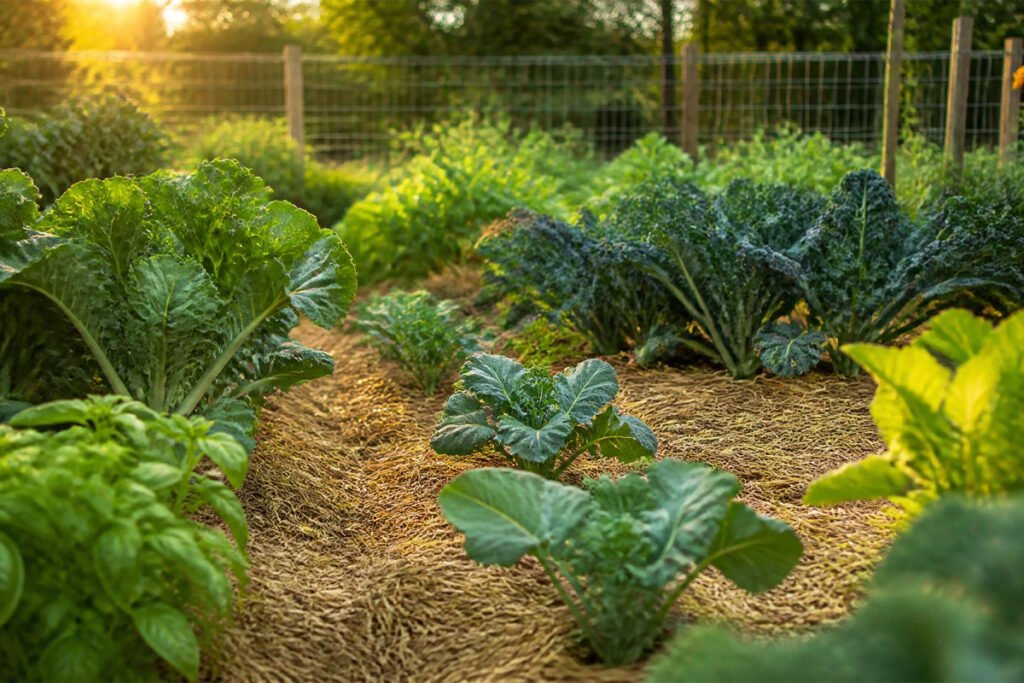
Our Verdict: For most backyard vegetable gardens, straw is the default choice, and it pairs especially well with beds that already have good soil preparation underneath it. Apply a 3–4 inch layer once soil has warmed in spring.
Garden Compost
Overview: Using finished compost as a surface mulch does double duty — it suppresses weeds and moisture loss the way any mulch does, but it also feeds your soil directly as nutrients leach downward with every watering. The catch is that compost needs to be fully finished and hot-composted to kill off weed seeds and pathogens before you spread it; half-finished compost can do more harm than good.
Key Features:
- Adds nutrients directly to the root zone
- Improves soil structure and water-holding capacity over time
- Dark color helps warm soil slightly in spring
- Can be made at home for free from kitchen and yard waste
Best For: Raised beds and containers where soil volume is limited and nutrient density matters more than in a large in-ground plot.
Pros: ✅ Feeds plants while it protects soil ✅ Free if home-produced ✅ Improves long-term soil health
Cons: ❌ Homemade compost must be fully finished to avoid weed seeds ❌ More expensive than straw if purchased in bulk
Our Verdict: If you’re already composting at home or running a compost bin, using finished compost as a 1–2 inch mulch layer is one of the best returns on effort in the whole garden.
Grass Clippings
Overview: If you mow an untreated lawn, grass clippings are essentially a free, nitrogen-rich mulch sitting in your yard waste bag every week. The key with clippings is thin layers — a thick, fresh pile mats down, turns slimy, and can actually block water and air from reaching the soil instead of helping.
Key Features:
- High nitrogen content feeds soil as it breaks down
- Completely free for lawn owners
- Breaks down quickly, needing regular reapplication
- Best applied in thin layers, allowed to dry between additions
Best For: Vegetable beds where you want a quick, no-cost mulch and are willing to top it up every week or two through the season.
Pros: ✅ Free and readily available ✅ Adds nitrogen as it decomposes ✅ Easy to apply incrementally
Cons: ❌ Must come from herbicide-free lawns ❌ Mats and smells if applied too thick or too fresh
Our Verdict: A smart supplemental mulch, especially layered over straw, but skip it entirely if your lawn has been treated with broadleaf weed killer — those chemicals can persist in clippings and damage vegetable plants.
Wood Chips or Bark Mulch
Overview: Wood chips are attractive, long-lasting, and often free from tree services or municipal drop-off programs, but they’re better suited to pathways between beds than to the actual growing area of a vegetable garden. Their high carbon-to-nitrogen ratio means they can tie up soil nitrogen as they slowly decompose, competing with your vegetables for the same nutrients.
Key Features:
- Long-lasting — often two or more seasons before needing replacement
- Excellent at suppressing weeds at a 3–4 inch depth
- Prevents soil compaction from foot traffic
- Attractive, tidy appearance
Best For: Pathways between raised beds or rows, not the vegetable root zone itself.
Pros: ✅ Very long-lasting ✅ Often free or low-cost ✅ Great for garden walkways
Cons: ❌ Can rob nitrogen from soil if worked into the growing bed ❌ Slow to break down, complicating next season’s bed prep
Our Verdict: Reserve wood chips for the space between your raised beds rather than inside them, and add a nitrogen source if any chips do end up mixed into planting soil.
Black Plastic Mulch
Overview: Black plastic sheeting is a synthetic option that warms the soil, suppresses weeds almost completely, and reduces evaporation to near zero. It’s the mulch of choice for commercial growers and home gardeners racing to get an early start on heat-loving crops in cooler climates.
Key Features:
- Warms soil several degrees, speeding up early-season growth
- Near-total weed suppression under the sheet
- Reduces surface evaporation dramatically
- Must be removed at the end of the season — it won’t decompose
Best For: Tomatoes, peppers, melons, and other heat-lovers, especially in regions with a short or cool growing season.
Pros: ✅ Speeds up ripening by up to two weeks ✅ Virtually eliminates weeding under the sheet ✅ Cuts watering frequency significantly
Cons: ❌ Adds nothing to soil health ❌ Can be easy to over-irrigate since you can’t see soil moisture ❌ Must be disposed of, not tilled in
Our Verdict: A strong seasonal tool for specific heat-loving crops, best paired with drip irrigation run underneath the plastic so roots get water directly.
Mulch Comparison Table {#comparison-table}
| Mulch Type | Best For | Cost | Longevity | Feeds Soil? |
|---|---|---|---|---|
| Weed-Free Straw | In-ground vegetable rows | Low | 1 season | Yes |
| Garden Compost | Raised beds, containers | Low–Medium | 1 season | Yes, directly |
| Grass Clippings | Quick, free top-ups | Free | 2–3 weeks | Yes |
| Wood Chips | Pathways, not planting beds | Free–Low | 1–2+ seasons | Minimal in beds |
| Black Plastic | Heat-loving crops (tomatoes, peppers) | Low–Medium | 1 season | No |
Best Mulch for Different Garden Setups {#different-setups}
Raised Beds
Raised beds warm up and dry out faster than in-ground plots because they’re elevated and exposed on all sides. Compost or a straw-compost combination is ideal here, since it slows moisture loss without the risk of tying up nitrogen the way wood chips can. If your raised bed setup is new this season, pair mulch with proper raised bed gardening fundamentals so the soil mix underneath is already retaining moisture well before mulch goes on top.
Container Gardens
Containers dry out the fastest of any growing setup, sometimes needing water daily in peak summer. A thin, 1-inch layer of compost or fine mulch keeps evaporation down without taking up precious root space in a limited container volume — a detail worth pairing with the guidance in a container vegetable gardening guide for pot size and drainage.
In-Ground Rows and Traditional Plots
Traditional in-ground vegetable rows have the most room to work with, and straw remains the standard here for a reason: it’s inexpensive to buy in bulk, breaks down into the soil by fall, and doesn’t require the labor of building or filling a raised structure. If you’re just getting a new plot going, mulching pairs naturally with a beginner’s guide to starting a vegetable garden and with a crop rotation plan so mulch materials and bed layout are considered together each season.
How to Apply Mulch Correctly {#how-to-apply}
Applying mulch is simple, but the details determine whether it helps your garden or accidentally harms it.
Step 1: Prepare the Bed
Weed the area thoroughly before mulching — mulch suppresses new weed seeds from germinating, but it won’t kill established weeds already growing. Water the soil deeply first so you’re locking in moisture, not locking out dry soil.
Step 2: Wait for the Right Soil Temperature
For organic mulches like straw, wait until the soil has warmed in spring before applying — mulching too early can trap cold into the ground and slow seedling growth. For black plastic around heat-loving crops, the opposite is true: lay it down early so it can start warming the soil before you plant.
Step 3: Apply at the Right Depth
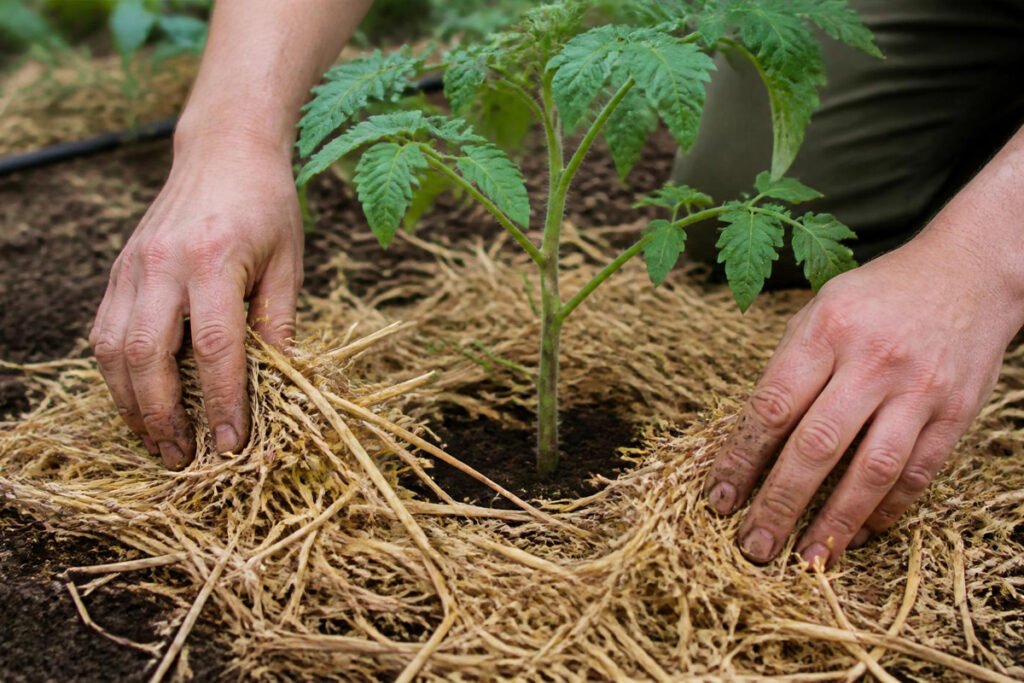
Spread organic mulches like straw or compost 2–4 inches deep. Thinner layers won’t block enough light to suppress weeds; much thicker layers can prevent air and water from reaching roots.
Step 4: Keep Mulch Off Stems
Leave a small gap — about an inch — between mulch and the base of each plant stem. Piling mulch directly against stems traps moisture against the plant tissue and invites rot and pest damage.
Step 5: Refresh Through the Season
Organic mulches break down as the season progresses. Check depth every few weeks and top off thinning areas, especially after heavy rain has compacted or washed away a layer.
Common Mulching Mistakes {#common-mistakes}
Piling mulch against plant stems. This is the single most common mistake, sometimes called “volcano mulching” when it happens around trees. It traps moisture against the stem, creating the perfect environment for rot and stem-boring pests. Always leave a small buffer zone.
Using fresh, un-composted materials. Fresh grass clippings, unfinished compost, or green wood chips can rob nitrogen from the soil as they break down, or introduce weed seeds and pathogens straight into your beds. If you’re unsure whether your compost is ready, review the timeline in a beginner composting guide before spreading it.
Applying mulch too early or too thick. A too-thick layer — more than 4 inches for most organic mulches — can suffocate roots and trap excess moisture against the soil, encouraging fungal problems instead of preventing them. Applying too early in spring can also keep soil colder than seedlings need to establish well.
Expert Tips {#expert-tips}
Layer straw over compost for the best of both. Put down a thin layer of compost directly on the soil, then top it with straw. You get the nutrient benefit of compost with the longer-lasting weed suppression of straw.
Match mulch color to your goal. Lighter mulches like straw reflect heat and keep soil cooler in summer, which is ideal for cool-season crops planted late. Darker mulches like compost or black plastic absorb heat and warm the soil, which benefits heat-loving crops trying to get an early start.
Don’t till organic mulch in until it’s mostly broken down. Working half-decomposed straw or leaves into the soil can temporarily tie up nitrogen that your plants need. Let organic mulches break down mostly on the surface first, then till in the remainder at the end of the season.
Final Thoughts {#final-thoughts}
Best overall: Weed-free straw remains the most reliable, affordable choice for most in-ground vegetable gardens. Best for soil health: Finished garden compost, since it protects the surface while feeding the root zone directly — particularly effective in raised beds. Best budget option: Grass clippings from an untreated lawn, applied in thin layers. Best for an early start: Black plastic mulch around heat-loving crops like tomatoes and peppers in cooler climates.
There’s no universal winner — the right mulch is the one that matches your bed type, your climate, and the crops you’re growing this season. Whichever material you choose, the habit of mulching consistently will do more for your garden’s water efficiency and weed pressure than almost any other single change you can make, especially once it’s paired with solid seasonal planning for what goes in the ground each month.
Frequently Asked Questions {#faq}
Do I need to mulch my vegetable garden every year? Yes, in most cases. Organic mulches like straw and compost break down over a single growing season, so beds typically need a fresh layer applied each spring after planting, with occasional top-ups through summer as the layer thins.
How deep should vegetable garden mulch be? Most organic mulches work best at 2–4 inches deep. Anything thinner won’t block enough sunlight to suppress weeds effectively, while anything much deeper can restrict air and water from reaching plant roots.
How much does mulch typically cost? Costs vary widely by material and region. Straw and compost are generally the most affordable per square foot when bought in bulk, while grass clippings and shredded leaves are usually free if you already have access to them.
Straw mulch vs. hay mulch — what’s the difference? Straw is the dried, seedless stalk left after a grain harvest, while hay is cut while still green and often contains seed heads. Always look for certified weed-free straw for garden use, since hay is far more likely to introduce weeds into your beds.
Can I use wood chips directly around my vegetable plants? It’s not recommended for the actual root zone. Wood chips have a high carbon-to-nitrogen ratio and can tie up soil nitrogen as they decompose, competing with vegetables for nutrients. They’re better used on pathways between beds.
Will mulch attract pests like slugs or rodents? Thick, consistently damp organic mulch can create favorable conditions for slugs in humid climates. Keeping mulch a few inches from stems, avoiding overly thick layers, and choosing straw over heavier materials in slug-prone areas helps minimize this risk.
Should I remove mulch at the end of the season? Organic mulches like straw and grass clippings can typically be tilled into the soil at season’s end, adding organic matter for next year. Synthetic mulches like black plastic must be fully removed and disposed of, since they won’t decompose.
Can I mulch around seedlings right after planting? Wait until seedlings are a few inches tall and established before mulching close to the stems. Mulching bare soil around seeds or very young seedlings can sometimes interfere with germination and early growth.
Is mulch a substitute for regular watering? No. Mulch reduces how often you need to water by slowing evaporation, but it doesn’t eliminate the need for consistent watering, especially during dry spells — pair it with a regular watering routine for best results.
What’s the best mulch for tomatoes specifically? Straw is the classic choice for in-ground tomato rows, while black plastic is popular for an earlier start in cooler climates. Both help prevent the soil-splash that leads to blossom end rot and fruit disease when growing tomatoes.
Author: Pamela Reese Last Updated: July 2026
Pingback: Best Garden Hoes: Proven Top Picks for Easy Weeding | Pro Gardening Tips – Expert Advice for a Thriving Garden