Onions are one of the most-cooked-with vegetables in almost any kitchen, yet they’re one of the most misunderstood crops in the garden. Plant them at the wrong time of year and you’ll get lots of green tops and tiny bulbs. Space them too close and they’ll compete for room and stay small. Harvest too early or cure them wrong, and a bulb that should last all winter goes soft in a matter of weeks.
The good news is that onions are forgiving once you understand two things: day-length sensitivity and timing. Onions form bulbs based on how many hours of daylight they receive, not just temperature, which means the “right” variety depends on where you live — get that wrong and no amount of care will fix it.
This guide covers exactly how to grow onions from set or transplant to a full, cured harvest, whether you’re planting a dedicated row, a raised bed, or working them into a companion-planted vegetable bed. If your soil needs attention first, start with our guide to preparing soil for a vegetable garden.
Quick Answer
The best way to grow onions depends on your region’s daylight hours and how you’re starting them. Gardeners in northern regions (roughly above the 35th parallel) need long-day onion varieties, which bulb once daylight reaches 14–16 hours. Southern gardeners need short-day varieties that bulb at 10–12 hours of daylight — planting the wrong type for your latitude is the single most common reason for disappointing onion harvests. For most home gardeners, planting onion sets (small dormant bulbs) in early spring is the easiest and most reliable method, while starting from seed indoors gives more variety choice but requires 8–10 weeks of lead time before transplanting.
Table of Contents
- How Growing Onions Works
- How to Choose the Right Onion Variety
- Best Onion Varieties for Home Gardens
- Comparison Table
- Best Growing Methods for Different Spaces
- How to Plant and Grow Onions Correctly
- Common Mistakes
- Expert Tips
- Final Thoughts
- Frequently Asked Questions
How Growing Onions Works
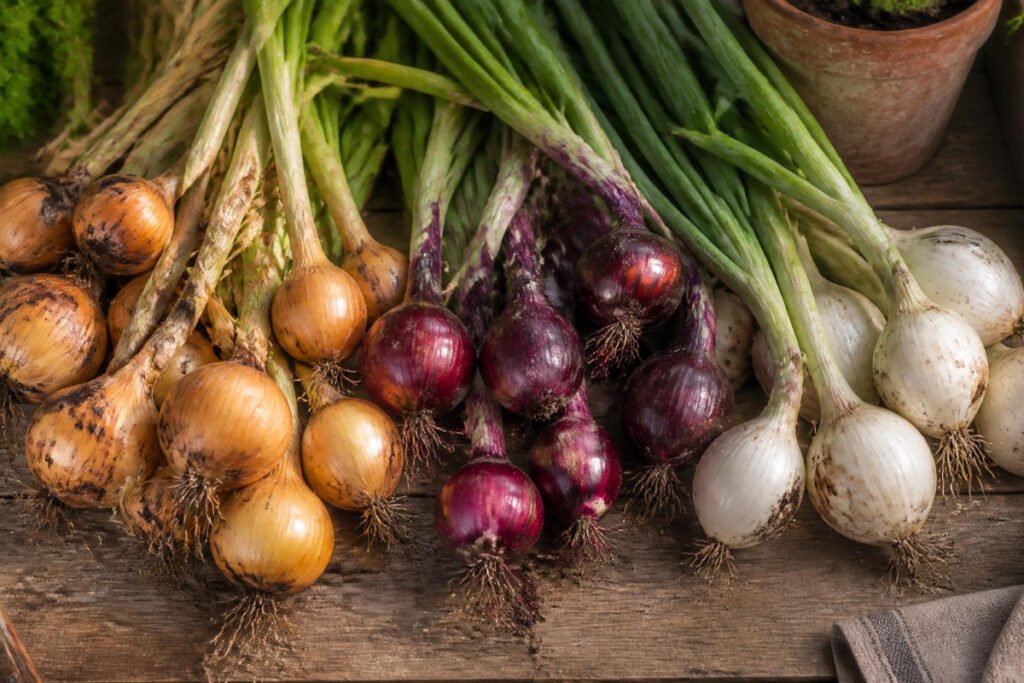
Onions grow from a swollen underground stem base called a bulb, which forms from layers of modified leaves. Unlike root vegetables such as carrots, the onion bulb isn’t a root — it’s storage tissue built up from the leaves above ground, which is why healthy, undamaged foliage directly determines bulb size.
The trigger for bulbing is photoperiod, or day length, not soil temperature. Onion plants spend their early growth putting energy into leafy green tops, and once daylight hours cross a variety-specific threshold, the plant shifts that energy into swelling the bulb instead of growing more leaves. This is why using a long-day variety in a southern climate — where daylight never reaches 14+ hours — results in tiny bulbs: the plant never gets the daylight signal it needs before the season ends. The reverse is also true for short-day varieties planted too far north.
Because bulb size is directly tied to how much leafy growth happens before bulbing starts, everything about early-season care — spacing, weeding, and nitrogen — is really about maximizing leaf growth before the plant switches modes. If you haven’t built up your bed’s fertility yet, our guide to organic fertilizers explains how to balance nitrogen for leafy growth without overdoing it late in the season.
How to Choose the Right Onion Variety
Ask yourself three questions before buying sets or seed:
What’s your latitude? This is the single most important decision. Long-day varieties suit northern gardeners (roughly north of the 35th parallel); short-day varieties suit the South; day-neutral (intermediate) varieties are a safer bet for gardeners near the middle of the country.
Do you want onions for fresh eating or long storage? Sweet, mild varieties like Walla Walla are best eaten within weeks of harvest. Pungent, thick-skinned storage varieties like yellow globe onions can last 6–10 months in the right conditions.
Sets, transplants, or seed? Sets (small dormant bulbs) are the fastest and most beginner-friendly option. Transplants give a head start without the lead time of starting seed indoors. Seed offers the widest variety selection but needs to be started 8–10 weeks before your last frost.
Onions prefer fertile, well-drained soil with a pH between 6.0 and 6.8, and they’re shallow-rooted, so consistent moisture near the surface matters more than deep watering. According to the University of Minnesota Extension, onions require full sun for best growth, and overcast skies or cool temperatures during the season will delay bulb formation regardless of variety.
Best Onion Varieties for Home Gardens
Walla Walla
Overview: A sweet, mild, large-bulbed onion originally from the Walla Walla Valley in Washington state. It’s a long-day variety with a short storage life, best used as a fresh-eating “slicing” onion rather than for winter storage.
Key Features:
- Very sweet, mild flavor, low pungency
- Long-day variety (northern climates)
- Large, flattened bulbs
- Short storage life (a few weeks to a couple months)
Best For: Northern gardeners who want a sweet onion for fresh eating.
Pros: ✅ Exceptional fresh flavor ✅ Large bulb size ✅ Popular, easy to find as sets Cons: ❌ Doesn’t store well ❌ Not suited to short-day climates
Our Verdict: Best planted alongside other quick-turnaround crops in a companion-planted bed since you’ll want to use the harvest fairly soon after digging.
Yellow Globe (Storage Onion)
Overview: The classic all-purpose yellow onion found in every grocery store — pungent, thick-skinned, and bred specifically for long storage. Available in both long-day and short-day strains depending on the seed source.
Key Features:
- Strong, classic onion flavor
- Available in long-day and short-day strains
- Thick, papery skin that cures well
- Excellent storage life (6–10 months)
Best For: Gardeners who want a reliable, all-purpose onion to use through winter.
Pros: ✅ Best all-around storage life ✅ Versatile in cooking ✅ Widely available as sets Cons: ❌ More pungent, less suited to eating raw ❌ Average bulb size compared to specialty varieties
Our Verdict: The safest first onion to grow. Pair it with solid soil prep for the best bulb size.
Red Burgundy
Overview: A red-skinned, red-and-white-fleshed onion with a moderately sharp flavor that mellows when cooked. Popular for its color as much as its taste — great raw in salads and sandwiches.
Key Features:
- Deep red-purple skin, streaked flesh
- Moderate storage life (3–5 months)
- Medium pungency, mellows when cooked
- Attractive for fresh market and home use alike
Best For: Gardeners who want color variety and a good balance of fresh eating and short-term storage.
Pros: ✅ Distinctive color ✅ Good raw and cooked ✅ Reasonable storage life Cons: ❌ Doesn’t store as long as yellow storage onions ❌ Can bolt (flower early) in unstable spring weather
Our Verdict: A strong companion crop alongside carrots or tomatoes for both visual interest and mild pest-deterrent benefits.
Candy
Overview: A day-neutral hybrid that performs well across a wide range of latitudes, making it one of the most forgiving choices for gardeners unsure which day-length category fits their region. Sweet flavor, large bulbs, moderate storage.
Key Features:
- Day-neutral — bulbs reliably across most U.S. latitudes
- Sweet, mild flavor
- Large bulb size
- Moderate storage life (2–4 months)
Best For: Gardeners in the middle latitudes, or anyone unsure which day-length category applies to them.
Pros: ✅ Forgiving of latitude ✅ Sweet flavor ✅ Reliable, large bulbs Cons: ❌ Not ideal for long-term storage ❌ Hybrid seed must be repurchased each year
Our Verdict: The lowest-risk choice if you’re planting onions for the first time and aren’t sure which category applies to your region.
Comparison Table
| Variety | Best For | Day-Length Type | Storage Life | Flavor |
|---|---|---|---|---|
| Walla Walla | Fresh eating, sweet | Long-day | 4–8 weeks | Very sweet, mild |
| Yellow Globe | All-purpose, storage | Long-day / Short-day | 6–10 months | Classic, pungent |
| Red Burgundy | Color, salads | Long-day | 3–5 months | Medium, mellows cooked |
| Candy | Beginners, mid-latitude | Day-neutral | 2–4 months | Sweet |
Best Growing Methods for Different Spaces
In-Ground Rows
Traditional rows work well for onions since they’re shallow-rooted and don’t need deep soil. Space onion sets or transplants 4–6 inches apart in rows 12–18 inches apart. Wider spacing produces larger bulbs; tighter spacing produces more bulbs at a smaller size — useful if you want scallion-sized “spring onions” from part of the row.
Raised Beds
Raised beds are ideal for onions because you can loosen and amend the top 6–8 inches of soil precisely, which is all onions really need. A well-built bed also warms faster in spring, letting you plant sets a little earlier. See our raised bed gardening guide or the beginner’s raised bed guide for setup basics.
Containers
Onions can be grown in containers at least 8–10 inches deep, spaced the same 4–6 inches apart as in-ground plantings. Containers are a good option for growing scallions or smaller bulb varieties on a patio, though full-sized storage onions generally do better with more root run in a bed. Our container gardening for beginners guide covers container sizing and drainage in more detail.
How To Plant and Grow Onions Correctly
Step 1: Choose Sets, Transplants, or Seed
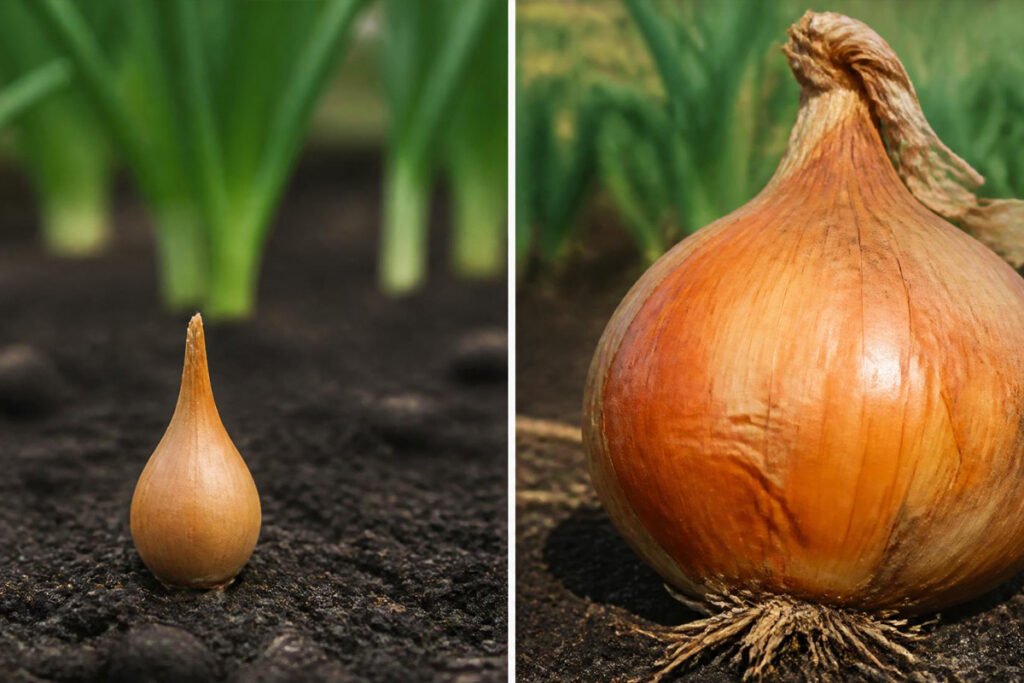
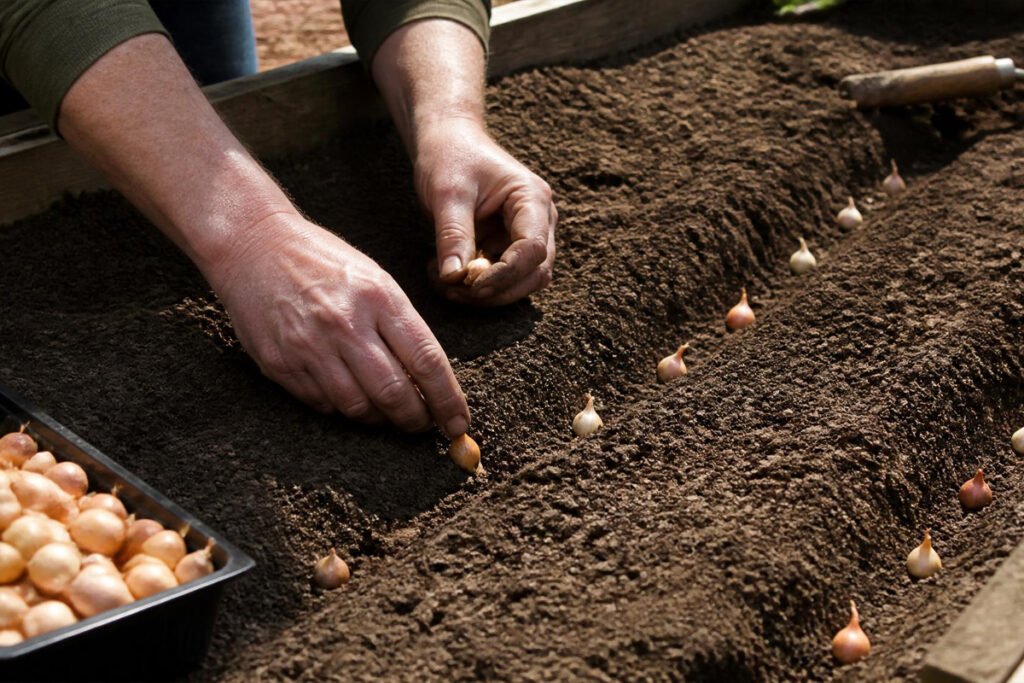
For most home gardeners, onion sets (small dormant bulbs, about the size of a marble) are the easiest starting point — plant them directly outdoors and skip the indoor seed-starting step entirely.
Step 2: Prepare the Soil
Loosen soil to about 6–8 inches deep and work in compost for organic matter and drainage. Onions are sensitive to compacted soil, which restricts bulb expansion. If your bed needs building up, see our guides to composting for beginners and starting a compost bin.
Step 3: Plant
Plant sets pointed-end up, about 1 inch deep, spaced 4–6 inches apart in rows 12–18 inches apart. Plant as soon as the soil can be worked in early spring — onions tolerate light frost well.
Step 4: Water and Weed Consistently
Onions have shallow, weak root systems and compete poorly with weeds. Keep the bed weeded by hand rather than deep cultivation, which can damage roots. Water consistently, aiming for about 1 inch per week — our watering guide covers how to keep moisture even without oversaturating shallow-rooted crops.
Step 5: Harvest and Cure
Onions are ready to harvest once the tops naturally yellow and fall over. Stop watering at this point, and once most of the tops have fallen, gently lift the bulbs and let them cure in a warm, dry, well-ventilated spot out of direct sun for 2–3 weeks, until the necks are fully dry and the outer skins are papery. Only fully cured onions should go into long-term storage.
Common Mistakes
Planting the wrong day-length variety for your latitude. This is the single most common cause of small, disappointing bulbs. Confirm whether your region needs a long-day, short-day, or day-neutral variety before buying sets or seed.
Letting weeds compete early in the season. Since bulb size is set by how much leafy growth happens before bulbing starts, weed competition in the first several weeks directly shrinks your final harvest. Stay on top of weeding by hand.
Storing onions before they’re fully cured. Onions that go into storage with damp necks or skins will rot within weeks. Always cure for 2–3 weeks in a warm, dry, ventilated space before storing — don’t rush this step even if you’re eager to clear the bed for fall crop rotation planning.
Expert Tips
Don’t mulch too heavily around the necks. Unlike most vegetables, onions do best with the soil surface around their necks left relatively bare once bulbs start swelling — heavy mulch right against the neck can trap moisture and encourage rot.
Stop watering once tops fall over. Continuing to water after the foliage naturally yellows and falls can cause bulbs to rot in the ground before you get a chance to harvest and cure them.
Interplant with carrots. Onions and carrots are a classic companion pairing — the onion’s scent can help deter carrot rust fly, and the two crops have different root depths and don’t compete heavily for space. See our companion planting guide for more pairing ideas.
Final Thoughts
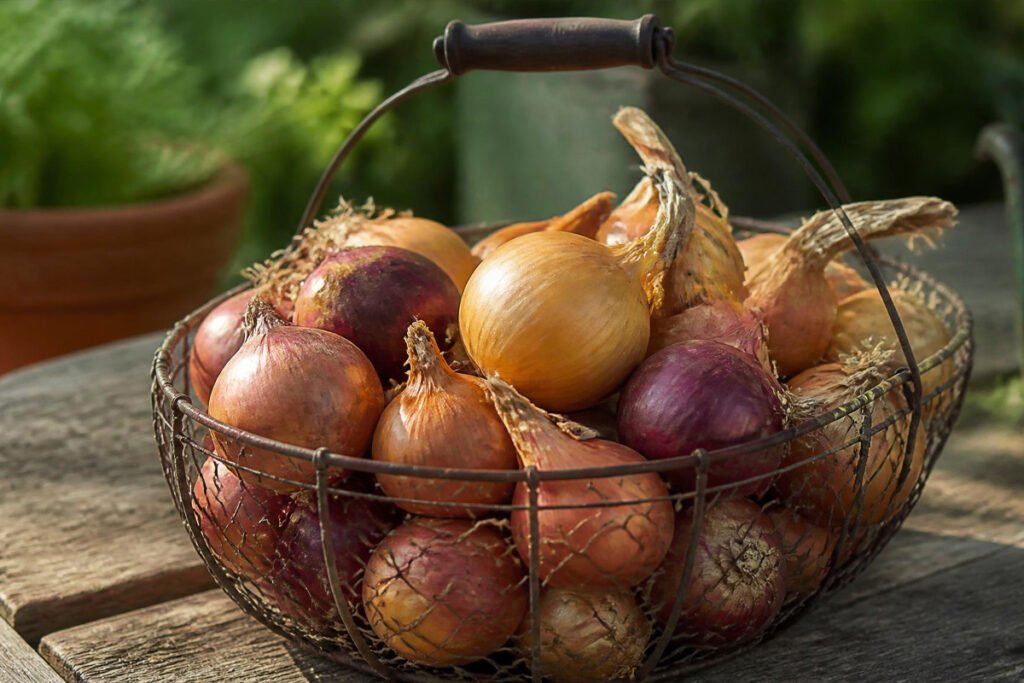
For most home gardeners, Yellow Globe onions are the best overall choice — reliable, versatile in the kitchen, and by far the best for long-term storage. If you want something sweeter for fresh eating, Walla Walla is worth the shorter storage window. On a budget or unsure of your day-length category, Candy is the most forgiving pick thanks to its day-neutral habit. And if you want a splash of color for salads, Red Burgundy rounds out the harvest nicely.
Whatever variety you choose, match it to your latitude first — that single decision matters more than soil, fertilizer, or watering combined. Get the day-length type right, keep the bed weeded early, water consistently, and cure fully before storage, and onions become one of the lowest-effort, highest-payoff crops in the garden. They also pair naturally with the potatoes covered in our potato growing guide if you’re planning a full root-and-bulb section of the garden this year.
Frequently Asked Questions
Do I need onion sets, or can I grow from seed? Either works. Sets (small dormant bulbs) are faster and more beginner-friendly, ready to plant directly outdoors. Seed offers more variety choice but needs to be started indoors 8–10 weeks before your last frost.
How long does it take to grow onions? Most onions take 90–120 days from planting to harvest, depending on the variety and whether you started from sets, transplants, or seed.
How much water do onions need? Onions need roughly 1 inch of water per week during active growth. Because they’re shallow-rooted, consistency matters more than deep watering — let the top inch of soil dry slightly between waterings.
Long-day vs. short-day onions — what’s the difference? Long-day onions need 14–16 hours of daylight to trigger bulbing and are suited to northern latitudes. Short-day onions need only 10–12 hours and are suited to southern latitudes. Planting the wrong type for your region results in small or no bulbs.
Why are my onion bulbs so small? The most common causes are planting the wrong day-length variety for your latitude, weed competition early in the season, or overcrowded spacing. Confirm your variety matches your region and thin plants to at least 4 inches apart.
Is it safe to eat onions that have started to flower (bolt)? Yes, bolted onions are safe to eat, but the bulb quality suffers — the center often develops a tough, woody flower stalk. Use bolted onions promptly rather than trying to store them.
When should I harvest onions? Harvest once the green tops naturally yellow and fall over on their own — don’t bend them down by hand, as this can reduce storage quality. Stop watering once this begins.
Can I grow onions in the same spot every year? It’s not recommended. Onions are susceptible to soil-borne diseases like white rot that build up with repeated planting. Rotate onions with unrelated crops on a 3–4 year cycle.
How many onions does a single set produce? Each onion set produces one bulb, unlike potatoes or garlic, which multiply. Plan your spacing based on how many individual bulbs you want to harvest.
What’s the ideal soil pH for onions? Onions prefer slightly acidic to neutral soil, ideally between 6.0 and 6.8, with good drainage and loose texture in the top several inches.
Can I plant onions near beans or peas? It’s best to avoid it. Onions can stunt the growth of beans and peas, and the reverse is also true — keep them in separate sections of the garden.
Do onions need full sun? Yes. Onions need at least 6 hours of direct sunlight per day; less than that typically results in smaller bulbs.
Author: Pamela Reese Last Updated: July 2026